
Results
-
 £29.95
Judd: Joy Peace & Happiness
An ideal concert opener (first or second half) where the idea is that the band appear on stage section by section starting with percussion followed by basses and so on!
Estimated dispatch 7-14 working days
-
 £59.95
Judd: King of Heaven
Based on the well-known hymn 'Praise my soul, the King of Heaven', this composition was specially written for The International Staff Band. A veritable showcase for the brass band, featuring each section in turn (cornets, horns and baritones, trombones, euphoniums and basses, percussion), the music concludes with an exciting and dramatic presentation of the theme.
Estimated dispatch 7-14 working days
-
 £59.95
Judd: My Strength My Tower - Contest Version
This music consists of a theme followed by five extensive variations. The theme is the composer's own tune set to the words, 'Thee will I love, my strength, my tower', a hymn by Johann Scheffler translated by John Wesley. A strong modal flavour is characteristic of the theme. Variation 1 This is a light and graceful variation with a good deal of imitative writing. It leads, without a break, into the next variation. Variation 2 Fire and ferocity are asked for in the course of this variation. Variation 3 This variation demonstrates the original approach of the composer. Solo lines for cornet and euphonium are included with their arabesques and arpeggii. Variation 4 Taking the form of a passacaglia, the 'ground' is given out at once by the basses. Fragments of the 'ground', plain or decorated, are combined and used in a number of ways, revealing the composer's mastery of counterpoint. Variation 5 The briskly moving and scintillating final variation abounds in sudden variations of dynamic. The tempo remains constant until an increase is called for in the coda. This 'contest' version has been prepared by Brian Bowen who was asked to re-work the percussion part and introduce a repiano cornet part (Salvation Army band publications do not, in general, have a part for repiano cornet).
Estimated dispatch 7-14 working days
-
 £39.95
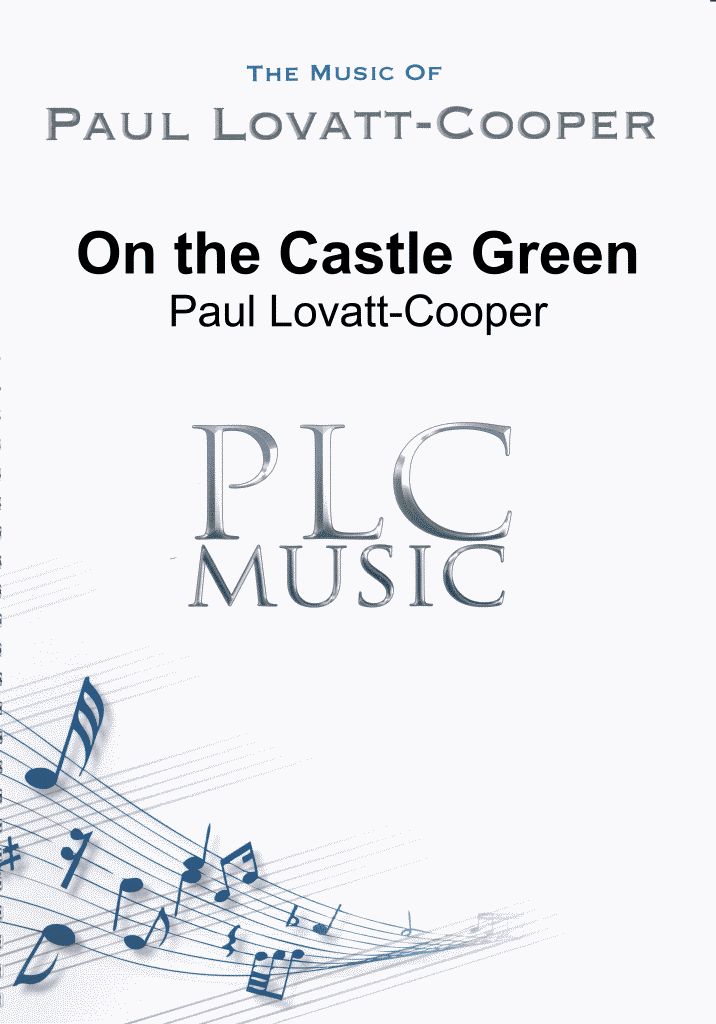
On the Castle Green (Brass Band - Score and Parts)
I was contacted by conductor and friend Desmond Graham who wanted to have a traditional concert march composed to celebrate the Golden Jubilee of his band; The Third Carrickfergus Band.Immediately my mind started wandering as I thought about all the great marches that I have enjoyed playing and listening to over the years. So when I put pen to paper I had already planned out the structure of the march and which instruments to feature.The march itself is split into two halves, the first in a minor key the second in a major key. The opening section starting loudly in F minor features stereotypical passages one would come to recognise in a traditional concert march: a cornet solo, a melodic bridging section and a robust bass solo led by the basses and trombones.The second half of the march changes pace and mood as it lifts into a major key giving it a more lighter feel. We hear a second cornet solo which plays the second theme of the march. After a second bridge section the theme is played by the front row cornets to allow the soprano to play an obligato melody similar to that heard in marches like "Army of the Nile" and "Stars and Stripes Forever". It all builds to a grandioso ending where the tempo drops and the final theme is played with a quick accel to the end.As for the title? In Carrickfergus lies an old castle that faces the town which is situated on a small plot of luscious green grass - "On The Castle Green".Paul Lovatt-Cooper
Estimated dispatch 7-14 working days
-
 £37.95
Benvenuto Cellini (Brass Band - Score only)
Berliozs opera Benvenuto Cellini was first produced in Paris in 1838 but was withdrawn as a failure, and it was not until the production in Dresden in 1888 that it was finally acclaimed by the Germans as a triumph. Adapted from certain episodes recorded in the memoirs of Benvenuto Cellini, Tuscan sculptor and goldsmith, the story, laid in Rome during the mid-sixteenth century, is not strictly historical. The short opening Allegro, marked deciso con impeto, is conceived in the most brilliant Berlioz manner, utilising full instrumentation. In the Larghetto we meet at once the first of the opera themes " the Cardinals aria (from the last act) introduced in the bass, quasi pizzicato. A second melody leads to a resumption of the Allegro, the contrasting second subject in the tenor horns being an adaptation of Teresas aria (Act I). Towards the end the Cardinal theme is re-introduced by trombones, fortissimo against an energetic cornet and euphonium passage (senza stringendo " without hurry, says the score). After a unison passage storming skywards, there is a sudden, dramatic three-bar silent pause broken by Eb basses alone, again stating the Cardinal theme. A simple molto crescendo on the dominant, begun piano, leads to the long, resounding chord.
Estimated dispatch 7-14 working days
-
 £82.95
Benvenuto Cellini (Brass Band - Score and Parts)
Berliozs opera Benvenuto Cellini was first produced in Paris in 1838 but was withdrawn as a failure, and it was not until the production in Dresden in 1888 that it was finally acclaimed by the Germans as a triumph. Adapted from certain episodes recorded in the memoirs of Benvenuto Cellini, Tuscan sculptor and goldsmith, the story, laid in Rome during the mid-sixteenth century, is not strictly historical. The short opening Allegro, marked deciso con impeto, is conceived in the most brilliant Berlioz manner, utilising full instrumentation. In the Larghetto we meet at once the first of the opera themes " the Cardinals aria (from the last act) introduced in the bass, quasi pizzicato. A second melody leads to a resumption of the Allegro, the contrasting second subject in the tenor horns being an adaptation of Teresas aria (Act I). Towards the end the Cardinal theme is re-introduced by trombones, fortissimo against an energetic cornet and euphonium passage (senza stringendo " without hurry, says the score). After a unison passage storming skywards, there is a sudden, dramatic three-bar silent pause broken by Eb basses alone, again stating the Cardinal theme. A simple molto crescendo on the dominant, begun piano, leads to the long, resounding chord.
Estimated dispatch 7-14 working days
-
 £44.95
Brass Band Sketches
Includes: Romance (for Soprano Cornet); Polka (for Bb Cornets); Lullaby (for Flugel Horn); Barcarolle (for Tenor Horns); Rondo (for Baritones or Euphoniums); Humoreske (for Trombones); Melody (for Eb or BBb Basses); March (for the Full Band).
Estimated dispatch 7-14 working days
-
 £74.95
Variations on an Enigma (Score and Parts)
Variations on an Enigma was commissioned by Howard Snell for the Desford Colliery Band and first performed by them in Gillingham, Dorset, England in September 1986.The 'Enigma' is a short snatch of a phrase taken from a well-known brass band test piece - a phrase which caught the imagination of the composer who took it as the basis of a sort of concerto for band with each section featured in turn. First the cornets have their turn, with a 'moto perpetuo', and they are followed by the horns and flugel whose variation is delicate and decorative. Trombones follow, each having there own tune in turn and then combining them together. Euphoniums and baritones have an expressive funeral march which is interrupted by percussion and basses who share a rhythmic, syncopated variation. A climax is reached and this is followed by a fugue (based on the theme) against which snatches of the preceding variations appear. The fugue heralds what turns out to be the theme on which all the variations are based, appearing in full at last, whose first five notes are derived from the 'enigma' theme. The piece ends with an emphatic final statement by the timpani.
Estimated dispatch 7-14 working days
-
 £37.95
Variations on an Enigma (Score Only)
Variations on an Enigma was commissioned by Howard Snell for the Desford Colliery Band and first performed by them in Gillingham, Dorset, England in September 1986.The 'Enigma' is a short snatch of a phrase taken from a well-known brass band test piece - a phrase which caught the imagination of the composer who took it as the basis of a sort of concerto for band with each section featured in turn. First the cornets have their turn, with a 'moto perpetuo', and they are followed by the horns and flugel whose variation is delicate and decorative. Trombones follow, each having there own tune in turn and then combining them together. Euphoniums and baritones have an expressive funeral march which is interrupted by percussion and basses who share a rhythmic, syncopated variation. A climax is reached and this is followed by a fugue (based on the theme) against which snatches of the preceding variations appear. The fugue heralds what turns out to be the theme on which all the variations are based, appearing in full at last, whose first five notes are derived from the 'enigma' theme. The piece ends with an emphatic final statement by the timpani.
Estimated dispatch 7-14 working days
-
 £69.95
Strange New Worlds (Brass Band - Score and Parts) - Graham, Peter
Strange New Worlds was commissioned by Nicholas Childs for the National Children's Brass Band of Great Britain with funds provided by Arts Council England.The COVID-19 pandemic made it necessary for the 2020 course to transition from residential to virtual and the work was designed to accommodate this change. The participants individually filmed themselves to a click track and the videos were collated to create a "virtual" performance. The premiere was streamed live on YouTube on August 7, 2020.The work is in 5 movements with a narrative dictated by the individual movement titles. Although to me this narrative is clearly defined, multiple scenarios present themselves. Some may interpret the story as being one from the ancients while others might identify with the science-fiction of H.G. Wells. Others still will relate to the recent surge of interest in 1980s culture and the Netflix series Stranger Things (to which the title of my work pays homage). Nor would it be unreasonable to consider the piece an analogy reflecting events in 2020. Listeners will decide the story (or message) for themselves.The five movements are: I. Things to Come; II. Descent to Darkness (featuring Cornets, Trombones and Percussion); III. Resistance (featuring Horns, Baritones, Euphoniums, Basses and Percussion); IV/V. Aftermath/A New HopeDuration: 8.00
Estimated dispatch 7-14 working days
 View Music