
Results
-
 £54.99
Flashlight (Brass Band - Score and Parts) - Van der Roost, Jan
This short showy piece was written to celebrate the fifteenth anniversary of the Belgian Brass Band, Midden Brabant and is used as the opening piece for most of the band's concerts. All sections of the band briefly express themselves, leading to an exultant final climax played by the complete band.Duration: 1:45
Estimated dispatch 7-14 working days
-
 £104.99
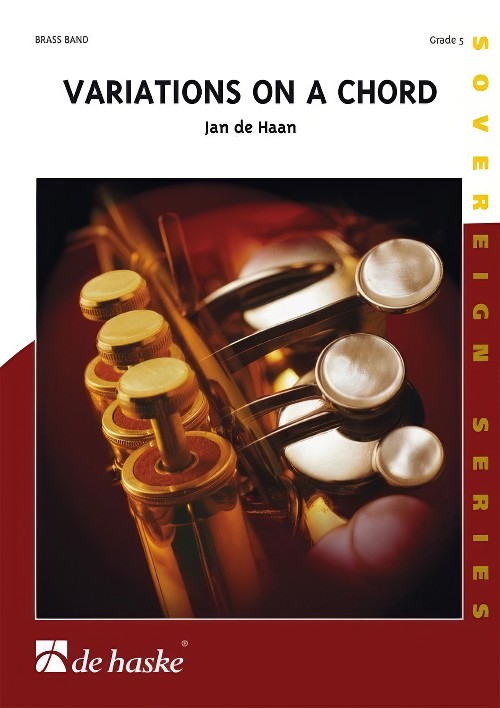
Variations on a Chord (Brass Band - Score and Parts) - De Haan, Jan
Variations on a Chord was composed on the occasion of the second lustrum of the Dutch Brass Band Championships celebrated in 1990. The piece is the immediate sequel to Contrasten a piece which was composed in 1986, and which is performed all over the world. Not only was the final chord of this previous work used as a starting point for the new composition, but Variations on a Chord is also the first concert piece for brass band composed by Jan de Haan since then. The several variations are based on a solemn theme. The so-called minor-major seventh chord is easily detectable. The structure of the piece is such that the lyrical theme is preceded by a majestic introduction, and is followed by eight variations each strongly contrasting in character. The piece finishes in a short but extremely spectacular coda.Duration: 11:45
Estimated dispatch 7-14 working days
-
 £32.95
GRAND MARCH from Aida (Brass Band) - Verdi, Giuseppe - Wright, Denis
Recorded on Polyphonic QPRL060D Master Brass Volume Four (1993 All England Masters), Polyphonic QPRL056D National Brass Band Championships of Great Britain and Gala Concert - 1992
Estimated dispatch 7-14 working days
-
 £76.99
Last Call (Brass Band - Score and Parts)
Last Call was commissioned by and written for Brass Band Ober?sterreich (Austria) as a special concert finale. Austrian composer Otto M. Schwarz was asked to write an encore piece with which the band could really show off. Featuring all the sections of the band in turn, your audience will surely be dazzled by their skills! 05:10
Estimated dispatch 7-14 working days
-
 £24.95
SPACE INVADERS (Brass Band Parts) - Scott, Andy
Brass Band parts only. Space Invaders is an arcade video game designed by Tomohiro Nishikado. Following its release in 1978, the game caused a temporary shortage of 100-yen coins in Japan, and the Guinness World Records ranks it the top arcade game. The piece commences with a fanfare-like passage with shifting time signatures, before settling into a funk-inspired groove, led by the bass section, bass trombone and percussion. An intricate ensemble section, either side of a tongue-in-cheek 'B' section (where Space Invader images and firing sounds were projected behind Foden's at Brass in Concert) all lead to a powerful and tight finish. Dur: 4:00
Estimated dispatch 7-14 working days
-
£15.00
SPACE INVADERS (Brass Band Score) - Scott, Andy
Brass Band score only. Space Invaders is an arcade video game designed by Tomohiro Nishikado. Following its release in 1978, the game caused a temporary shortage of 100-yen coins in Japan, and the Guinness World Records ranks it the top arcade game. The piece commences with a fanfare-like passage with shifting time signatures, before settling into a funk-inspired groove, led by the bass section, bass trombone and percussion. An intricate ensemble section, either side of a tongue-in-cheek 'B' section (where Space Invader images and firing sounds were projected behind Foden's at Brass in Concert) all lead to a powerful and tight finish. Dur: 4:00
Estimated dispatch 7-14 working days
-
£54.99
The Logical Song (Brass Band - Score and Parts)
The Logical Song was written by the lead singer of the famous British pop band Supertramp - a song about a happy, carefree child growing up to become a cynical adult. It was one of the group's biggest worldwide hits. Andr? Waignein's brass band arrangement will be a big hit with all Supertramp fans and may well attract many new fans! 03:40
Estimated dispatch 7-14 working days
-
£14.99
The Logical Song (Brass Band - Score only)
The Logical Song was written by the lead singer of the famous British pop band Supertramp - a song about a happy, carefree child growing up to become a cynical adult. It was one of the group's biggest worldwide hits. Andr? Waignein's brass band arrangement will be a big hit with all Supertramp fans and may well attract many new fans! 03:40
Estimated dispatch 7-14 working days
-
£60.99
Triumphant Intrada (Brass Band - Score and Parts)
This new composition for brass band makes an ideal concert opener. Majestic chords and energetic rhythms hold the listener spellbound and all the instruments in the band are given the opportunity to display their range of beautiful sound colours. 03:00
Estimated dispatch 7-14 working days
-
£44.95
TUBA CONCERTO (Gregson) (Tuba Solo with Brass Band - Score only) - Gregson, Edward
Brass Band Score onlyThis work was commissioned by the Besses o' th' Barn Band with funds provided by the Arts Council of Great Britain. It was written for, and is dedicated to, John Fletcher, who gave the first performance in Middleton Civic Hall, near Manchester, on 24 April, 1976, with Besses o' th' Barn Band conducted by the composer. Another interesting feature about the premire was that it was recorded by BBC Television for an Omnibus programme with Andr Previn as presenter. The concerto exists in three versions: with brass band (1976), orchestra (1978) and wind band (1984).The concerto is in three movements, following the usual, quick-slow-quick pattern: Allegro deciso,Lento e mesto, Allegro giocoso. The first movement has a sonata form shell with two contrasting themes, the first one being rhythmic in character, the second lyrical. There is a reference made in passing to the Vaughan Williams Tuba Concerto, but this merges into the other material in the development section.The second movement begins with a chorale, but after the entry of the tuba it leads to a cantabile theme, softly unfolded by the soloist. The opening chorale passage returns, this time briefly on muted brass, and leads to a middle section which is more chromatic in style and soon builds to a powerful climax, where the opening cantabile theme triumphantly returns. The music subsides, returning to the opening chorale and ending peacefully.The finale is light and breezy in style, and is cast in rondo form. After a brief introduction the tuba announces the main rondo theme, which is dance-like and a little jaunty. There are two episodes: the first a broad sweeping tune, the second a slowish waltz and a little jazz-like. After a virtuoso cadenza reference is made to the very opening of the concerto before the work ends with a triumphal flourish.The Tuba Concerto has established itself as one of the main works in the solo tuba repertoire. It has been performed and broadcast in over 40 countries all over the world. There are currently six commercial recordings of the concerto in its various versions.resolution in C major, pointed by a simple but expansive melody towards which the piece has been heading, and ending in a blaze of joyful colour.Duration: 18 mins
Estimated dispatch 7-14 working days
 View Music