
Results
-
 £55.00
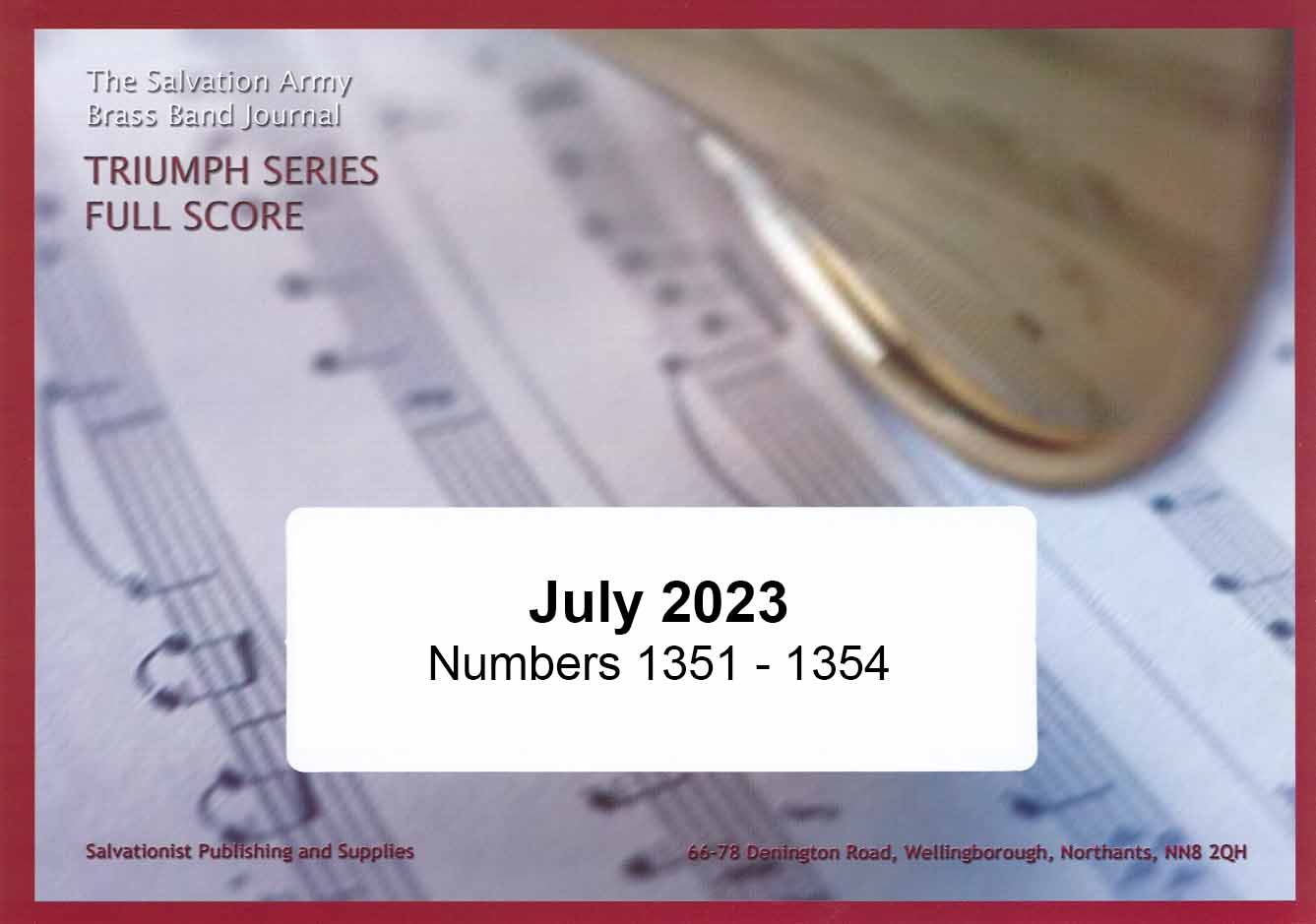
Triumph Series Brass Band Journal, Numbers 1351 - 1354, July 2023
1351: The anointed King (Marcus Venables)This piece was originally written as a massed band item for the Ontario Central-East Divisional Music Day in 2019. The updated version includes two songs, King of kings, majesty (S.A.S.B. 376) and O worship the King (S.A.S.B. 52) to a rhythmic setting of the tune Laudate Dominum (T.B. 481). Both songs present the contrasting characteristics of God; the powerful King and gentle, loving Saviour.1352: A suite of English Christmas carols (Kenneth Downie)This suite is the result of a request for a piece of music featuring exclusively English Christmas carols.The first movement features The holly and the ivy (C.C. 87). In sharp contrast, the second movement calls for a broad, sensitive, song-like approach. Using The cherry tree carol (C.C. 85), a much slower tempo than is normally applied to encourage the listener to see this beautiful tune in a new light. The rumbustious arrival of the finale is based on I saw three ships come sailing in (C.C. 44) with the festive mood prevailing until the end.1353: Nothing but thy blood (Norman Bearcroft)This two-verse setting of Richard Slater's much-loved hymn Nothing but thy blood (S.A.S.B. 769) appears straight-forward in nature, but requires a careful sense of the musical line across all parts.1354: Meditation - Reflections on Advent (Andrew Blyth)Two well-known carols, Away in a manger (C.C. 12) and Silent Night! (C.C. 77) are featured alongside original material. The piece attempts to convey a sense of reflection and meditation on the wonderful and awe-inspiring Advent story.
Estimated dispatch 7-14 working days
-
 £18.00
Es ist ein Ros Entsprungen
DescriptionEs ist ein Ros Entsprungen is sometimes sung to the English words "A Great and Mighty Wonder". This tune to the reformation era German carol first appeared in the Speyer Hymnal in Cologne in 1599. This harmonisation of the tune by Michael Praetorius in 1609, one of his earliest publications. Praetorius was, along with his slightly younger contemporary Heinrich Schutz, the foremost German composer of the day, and became famous for his choral music. Much of this was written for multiple groups positioned around the church and conducted by a central conductor, giving a multi-phonic effect similar to the Venetian music of Gabrieli. Today his most famous music is Terpsichore, a collection of over 300 secular dances.You can follow the preview video of the score below.PercussionPercussion required are timpani and clash cymbals only; if clash cymbals are not available this part should be omitted (rather than played on a suspended cymbal).Mutes2 x solo cornets, second cornets and all trombones will require cup mutes
Estimated dispatch 7-14 working days
-
 £99.95
Carols for Band (Brass Band - Score and Parts)
Designed to be playable by any combination from quartet to full brass band, wind band or orchestra, the arrangements in this book with provide a practical solution to all your carolling needs. Parts are divided into Soprano, Alto, Tenor and Bass so that any suitable instrumentation will sound well, providing an equal balance of players per voice is maintained. The carols are printed in alphabetical order so they are easy to find, and comprehensively indexed under both first line and name of tune.Score, Timpani and Percussion parts are available separately.Instrumentation is as follows: Brass BandWind BandStringsSopranoEb Soprano CornetSolo Bb CornetBb Repiano & Flugel1st Flute & Piccolo2nd FluteOboe1st Bb Clarinet1st Bb Trumpet/Cornet1st ViolinAlto2nd & 3rd Bb CornetSolo Eb Horn1st Bb Trombone2nd & 3rd Bb ClarinetsEb Alto Saxophone2nd Bb Trumpet/Cornet1st F Horn2nd ViolinTenor1st & 2nd Eb Horns1st & 2nd Bb Baritones2nd Bb Trombone1st Bb EuphoniumEb Alto ClarinetBb Tenor Saxophone2nd F Horn1st & 2nd TrombonesViolaBassBass Trombone2nd Bb EuphoniumEb BassBb BassBassoonBb Bass ClarinetEb Baritone SaxophoneBass TromboneEuphoniumTubaCello/BassTitles included:Angels from the Realms of GloryAs with Gladness Men of OldAway in a MangerBrightest and BestChristians AwakeCoventry CarolDeck the HallsDing Dong, Merrily on HighFirst NowellGod Rest ye Merry, GentlemenGood King WenceslasHark the Glad SoundHark, the Herald Angels SingHolly and the IvyI Saw Three ShipsIn Dulci JubiloIn the Bleak Mid-WinterInfant HolyInfant KingIt Came Upon a Midnight ClearJingle BellsLo, He Comes with Clouds DescendingLove Came Down at ChristmasO Come, All ye FaithfulO Come, O Come, EmmanuelO Little Town of BethlehemOf the Father's Love BegottenOnce in Royal David's CitySans Day CarolSee Amid the Winter's SnowSilent NightSussex CarolThou Didst Leave Thy ThroneUnto Us is Born a SonWe Wish You a Merry ChristmasWhile Shepherds WatchedThe Brass Band Set consists of 25 Parts:1 x Eb Soprano Cornet4 x Solo Bb Cornet2 x Bb Repiano & Flugel4 x 2nd & 3rd Bb Cornet1 x Solo Eb Horn2 x 1st & 2nd Eb Horn2 x 1st & 2nd Bb Baritone1 x 1st Bb Trombone1 x 2nd Bb Trombone1 x Bass Trombone1 x 1st Bb Euphonium1 x 2nd Bb Euphonium2 x Eb Bass2 x Bb Bass
Estimated dispatch 7-14 working days
-
 £33.62
Men of Harlech (Brass Band) Welsh Traditional arr. Alex McGee
This contemporary take by Alex McGee on the Welsh folk song Men of Harlech will be an entertaining addition to concert programmes. The arranger writes: 'Men of Harlech is perhaps one of the most well known of all traditional Welsh folk songs, but not like this. This setting was inspired by a composer who I first encountered as a 14-year-old playing in his first regional brass band, Gareth Wood. Upon learning of the death of Gareth I felt compelled to honour his memory and his music in composition. I struck upon the idea to do what he had done to the tune Sosban Fach to Men of Harlech, to take the tune as the raw material and try to craft it into something new yet recognisable, modern yet accessible. The work attempts to highlight what for me are the underlying characteristics of we Welsh; prone to melancholy but quick to find joy, contradictory, inviting, welcoming and warm but capable of housing a fierce streak of nationalistic pride. I dedicate this work to Gareth Wood and thank him for his music.' To view a rolling score video of the work please visit: https://www.youtube.com/watch?v=YSoZnpnhEjQ Duration: 3.30 minutes Difficulty Level: 3rd Section + PDF download includes parts and score. Sheet music available from www.brassband.co.uk Instrumentation: Soprano Cornet Eb Solo Cornet Bb Repiano Cornet Bb 2nd Cornet Bb 3rd Cornet Bb Flugel Horn Bb Solo Horn Eb 1st Horn Eb 2nd Horn Eb 1st Baritone Bb 2nd Baritone Bb 1st Trombone Bb 2nd Trombone Bb Bass Trombone Euphonium Bb Bass Eb Bass BbTimpani Percussion 1-2
In Stock: Estimated dispatch 1-3 working days
-
 £34.95
Aristotle's Air - Christopher Bond
The Ancient Greeks believed that there were four elements that everything was made up of: earth, water, air and fire. This theory was suggested around 450 BC, and was later supported and added to by Aristotle. The idea that these four elements - earth, water, air and fire - made up all matter was the cornerstone of philosophy, science, and medicine for two thousand years. Air was considered a 'pure' element, but in fact the air that's all around us is made up of a variety of gasses. Of course, in music, air has a different meaning; a beautiful song-like melody or tune and Aristotle's Air is just that. The work was commissioned by and written for The Cory Band as part of their winning 2015 Brass in Concert programme 'The Four Elements of the Universe', being premiered at the contest at The Sage, Gateshead, on 15th November 2015. The work was awarded the Cyril Beere Memorial Trophy for the Best New Composition or Arrangement.
Estimated dispatch 10-14 working days
-
 £29.95
Salvation Army Classics 5-8 for Small Ensemble
Salvation Army Classics arranged for Smaller Ensembles Series 5 - 8March - Mighty to SaveMeditation - HyfrydolHymn Tune Setting - ColneHymn Tune Arrangement - My All is on the Altar This series features pieces that have been rescored for Unity Series (five-part) scoring.PART I 1st Cornet BbPART II 2nd Cornet Bb and 1st Horn EbPART III 2nd Horn Eb and Baritone or Trombone BbPART IV Euphonium BbPART V Bass Eb and Bass BbThese transcriptions have been carried out in such a way to facilitate the addition of any original parts that may be available.Where relevant, suggestions are made for a variation in tone colour (i.e. 2nd Cornet, Flugel, Baritone, Trombone) as well asthe occasional opportunity for rest.
Estimated dispatch 7-14 working days
-
 £34.95
Aristotles Air (Brass Band - Score and Parts)
The Ancient Greeks believed that there were four elements that everything was made up of: earth, water, air and fire. This theory was suggested around 450 BC, and was later supported and added to by Aristotle. The idea that these four elements - earth, water, air and fire - made up all matter was the cornerstone of philosophy, science, and medicine for two thousand years.Air was considered a pure element, but in fact the air that's all around us is made up of a variety of gasses. Of course, in music, air has a different meaning; a beautiful song-like melody or tune and Aristotle's Air is just that.The work was commissioned by and written for The Cory Band as part of their winning 2015 Brass in Concert programme The Four Elements of the Universe, being premiered at the contest at The Sage, Gateshead, on 15th November 2015. The work was awarded the Cyril Beere Memorial Trophy for the Best New Composition or Arrangement.
Estimated dispatch 7-14 working days
-
£44.95
CHRISTUS VICTOR (Brass Band Set) - Kenneth Downie
This is a glorious selection of music to celebrate the supreme victory of Jesus Christ. The predominant theme of 'Crown Him!' comes from the Thomas Kelly hymn 'Look, ye saints! The sight is glorious' which are associated with Henry Smart's tune 'Regent Square'. Also featured are Andre Crouch's song 'Soon and very soon' as well as Dave Bilborough's 'All hail the lamb'. In the final pages of the score, all three tunes come together in a statement of affirmation.
Estimated dispatch 7-14 working days
-
 £44.95
Judd: Christus Victor
This is a festive selection of music to celebrate the supreme victory of Jesus Christ. The predominant theme of 'Crown Him!' comes from the Thomas Kelly hymn 'Look, ye saints! The sight is glorious' which are associated with Henry Smart's tune 'Regent Square'. Also featured are Andre Crouch's song 'Soon and very soon' as well as Dave Bilborough's 'All hail the lamb'. In the final pages of the score, all three tunes come together in a statement of affirmation.
Estimated dispatch 7-14 working days
-
 £125.00
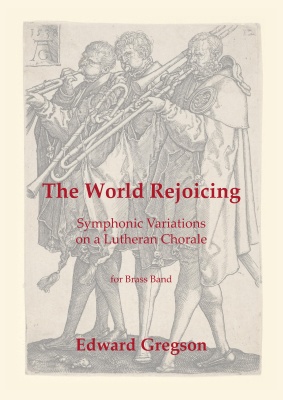
The World Rejoicing (Brass Band - Score and Parts)
The World Rejoicing was commissioned by the National Brass Band Associations of Belgium, Netherlands, Norway, Switzerland, and the British Open, as the test piece for their competitions in 2020/21. Although the work was completed in 2019, the pandemic of 2020 meant that these competitions were postponed until 2021/22. The premiere took place in September 2021 at Symphony Hall, Birmingham, UK.In searching for a common link between the brass band traditions of the various European countries that commissioned this work, I considered the fact that hymns have always played an important role in the relationship that brass bands have with their particular communities; and thus I turned to a well- known Lutheran chorale, Nun danket alle Gott (Now thank we all our God), written around 1636 by Martin Rinkart, with the melody attributed to Johann Cruger. A number of composers have incorporated this chorale into their music, most famously J.S. Bach in his Cantatas no. 79 and 192, and Mendelssohn in the Lobsegang movement of his 2nd Symphony (the harmonisation of which is usually used when this hymn is sung).It seemed fitting therefore for me to return to a compositional form I have used many times before (Variations) and to write a work based on this hymn. I have used it in a similar way to that which I employed in my Variations on Laudate Dominum of 1976 - that is, rather than writing a set of variations using elaborations of the complete tune, I have taken various phrases from the chorale and used them within the context of other musical material, applying an overall symphonic process of continuous variation and development. The structure, or sub-divisions of the work, which is through composed and plays without a break, is as follows:Prelude, Capriccio, La Danza 1, Processional, La Danza 2, Arias and Duets, Fuga Burlesca, Chorale, and Postlude.The work, which is around 16 minutes in length, is also partly autobiographical - in the manner say of Strauss's Ein Heldenleben - in that I have incorporated into the score brief quotations from many of my other major works for brass band. In that respect, The World Rejoicing sums up a particular facet of my life as a composer, and reflects the admiration I have always had for what is surely one of the great amateur music-making traditions in the world.Duration: 16.00
Estimated dispatch 7-14 working days