
Results
-
Tiger In The Night - Mike Batt - Len Jenkins
"Tiger in the Night" is a song made popular by Colin Blunstone and Katie Melua, and takes its inspiration from the poem by William Blake.It features in the soundtrack of the 1997 film 'Keep the Aspidistra Flying' which was based on the 1936 book by George Orwell. The title of the book is a reference to 'Keep the Red Flag Flying' but applied to the stuffiness of the British Middle Class. The music for the film was composed by Mike Batt who was also responsible for "The Wombling Song" and "Wombling Merry Christmas" which we also publish for brass.
-
£32.00
Hark the Herald Angels Sing - Traditional - Broadbent, D
Hark! The Herald Angels Sing is one of the most celebrated Christmas carols. The song joyfully proclaims the birth of Jesus and the message of peace on Earth, inviting all to join in the heavenly celebration. With its triumphant melody and uplifting lyrics, it has become a cornerstone of Christmas worship and festive performances, capturing the grandeur and jubilation of the holiday season.Part of Derek Broadbent's Showcase Carol Collection
In Stock: Estimated dispatch 1-3 working days
-
 £77.00
General Series Brass Band Journal, Numbers 2269 - 2272, August 2026
2269: Intrada - Christians Awake (Stephen Gibson)This intrada heralds the happy morning when Christians celebrate the birth of Jesus. Fanfares surround the traditional Christmas Day hymn, Christians Awake (C.C. 20), where we are encouraged to 'awake, salute the happy morn'. Written in a processional style, this music was composed as a concert opener to be performed in a large church setting.2270: Jesus loves me (Stanley Kelley)Jesus loves me! (S.A.S.B. 807) is a song many church-goers learn as children. While written for children, its message is for everyone. John 15:9 says, 'As the Father has loved me, so have I loved you.'2271: Prelude on 'Deep Harmony' (Geoffrey Nobes)This piece was written for the Blendworth Band of Hampshire. The hymn tune, by Handel Parker, is one of the most beautiful and iconic melodies ever written, with lovely harmony supporting the rise and fall of a simple but perfect melodic line.2272: To the hills (Paul Sharman)The inspiration for this arrangement came during a walking holiday in the Lake District. Looking towards the hills brought to mind the words of Psalm 121 and Ernest Rance's setting of that passage, I Lift Up My Eyes (S.A.S.B. 208), with its lovely tune Ochills. This arrangement was written shortly after the composer's return home.
Estimated dispatch 7-14 working days
-
 £45.00
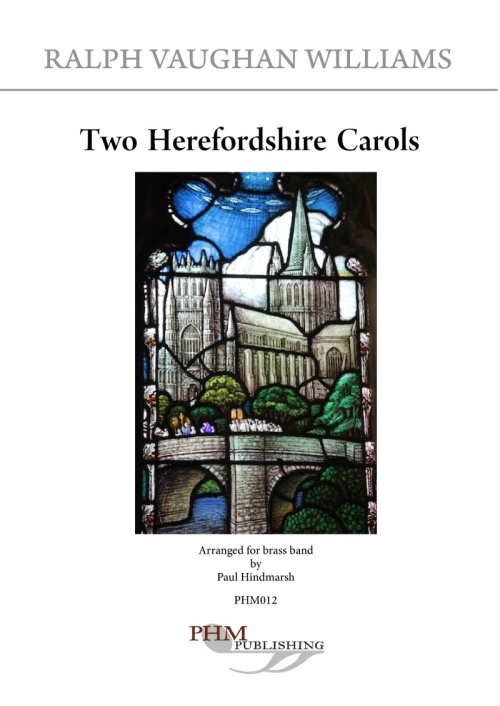
Two Herefordshire Carols (Brass Band - Score and Parts)
The two traditional tunes that comprise this straightforward setting were sung to Ralph Vaughan Williams (1872-1958) by Mrs. Esther Smith of Dilwyn, near Hereford, during one of the great composer's folk song collecting tours of England in the early years of the twentieth century. They were included in Twelve Traditional Carols from Herefordshire, edited by E.M. Leather and Vaughan Williams. The words to which Mrs. Smith sung the first tune were probably drawn from eighteenth century evangelical sources. The editors replaced these with six of the 16 verses of a traditional seventeenth century carol text, Joseph and Mary.The second melody, which appears as the centre piece of this arrangement, was sung to a carol that tells of a farmer who ploughed on Christmas Day. It is in fact a translation of a German traditional carol Gelobet seist du Jesu Christ that was published in Goodly Psalmes and Spiritualle Songes (1546) translated by Miles Coverdale. Vaughan Williams used the title Coverdale's Carol.The brass band settings follow the settings made by Vaughan Williams in 1920 for the Oxford Book of Carols. Since his simple harmonic approach is similar in both settings, three verses of his haunting version of Coverdale's Carol have been folded inside four verses of the slightly more animated treatment of Joseph and Mary. The harmonisations of Vaughan Williams have been given some brass band colour, with some verses taken by soloists from the ensemble. The accompaniment figuration that embellishes the second verse of Joseph and Mary has been used to open and close this arrangement and to bind the verses together.- Paul HindmarshDuration: 5.00
Estimated dispatch 7-14 working days
-
 £38.95
Unity Series Band Journal - Numbers 478 - 481, June 2019
478: March - Seize the day (Andrew Mair)This march features the tunes God's love is wonderful (T.B. 130) and Everybody should know, and makes reference to Rescue the perishing (T.B. 808) and the chorus Able to save (T.B. 538)479: Jingle bells jazz! (Richard Phillips)The familiar strains of Jingle Bells (C.C. 121) have featured in Salvation Army music countless times over the years (perhaps more than any other non-religious song), whether as the main theme, countermelody, or as a derived frament or motif. This is an attractive laid-back jazz setting of the tune.480: Poor, wayfarin' stranger (Thomas Mack)This arrangement of the Spiritual depicts a poor wayfarin' stranger's journey through life using a minor key and a slow walking style.481: Selection - No crib for a bed (Charles Craig)This simple setting reminds us that, amidst the joy and exuberance that often accompanies the Christmas season, Jesus' birth was a very humble event.
Estimated dispatch 7-14 working days
-
£67.00
Mary, Did You Know? - Green-Lowry - John Philip Hannevik
Mark Lowry wrote the lyrics for Mary, did you know in 1984, but the melody was created in 1991, when Marks colleague and friend Buddy Greene composed what turned out to be a modern Christmas Classic.Since then, the song has been recorded by numerous artists from all over the world.
Estimated dispatch 7-14 working days
-
£72.00
Spikke-sage-lime-banke (Fra "Putti Plutti Pott og Julenissens skjegg") - Per Asplin - Haakon Esplo
The popular children's musical Putti Plutti Pott og Julenissens skjegg ( Plutti Plutti Pott and Santa Claus' beard) was composed by Per Asplin in 1969. It tells the story of the little boy Plutti Plutti Pott who travel to Uncle Per, Petter and Caroline with the magical beard of Santa Claus.The musical was released both as a novel, on recorings and an television version was made in 1970. The stage version from 1987 is still very popular in Norway with many sell-out shows before Christmas each years..The funny song "Spikke-Sage-Lime-Banke" which means whittle, saw, glue and knock, may be more known to many listeners as Vi ma finne skjegget ("We Must Find The Beard").
Estimated dispatch 7-14 working days
-
 £54.99
Stop the Cavalry (Brass Band - Score and Parts)
Stop the Cavalry is a song about a British soldier at the front line whowrites a fictional letter to "Mr Churchill", begging him to send the armyhome because he'd prefer to spend Christmas with his darling. Thisrelaxed anti war song with a generous touch of British humour willcertainly help your band make a successful start or end to any concert. 03:00
Estimated dispatch 7-14 working days
-
 £45.00
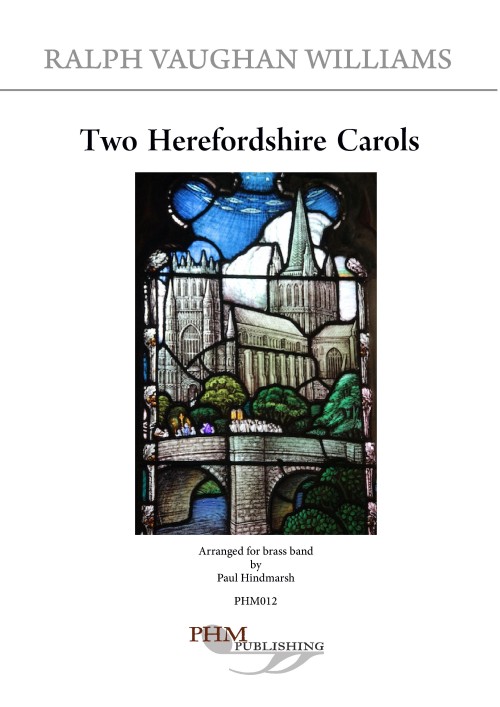
Two Herefordshire Carols (Brass Band - Score and Parts) - Vaughan Williams, Ralph - Hindmarsh, Paul
The two traditional tunes that comprise this straightforward setting were sung to Ralph Vaughan Williams (1872-1958) by Mrs. Esther Smith of Dilwyn, near Hereford, during one of the great composer's folk song collecting tours of England in the early years of the twentieth century. They were included in Twelve Traditional Carols from Herefordshire, edited by E.M. Leather and Vaughan Williams. The words to which Mrs. Smith sung the first tune were probably drawn from eighteenth century evangelical sources. The editors replaced these with six of the 16 verses of a traditional seventeenth century carol text, Joseph and Mary.The second melody, which appears as the centre piece of this arrangement, was sung to a carol that tells of a farmer who ploughed on Christmas Day. It is in fact a translation of a German traditional carol Gelobet seist du Jesu Christ that was published in Goodly Psalmes and Spiritualle Songes (1546) translated by Miles Coverdale. Vaughan Williams used the title Coverdale's Carol.The brass band settings follow the settings made by Vaughan Williams in 1920 for the Oxford Book of Carols. Since his simple harmonic approach is similar in both settings, three verses of his haunting version of Coverdale's Carol have been folded inside four verses of the slightly more animated treatment of Joseph and Mary. The harmonisations of Vaughan Williams have been given some brass band colour, with some verses taken by soloists from the ensemble. The accompaniment figuration that embellishes the second verse of Joseph and Mary has been used to open and close this arrangement and to bind the verses together.- Paul HindmarshDuration: 5.00
Estimated dispatch 7-14 working days
-
 £59.99
Ukrainian Bell Carol (Brass Band - Score and Parts) - Leontovych, Mykola Dmytrovich - Sparke, Philip
The Ukrainian Bell Carol is part of a large choral work entitled Shchedryk by the Ukrainian composer Mykola Dmytrovich Leontovych (1877-1921). The tune is an adaptation of an old 'shchedrivka', a song traditionally sung on Ukrainian New Year's Eve (January 13th) which hopes for good fortune in the year to come. The tune has since been the inspiration for at least four different Christmas carols, of which Carol of the Bells is the most famous. Philip Sparke has sourced the original Ukrainian melody to create this stirring arrangement.Duration: 3:00
Estimated dispatch 7-14 working days
 View Music