
Results
-
 £115.60
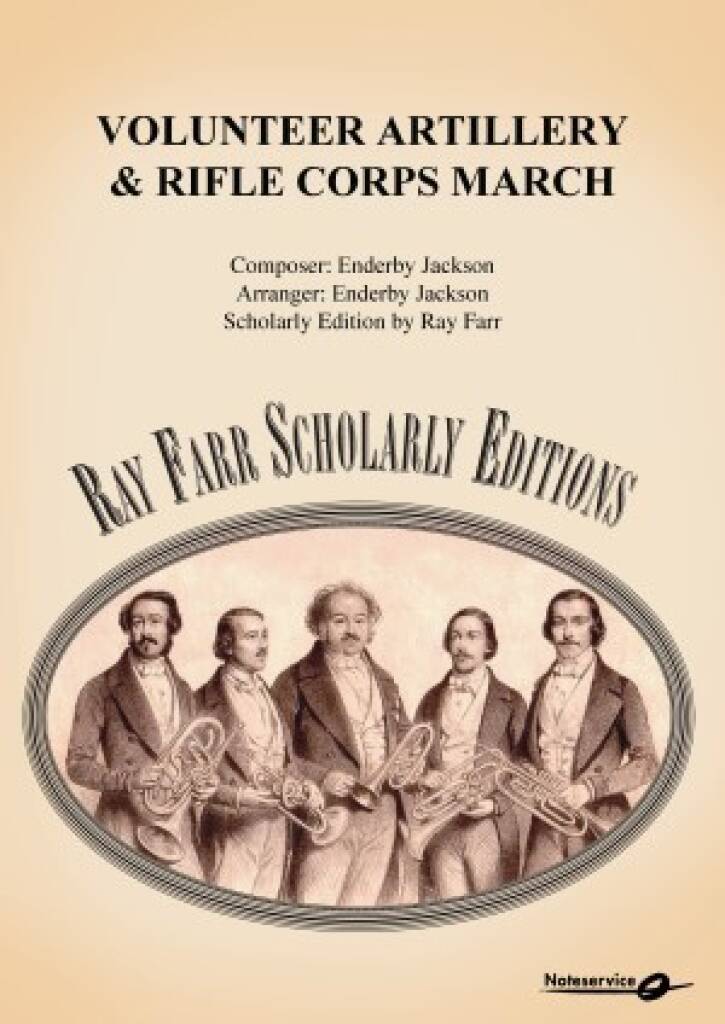
Voluntary Artillery & Rifle Corps March - Endeerby Jackson - Ray Farr
The march was written by Enderby Jackson and performed during a series of brass band events which took place at the Crystal Palace, London 1860 - 1863. Enderby Jackson was the organiser of these historically important events, and also conducted the massed band concerts. The Volunteer Force was a part-time, citizen army created in May 1859 by the British government as a result of increasing tensions between Britain and France. By 1862 more than 200,000 men had enlisted and were paid when on duty however, each member of the corps had to provide his own weapon and equipment.Some of the volunteer corps had bands which normally numbered between six and twelve players plus percussion1 and these bands became an important stimulant to the development of brass band.2 The corps were heavily subsidised by the government and considerable funding was spent on the bands3 which were often local brass bands. These bands were often provided with rehearsal rooms, instruments and uniforms,4 furthermore, the volunteer movement created and saved many brass bands.5Most of the musicians performing at the Crystal Palace Contests were affiliated to the Volunteer Force.
Estimated dispatch 5-14 working days
-
 £154.60
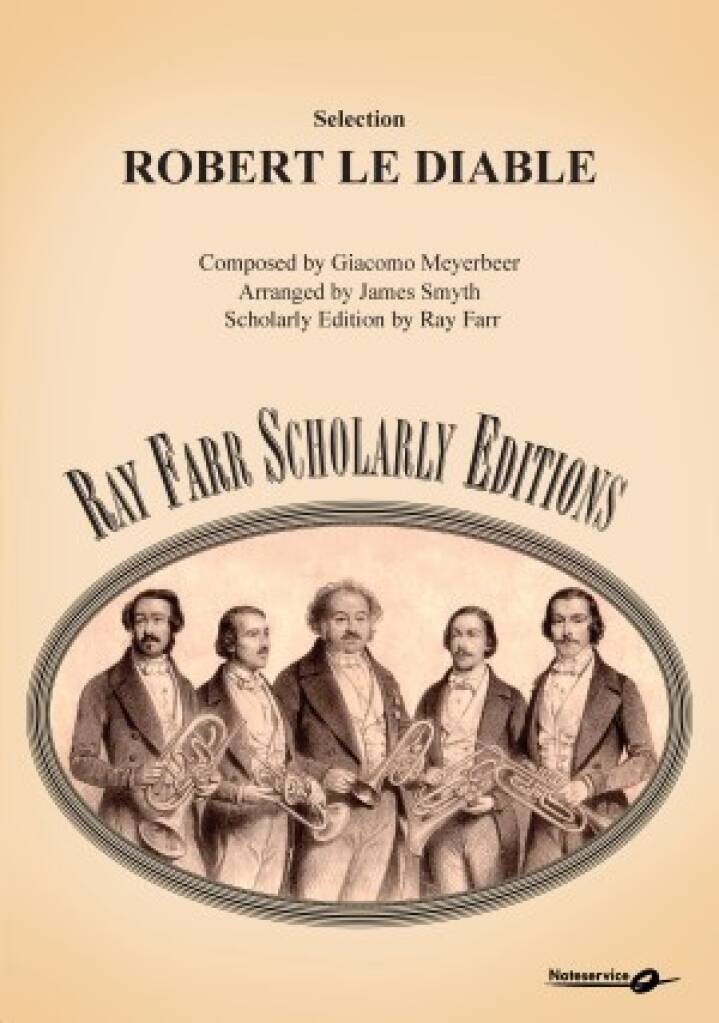
Selection Robert Le Diable - Giacomo Meyerbeer - Ray Farr
This Selection from Giacomo Meyerbeers opera Robert le Diable was arranged by James Smyth. Enderby Jackson commissioned the arrangement which was used as the test piece for the third National Brass Band Contest held at the Crystal Palace, London in 1862.The purpose of this scholarly edition is to produce a performing version, clearing ambiguities and errors, that can be enjoyed by today's performers and listeners, bearing in mind the original function and context. At the same time the edition is an analytical, musicological study of one of the rare treasures of the brass band repertory.
Estimated dispatch 5-14 working days
-
£105.20
Marche pour la ceremonie des Turcs - Jean-Baptiste Lully - Haakon Esplo
Jean-Baptiste Lully (1632-1687) moved from Italy to Paris and started as a kitchen boy. Alongside he also composed music and was a dancer and actor. He soon became leader of the court orchestra, and wrote music for the parties at the court. At aconcert in 1687 he hit his foot with his conductor pole, got gangrene in the wound and died three months later. Lully is the first known composer of French baroque operas and had great influence on the development of the European musictowards the end of the 1600s.Turkish march is used in the 1991 movie "All the mornings of the world" (Tous les matins du monde) starring Gerard Depardieu. The action takes place in France in seventeenthcentury where we follow the relationshipbetween the viol player Marin Marais and his mentor Sainte Colombe.
Estimated dispatch 5-14 working days
-
 £105.20
Vise ved vintersolkverv - Tore Bruvoll - Haakon Esplo
The beautiful song "Song at Winter Solstice" has within short time been highly loved by listeners all around Norway. It's performed by folk-rock band "Hekla Stalstrenga" who released their first album "Hekla Stalstrenga" in 2008. This album was nominated for "Spellemansprisen" (the Norwegian equivalent to Grammy) in the folk music / traditional music category. "Song at Winter Solstice" was released as single record in 2013.
Estimated dispatch 5-14 working days
-
 £271.60
Aubade - Dawn Songs of the Fabulous Birds - Torstein Aagaard-Nilsen
Commissioned by The Norwegian Band Federation for The European Brass Band Championship 2003, in Bergen, Norway (Third edition) I remember as a kid the very early morning wake-up ceremonies caused by Seagulls having a "party" outside our home. Very few would describe it as beautiful, particularly not at 4:30 in the morning... But by listening carefully to birds I was fascinated by their diversity and musical language: they dont sing tunes or long phrases, they rather make sounds and signals, based on short motives. Aubade is based on musical pictures of the imaginary birds: the creatures with wings that exists only in myths and legends. The whole story starts with aBaritone-cadenza that evoke all the sleeping creatures. Very soon they all start to sing their songs in one way or another. The composition has a burlesque scherzo-character including slow espressive intersections. Traditional elements like melody and harmony is combined with extensive sounds and textural effects created by use of multiple muting, singing and playing at the same time. I am not too concerned about having a program for the piece. I just know that by thinking of the unheard dragon-songs, griffin-songs, the sound of the dodo, my creativity was stimultated. As a piece of music, Aubade follows its own rules based on well-known elements like melodies, arpeggio-figures, harmonies, rhythms, variations and recapitulation of ideas. - Torstein Aagaard-Nilsen
Estimated dispatch 5-14 working days
-
 £332.70
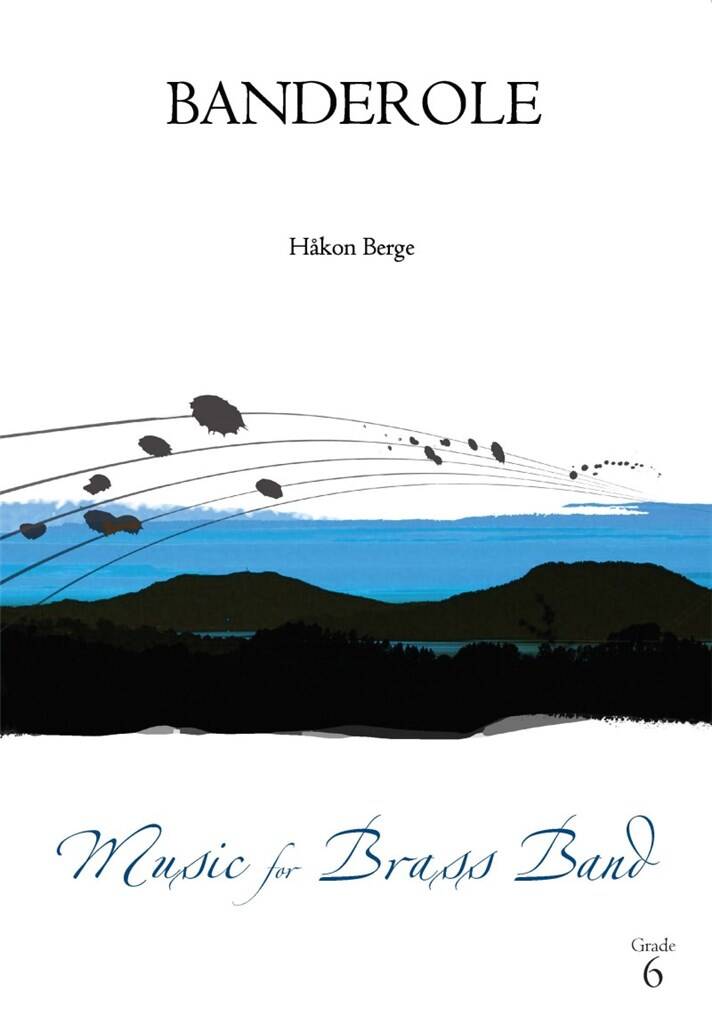
Banderole - Håkon Berge
Hakon Berge (born 22 April 1954 in Stavanger) is a Norwegian composer, conductor, arranger and music administrator, resident in Oslo. He studied at the Rogaland Conservatoire and at the Norwegian State Academy of Music. Berge has composed music for theatrical productions in venues such as the Rogaland Theatre, The National Theater in Bergen and the National Theatre in Oslo. He is also experienced in television production and was responsible for televised opera Gagarin - A Space Travel Opera(1991). He has composed a considerable number of commissions, including the music for the opening of the Alexandria Library, music for the opening of the Nobel Peace Centre in Oslo, and the testpiece Brass Blot (for the European Brass Band Championships in Stavanger in 2008, in which Cory Band from South Wales won the first prize. Berge has also written the music to the documentary musical Byterminalen, also described as a rock opera, which was premiered in May 2008 in connection with the celebration of Stavanger as European City of Culture. Hakon Berge has held a number of offices in the musical life of Norway: he has been chairman both of the Norwegian Society of Composers and of TONO, the Norwegian performing rights organization.
Estimated dispatch 5-14 working days
-
 £127.30
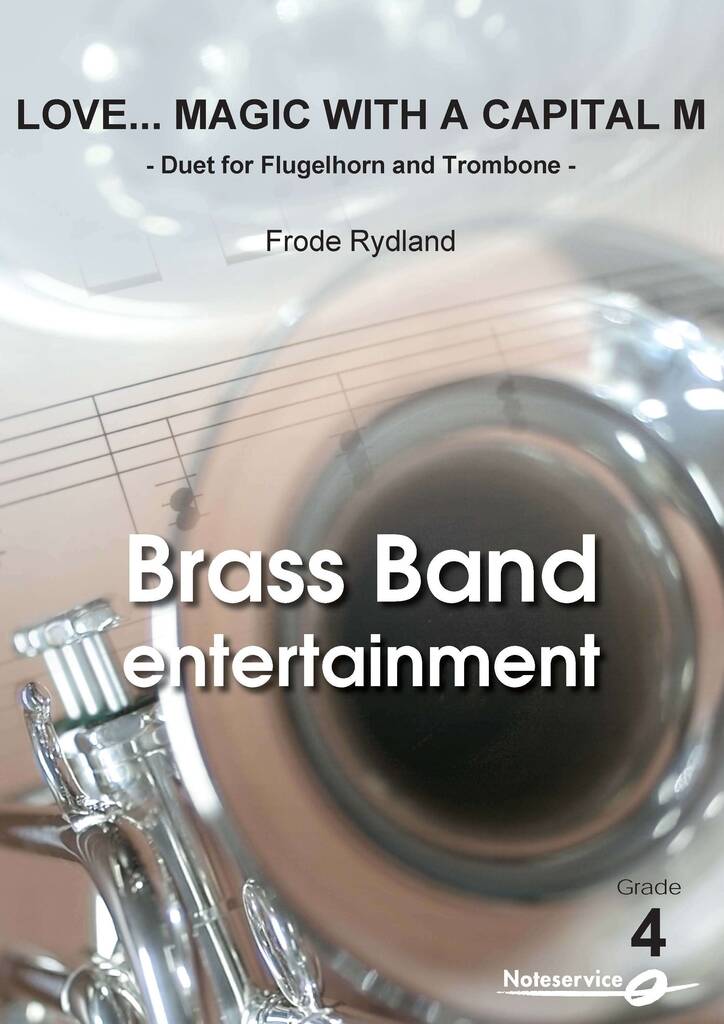
Love? Magic With a Capital M - Frode Rydland
Imagine an extravagant magic show at Caesar's Palace in Las Vegas. All shows like this feature great superstars as guest artists. For instance, it can be Celine Dion and Josh Groban who enters the stage for a duet...Love... Magic with a capital M is a ballad for an imaginary magic show where the great stars are flugelhorn and trombone.A bit different stage setup, a bit of choreography, a bit of singing and a lot of sweet music!The Choir parts are intended to be sung by the band. But if your concert features a choir, you may add the choir to this performance.This music was written for Norwegian band Eikanger-Bjorsvik Musikklag for their winning program "MAGIC!", performed at the Norwegian equivalent to Brass in Concert, Siddis Brass in 2019.
Estimated dispatch 5-14 working days
-
 £115.60
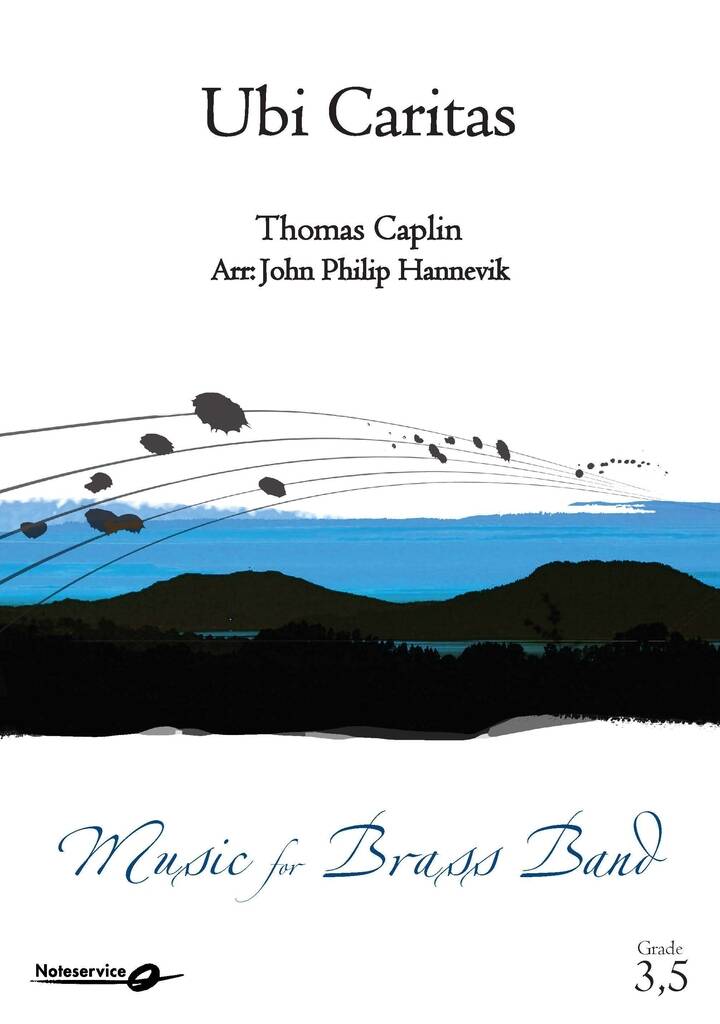
Ubi Caritas - Thomas Caplin - John Philip Hannevik
Thomas Caplin is a Swedish professor of choral conducting. He works at the Inland Norway University of Applied Sciences in Hamar. He composed this beautiful opus for choir based on the ancient text Ubi caritas.The text is often used during Maundy Thursday, describing Jesus washing the feet of his disciples: Where charity and love are, there God isIn this arrangement, a smaller group of players are soloists. The arrangement will work well if the group can be placed on a gallery or at the back of the concert hall.
Estimated dispatch 5-14 working days
-
 £115.60
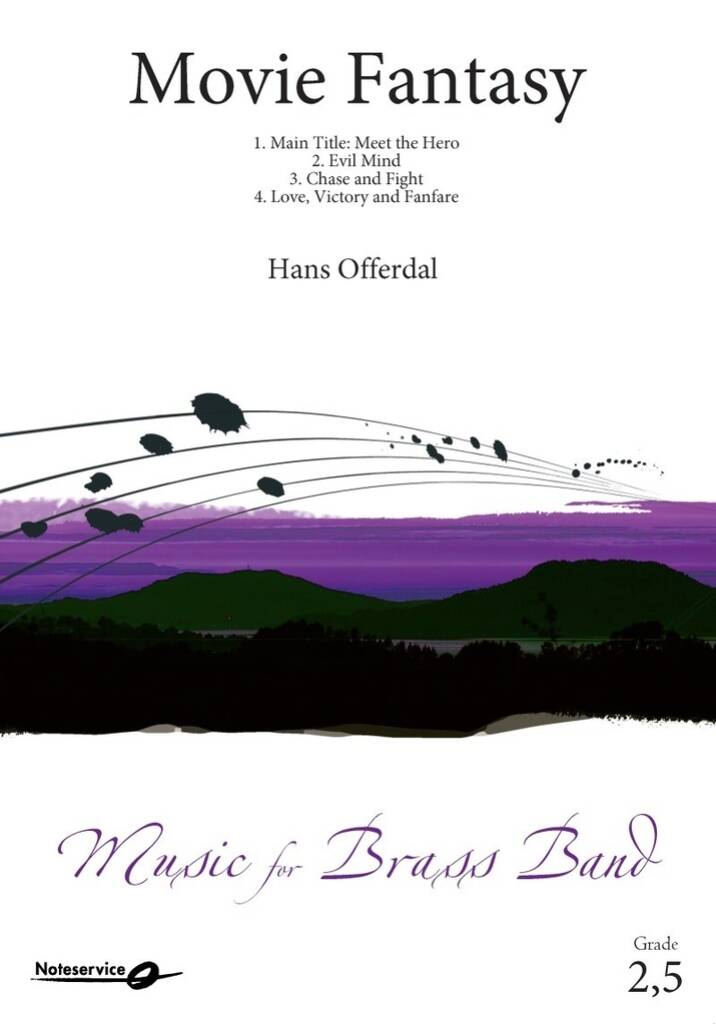
Movie Fantasy - Hans Offerdal
Movie Fantasy is a film music fantasy in four movements.In the first movement we meet the hero of our story. He is a strong man who fights for justice. Thefollowing movement introduces us to the bad guy with his evil mind and vicious plan to destroy our hero.In the third movement they chase each other and end up in a huge fight. They knock each other out and liestill on the ground. Which one of them will survive?In the final movement our hero wakes up at the hospital the very next morning with his girl friend at hisside. He realises that he won the fight and the bad guy is set in jail. His girlfriend embraces him and thecamera moves back. End credits roll as the piece closes with a fanfare.Each movement can also be played separately.
Estimated dispatch 5-14 working days
-
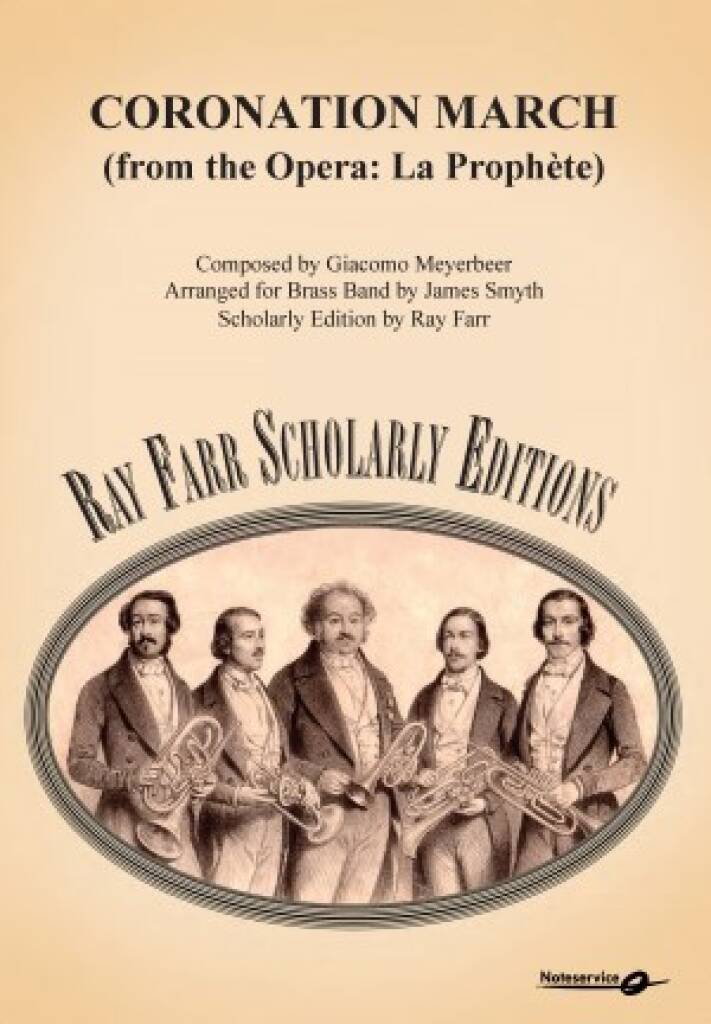 £115.60
Coronation March - Giacomo Meyerbeer - Ray Farr
This Coronation March is from the opera Le Prophete (The Prophet) by Giacomo Meyerbeer and was arranged for brass band by James Smyth. The march was performed during a series of brass band events which took place at the Crystal Palace, London 1860 - 1863. Enderby Jackson was the organiser of these historically important occasions and also conducted the massed band concerts.The purpose of this scholarly edition is to produce a performing version, clearing ambiguities and errors, that can be enjoyed by today's performers and listeners, bearing in mind the original function and context. At the same time the edition is an analytical, musicological study of one of the rare treasures of the brass band repertory.
Estimated dispatch 5-14 working days
 View Music