Searching for Wind Band Music? Visit the Wind Band Music Shop
We've found 399 matches for your search. Order by

Results

  • £37.06

    Polonaise from 'Scenes de Ballet' (Brass Band) Glazunov arr. Rob Bushnell

    Alexander Glazunov was a Russian composer who was a gifted musician from childhood. He was seen as the natural heir to the nationalist revolution that had started with the Mighty Handful. Despite quickly turning from this to absolute forms of music, taking a keen interest in ballet music, his compositions still alludes to Russian folk tunes. He wrote four dance compositions, of which Scenes de Ballet was the first in 1894. The suite Scenes de Ballet, opus 52 has eight movements and was dedicated to the orchestra of the Russian Opera, St Petersburg. First performed in 1895 at a concert of the Imperial Music Society with Glazunov conducting. This arrangement of the final movement is for the British-style brass band, with alternative parts for horns in F and bass-clef lower brass. A recording of the original composition can be found here: https://www.youtube.com/watch?v=BS-Yx-bmxPg Duration: approx. 5.20 minutes Difficulty Level: 2nd Section + PDF download includes parts and score. Sheet music available at www.brassband.co.uk (UK) or www.cimarronmusic.com (USA) Instrumentation: Soprano Cornet Eb Solo Cornet Bb Repiano Cornet Bb 2nd Cornet Bb 3rd Cornet Bb Flugel Horn Bb Solo Horn Eb 1st Horn Eb 2nd Horn Eb 1st Baritone Bb 2nd Baritone Bb 1st Trombone Bb 2nd Trombone Bb Bass Trombone Euphonium Bb Bass Eb Bass Bb Timpani Percussion 1 - Snare Percussion 2 - Triangle, Cymbal & Bass Drum

    In Stock: Estimated dispatch 1-3 working days
  • £37.06

    A Fugal Overture (Brass Band) Gustav Holst arr. Rob Bushnell

    A Fugal Overture was written in 1922 by Gustav Holst. It was first performed at the Royal Opera House, Covent Garden on 14 May 1923 and was used as an opening work to Holst's one-act opera The Perfect Fool. It received its concert premiere on 11 October 1923 at one of Henry Wood's Queen's Hall Promenade Concerts. It is an early example of neoclassicism and was influenced by the counterpoint of J. S. Bach, despite its unconventional use of the fugal process. Holst began writing the piece in the summer of 1922, having hoped to develop it into a ballet. It is divided into three sections, the fugal subject with its distinct 3+3+2 pattern, a slower section with solos at the end, and a third section where the subject returns. Although reviews of the piece were mixed at the time of its premiere, the likes of Adrian Boult have said it was "an invigorating work that could effectively start any [...] concert". In more recent years, it has been compared to John Adam's A Short Ride in a Fast Machine. This arrangement is for the British-style brass band, with alternative parts for horns in F and bass-clef lower brass. A recording of the original composition can be found here: www.youtube.com/watch?v=a8xfwJyFq2E. Duration: Approx. 5.40 minutes Difficulty Level: 1st Section + PDF download includes parts and score. Sheet music available from www.brassband.co.uk Instrumentation: Soprano Cornet Eb Solo Cornet Bb Repiano Cornet Bb 2nd Cornet Bb 3rd Cornet Bb Flugel Horn Bb Solo Horn Eb 1st Horn Eb 2nd Horn Eb 1st Baritone Bb 2nd Baritone Bb 1st Trombone Bb 2nd Trombone Bb Bass Trombone Euphonium Bb Bass Eb Bass BbTimpani Percussion 1-2

    In Stock: Estimated dispatch 1-3 working days
  • £37.06

    Whodunnit? Murder Mystery for Brass & Percussion (Brass Band) Karl Whelan

    The composer writes: 'One of my all time favourite films is Clue (1985) based on the board game of the same name (Cluedo, if you're from the UK). Clue follows the night of six guests who are invited to a mansion for dinner. The host, Mr. Boddy is murdered, and the guests must work together to find the killer before any more lives are lost. I implore you to give it a watch if you haven't already, even if it's just for Tim Curry's magical performance as The Butler. Running at 82 minutes, the film is over before you know it. I wanted to create a similar story here with Whodunnit?, which like it's inspiration, Clue, moves at an incredible pace as it follows a dinner party, to which our guests have been invited. This work is rather dark throughout and full of intentional cliches, for which, I make no apology!' To view a rolling score video please visit www.youtube.com/watch?v=hdviJUrCvOE Sheet music available from: UK - www.brassband.co.uk USA - www.cimarronmusic.com Difficulty Level: 2nd Section + Length: 6.00 minutes Instrumentation: Soprano Cornet Eb Solo Cornet Bb Repiano Cornet Bb 2nd Cornet Bb 3rd Cornet Bb Flugel Horn Bb Solo Horn Eb 1st Horn Eb 2nd Horn Eb 1st Baritone Bb 2nd Baritone Bb 1st Trombone Bb 2nd Trombone Bb Bass Trombone Euphonium Bb Bass Eb Bass Bb Timpani Percussion 1 (Suspended Cymbal**, Shaker, Drum Kit, Vibraslap) Percussion 2 (Bass Drum, Suspended Cymbal**, Wood Blocks, Tam-tam) Percussion 3 (Glockenspiel, Xylophone, Tubular Bells, Vibraphone) * Doubling on Trumpet (if possible) ** Shared

    In Stock: Estimated dispatch 1-3 working days
  • £22.00

    Clarion Alarum (Score & Parts) - Simon Dobson

    Clarion Alarum: Fanfare No.1 for Brass Band is a short fanfare for brass band, contrasting the brilliance of the sound of cornets and trombones with the warmer tones of horns, euphoniums and tubas.Brass Band Grade 5: 1st SectionDuration: 2.5 minutes

    In Stock: Estimated dispatch 1-3 working days
  • £85.00

    Pentacle (Score & Parts) - Graham Cole

    Pentacle was selected as a test piece for the National Brass Band Championships of Great Britain, First Section regional competition in 2009. The Pentacle is an image of an upright five-pointed star drawn inside a circle with a single continuous line making the five points equally spaced. Traditionally, each of the five angles has been attributed to the five metaphysical elements of the ancients. These provide the titles for the five sections of the piece: Earth (representing stability and physical endurance), Wind (representing intelligence and the arts), Fire (representing courage and daring), Water (representing emotions and intuition) and Quintessence (which represents the All and the Divine spirit).Brass Band Grades 1 & 2: Novice and Learner bands.Duration: 13 minutes.

    In Stock: Estimated dispatch 1-3 working days
  • £40.00

    Unsquare Dance (Score & Parts) - Dave Brubeck

    Dave Brubeck, the American jazz pianist, has contributed a huge amount of material to the genre, responsible for many titles now so often referred to as 'jazz standards'. His Unsquare Dance (in 7/4 time) of 1961 has been expertly arranged for brass band by Mark Freeh. Brass Band Grades 1 & 2: Novice and Learner bands. Duration: 4 minutes.

    In Stock: Estimated dispatch 1-3 working days
  • £45.00

    Barcelona - Vocal Duet or Cornet & Euphonium - Brass Band Sheet Music Full Score & Parts - LMAM054

    Any purchases from this site cannot be made please click on the link (PURCHASE PDF - Sheet Music Direct or Sheet Music Plus) above. Do not click on "Add to cart" or buy with Shop button.Any purchases from this site cannot be made please click on the link (PURCHASE PDF - Sheet Music Direct or Sheet Music Plus) above. Do not click on "Add to cart" or buy with Shop button.COMPOSER: Mike Moran & Freddie MercuryARRANGER: David Beal"Barcelona" is a single released by Queen vocalist Freddie Mercury and operatic soprano Montserrat Caballe. A part of their collaborative album Barcelona, it also appeared on Queen's Greatest Hits III. The song reflects Mercury's love of opera with his high notes and Caballe's operatic vocals, backed by a full orchestra. Originally released in 1987, it was one of the biggest hits of Mercury's solo career, reaching number eight in the UK singles chart. After Mercury's death in 1991, it was featured at the 1992 Summer Olympics. The single was re-issued on 20 July 1992, after which the track climbed even higher, peaking at number two in the UK, the Netherlands and New Zealand. In 2004, BBC Radio 2 listed Barcelona at number 41 in its Sold On Song Top 100.Scored here for British Brass Band.Any purchases from this site cannot be made please click on the link above

    In Stock: Estimated dispatch 3-5 working days
  • £30.00

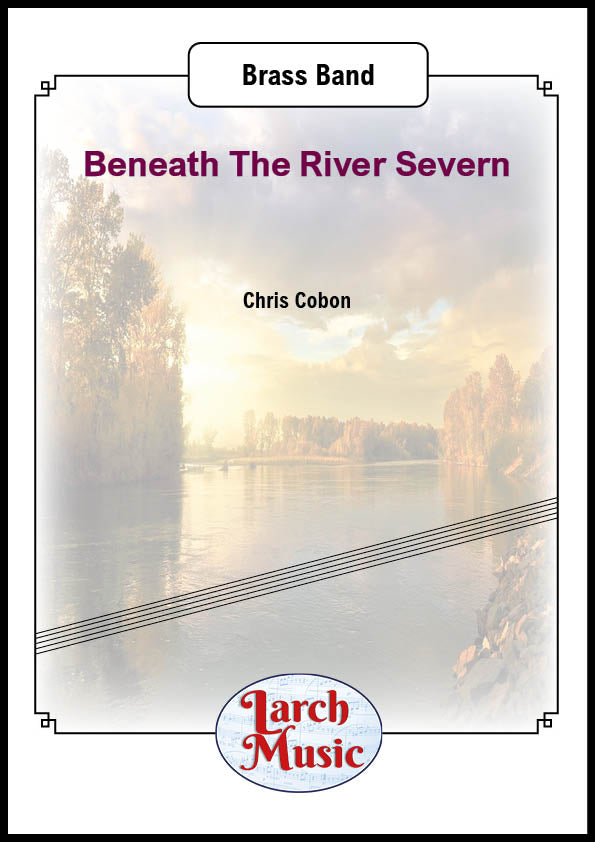
    Beneath The River Severn (Chris Cobon) - Brass Band Sheet Music Full Score and Parts - LM283

    COMPOSER: Chris CobonBeneath The River SevernProgramme NotesBeneath The River Severn follows on, chronologically,from three pieces about steam engines;LMR600 Gordon, Tornado (LNER Peppercorn Class A160163),The Lady Armaghdale and also 'Moments in Brass' Sets 1+2Living 3 miles from the River Severn, the longest river in Great Britain,I regularly cross it on the way to conduct Highley Colliery Brass Band.Beneath The River Severn aims to capture not only the beauty of the river but also the dangerous undercurrents that lie under the calm surface.The length of the complete piece is 4 minutes 11 secondsMusical Traits:Attempting to avoid stereotype water music,I started with sketches based on quartal harmony but inverted (so 5ths)For example, the first run onEuphonium starts on concert pitch G, Hrns = D, Bari=A, 1st Hrn=E etc."A" represents the undercurrent,which has claimed many lives over the years.An 11-note salute to the greatest river piece,Smetana's Vltava, is worked into this sectionSuitable Section 4 Upwards

    In Stock: Estimated dispatch 3-5 working days
  • £25.00

    Eloise (Paul Ryan arr. David Beal) (The Damned - Barry Ryan) - Brass Band Sheet Music Full Score & Parts - LM368

    COMPOSER: Paul RyanARRANGER: David BealISMN : 9790570003686UK SALES ONLYPDF DOWNLOAD - NOT AVAILABLE DUE TO COPYRIGHTSuperb Opener or closer for your next Concert!A great brass band title suitable for most bandsPROGRAMME NOTESBarry Ryan - 1968"Eloise" is a song first released in 1968 on theMGMlabel.It was sung byBarry Ryan, and written by histwinbrotherPaul Ryan.Running for over five minutes, it features strongorchestration,melodramaticvocals, and a brief slowinterlude.It sold three million copies worldwide,and reached No. 2 in theUK Singles Chartas published byRecord Retailer,but hit No. 1 in theNMEandMelody Makercharts.It topped the chart in 17 countries,including Italy,the Netherlandsand Australia.The single was released as "Barry Ryan with the Majority".The Majority were a pop band, who for a period, were the backing band for Ryanand who, after renaming to Majority One, had some success in Europe.Ryan also released an Italian-language version of the song,"Eloise (Versione Italiana)", in 1968.After not being able to cope with the success of some of his hits as a duo with Barry,Paul decided to take a step away from the limelight and to concentrate on songwriting."Eloise" was the second song he wrote and was influenced byRichard Harris'arrangement of "MacArthur Park"after listening to a rough mix of it at a party at Harris' house.After listening to it, Paul locked himself away and wrote "Eloise" in three days.The Damned - 1986In January 1986, the non-album single "Eloise",a cover version of the 1968 hit byBarry Ryan,was a No.3 chart success in the UK,the band's highest chart placing to date.LM368 - ISMN : ISMN : 9790570003686

    In Stock: Estimated dispatch 3-5 working days
  • £22.50

    Edward Gregson: Concertante for Piano and Brass Band

    DescriptionProgramme NoteThe Concertante for Piano and Brass Band was written in 1966, when the composer was an undergraduate student at the Royal Academy of Music in London. It received its first public concert performance in 1967 at the Royal Festival Hall, London, when the composer was the soloist with the International Band of the Salvation Army, conducted by Bernard Adams. It was one of the first major works to be written for this particular combination.The Concertante is unashamedly romantic in idiom and is in three movements: Prelude, Nocturne and Rondo. The Prelude is cast in sonata form and opens with a short cadenza-like flourish from the soloist, followed by two main ideas - the first sweepingly dramatic, the second highly lyrical. The interplay between these two themes forms the main focus of the movement, and after a return to the opening theme, an exuberant codetta brings the music to a close, albeit a quiet one. https://morthanveld.com/wp-content/uploads/2017/09/Gregson-Concertante-1st-movt-clip.mp3The tender Nocturne opens with an introduction from the band that contains precursors of the two main ideas to follow. The solo piano announces the main theme, which has a slightly 'bluesy' character with its flattened third and seventh notes of the scale, and is a love song dedicated to the composer's wife-to-be. The band enters with phrases of a chorale already hinted at in the introduction - Ray Steadman-Allen's hymn tune 'Esher' - but never quite presented in its complete state. Both ideas are developed alongside each other, with eventually the first theme returning, this time with piano and band together, and building to a majestic climax, before subsiding to a peaceful coda - a return to the very opening of the movement. https://morthanveld.com/wp-content/uploads/2017/09/Gregson-Concertante-movt-2-clip.mp3The final Rondo is full of energetic rhythms and changing time patterns. The main theme is playful in character, with much interplay between soloist and band, whilst the middle section presents a new theme, and one that has more than a hint of the hymn tune 'Onward Christian Soldiers', in what amounts to a good humoured parody. The opening Rondo theme returns, this time leading to a powerful and dissonant climax from the band. This is followed by an extended piano cadenza, underlying the virtuoso aspect of the work, and leading to an energetic and life-affirming coda, which brings the work to a triumphant conclusion. https://morthanveld.com/wp-content/uploads/2017/09/Gregson-Concertante-movt-3-clip.mp3Duration: 18 minutesInstrumentation:Please note that there is no 1st/Repiano Cornet part in this work. The 1st/Repiano Cornet player should join the Solo Cornet bench. As such an extra Solo Cornet part is provided in the set of parts.Version for two pianosA version of the Concertante for two pianos is available for rehearsal purposes. Piano 1 is the solo part and Piano 2 the band reduction. However, for those pianists not needing to rehearse the work in this way, a solo piano part is also provided with the main set of band parts.To view a preview of the solo part for the first movement click here.The youthful Gregson (his work was written as a third year undergraduate) was seemingly a bit of a musical magpie - but one heck of a skilful one at that.These were shiny baubles of poise, panache and pastiche, with affectionate, remarkably mature nods of appreciation towards Gershwin, Rachmaninov, Ireland and even Elmer as well as Leonard Bernstein.The rich colour palette and flowing lines (with the tenderest of central Nocturnes) were a joy - as were the little buds of motifs that dotted the score like seeds ready to be planted on a future fertile brass band compositional field. - Iwan Fox, 4Barsrest.com, June 2019For more information on Edward Gregson's music please visit the composer's website: www.edwardgregson.com

    Estimated dispatch 7-14 working days

     PDF View Music