
Results
-
 £105.20
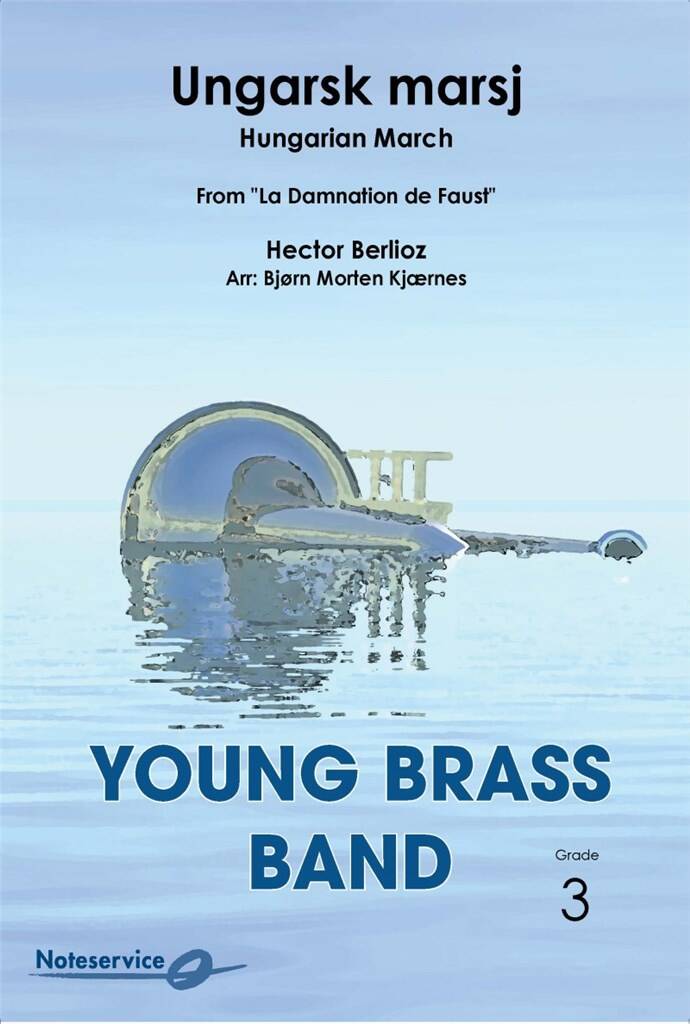
Ungarsk marsj - Hector Berlioz - Bjorn Morten Kjaernes
The "Rakoczi March" (Hungarian March) was the unofficial state anthem of Hungary before Ferenc Kolcsey wrote the Himnusz which is today the official national anthem of Hungary. The first version of this march-song was probably created around 1730 by one or more anonymous composers, although tradition says that it was the favorite march of Francis Rakoczi II. That early version called back Francis Rakoczi II to save his people. It was very popular in the 18th century but in the 19th century the more refined Rakoczi March became prevalent. Hector Berlioz included the music in his composition "La Damnation de Faust" in 1846, and Franz Liszt wrote a number of arrangements, includinghis Hungarian Rhapsody No. 15, based on the theme. The march gave its name to a 1933 Austrian-Hungarian feature film - Rakoczy-Marsch This arrangement is based on Berlioz instrumentation and phrasing from his Hungarian March, but in the form of the 19th century Rakoczi March
Estimated dispatch 5-14 working days
-
 £289.80
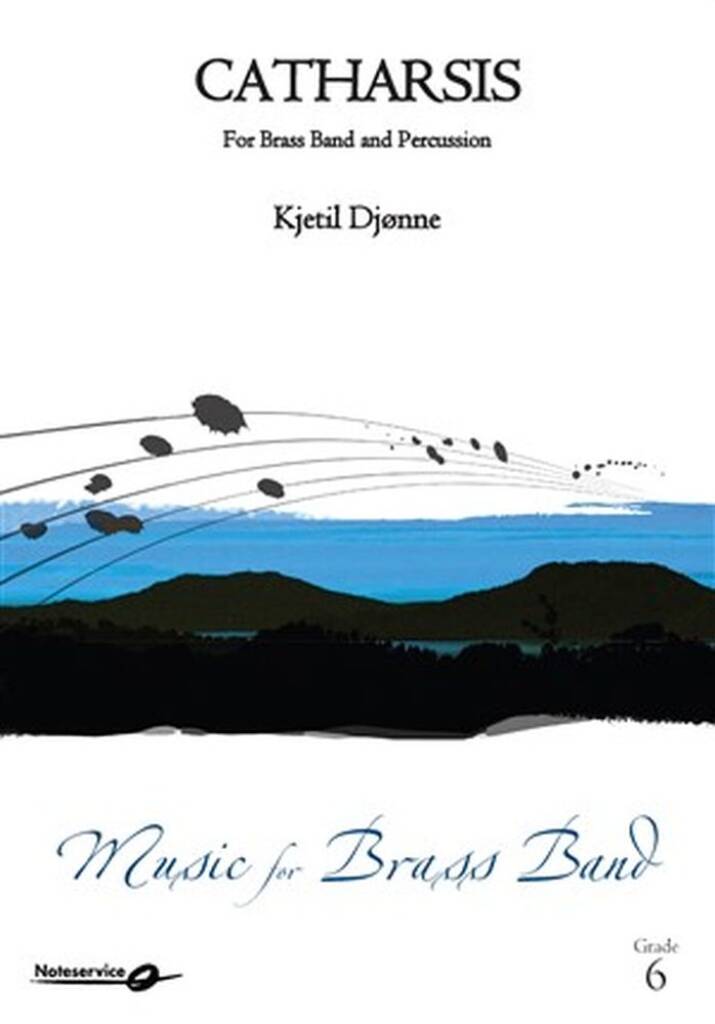
Catharsis - Kjetil Djønne
"Catharsis" explores purification through musical art - a process that provides spiritual renewal and release from moral ambiguities. Its etymology traces back to ancient Greece, but understanding and usage in modern language evolved in the late 18th century. The piece poses cathartic questions through diverse musical elements, from cadences to the ensemble, undergoing changes in tempo, style, texture, and meter. The music embarks on a journey from lyrical expressions to structuralism, from vibrant hues to pale tones, from unrest to tranquility, and from jazzy interludes to grand fulfillment.
Estimated dispatch 5-14 working days
-
 £61.00
Caro Mio Ben - T. Giordano - Willy Hautvast
Here we have one of the most famous 'Arie antiche' (ancient aria's) from the 18th century, written in the style of Handel. For many years it has been attributed to Giuseppe Giordani, opera and sacred music composer of the Neapolitan school. However, recent investigations clearly established that this song had actually been composed by his son Tommaso (1733-1806). This delicate wind band arrangement by Willy Hautvast can also be performed with a vocal soloist or a mixed choir.
Estimated dispatch 5-14 working days
-
 £54.99
A Spanish Christmas Carol - Patrick Millstone
Rondeau of the Shepherds," so ran the official title of the famous Dutch Christmas carol 'Midden in de winternacht'. In 1948 wrote Dutch poet and writer Harry Prenen this text. The melody is known by the 17th/18th- century organ composers of suites Daquin, Balbastre and Dandrieu. "Rondeau of the Shepherds" was subtitled "Catalan Christmas Carol". The song itself is because its origins in a Spanish (Catalan probably) Christmas song from the late Middle Ages, "El Desembre congelat. The motives of this song (shepherds, flutes, drums) demonstrate knowledge of the Bible and give a picture of the late medieval Christmas experience. . Perfect as an uptempo intermezzoin a church service.
Estimated dispatch 5-14 working days
-
 £60.99
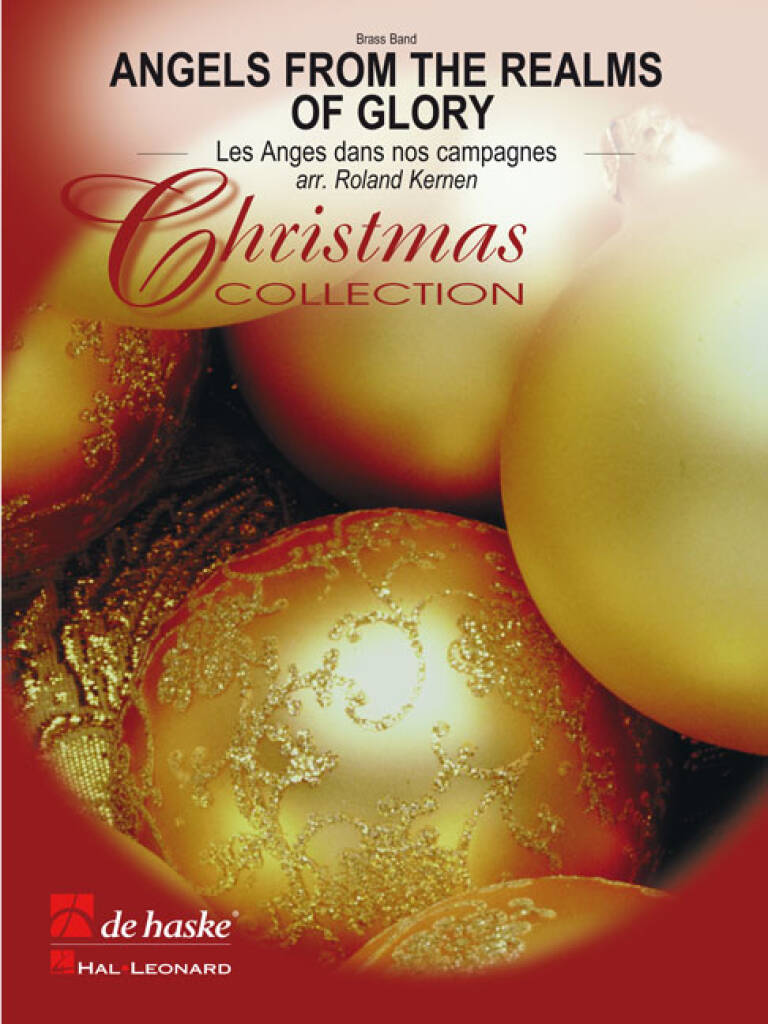
Angels from the Realms of Glory - Roland Kernen
The title of this clever arrangement reveals the Christmas song it is based on. The melody can be traced back to a French folksong from the 18th century which is now known around the world. In France it is called Les anges dans nos campagnes, in Germany it is most widely known as Engel auf den Feldern singen and in England it was originally called Angels From the Realms of Glory but it often known as Angels We Have Heard on High. Everyone will rejoice upon hearing the 'Gloria in excelsis Deo' refrain!
Estimated dispatch 5-14 working days
-
£67.00
Ungarsk marsj - Hector Berlioz - Bjorn Morten Kjaernes
The "Rakoczi March" (Hungarian March) was the unofficial state anthem of Hungary before Ferenc Kolcsey wrote the Himnusz which is today the official national anthem of Hungary.The first version of this march-song was probably created around 1730 by one or more anonymous composers, although tradition says that it was the favorite march of Francis Rakoczi II. That early version called back Francis Rakoczi II to save his people. It was very popular in the 18th century but in the 19th century the more refined Rakoczi March became prevalent.Hector Berlioz included the music in his composition "La Damnation de Faust" in 1846, and Franz Liszt wrote a number of arrangements, including his Hungarian Rhapsody No. 15, based on the theme. The march gave its name to a 1933 Austrian-Hungarian feature film - Rakoczy-Marsch This arrangement is based on Berlioz instrumentation and phrasing from his Hungarian March, but in the form of the 19th century Rakoczi March
Estimated dispatch 7-14 working days
-
£36.00
Rise
Rise was commissioned by Lions Youth Brass for the 2016 National Youth Brass Band Championships and is an original Brass Band work based upon the Christian Hymn Jesus Christ Is Risen Today , widely known as the Easter Hymn. Originally written in the fourteenth Century as a Bohemian Latin Hymn, it gained popularity in the 18th Century when John Baptist Walsh translated the text. This composition
In Stock: Estimated dispatch 1-3 working days
-
 £18.00
Scarborough Fair
DescriptionScarborough Fair is a traditional English ballad about the Yorkshire town of Scarborough. The song relates the tale of a young man who instructs the listener to tell his former love to perform for him a series of impossible tasks, such as making him a shirt without a seam and then washing it in a dry well, adding that if she completes these tasks he will take her back. Often the song is sung as a duet, with the woman then giving her lover a series of equally impossible tasks, promising to give him his seamless shirt once he has finished.As the versions of the ballad known under the title Scarborough Fair are usually limited to the exchange of these impossible tasks, many suggestions concerning the plot have been proposed, including the theory that it is about the Great Plague of the late Middle Ages. The lyrics of "Scarborough Fair" appear to have something in common with an obscure Scottish ballad, The Elfin Knight which has been traced at least as far back as 1670 and may well be earlier. In this ballad, an elf threatens to abduct a young woman to be his lover unless she can perform an impossible task.As the song spread, it was adapted, modified, and rewritten to the point that dozens of versions existed by the end of the 18th century, although only a few are typically sung nowadays. The references to the traditional English fair, "Scarborough Fair" and the refrain "parsley, sage, rosemary, and thyme" date to 19th century versions. A number of older versions refer to locations other than Scarborough Fair, including Wittingham Fair, Cape Ann, "twixt Berwik and Lyne", etc.The earliest notable recording of it was by Ewan MacColl and Peggy Seeger, a version which heavily influenced Simon and Garfunkel's later more famous version. Amongst many other recordings, the tune was used by the Stone Roses as the basis of their song "Elizabeth my Dear".
Estimated dispatch 7-14 working days
-
£27.00
Ground Bass
Ground Bass is based on the ostinato from J.S. Bach's 'Passacaglia and Fugue in C Minor (BWV 582)' originally written for Organ solo in the early 18th Century. It has been transcribed and reworked numerous times by a number of composers from different periods in time ever since its composition. This work utilises the ground bass in four different sections each exploring the colours that the brass
In Stock: Estimated dispatch 1-3 working days
-
 £62.00
Caro Mio Ben - T. Giordano/Willy Hautvast
Here we have one of the most famous 'Arie antiche' (ancient aria's) from the 18th century, written in the style of Handel. For many years it has been attributed to Giuseppe Giordani, opera and sacred music composer of the Neapolitan school. However, recent investigations clearly established that this song had actually been composed by his son Tommaso (1733-1806). This delicate wind band arrangement by Willy Hautvast can also be performed with a vocal soloist or a mixed choir.
Estimated dispatch 10-14 working days
 View Music