Results
-
 £37.08
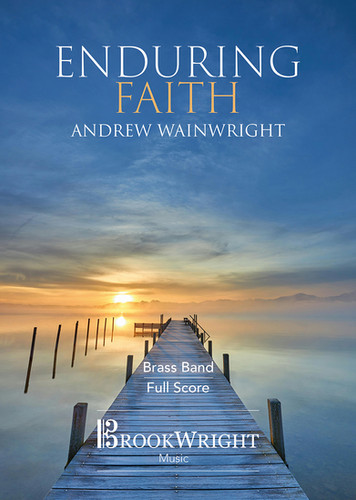
Enduring Faith (Brass Band) Andrew Wainwright
Enduring Faith was commissioned by Christopher Ward and the Five Lakes Silver Band and is a lyrical work for brass band that explores the intersection of hope, resilience, and conviction. Designed with a focus on melodic clarity and expressive phrasing, the composition moves through a series of nuanced emotional shifts - ranging from quiet, reflective passages to moments of expansive lyricism and affirmation. The harmonic structure travels through several keys, serving as a musical metaphor for the changing seasons of life. Throughout the piece, the texture is enriched by featured soloists from across the ensemble, including flugel horn, cornet, euphonium, baritone, and trombone. This work is dedicated to Doug and Stephanie Bayne, long-standing members of the Five Lakes Silver Band, in recognition of their commitment to their community and their steadfast support of the ensemble. It was recorded by the Five Lakes Silver Band on their 2025 album, Legacy. To view a video of the Five Lakes Silver Band performing the work please visit https://youtu.be/84NU_OXMs3Y Duration: Approx. 5.30 minutes Difficulty Level: 3rd Section + This PDF download includes the full score and parts. Sheet music available at www.brassband.co.uk (UK) or https://satradecentral.org (USA) Instrumentation: Soprano Cornet Eb Solo Cornet Bb Repiano Cornet Bb 2nd Cornet Bb 3rd Cornet Bb Flugel Horn Bb Solo Horn Eb 1st Horn Eb 2nd Horn Eb 1st Baritone Bb 2nd Baritone Bb 1st Trombone Bb 2nd Trombone Bb Bass Trombone Euphonium Bb Bass Eb Bass Bb Timpani Percussion 1-2
In Stock: Estimated dispatch 1-3 working days
-
 £11.13
Fanfare of Joy (Brass Band - Additional Transposing Parts) Andrew Wainwright
Fanfare of Joy was commissioned by the Burbage Band (Buxton) and its conductor Steven Critchlow in 2017. Based on Joy to the World and The First Nowell, this spectacular work opens with a majestic brass fanfare, before breaking in a Celtic-style dance which builds to a dramatic conclusion. The fanfare opening serves to announce the arrival of something special. In this case, the fanfare announces the arrival of Christmas, a time of joy and celebration. The Celtic-style dance is a lively and energetic movement that captures the spirit of Christmas. The music is full of syncopated rhythms and intricate melodies, driven by percussion. The final movement of the piece is a dramatic conclusion that brings the work to a rousing finish. The music is full of excitement and energy, and a fitting celebration of the Christmas season. To view a video of Dallas Brass Band performing the work please visit https://www.youtube.com/watch?v=CHl_oj1A-E8 PDF download includes additional transposing parts. Full brass band set available here. Sheet music available exclusively from World of Brass - www.worldofbrass.com Difficulty Level: 1st Section + Parts included in this download: Solo Horn F 1st Horn F 2nd Horn F 1st Baritone Bass Clef 2nd Baritone Bass Clef 1st Trombone Bass Clef 2nd Trombone Bass Clef Euphonium Bass Clef Tuba 1 Bass Clef Tuba 2 Bass Clef
In Stock: Estimated dispatch 1-3 working days
-
£33.37
Fanfare of Joy - Brass Band (Andrew Wainwright)
Fanfare of Joy was commissioned by the Burbage Band (Buxton) and its conductor Steven Critchlow in 2017. Based on Joy to the World and The First Nowell, this spectacular work opens with a majestic brass fanfare, before breaking in a Celtic-style dance which builds to a dramatic conclusion. The fanfare opening serves to announce the arrival of something special. In this case, the fanfare announces the arrival of Christmas, a time of joy and celebration. The Celtic-style dance is a lively and energetic movement that captures the spirit of Christmas. The music is full of syncopated rhythms and intricate melodies, driven by percussion. The final movement of the piece is a dramatic conclusion that brings the work to a rousing finish. The music is full of excitement and energy, and a fitting celebration of the Christmas season. To view a video of Dallas Brass Band performing the work please visit https://www.youtube.com/watch?v=CHl_oj1A-E8 PDF download includes score and full set of parts. Additional transposing parts for Horns in F, and Baritones, Trombones, Euphonium and Tubas in Bass Clef are available here. Sheet music available exclusively from World of Brass - www.worldofbrass.com Difficulty Level: 1st Section + Instrumentation: Soprano Cornet Eb Solo Cornet Bb Repiano Cornet Bb 2nd Cornet Bb 3rd Cornet Bb Flugel Horn Bb Solo Horn Eb 1st Horn Eb 2nd Horn Eb 1st Baritone Bb 2nd Baritone Bb 1st Trombone Bb 2nd Trombone Bb Bass Trombone Euphonium Bb Bass Eb Bass Bb Timpani Percussion 1-3
In Stock: Estimated dispatch 1-3 working days
-
 £44.49
Hero (Tenor Horn Solo with Brass Band) Fendall Hill
This piece was written as a full length virtuosic solo based on an earlier work called Humble Hero, which is also available from BrookWright Music. It is an extension of that work and still dedicated to Ken Bradley, designed to provide a reflection of his technical skills and a platform to emulate musicianship for which he was renowned. Ken Bradley (1962 - 2022) was one of Australia's best-known, well-loved, and talented brass musicians. The solo is also available from this website with piano accompaniment. To view a rolling score video of the work please visit https://www.youtube.com/watch?v=WIqS9xak_Es Duration: approx. 7.30 minutes Difficulty Level: 2nd Section + PDF download includes parts and score. Sheet music available at www.brassband.co.uk (UK) or https://satradecentral.org (USA) Instrumentation: Tenor Horn Soloist Eb Soprano Cornet Eb Solo Cornet Bb Repiano Cornet Bb 2nd Cornet Bb 3rd Cornet Bb Flugel Horn Bb 1st Horn Eb 2nd Horn Eb 1st Baritone Bb 2nd Baritone Bb 1st Trombone Bb 2nd Trombone Bb Bass Trombone Euphonium Bb Bass Eb Bass Bb Timpani Percussion 1-3
In Stock: Estimated dispatch 1-3 working days
-
 £33.37
Hope (Brass Band) Nathanael Watchorn
Hope is a deeply reflective and uplifting work for brass band, shaped by themes of serenity, renewal, and spiritual hope. Composer Nathanael Watchorn revisits a melody and harmonic framework originally conceived for an unrealised project - material that, even at its inception, carried the gentle strength and stillness of a benedictory chorus. Sensing its innate sense of calm and assurance, Watchorn sought to give the music new life through words that would illuminate its emotional core. Those words came from his father, Major Julian Watchorn, whose poetic text - titled Benediction: The Hope of Christ - speaks of grace, love, joy, and the sustaining power found in Christ. The verses provide a clear spiritual lens through which conductors, performers, and listeners alike can experience the music. Whether heard as a musical benediction or a stand-alone concert work, Hope provides a meaningful and deeply moving moment of stillness amid the noise of modern life. To view a video of Regent Hall Band performing the work please visit www.youtube.com/watch?v=489X1cwPYi0&list=RD489X1cwPYi0&start_radio=1 Duration: approx. 3.00 minutes Difficulty Level: 3rd Section + This PDF download includes parts and score. Sheet music available at www.brassband.co.uk (UK) or https://satradecentral.org (USA) Instrumentation: Soprano Cornet Eb Solo Cornet Bb 1st Cornet Bb 2nd Cornet Bb Flugel Horn Bb Solo Horn Eb 1st Horn Eb 2nd Horn Eb 1st Baritone Bb 2nd Baritone Bb 1st Trombone Bb 2nd Trombone Bb Bass Trombone Euphonium Bb Bass Eb Bass Bb Timpani Percussion 1-2
In Stock: Estimated dispatch 1-3 working days
-
 £49.95
Bestowal of a Century - Christopher Bond
Bestowal of a Century (2014) was commissioned by Lowenna Taylor, and funded through her Harry Mortimer Trust award which she was presented with at the 2013 British Open Championship following the completion of her studies at the Royal Welsh College of Music in Cardiff. The 15-minute work received its world premiere at the Cornwall Youth Brass Band Christmas concert in 2014 with solosit, Lowenna, working alongside the band under the baton of Les Neish. The 'Bestowal' refers to the presentation of the Royal Trophy by the then Prince of Wales to the famous West of England Bandsman's Festival in Bugle in 1913. Over the years it has been won by some of the greatest names in brass banding, including Black Dyke and Munn & Feltons - although more recently it has become a wonderful open festival that includes sections for local bands as well as visitors from all over the banding globe. 2014 marked the one-hundredth anniversary of the presentation of the trophy, which is the only brass band trophy to have the official seal of royal patronage. The work, in three distinct sections, opens in a mysterious way, building progressively with interjections from the horn. The composer notes its as though one can imagine different part of the trophy being put together, piece by piece, until the trophy is complete and a climax is reached. Following this, a playful theme is presented which is developed throughout the first section and interacting between soloist and band. The second movement, in complete contrast, is a lyrical melody; heart-wrenching throughout, and sits well both as part of the concerto and also as a stand-alone solo item. The third movement is light-hearted and virtuosic, demonstrating the technical capabilities of the instrument with fast and virtuosic playing, and a cadenza towards the end of the work.
Estimated dispatch 10-14 working days
-
 £34.95
New Dawn, A - Christopher Bond
A New Dawn (2013) was commissioned by and written for British tenor horn virtuoso Owen Farr in late 2013, to provide the title track of his new CD album. With a specific brief, the work was to include a bold ear-catching 'fanfare-esque' opening to bring maximum impact to the opening of the album, before settling in a rhythmic groove which allows the new tempo and reduced texture to settle before the entry of the tenor horn, who's initial four bar motif is what forms the basis of much of the work. Following this, structurally, the work follows with a set of variations, carefully demonstrating the capabilities of the instrument and indeed the player. Bar 90 sees the return of the bold opening gestures, this time followed with a harmonic transformation, before a recapitulation at bar 120 which sees a return to the original tenor horn material and an increase in intensity, volume and virtuosity through to the close. A New Dawn was premiered by Owen Farr and the Cornwall Youth Brass Band on 30th December 2013, and was recorded by Owen and the Cory Band in March 2014, featuring as the title track on his CD release of the same name.
Estimated dispatch 10-14 working days
-
 £45.00
Paint The Town Red - Christopher Bond
Paint The Town Red was commissioned by Wotton Silver Band in 2021 as a new signature work for the band. The work is upbeat and celebratory in style with an impactful opening and close. The band, located in Wotton-under-Edge in Gloucestershire, wear red uniforms which provided the inspiration for the title of the work.
Estimated dispatch 10-14 working days
-
£95.00
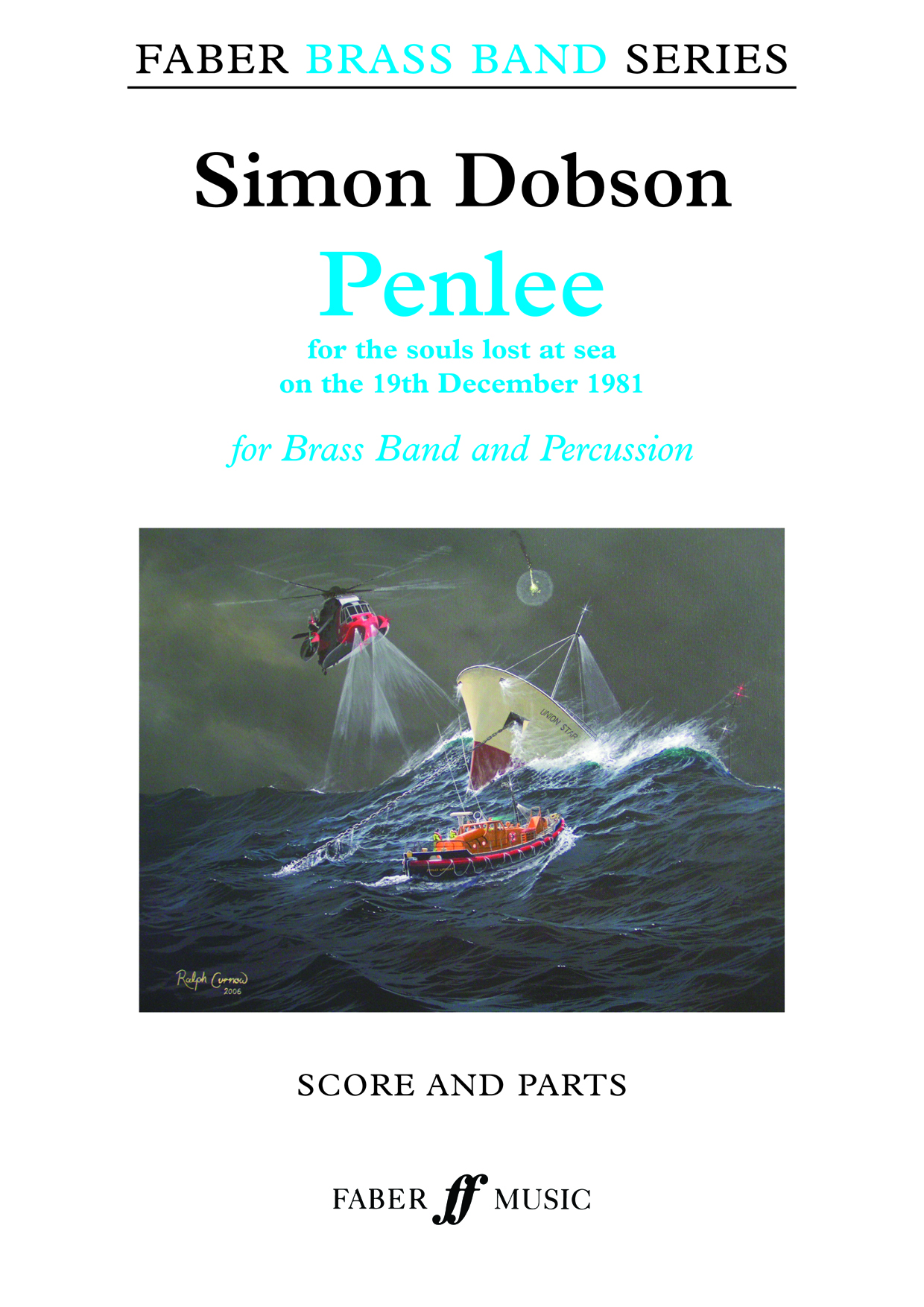
Penlee (Score & Parts) - Simon Dobson
To some, the tragic story of the Penlee lifeboat, Solomon Browne, would need no introduction, and to some the pain felt is still very much a reality. The composer, born just a few weeks before that fateful night on the 19th December 1981, has created this work as a musical homage to the bravery of the souls who lost their lives and has dedicated it to their memory.Penlee was commissioned by the Cornwall Youth Brass Band using funds bequeathed by Michael Pickett. The first performance was given by the Cornish Youth Brass Band, conducted by Ian Porthouse, at St. Michael's Church, Newquay, on 30th December 2008.Penlee has been voted into the Classic FM Hall of Fame 2011 at No.106. Not only is it the first time a brass work has been featured in the Hall of Fame, but it was also the highest new entry.The work has subsequently been recorded by the Leyland Band, conducted by Jason Katsikaris, on the CD entitled Penlee.Brass Band Grade 4: Advanced Youth and 3rd SectionDuration: 13 minutes
In Stock: Estimated dispatch 1-3 working days
-
 £29.95
Dream Sequence - Jonathan Bates
DURATION: 3'00". DIFFICULTY: 3rd+. Composed for Strata Brass in 2020 as part of their COVID-19 induced, virtually recorded 'A Christmas Carol' (a new suite for brass bandlasting around 30 minutes in total), 'Dream Sequence' is an ethereal texture-driven work relying heavily on the use of tuned percussion to create a dreamy layer of sound within which the band intersperse. In the context of the story, this work is used to set the scene of Scrooge drifting to sleep, contemplating his ways before the visit of the 3 ghosts later that evening. The 2 Christmas carols utilised in this work are 'O Come Emmanuel' and 'Carol of the Bells'. .
In Stock: Estimated dispatch 1-3 working days
 Watch video