Results
-
£85.00
Freaks! - Gavin Higgins
Freaks! was written for Lisa Sarasini in 2006 and first performed by her with Zone One Brass at the Royal College of Music, London. This tuneful and flamboyant showpiece was inspired by the Tod Browning film of the same name. The 1932 black and white cult classic was banned for many years due to its controversial morality issues and lead characters - real life side show 'freaks'. It is one of the most bizarre things to have ever come out of Hollywood. Gavin Higgins' virtuoso trombone solo is programmatic in style, full of humour with a sinister undercurrent, and is broken into seven short scenes: Introduction Roll up... See the Freaks The Amazing Cleopatra - Queen of the Air Gooble Gobble one of us - The Wedding Party The Fall of Cleopatra The Freaks Take Revenge Cleopatra - The Duck Lady
In Stock: Estimated dispatch 1-3 working days
-
£34.95
MARCH OF THE HOURS (Brass Band Set) - Emil Soderstrom
March of the Hours was first performed at Star Lake Music Camp in 1962 with the composer supplying an informative listening guide which was printed in the published score; "The phrases are of 12 crotchets each (three bars) signifying the 12 hours. Up to the trio, the music describes the headlong search for pleasure by the thoughtless. Abruptly, the trio brings 'I need thee every hour', but an episode employing the original theme pushes it aside until it reappears, this time against a background of chimes of the full hour (Westminster chimes). While the hour strikes 12, a paraphrase of the opening strains of 'When the trumpet of the Lord shall sound and time shall be no more' is heard. Here the music stops, to be followed by the trumpet sounding (cornets and trombones) and the rest of the band responds with 'When the roll is called up yonder' with a final 'I'll be there'."
Estimated dispatch 7-14 working days
-
 £30.00
That Moaning Trombone - Carl D Bethel, Sandy Coffin
Comic March One-StepCommissioned by John Wallace, this arrangement of That Moaning Trombone has been crafted by Sandy Coffin through close listening of the available recordings of the Harlem Hellfighters Band. Sandy had been heavily involved with the Historic Brass Society symposium 2017 held in New York and assisted John with his research on this fascinating band and the style of music it generated.Eye-witness accounts refer to the 369th band 'dancing' rather than 'marching'. Above all, in modern performance, finding a 'dancing beat' is crucial to a successful performance of this Ragtime march in order to do justice to the great pioneering work of James Reese Europe.Note the the reckless abandon with which glissando, at that time a novel effect, is used!Look and Listen (courtesy of the Tullis Russell Mills Band):Background to the Harlem HellfightersThe US Army 369th Regiment, made up largely of African-Americans from New York, became known as the Harlem Hellfighters because of the heroic reputation which accrued to them during the actions they engaged in during the First World War in Europe.James Reese Europe was one of the most active African-American composer/musical directors in the pre-war American music scene. The legendary Harlem Hellfighters Band, which he assembled in 1917 from African-American and Puerto Rican musicians, came at an important transitional point in musical history. A new form of music called jazz was emerging from Ragtime and the performing style of Europe's band was immersed in the flow of this new direction.Europe's Harlem Hellfighters influenced and inspired everyone who heard them, including the welcoming crowd when they disembarked in France, bowled over by their swinging rendition of La Marseillaise. Reese Europe became a war hero, commanding a machine-gun unit as well as the band.On return from War in 1919 the band led a ticker-tape parade along Fifth Avenue in New York and soon made about 30 shellac recordings. These recordings display some of the fingerprints of their performing style: ragging, improvising, muting, wailing, smearing (their word for glissando) - and from the evidence of their recordings they took the printed page as a blueprint for individuality.In May 1919 during the Hellfighters' triumphant coast-to-coast tour after their return, James Reese Europe was tragically murdered, bringing to premature close, at the age of 39, the work of a great musical innovator.
In Stock: Estimated dispatch 3-5 working days
-
 £34.95
Seascapes (Brass Band - Score Only)
Seascapes was commissioned for the National Brass Band Championships of Great Britain in 1988.Seascapes takes its inspiration from the poem 'Cargos' by John Masefield. In the first movement, a gentle lyric theme, set against a pulsating background is contrasted with a dance. The dance reaches its climax and the music concludes with a quiet theme. The second movement has something of the nature of a sarabande, with a central section, which is a little lighter but retains a Spanish flavour. The composer adds a whimsical thought of his own that there may also have been a party of monks aboard. A variety of ingredients blend in the third movement: the coaster engines, the sea, some jovial shanty-music and the storm element through which the coaster steadily chugs.Suitable for Championship Section bands.
Estimated dispatch 7-14 working days
-
£69.95
Seascapes (Brass Band - Score and Parts)
Seascapes was commissioned for the National Brass Band Championships of Great Britain in 1988.Seascapes takes its inspiration from the poem 'Cargos' by John Masefield. In the first movement, a gentle lyric theme, set against a pulsating background is contrasted with a dance. The dance reaches its climax and the music concludes with a quiet theme. The second movement has something of the nature of a sarabande, with a central section, which is a little lighter but retains a Spanish flavour. The composer adds a whimsical thought of his own that there may also have been a party of monks aboard. A variety of ingredients blend in the third movement: the coaster engines, the sea, some jovial shanty-music and the storm element through which the coaster steadily chugs.Suitable for Championship Section bands.
Estimated dispatch 7-14 working days
-
 £45.00
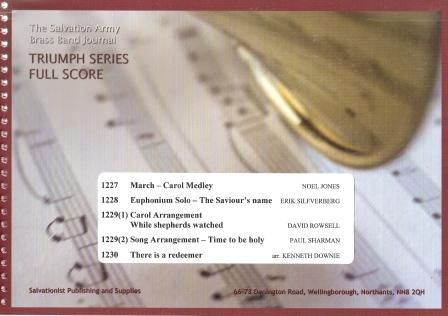
Triumph Series Band Journal July 2012 Numbers 1227 - 1230
No. 1227 March - Carol Medley (Noel Jones)This march features three carols, 'God rest ye merry, gentlemen', Hark! The herald angels sing' and 'Deck the Hall' together with brief references to others in a medley form. A couple of these references are somewhat camoflaged which provides further interest.No. 1228 Euphonium Solo - The Saviour's Name (Erik Silfverberg)A setting of Jane Clarke's lovely melody set to familiar words, 'There is a name I love to hear'.No. 1229 (1) Carol Arrangement - While shepherds watched (David Rowsell)A four-verse setting of the 16th Century tune, 'Winchester Old' commonly associated with the carol, 'While shepherds watched their flocks by night'.No. 1229 (2) Song Arrangement - Time to be holy (Paul Sharman)This arrangement of George Cole Stebbins' tune was originally made for the 2010 World Youth Convention in Sweden, the theme of which was 'Time to be holy'.No. 1230 There is a redeemer (Kenneth Downie)Melody Green-Sievright's popular song, 'There is a redeemer' was first published in 1982, 30 years before the appearance of this new setting.
Estimated dispatch 7-14 working days
-
 £3.95
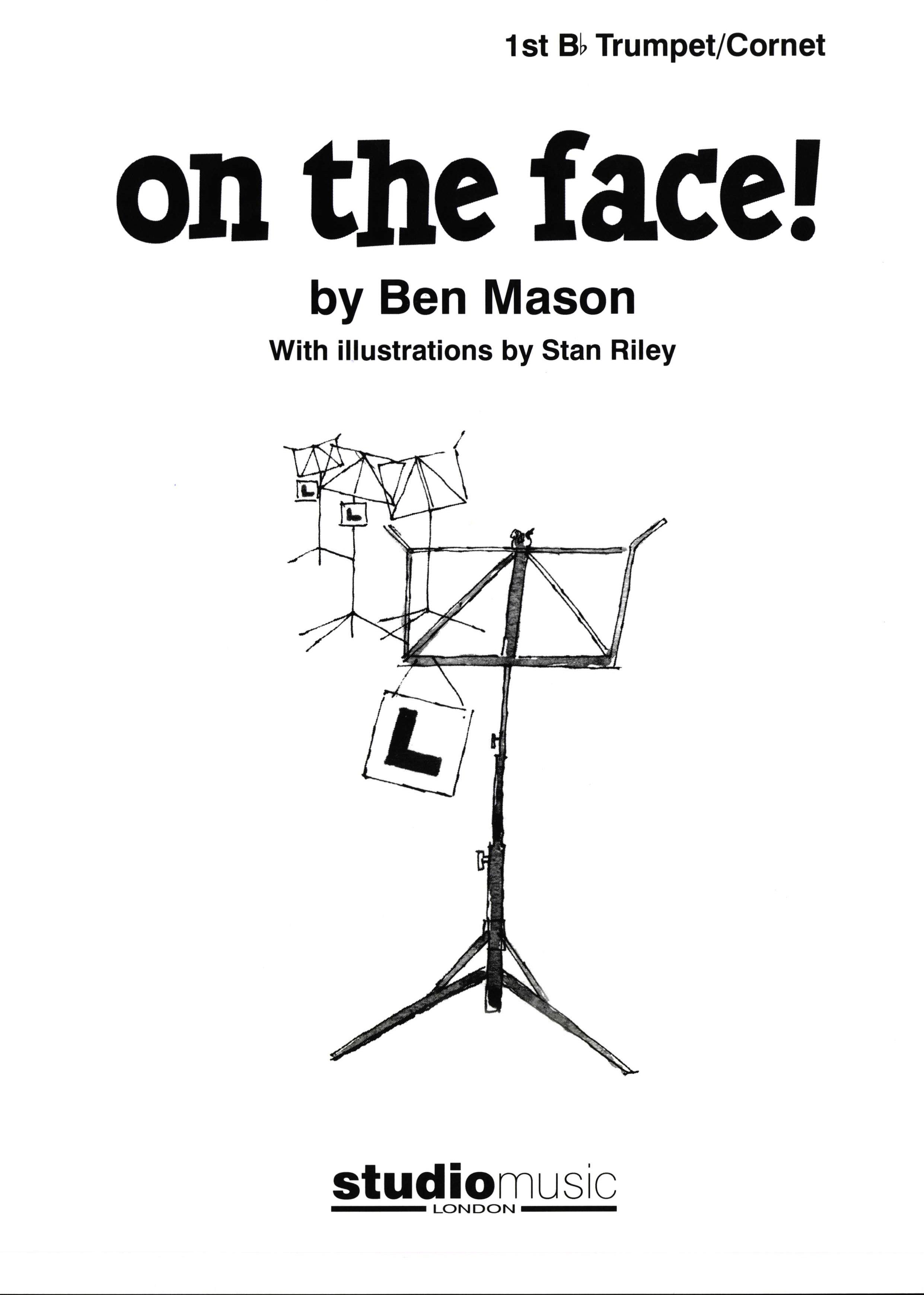
£3.95On the Face! (1st Bb Trumpet/Cornet)
On the Face is a complete repertoire (warm-ups and 23 pieces) for beginner brass ensemble. Perfect material for school assemblies and music centres, it includes folk songs, famous classical themes, and exciting new jazz and pop numbers. Each piece is score for a basic trio of two trumpets/cornets and one trombone/euphonium (TC or BC). However, optional independent parts can also be added for horn in E flat or F; high trombone or euphonium (tenor part); tuba; and drum kit. The pieces work equally well either with one player to a part, or in larger group settings. With its appealing variety of musical styles and textures, On the Face is sure to make the young brass player's first experience of group playing both rewarding and fun.
Estimated dispatch 7-14 working days
-
 £3.95
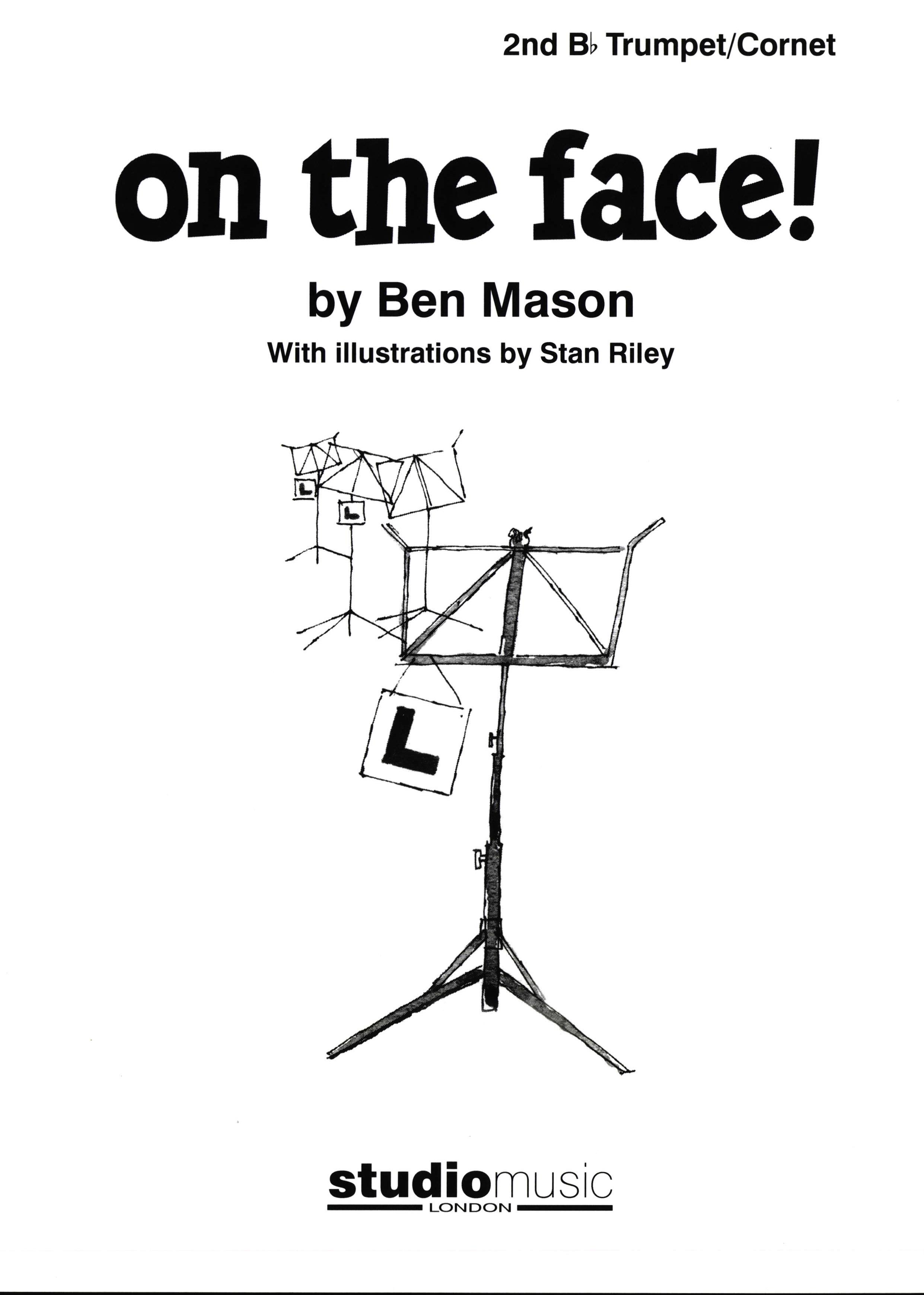
£3.95On the Face! (2nd Bb Trumpet/Cornet)
On the Face is a complete repertoire (warm-ups and 23 pieces) for beginner brass ensemble. Perfect material for school assemblies and music centres, it includes folk songs, famous classical themes, and exciting new jazz and pop numbers. Each piece is score for a basic trio of two trumpets/cornets and one trombone/euphonium (TC or BC). However, optional independent parts can also be added for horn in E flat or F; high trombone or euphonium (tenor part); tuba; and drum kit. The pieces work equally well either with one player to a part, or in larger group settings. With its appealing variety of musical styles and textures, On the Face is sure to make the young brass player's first experience of group playing both rewarding and fun.
Estimated dispatch 7-14 working days
-
 £24.95
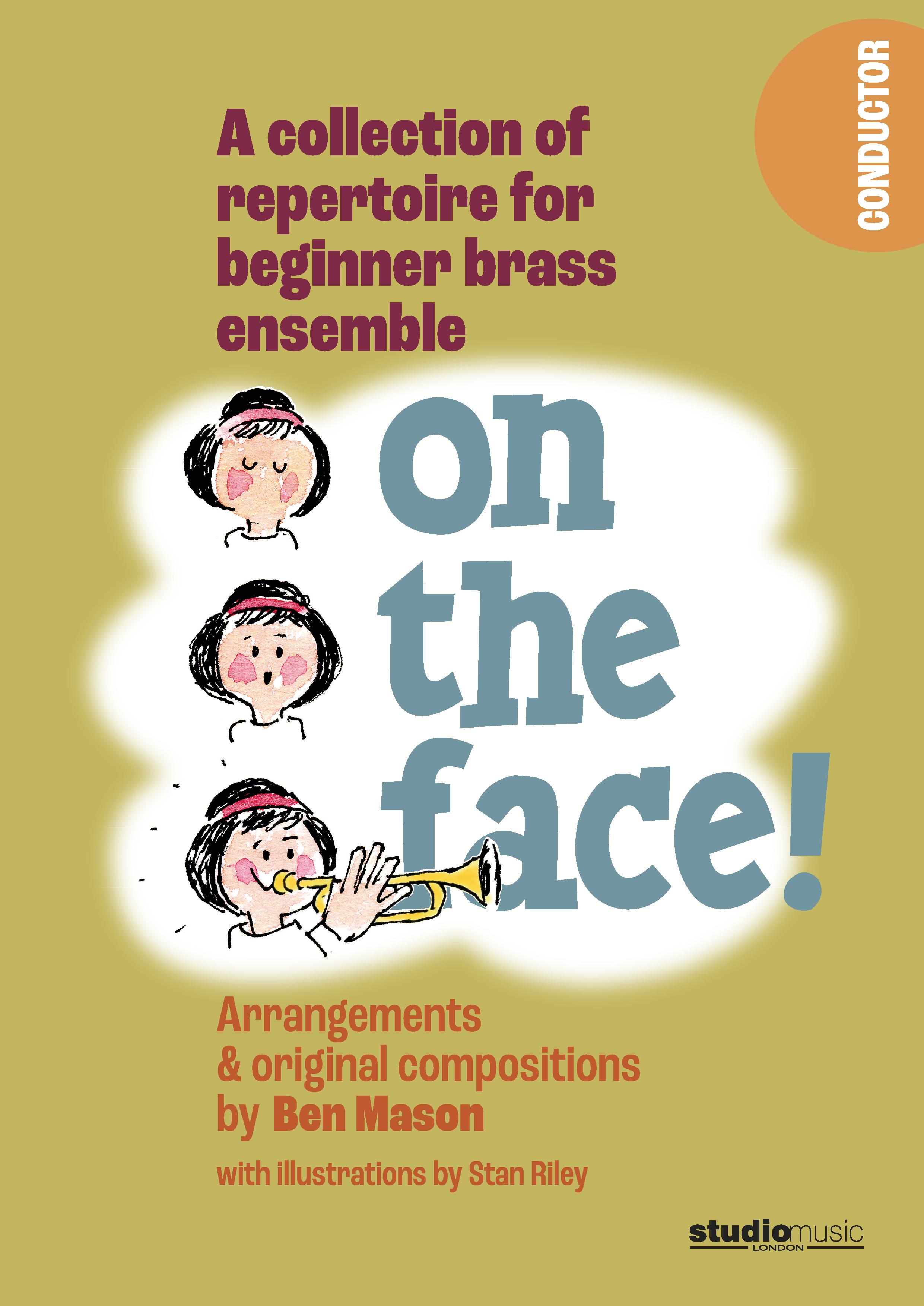
On the Face! (Basic Set)
The Basic Set contains:Score1st B flat Trumpet/Cornet2nd B flat Trumpet/CornetTrombone/Euphonium/Baritone BCTrombone/Euphonium/Baritone TCOn the Face is a complete repertoire (warm-ups and 23 pieces) for beginner brass ensemble. Perfect material for school assemblies and music centres, it includes folk songs, famous classical themes, and exciting new jazz and pop numbers. Each piece is score for a basic trio of two trumpets/cornets and one trombone/euphonium (TC or BC). However, optional independent parts can also be added for horn in E flat or F; high trombone or euphonium (tenor part); tuba; and drum kit. The pieces work equally well either with one player to a part, or in larger group settings. With its appealing variety of musical styles and textures, On the Face is sure to make the young brass player's first experience of group playing both rewarding and fun.
Estimated dispatch 7-14 working days
-
£19.95
On the Face! (Conductor Score)
On the Face is a complete repertoire (warm-ups and 23 pieces) for beginner brass ensemble. Perfect material for school assemblies and music centres, it includes folk songs, famous classical themes, and exciting new jazz and pop numbers. Each piece is score for a basic trio of two trumpets/cornets and one trombone/euphonium (TC or BC). However, optional independent parts can also be added for horn in E flat or F; high trombone or euphonium (tenor part); tuba; and drum kit. The pieces work equally well either with one player to a part, or in larger group settings. With its appealing variety of musical styles and textures, On the Face is sure to make the young brass player's first experience of group playing both rewarding and fun.
Estimated dispatch 7-14 working days