
Results
-
 £89.99
Hobbits - Johan de Meij
Johan de Meij's first symphony The Lord of the Rings is based on the trilogy of that name by J.R.R. Tolkien. This book has fascinated many millions of readers since its publication in 1955. The symphony consists of five separate movements, each illustrating a personage or an important episode from the book. This transcription for brass band, arranged by the composer has the following movements: I. GANDALF (The Wizard), IV. JOURNEY IN THE DARK (The Mines of Moria and The Bridge of Khazad-D m), V. HOBBITS. The symphony was written in the period between March 1984 and December 1987, and had its premiere in Brussels on 15th March 1988, performed by the The Royal Band ofthe Belgian Guides under the baton of Norbert Nozy. In 1989, the symphony The Lord of the Rings was awarded a first prize in the Sudler International Wind Band Composition Competition in Chicago, and a year later, the symphony was awarded a grant by the Dutch Composers Fund. In 2001, the orchestral version was premiered by the Rotterdam Philharmonic Orchestra and recorded by the London Symphony Orchestra.
Estimated dispatch 5-14 working days
-
 £22.00
The Catskills - Nigel Hess
In upstate New York lie the Catskill Mountains - an extraordinary combination of tranquillity and power, peace and majesty. Once seen they call you back again and again. This brass band transcription has been made by PhillipLittlemore and explores the sonorous and warm sounds of the brass band. The Catskills is the second movement of East Coast Pictures, originally written for wind band, and was commissioned in 1985 by the British Youth WindOrchestra with funds from National Westminster Bank plc. These three short 'pictures' were inspired by several visits by the composer to a small part of the USA's East Coast, an area that provides greatextremesin the geography and the people.
Estimated dispatch 5-14 working days
-
 £60.00
Occasional Overture - Benjamin Britten
Benjamin Britten composed his Occasional Overture Op.38, for the opening of the BBC Third Programme on 29th September 1946, when it was performed by the BBC Symphony Orchestra under Sir Adrian Boult. It was notheard again until 1982, when the composer's Executors decided that it should be revived. Given the dominance of brass and woodwind in this concise but exciting work, versions for brass band and wind band have been preparedfor Britten's centenary year. Brass Band Grade 6: Championship. Duration: 8 Minutes.
Estimated dispatch 5-14 working days
-
 £110.40
Three Inventions - Pi Scheffer
Dr. J (Pi) Scheffer was the leader of the famous Dutch AVRO Radio Big Band 'The Skymasters' in the 50's, as well as also being an English teacher. He also had a huge success with his composition for wind band 'Three Inventions', not only in Europe but also in the USA. At the time of publication (1971) there was no promotion with sound sample of this work, so for this reason now Molenaar Edition has a complete new score and parts available in their 'Creative Compositions' (c) series. The work is in the movements. 'Flippant', 'Whimsical' and 'Sorta Mixed Up'. A recent edition of the American magazine publication 'The School Musician' even compared Scheffer with Leonard Bernstein.
Estimated dispatch 5-14 working days
-
 £147.10
Rainforest Concerto - Saskia Apon
Rainforest Concerto has been commissioned by the Brass Band Rijnmond. This double concerto for two trombones and wind band consists of three parts with the cadenza in the slow niddle movement. Saskia Apon was inspired by the threat of the destruction of the rainforest. In the first part, Creation, we hear an accelerated reproduction of the birth of this impressive natural phenomenon. We hear the first birds, we see the growth of the mangrove trees and we witness the struggle for light and the force necessary to keep the realized equilibrium in a perpetual balance.The second part, Ode, is a tribute to the wonder and splendour of the rainforest. By means of subtle and extremely delicate sonorities we hear how nature adds an inestimable value to the rainforest. However it is also extremely fragile and this engenders a certain melancholy due to the awareness of man's impotence to respect this beautiful nature.In the last part, Contra Demolition, we hear the threatening decline, but also the revolt against this possible ruin. It is a heartfelt cry to leave nuture in peace and to work hard for the preservation of the beauty and the value of the rainforest.
Estimated dispatch 5-14 working days
-
 £104.99
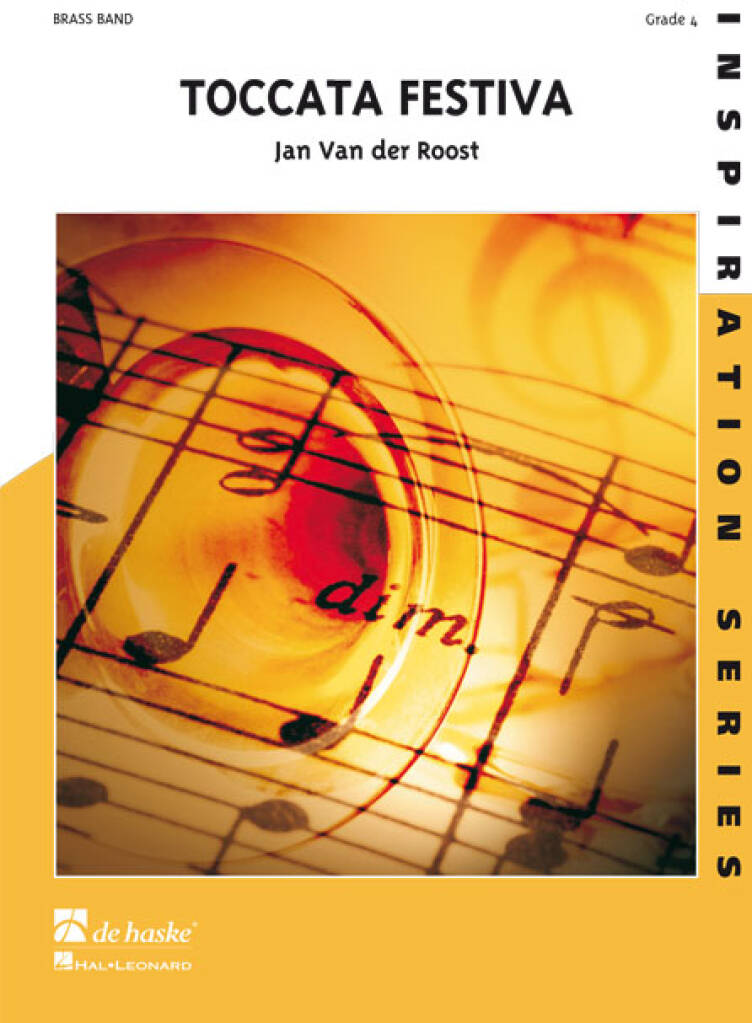
Toccata Festiva - Jan Van der Roost
'Toccata Festiva' was commissioned in 1994 by the Dutch Brass Band Championships. The wind band version was made a year later by the composer himself. Historically speaking, the toccata is considered to be one of the first independent instrumental forms for keyboard instruments. Originally the toccata was typically more or less improvised, later this musical form was given a more regulated structure. Both elements are used in the 'Toccata Festiva': on the one hand the different themes are developed freely, on the other, the piece has an orderly structure. It is in a three part form (quick-slow-quick) and includes both strong rhythmical figures and broad melodic lines. Partof the composition is written in a more or less archaic tone idiom, referring to the period from which the toccata form originates (16th century).
Estimated dispatch 5-14 working days
-
 £115.60
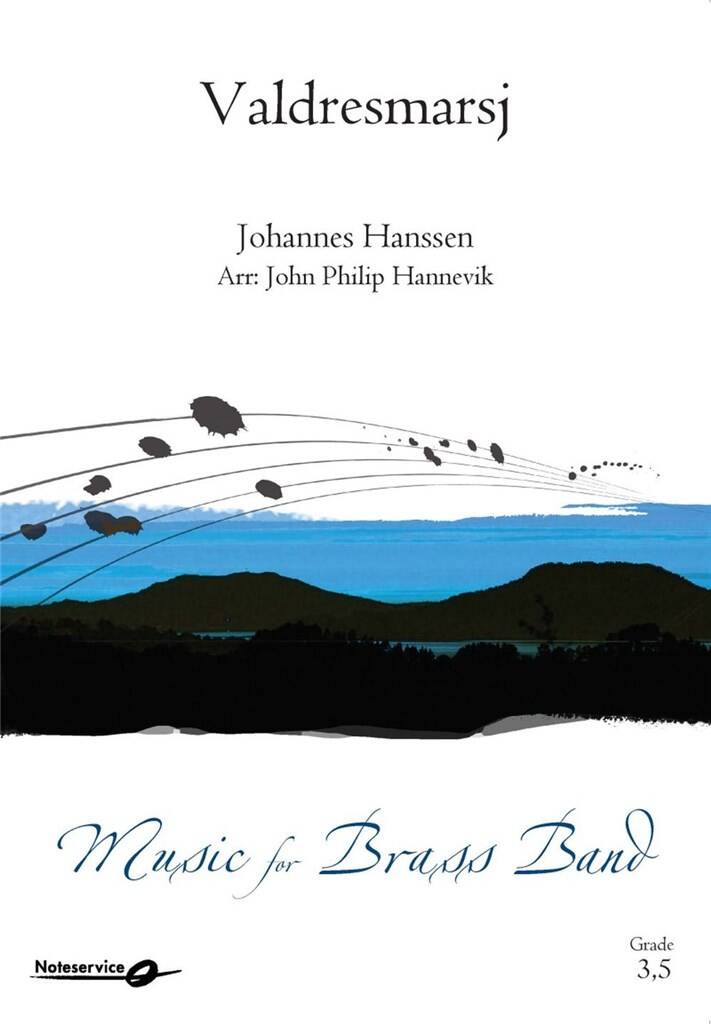
Valdresmarsj - Johannes Hanssen - John Philip Hannevik
Valdres is a mountain region that lies between Oslo and Bergen. Johannes Hanssen (1874-1967) composed the march for the Valdres Battalion between 1901 and 1904, using the Battalions horn-signal combined with a traditional style folk-tune. The march has been named "one of the greatest marches in the world" on many occasions, and it is a firm favourite with it's national flavor and unusual style. This version is similar to Johannes Hanssens revised version for Wind Band from 1954. However, it is interesting to notice that in Hanssens very first version of the march half a century earlier, the first theme was played by the Eb-Cornet, just like in this arrangement for brassband.
Estimated dispatch 5-14 working days
-
 £104.99
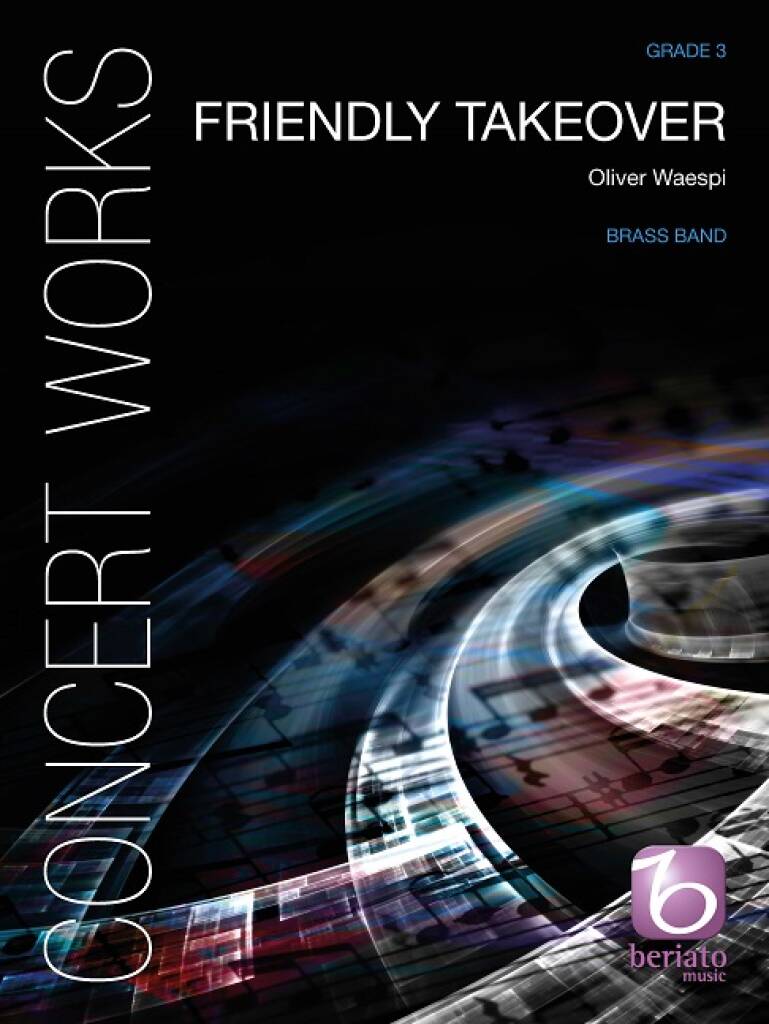
Friendly Takeover - Oliver Waespi
Friendly Takeover was composed for the 2016 Swiss Wind Band Convention in Montreux. In this three movement piece the composer experiments with lyrical motives combined with rhythmical pulses in different meters throughout the piece. In the finale, the musical scene is taken over completely by groove-based rhythms. This takeover, however, is of a friendly nature, as the various beats are not being conceived as rivals of the lyrical motives, but are rather supposed to infuse energy and vitality to the latter. Thus, one gets the impression of an ongoing acceleration throughout the piece.
Estimated dispatch 5-14 working days
-
 £125.00
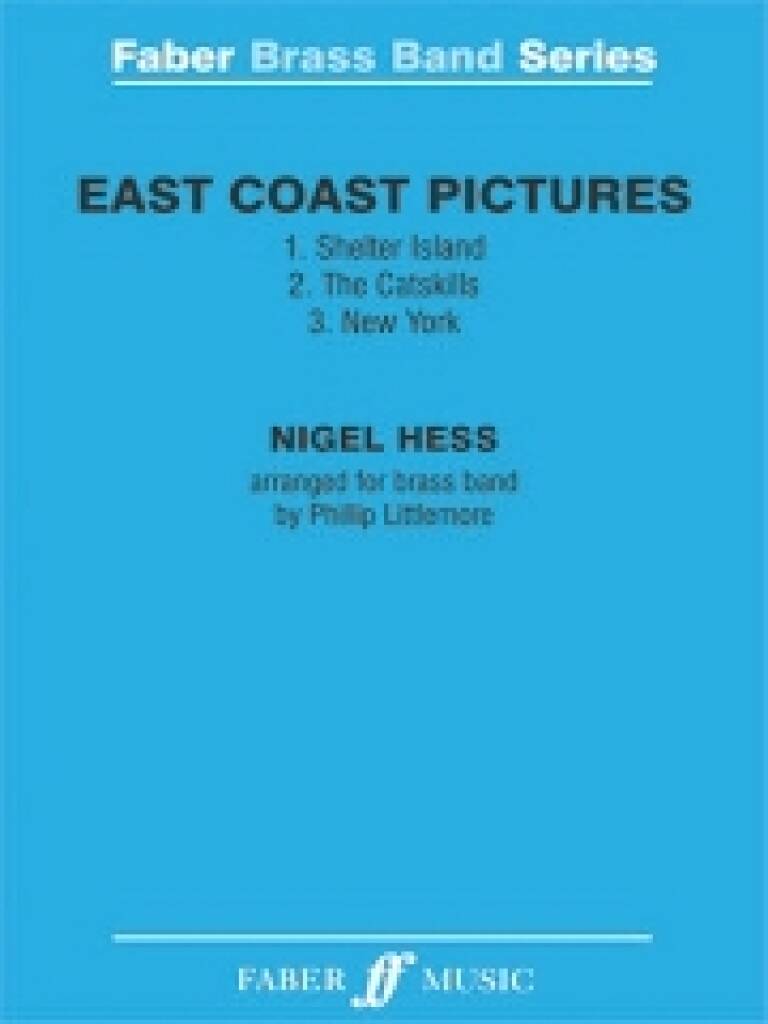
East Coast Pictures. - Nigel Hess
East Coast Pictures, originally written for wind band, have now been transcribed by Phillip Littlemore, introducing these exciting programmatic pieces to a wider audience. These three short 'pictures' wereinspired by several visits by the composer to a small part of the USA's East Coast, an area that provides great extremes in the geography and the people. Shelter Island is a small island situated almost at the end of LongIsland, a few hours' drive east of New York. In the summer it becomes a crowded tourist trap, but in the winter it is gloriously deserted, and bravely faces the onslaught of the turbulent Atlantic, shrouded in sea mistsanddriving rain. In upstate New York lie the Catskill Mountains, an extraordinary combination of tranquillity and power, peace and majesty. Once seen they call you back again and again. New York ...or, to be precise, Manhattan.For anyone who is familiar with this bizarre and wonderful city, this 'picture' needs no explanation. For those not yet hooked, here is a foretaste of things to come.
Estimated dispatch 5-14 working days
-
 £149.99
A Tribute to Henk Badings - Rob Goorhuis
The motivation for composing this test piece for the Concert Division Brassband of the 2001 WMC was Rob Goorhuis's deep respect for one of the greatest Dutch composers of the 20-th century who also enlarged the wind band repertoire in a most valuable way. Goorhuis wanted to light up the "soft and kind" side of the brassband and wrote about this composition : "The basis is a theme of twelve tones wich Badings once played at an International Organ Improvisation Contest in Haarlem.My organ teacher participated in that contest and so the theme remained somehow in the back of my mind." The composer worked out a series of variations and clustered them into bundles ofthree and so the melody kept its diversity while remaining easy to recognise.
Estimated dispatch 5-14 working days
 View Music