
Results
-
£60.99
Tale Spin Theme (Spin It!) - Peter Kleine Schaars
In addition to many classic animated films the Disney Corporation has also produced many great programmes especially for television. Many of these are broadcast in the USA on a special children's series called 'The Disney Afternoon'. Old and young alike will recognise the melody from this classic Disney theme tune, and will be enchanted by its mesmerising Latin groove.
Estimated dispatch 5-14 working days
-
 £60.99
Antonin's New World - Antonín Dvorák - Dizzy Stratford
Antonin's New World is an excellent piece of musical theatre featuring a comedy act for triangle soloist and band. The music itself does not sound comical, being based on Anton Dvorak's Symphony in E Minor (From the New World), but the right mix of seriousness and humour brings a surprising effect. With a bit of acting talent from your triangle soloist, this interpretation of the well known classical melody will be a major hit. Whether you choose Antonin's New World as a "triangle solo" novelty piece or simply as a delightful adaptation of Dvorak's immensely popular Ninth Symphony, both the band and the audience will love it!
Estimated dispatch 5-14 working days
-
 £60.99
Emerald Jubilee - Jan de Haan
An Emerald Jubilee celebrates a 40th anniversary. Jan de Haan composed this colourfully orchestrated concert march to celebrate Will van der Beek's 40th anniversary as conductor of the Deutsche Musikverein Haaren. As publisher of van der Beek's transcriptions of classical works Jan de Haan can look back on many years of successful collaboration with the knowledge that there will be many more to come. Unusually cast in a minor key, the main theme provides an interesting contrast to the more melodic major key of the second movement. The relatively slow theme gives this march a dignified stately and subdued quality.
Estimated dispatch 5-14 working days
-
 £89.99
Dragonfly - Thierry Deleruyelle
Dragonfly was commissioned by Bastien Baumet, an international French soloist, as a new departure in euphonium repertoire. The concerto can be accompanied by wind band or brass band, as well as with piano accompaniment.Written in three uninterrupted parts, a slow and warm theme separates two dynamic, swift, and agile sections. Like a dragonfly, the music flies sometimes with jolts, sometimes with serenity, allowing us to discover landscapes, colours, and changing horizons. Dragonfly showcases the soloist's inspired melodic curves, beautiful tone, and virtuosity.A graduate of the Paris Conservatoire and first prize winner in the prestigious Jeju International Competition in South Korea, Bastien Baumet is a leading figure in the euphonium world. He will be performing this concerto all over the world, to triumphant acclaim wherever he goes.
Estimated dispatch 5-14 working days
-
 £105.00
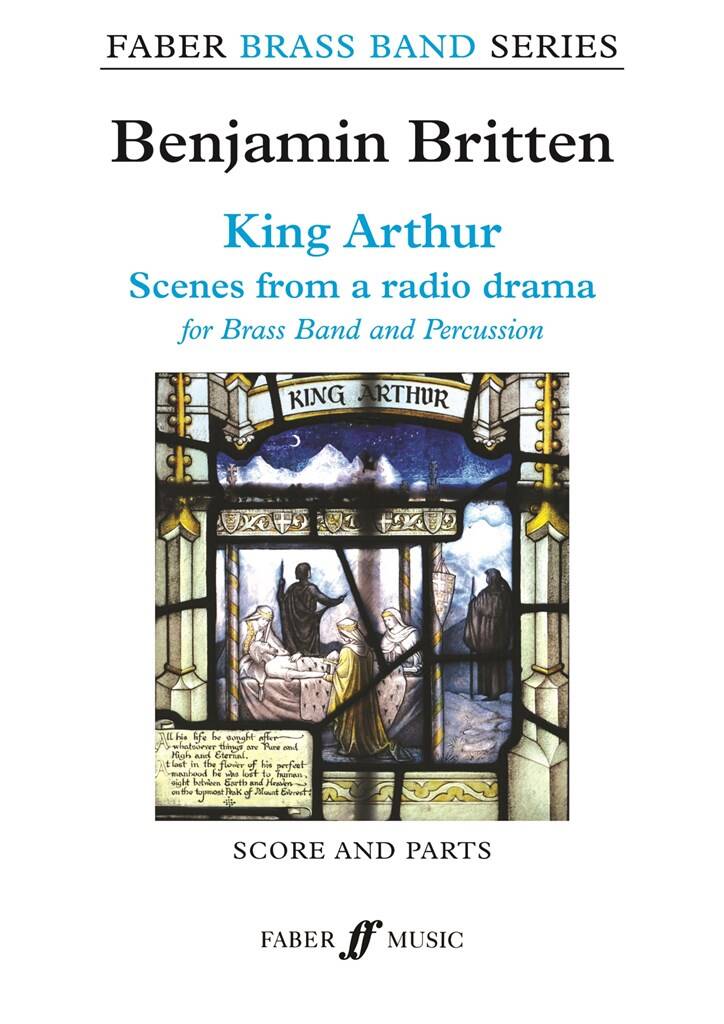
King Arthur - Benjamin Britten
King Arthur was the first of 28 scores Benjamin Britten (1913-1976) composed for radio between 1937 and 1947. It was an ambitious dramatisation of King Arthur's life and times - part pageant, part play, partcantata - written by D.G. Bridson. This colourful suite incorporates the Introduction, a dramatic Wild Dance, some of the music underscoring the scenes for Galahad and The Holy Grail, and two vividbattle scenes, ending with The Final Battle and Apotheosis. King Arthur (scenes from a radio drama) for brass band should not be confused with a much longer orchestral suite which Paul Hindmarsh devised from the same sourcein1995. King Arthur (scenes from a radio drama) will be played by the 20 First Section finalists on 16th September 2018 at this year's National Brass Band Championships of Great Britain.
Estimated dispatch 5-14 working days
-
 £52.70
Irish Air - Willy Hautvast
The complete title of this Irish tune is : 'Believe me if all those endearing young charms'. The character of this song is rather nostalgic, but yet it is popular all over the world as it has been sung and performed by all kinds of ensembles and singers. This piece can be used at several occasions and the well-known tune will be a huge success.
Estimated dispatch 5-14 working days
-
 £105.20
Under manen (Fra Den unge Fleksnes) - Christian Engebretsen - Bjorn Morten Kjaernes
This has become a Christmas song that has its roots in a love duet between the young Fleksnes and classmate Victoria. The class will be competing with a duet in a song competition. The text gives hope of love and links it to Christmas traditions. "A Dream of Christmas, About Love" is the first line of the text. "The Young Fleksnes" runned as advent calender on TV Norge in 2010. This arrangement feature an flugelhorn soloist and a euphonium soloist. Please be aware of the dynamics between soloists and accompaniment. Adjust the dynamics according to the musicians in the ensemble.
Estimated dispatch 5-14 working days
-
 £115.60
S.O.S. - Björn Ulvaeus - Bjørn Morten Kjærnes
When the publisher asked me to make an arrangement of an ABBA tune, S.O.S. was the first song I thought of. Its introduction and melody are well suited to play for Wind Band. Admittedly, the key had to be shifted to make it sound good for this instrumentation. To me, this is nostalgia, while for others, the Mamma Mia movie/show will be what they associate with this wonderful song. Apart from a few medleys, few of ABBA's songs are available to Wind Band. So, it was very fun to work on this classic.The arrangement is made quite simply to fit many sizes of Bands. Technically, it is also relatively simple both in range and rhythm. As you can see, there are many ways to adjust this arrangement to your own ensemble. Bring out melody lines and the bassline, and a lot is done. If needed, simplify to make it sound nice.Bjorn Morten Kjaernes
Estimated dispatch 5-14 working days
-
£74.99
Backdraft - Hans Zimmer - Masato Myokoin
The hit movie Backdraft is one of the earliest soundtracks by award-winning Hollywood composer Hans Zimmer. Starring Kurt Russell amongst many other stars the film plays a dignigned homage to the highly dangerous life of fire workers. Behind the racing engines and blaring sirens the soundtrack is easily lost in the film but is highly charged and a fitting backdrop to the action on screen. This authentic arrangement by Masato Myokoin retains all the excitement and action of the original and will be a great addition to any concert or contest programme. Sure to be a blazing success!
Estimated dispatch 5-14 working days
-
 £69.99
A Flemish Christmas - Jan Hadermann
In A Flemish Christmas, Jan Hadermann tells the Christmas story by means of four Old Flemish Christmas Songs.Mary is chosen to bring Jesus Christ, the son of God, into the world: Het was een maged uitverkoren ('She was a virgin chosen').On the occasion of a census, Mary, who is with child, and Joseph, her husband to be, travel from Nazareth to Bethlehem, where Jesus will be born in a humble stable: Maria die zoude naar Bethlehem gaan (Mary would go to Bethlehem').O kerstnacht, schoner dan de dagen ('Oh Christmas Night, more beautiful than the days') is a stately chorale that sings the praises of Jesus' birth.Three wise men from the East, Caspar,Melchior and Balthazar, follow a bright star in the sky, which leads them to Bethlehem. There, they worship the newborn King, and offer him gold, frankincense and myrrh: Wij komen van Oosten (We've come from the East').This musical Christmas story ends with a festive repeat of the third movement, the stately chorale.
Estimated dispatch 5-14 working days
 View Music