
Results
-
 £42.95
Scaff! (Brass Band - Score and Parts) - Berlioz, Hector - Wheeler, Alastair
While in the Oxford University Jazz Orchestra, trumpeter Alex Gallafent confided that he had always wished there was a big band arrangement of 'March to the Scaffold' opening with Gene Kruppa toms. Fast forward several years to the Kew Wind Orchestra, where Andy Black is a chartered surveyor who "loves a nice piece of scaff...". Here is a great arrangement done for brass band.The protagonist in the story of this 4th movement is having a nightmare that he has killed his loved one, that he is condemned and he is being led to execution where he will witness his own guillotining.
Estimated dispatch 7-14 working days
-
 £59.70
Troldtog (March of the Trolls) (Brass Band - Score and Parts) - Grieg, Edvard - Smith, Sandy
Edvard Grieg (1843--1907) is best known for his eternally popular Piano Concerto in A Minor, as well as more than 150 songs and 66 lyric pieces. March of the Trolls is from his Lyric Pieces, Op. 54. Trolls are a constant theme in Norwegian folklore and can be viewed as the equivalent of our "boogie man." Far to the north in Norway where the winter storms whip the weather-beaten coasts, you will find dark forests with moonlit lakes, deep fjords surrounded by mighty snowcapped mountains, and long rivers and cold streams cascading down the mountain sides. This is where you might find the irritable, short-tempered trolls coming out of their hiding places after sunset, marching to wreck havoc on unsuspecting Norwegian households. Wait and see what your audience will do when the Trolls march up and down the aisles of your next concert!
Estimated dispatch 7-14 working days
-
 £43.99
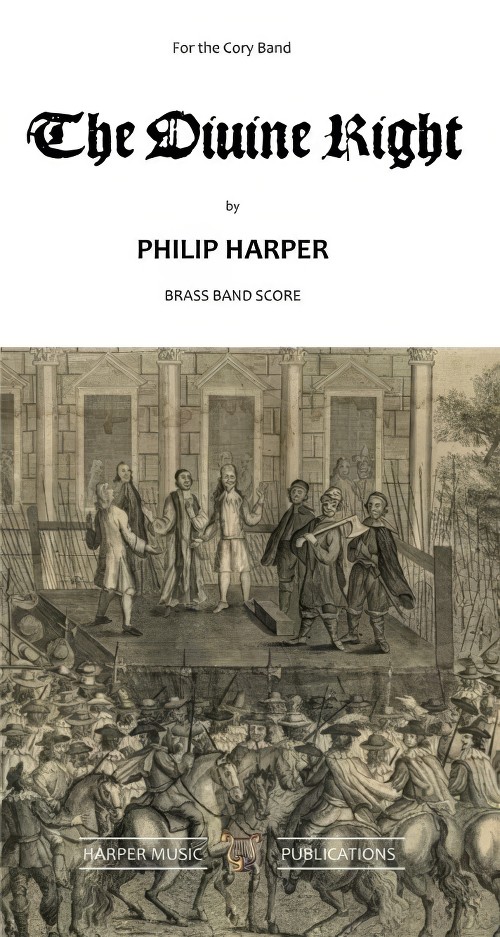
The Divine Right (Brass Band - Score only) - Harper, Philip
At the time of composing this piece, the Arab Spring was sweeping through the Middle East. It seemed that almost every week a new country's people had risen up against the regimes and dictatorships which had prevailed for generations, leaving many nations at a defining crossroads in their history. There were so many possible ways ahead: so many hopes, yet so many uncertainties.This music is a depiction of these revolutionary times, and several musical themes are in turn presented, discussed, considered, fought over, altered, rejected or accepted.Most nations have had, or probably will have, their own Arab Spring, including the United Kingdom. Events of 17th Century Britain provide the context for this piece, particularly those following the execution of the tyrant King Charles I on 30 January 1649. The regicide was in part due to Charless steadfast belief in the Divine Right of Kings, and led to a tumultuous interregnum, where England stood at its own defining crossroads. The music begins turbulently, before King Charles appears and is led to the gallows outside Banqueting House in central London where he is brutally decapitated. From the assembled crowd rose, according to one observer,a moan as I never heard before and desire I may never hear again.The music descends to emptiness.The musical argument which follows is not strictly programmatic, but a number of musical themes are all thrown into the melting pot, representing ideas such as: religion; military force; reasoned Parliamentary debate; and the chattering, irrepressible voice of the people. Additionally, there are some quotations from the music of royalist composer Thomas Tomkins (1572-1656), who was often in tune with the feeling of the times.This defining episode in England's history was brought to a close with the Restoration of the monarchy in 1660, and as the exiled King Charles II rode back into London the diarist John Evelyn wrote:Never was so joyful a day seen in this nation. I stood in the Strand and beheld it, and blessed God.At the end of the piece the bells ring out, and the musical appearance of the King has transformed from turbulent to triumphant.Duration: 17.00
Estimated dispatch 7-14 working days
-
£104.99
The Divine Right (Brass Band - Score and Parts) - Harper, Philip
At the time of composing this piece, the Arab Spring was sweeping through the Middle East. It seemed that almost every week a new country's people had risen up against the regimes and dictatorships which had prevailed for generations, leaving many nations at a defining crossroads in their history. There were so many possible ways ahead: so many hopes, yet so many uncertainties.This music is a depiction of these revolutionary times, and several musical themes are in turn presented, discussed, considered, fought over, altered, rejected or accepted.Most nations have had, or probably will have, their own Arab Spring, including the United Kingdom. Events of 17th Century Britain provide the context for this piece, particularly those following the execution of the tyrant King Charles I on 30 January 1649. The regicide was in part due to Charless steadfast belief in the Divine Right of Kings, and led to a tumultuous interregnum, where England stood at its own defining crossroads. The music begins turbulently, before King Charles appears and is led to the gallows outside Banqueting House in central London where he is brutally decapitated. From the assembled crowd rose, according to one observer,a moan as I never heard before and desire I may never hear again.The music descends to emptiness.The musical argument which follows is not strictly programmatic, but a number of musical themes are all thrown into the melting pot, representing ideas such as: religion; military force; reasoned Parliamentary debate; and the chattering, irrepressible voice of the people. Additionally, there are some quotations from the music of royalist composer Thomas Tomkins (1572-1656), who was often in tune with the feeling of the times.This defining episode in England's history was brought to a close with the Restoration of the monarchy in 1660, and as the exiled King Charles II rode back into London the diarist John Evelyn wrote:Never was so joyful a day seen in this nation. I stood in the Strand and beheld it, and blessed God.At the end of the piece the bells ring out, and the musical appearance of the King has transformed from turbulent to triumphant.Duration: 17.00
Estimated dispatch 7-14 working days
-
 £64.95
A Day in the Life of a Knight (Brass Band - Score and Parts) - Lawrence, Phil
Here we have a most descriptive piece of writing - a story through music. A fantastic 1st section test piece and championship concert work:The opening scene would depict standing on the battlements of a castle hearing the thundering hoofs of our brave Knight's horse miles in the distance. His arrival is expected, and his reputation is known across many lands. Today, he is to joust amongst mere mortal knights and compete for the hand of the fair (and local) Princess.He vanquishes all competitors and wins the day. The scene moves to evening and court where reception and dance is to be held for our winning knight. Both Knight and Princess become centre of attention during the dance. Their eyes only for each other.At last, the Knight has a chance to be a lone with his Princess as they steal away from the celebrations to a star lit rampart above the castle gardens, where the Knight declares his ever-lasting love and pledges his life and of honour to her. He asks her hand, meanwhile monks pray in the below chapel hoping for union. She say's yes. It is announced in court, then blown from the battlements.Day breaks; he is brought word of evil doings back in his own land. He leaves word to the Princess that he will be back soon to take her hand. The trouble back home was a rouse to get him away from the Princes so one of the vanquished, a dark knight in yesterdays joust, has summoned a dragon to kidnap the princess for his own.As the truth of the deception reaches our Knight he quickly returns to face the varlet that has taken his Lady. This time tis no joust, but a fight to the death with the dark knight and dragon. Our champion proves his best once again and wins the day and the hand of his Princess forever!- Phil LawrenceSuitable for 1st Section Bands and aboveDuration: 11.15
Estimated dispatch 7-14 working days
-
 £44.95
Princethorpe Variations (Brass Band - Score and Parts) - Downie, Kenneth
Colourful harmony, rhythmic flair and melodic invention are the hallmarks of this excellent set of variations by Kenneth Downie, based on the well known church tune, Princethorpe.This major work demonstrates the well-known characteristics of the composer: colourful harmony, rhythmic flair and melodic invention, all encapsulated in scoring which is engulfing both to players and listeners alike. Following a presentation of the theme there are five variations culminating in what can be described as either a finale or coda.Theme. The composer shows his originality in the harmonic sense of this introduction. Perhaps it could be suggested that over-indulgence of rubato may be a temptation to be avoided.Sections A to F. Relentless rhythmic drive is of paramount importance in this first variation. Conscientious observance of dynamics is of course an essential requirement in conveying the exciting quality of the music; there are moments of sudden contrast of which all will need to be aware. Moving between the time-signatures of 5/4 and 6/4 these sections are built from strong easily-identifiable fragments of the theme. These is a significant increase in temp at letter F which will further the exciting impact of the music.Sections G & H. In a pastorale style this short, gentle variation affords a contrast in style between the previous and succeeding ones. The gentle undulating character of the melodic lines is governed by the Allegretto grazioso directive.Sections I to M. Commencing two bars before letter I the music is now exuberant and the tempo and style is that of a march in compound time. In this exhilarating movement there are moments of contrast and indeed of delicacy which are a foil to the more energetic moments. Rhythmic control will be essential to maintain a consistent tempo. As elsewhere in the work, the percussion section will contribute much to the success of the performance there are bars where this section alone is heard and there are important entries for glockenspiel.Sections N & O. With emotional content this Adagio variation has the first two notes of the melody as its melodic impetus. Apart from just over two bars at O (where there is an interpolatory phrase from Cornets and Trombones), the melodic line is entrusted to the plaintive sounds of the horn section. Cornets and Trombones provide a change of tone colour at the beginning of section O. Under a poco rall, this very expressive variation is concluded; there is an important link supplied by Eb Bass.Sections P & Q. A lively march-tempo is launched immediately and these sections are in the nature of an introduction to the final variations. There is a quickening of pace at Q which assists the generation of excitement which should be an essential part of the performance. Solo Cornets introduce a melodic line at Q which anticipates the compound time of the following section.Sections R & S. The Solo Cornet theme of the previous section is now a contrapuntal line accompanying the theme tune. With an elongation of the notes in the melody, the conductor will need to call on the sustaining powers of the band and at no time should the interesting accompanying lines be allowed to detract from the sonorous presentation of the basic theme.Sections T, U & V. Following a poco rit, the finale begins at letter T with the directive, molto vivace. There is much detail to be rehearsed, not least being the dynamic contrasts which are encountered. As throughout the work, the listener should have no difficulty in identifying the thematic sources of the composer's music.
Estimated dispatch 7-14 working days
-
£22.50
Princethorpe Variations (Brass Band - Score only) - Downie, Kenneth
Colourful harmony, rhythmic flair and melodic invention are the hallmarks of this excellent set of variations by Kenneth Downie, based on the well known church tune, Princethorpe.This major work demonstrates the well-known characteristics of the composer: colourful harmony, rhythmic flair and melodic invention, all encapsulated in scoring which is engulfing both to players and listeners alike. Following a presentation of the theme there are five variations culminating in what can be described as either a finale or coda.Theme. The composer shows his originality in the harmonic sense of this introduction. Perhaps it could be suggested that over-indulgence of rubato may be a temptation to be avoided.Sections A to F. Relentless rhythmic drive is of paramount importance in this first variation. Conscientious observance of dynamics is of course an essential requirement in conveying the exciting quality of the music; there are moments of sudden contrast of which all will need to be aware. Moving between the time-signatures of 5/4 and 6/4 these sections are built from strong easily-identifiable fragments of the theme. These is a significant increase in temp at letter F which will further the exciting impact of the music.Sections G & H. In a pastorale style this short, gentle variation affords a contrast in style between the previous and succeeding ones. The gentle undulating character of the melodic lines is governed by the Allegretto grazioso directive.Sections I to M. Commencing two bars before letter I the music is now exuberant and the tempo and style is that of a march in compound time. In this exhilarating movement there are moments of contrast and indeed of delicacy which are a foil to the more energetic moments. Rhythmic control will be essential to maintain a consistent tempo. As elsewhere in the work, the percussion section will contribute much to the success of the performance there are bars where this section alone is heard and there are important entries for glockenspiel.Sections N & O. With emotional content this Adagio variation has the first two notes of the melody as its melodic impetus. Apart from just over two bars at O (where there is an interpolatory phrase from Cornets and Trombones), the melodic line is entrusted to the plaintive sounds of the horn section. Cornets and Trombones provide a change of tone colour at the beginning of section O. Under a poco rall, this very expressive variation is concluded; there is an important link supplied by Eb Bass.Sections P & Q. A lively march-tempo is launched immediately and these sections are in the nature of an introduction to the final variations. There is a quickening of pace at Q which assists the generation of excitement which should be an essential part of the performance. Solo Cornets introduce a melodic line at Q which anticipates the compound time of the following section.Sections R & S. The Solo Cornet theme of the previous section is now a contrapuntal line accompanying the theme tune. With an elongation of the notes in the melody, the conductor will need to call on the sustaining powers of the band and at no time should the interesting accompanying lines be allowed to detract from the sonorous presentation of the basic theme.Sections T, U & V. Following a poco rit, the finale begins at letter T with the directive, molto vivace. There is much detail to be rehearsed, not least being the dynamic contrasts which are encountered. As throughout the work, the listener should have no difficulty in identifying the thematic sources of the composer's music.
Estimated dispatch 7-14 working days
-
 £35.00
I Vow to Thee, My Country (Brass Band - Score and Parts) - Holst, Gustav - Littlemore, Phillip
!!I Vow to Thee My Country. Originally for unison voices with orchestra, Holst adapted it as a hymn tune and called it Thaxted , named after the village where he lived for many years. Because of the sentiment in the words it has now become a staple of Remembrance services.The American Composer, Geoff Knorr, incorporated Holst's music into his score for the strategy-based video game Civilisation, where it is used to depict the England of Elizabeth I. It is from this music that the transcription is made. Duration: 5.40
Estimated dispatch 7-14 working days
-
 £59.99
Laura (Flugel Horn Solo with Brass Band - Score and Parts) - Mercer & Raksin - Freeh, Mark
David Raksin was active in the music business for so many decades that he was thought by many to be the Grandfather of film music. Raksin created notable scores for films such as Forever Amber and The Bad and the Beautiful, though he is best known for the soundtrack to Laura, where the lead character is always represented by the same theme, an "idee fixe". This haunting melody gets under your skin and stays there. It is totally suited to the plot where the investigating detective is haunted by the subject of his investigations. Here is a chance to feature your flugel soloist in this jazz ballad which has been given the 'Freeh treatment'.Duration: 4.00
Estimated dispatch 7-14 working days
-
 £34.95
SLOW RIDE IN A STATIC MACHINE, A (Brass Band) - Lawrence, Phil
A Slow Ride in a Static Machine was inspired some time ago when my (late) Father came to visit me "down in London" as he put it. It was based not on one of his circular mishaps, but on several! He was always directed carefully, but refused to carry a map in the car! At one time when I lived in North London I would meet him outside the capital, and he would then follow be back to my place, but after I moved to East London I made him bite the navigational bullet and transverse the 'M25 Orbital'. His main problem seemed to be getting off this mesmerising circular cark park. He would often phone (in a weary tone) from the Dartford Tunnel (which is 5 junctions past the one he needed to get off at), asking me to, "bring him in" so to speak. I would always refuse. And then, he would do the opposite (especially when travelling at night), he would phone me up from near Cambridge (he'd gone the wrong way up the M11 away from London by 45 miles), and would ask where he was!The title is obviously a play on John Adams' composition, A Short Ride In A Fast Machine. This quirky tone poem starts as a wind-up by using those unwanted intervals of augmented 4th's and minor 9th's & 7th's in the main tune, before hearing the road works, the juggernauts multi horns, fender-benders, ambulance and police sirens! This then all works to a back beat on kit. The wind-up start gets to an almost Go-Go 1960's Disco middle section (the nostalgic hay-days of the open road), where our wind-up tune falls into place and we all relax as we can now drive at 42.1 mph! We DC, and then get into a right car mess in the Coda!Phil Lawrence.Duration:4:00
Estimated dispatch 7-14 working days
 View Music