
Results
-
 £127.30
What Now My Love - Gilbert Becaud - Ray Farr
What Now, My Love was written in 1961 by composer Gilbert Becaud and lyricist Pierre Delanoe with the original title Et Maintenant.Very many top, internationally renowned artists have recorded this song including Elvis Presley, Frank Sinatraand Shirley Bassey.Ray Farr has set the emotional song to the ostinato of Ravel's Bolero, and features several soloists from within the band.
Estimated dispatch 5-14 working days
-
 £115.00
What Now My Love (Et Maintenant) - Gilbert Becaud
Estimated dispatch 5-14 working days
-
 £61.99
Et Maintenant (What Now My Love) - Gilbert BA(c)caud, Pierre DelanoA« & Carl Sigman - Steve Cortland
Estimated dispatch 10-14 working days
-
 £54.99
What Sweeter Music - John Rutter - Douglas Yeo
John Rutter, master of melody, is now available for your brass band. This beautiful carol tells the story of Christmas night and breathes the atmosphere of this joyous time. This arrangement does great justice to the original.
Estimated dispatch 5-14 working days
-
 £53.99
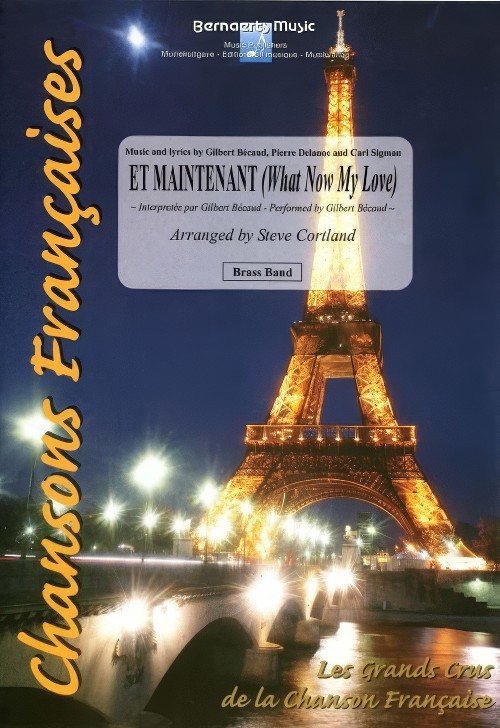
Et Maintenant (What now My Love) (Brass Band - Score and Parts) - Cortland, Steve
Performed by Gilbert Becaud. Duration: 03:15
Estimated dispatch 7-14 working days
-
 £54.99
What Sweeter Music (Brass Band - Score and Parts)
John Rutter, master of melody, is now available for your brass band. This beautiful carol tells the story of Christmas night and breathes the atmosphere of this joyous time. This arrangement does great justice to the original.
Estimated dispatch 7-14 working days
-
 £44.50
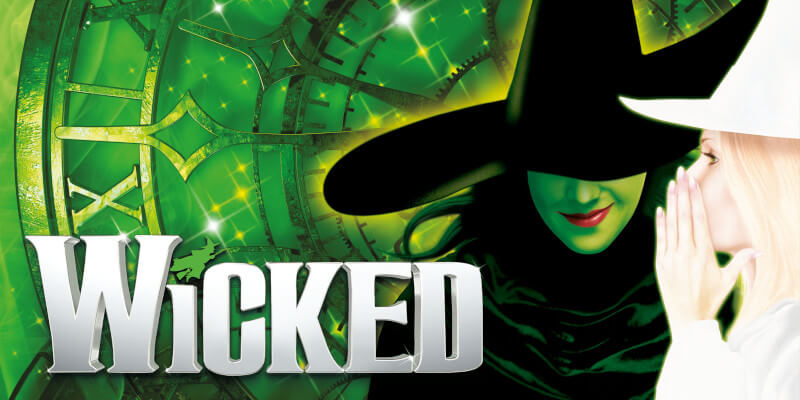
Wicked (Selections From) - Stephen Schwartz - Gavin Somerset
Since 2003, this smash hit musical telling the untold stories of the witched of Oz, has been entertaining audiences across the globe. The show has achieved worldwide success and broken box office records for weekly-gross-takings in New York, Los Angeles, Chicago, St. Louis, and London as well as holding the record for the biggest opening in the West End (�100,000 in its first hour on sale!) The music by Stephen Schwartz is a hit amongst audiences of all ages. Now, for the first time, the music is available for Brass Band in an arrangement personally approved by the composer. The arrangement by Gavin Somerset includes the well-known items "What Is The Feeling", "Dancing Through Life", "Popular" and the dazzling "Defying Gravity", of which "Defying Gravity" can be played as a stand-alone item, perfect for entertainments contests & encores etc. This is a feast of music, bringing variety to your concerts and a must for every bands library.
In Stock: Estimated dispatch 1-3 working days
-
£29.50
Dance of the Troglodytes - Naomi Styles
If your resident tuned percussionist hasn't had much to do of late, then why not present him or her with Dance of the Troglodytes? While not strictly a xylophone solo, it features this instrument strongly with fast arpeggios over a steady tune that gradually rises in intensity and excitement. 'Dance of the Troglodytes' is one of a modern day 'Carnival of the Animals' - a series of brass band tunes inspired by Christopher Lloyd's book 'What on Earth evolved?' which ranks the species which have most influenced planet Earth. The music celebrates Homo Sapiens, ranked by Lloyd as the 6th most influential species. Emerging from Africa about 160,000 years ago from Homo erectus stock, Homo Sapiens' quick thinking, manual dexterity and increasingly complex tool making skills made it the only surviving human species. Now we humans have spread to every corner of the globe, shaping it through agriculture, transportation and industry. Dance of the Troglodytes echoes the rise of humans as they emerge from primitive life and gradually create the complex world we live in today.
In Stock: Estimated dispatch 1-3 working days
-
£76.99
Durkle Bandrydge Suite - Bruce Fraser
Durkle Bandrydge is the name of the composers imaginary world, but it could very well be anyones invisible dream world with a different name. In this very versatile suite by Bruce Fraser, 8 characters are featured, each with its ownpeculiarities, making Durkle Bandrydge such a colourful place. Do these characters differ that much from us? That is for you to find out! In the last part, all characters come together in a special way.Durkle Bandrydge exists at the end ofyour street. It is invisible to humans, but Durkle Bandrygators can watch us with great interest. The music will introduce you to some of the characters who live in this unusual place. The parts: Somnanbulyss, who is a giant trollguarding the entrance to Durkle Bandryde. At least, he is supposed to, but he tends to sleep most of the time. His music is therefore very slow moving and sleepy. Long Gwysteen is a tall, mysterious, and somehow sophisticated character,who walls around with a shell on his back. His music glides along rather gracefully. Squelfitch is a rather unpleasant and smelly character who lives in a bog, which is why his music sounds rather slimy and a bit like trying to walkthrough quicksand. Perfydlia is a meddling old woman, who gossips about everybody and squeals with sudden delight at the small exciting bits of tittletattle about others in the village. In the music you can hear her sudden little squealsof delight. Maryann Lovely is a beautiful young lady, graceful, gorgeous, absolutely devine, and her music is obviously just the same. Thistledoo Nicely is a lively character who spends and spends and spends with her credit card,buying the latest fashion and never worries about having to pay the bills. Her music reflects her excitement when shopping and het 'happy go lucky' approach to life. Marsyn Edginton is the Lord of the manor, the richest man in town, the'big cheese', the man with all the power and, of course, the biggest house. He is very grand and his music like he could be a king. Jimmy McScotsmyn is a red haired scotsman wearing tartan cap. He misses his home country terribly and eatslots of shortbread, oatcakes, scotch eggs, porridge and drinks an enormous amount of Scotch Wisky, which helps him to have fond memories of the kind of music he would like to dance to when he was a younger man. His favourite dance is a Jig andthis is the music he remembers. Grand March of the Durkle Bandrydgators. We hope that you have enjoyed meeting these characters from Drukle Bandrydge and would invite you to listen to all the villagers now march along in a grand parade -it is a pity that you can not see them, what is a wonderful sight. If you listen carefully, you will hear the melodies which belong to the characters as they march past. Oh what a grand spectacle!
Estimated dispatch 5-14 working days
-
 £115.60
Dream of the Return - Pat Metheny - Ray Farr
Dream of the Return is one of the tracks on Pat Metheny's album of 1989 "Letter from Home".The CD recording is remarkable for its variety, imagination and musical artistry, and the combining of Latin American rhythms with jazz harmonyproduces magical results especially with Pat Metheny's guitar playing.While most tracks on the CD are instrumental, this song stands out because of its beautiful lyrics (by Pedro Aznar) which, roughly translated, are:I tossed a poemto the sea that took my questions and my voice.Like a sinking ship it was lost in the waves.I begged it not to return without having seen the open seaAnd in my dreams, show me what it had seen.Even if it did notcomeback I would know that it had journeyed.Floating all the time on calm or stormy seasEven though some safe haven waits.I waited long for its answer and almost gave up hope,And with a yearning voice I cried desperatelyto the heavens.Much later, somehow, it was washed ashore like an answered prayer.Now the rolling sea beats in my veins and sets my heart free
Estimated dispatch 5-14 working days
 View Music
 Listen to MP3