
Results
-
 £87.99
Lady Claus - Thierry Deleruyelle
The Christmas festive season is a time for sharing the most wonderful stories. There are few female characters in these tales. And yet, they do exist in many countries. In Italy, Mother Christmas is associated with the Befana; in Russia with Babushka; and with Lucia in Scandinavia, Frau Holle in Germany, Mari Lwyd in Wales, and Tante Arie in France. What these women have in common is that they too hand out presents to children.The music begins with a majestic introduction that draws us into the heart of the Christmas legends. The timpani and sleigh bells then launch into a fast, joyful, and dynamic section. Finally, the music softens, with a Christmas chorale heard across multiple sections. The piece ends in a hushed atmosphere, as if all that remained was a Christmas tree twinkling in the darkness.Lady Claus was commissioned by the Montbeliard Municipal Wind Band, conducted by Laurent Zemp, to mark its 150th anniversary. This work pays tribute to those legendary women who contribute to the beauty and magic of Christmas, not only by delivering presents but also by passing on the human values they embody.
Estimated dispatch 5-14 working days
-
 £119.50
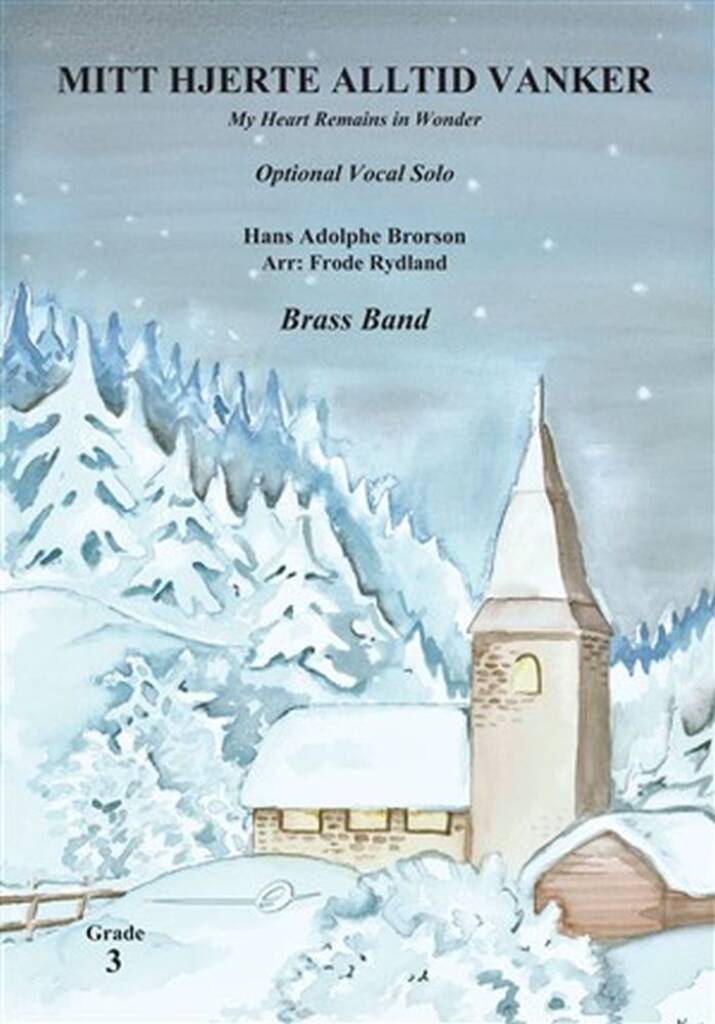
Mitt hjerte alltid vanker - Hans Adolphe Brorson - Frode Rydland
One of the world's most famous Christmas songs was composed by the Dane Hans Adolph Brorson, who was primarily a theologian and bishop, but is also recognized as one of Scandinavia's greatest composers of hymns. "My Heart Remains in Wonder" was first published in 1732.This arrangement was originally written for the Eikanger-Bjorsvik Musikklag with soloist Christine Gulbrandsen for their recording "A Christmas Journey with Eikanger-Bjorsvik."This published version has been adapted so that it can also be performed instrumental. What should be omitted when using a soloist is clearly noted in the score and parts.
Estimated dispatch 5-14 working days
-
The Crown of Roses - Tchaikovsky - Len Jenkins
Tchaikovsky wrote this in his 'Songs for Young People' in Moscow in 1883 to words by Pletchtcheev. The story it tells is about Jesus Christ when he was a young child, having a small wild garden in which roses grew. Passing children saw the roses and plucking them mockingly asked if he wove rose garlands in his hair. Christ says to take the roses, but to leave the thorns. Instead, they make a crown of these and forced it onto his head so that it bleeds, symbolic of what was going to happen later in his lifetime. The melody contains all the passion that we associate with Russian church music and is equally suitable for a contemplative Christmas or Passiontide. This arrangement is faithful to the four verses of the original lyrics, but with an optional ending half-way if preferred.
 View Music