
Results
-
 £90.00
Trittico (Brass Band - Score and Parts) - Curnow, James
Trittico was commissioned by the Swiss Brass Band Association for their national championships in 1988.A trittico is a triptych or group of three paintings or musical compositions based on a common theme and presented or performed together. The present work is a set of three extended variations on the American shaped-note hymn Consolation.The work opens in grand style with motives based on intervals of the hymn tune. The opening motif, and smaller fragments of it reappear throughout the piece and serve as an underlying element alongside the theme itself.The first variation is essentially a scherzo which echoes the minor mood of the theme. The hemiolic opposition of compound and duple time is used to good effect and, again, the main motif is never far away. This is music with energy and forward movement.The second variation gives the soloists a chance to shine. The mood is tranquil, yet there is always some activity and the musical material pre-echoes the third variation.The third variation is another scherzo-like section, the main theme accompanied by a rhythmic ostinato. Toward the conclusion there is a short aleatoric passage - a variation within a variation allowing half the band to make their own variations in a cacophony of sound. An energetic coda draws together several elements to round off a work brim full of drive, energy, and self-propelled enthusiasm.Recorded on Polyphonic QPRL044D Brass from the ValleysDuration: 13:30
Estimated dispatch 7-14 working days
-
 £37.95
Connotations (Brass Band - Score only) - Gregson, Edward
Connotations was commissioned for the 1977 National Brass Band Championship finals, held in the Royal Albert Hall, London (the winner, incidentally, of that particular competition was the famous Black Dyke Mills Band).At the age of 32 Gregson was the youngest composer to have received the honour of such a commission. It came at the end of a productive five years writing for the brass band publisher R Smith. Some of those works - The Plantagenets, Essay and Patterns for example, with their direct and tuneful style, have remained popular with brass bands the world over.For Gregson, these were the means by which he sharpened the tools of his trade, preparing the ground, as it were, for his finest work to date - Connotations. He thought of calling the piece Variations on a Fourth, but with due deference to Gilbert Vinter perhaps (Variations on a Ninth), he chose a more appropriate one. As Gregson has written, 'Connotations suggests more than one way of looking at something, an idea, and this is exactly what the piece is about'.Writing a competition piece brought its own problems. 'It has to be technically difficult and yet musically satisfying. I didn't like being kept to an eleven-minute maximum. The inclusion of short cadenzas for less usual solo instruments seems to signify a certain test-piece mentality'.Gregson solved the problems admirably by adopting a symphonic approach to variation form: Introduction - fanfares, a call to attention, in effect Variation 1; Theme - a six-note motif, given a lyrical and restrained first statement; Variation 2 - a delicate toccata; Variation 3 - typically robust in melody and rhythm; Variation 4 - lyrical solos; Variation 5 - a scherzo; Variation 6 - cadenzas; Variations 7-9 - an introduction, fugato and resounding restatement of the theme.Duration: 10.30
Estimated dispatch 7-14 working days
-
£74.95
Connotations (Brass Band - Score and Parts) - Gregson, Edward
Connotations was commissioned for the 1977 National Brass Band Championship finals, held in the Royal Albert Hall, London (the winner, incidentally, of that particular competition was the famous Black Dyke Mills Band).At the age of 32 Gregson was the youngest composer to have received the honour of such a commission. It came at the end of a productive five years writing for the brass band publisher R Smith. Some of those works - The Plantagenets, Essay and Patterns for example, with their direct and tuneful style, have remained popular with brass bands the world over.For Gregson, these were the means by which he sharpened the tools of his trade, preparing the ground, as it were, for his finest work to date - Connotations. He thought of calling the piece Variations on a Fourth, but with due deference to Gilbert Vinter perhaps (Variations on a Ninth), he chose a more appropriate one. As Gregson has written, 'Connotations suggests more than one way of looking at something, an idea, and this is exactly what the piece is about'.Writing a competition piece brought its own problems. 'It has to be technically difficult and yet musically satisfying. I didn't like being kept to an eleven-minute maximum. The inclusion of short cadenzas for less usual solo instruments seems to signify a certain test-piece mentality'.Gregson solved the problems admirably by adopting a symphonic approach to variation form: Introduction - fanfares, a call to attention, in effect Variation 1; Theme - a six-note motif, given a lyrical and restrained first statement; Variation 2 - a delicate toccata; Variation 3 - typically robust in melody and rhythm; Variation 4 - lyrical solos; Variation 5 - a scherzo; Variation 6 - cadenzas; Variations 7-9 - an introduction, fugato and resounding restatement of the theme.Duration: 10.30
Estimated dispatch 7-14 working days
-
 £80.00
St. Magnus - Kenneth Downie
Dedicated to Alastair Massey, an inspirational music teacher. Commissioned by the Scottish Brass Band Association for the 2004 European Brass Band Championships in Glasgow. This music is a set of variations on the tune known as St Magnus, which is attributed to Jeremiah Clarke. Most people will associate it with Thomas Kelly's hymn which begins: "The Head that once was crowned with thorns is crowned with glory now". The tune is very simple, consisting of just two, four-bar phrases. Neither is there much in the way of rhythmic variety, every note being a crotchet with the exception of two quavers, and the last note in each phrase. Within such a simple structure, however, lies considerable strength. THEME The listener is given the opportunity of hearing it twice, in full, at the beginning, starting with one player but soon taken up by the full ensemble. It returns in the middle of the music and is stated again near the end. This has been done quite deliberately in the hope that there will be an appreciation of what material is being developed, by the listener as well as by those with access to the score, who are able to see the visual connections. VARIATION 1 This takes the rhythm of the last part of the theme and also uses the shape of the opening as a recurring figure. The mood is whimsical and skittish, with short, teasing rhythmic figures tossed around the band, and quick interplay with percussion, at a fast tempo. An energetic flourish finishes this variation before the Andante espress. VARIATION 2 This commences with chords related to the opening of Variation 1. The cantabile on solo comets establishes a new, lyrical mood and there is scope for expressive playing in a series of short solo passages. The theme works its way unobtrusively into the texture before a reprise of the solo cornet melody and some more lyrical interchanges between Eb bass, euphonium, flugel horn and comets. The variation ends serenely with clear references to the last phrase of the theme. VARIATION 3 The first idea to dominate is clearly linked to the shape of the theme's first phrase. There is a frenetic feel to much of this variation, with considerable energy and instability created by extensive use of cross-rhythms. A thinning-out of the score marks a clear change to development of the start of the second phrase of the theme. This proves to be short-lived however, and the opening material returns leading to a restatement of the theme, "Maestoso," after which a euphonium cadenza links to Variation 4. VARIATION 4 Here we have some solos for euphonium, cornet, trombone and Eb bass set against a background of horns and baritones presenting a pensive statement of the theme's opening. VARIATION 5 This commences Allegro, with lively work for cornet and euphonium spreading to the whole band before attention focuses on the beginning of the second phrase of the theme which is initially presented in diminution, then in regular rhythm, then in inversion. An increase in tempo coupled with a decrease in volume, requires dexterity and control, with several metrical challenges thrown in for good measure. The same fragment of phrase becomes an ostinato which generates a frenzied climax, punctuated by short, dramatic silence, before the opening figure returns and the music gradually winds down. The tubular bells herald the final return of the theme, in augmentation, marking the start of the Finale. FINALE This features the running semiquavers of the previous variation sounding in counterpoint. A fast, furious coda speeds the work to a conclusion while references to the opening of the theme are still trying to break into the texture of the music. Kenneth Downie
Estimated dispatch 5-14 working days
-
 £76.99
Catedrales - Bert Appermont
Cathedrals have always appealed to the imagination. Hundreds of years of manpower have been invested in their building and it is not for nothing that today they represent imposing symbols of architecture and history. The cathedral is also a great source of inspiration for compositions, drawing on a full palette of acoustic echo effects, Gregorian melodies and organ based choral themes.The work "Catedrals" opens with a five tone motif using double tonguing which resonates through space. Then comes a Gregorian antiphonal theme "Salve Regina" which is heard in the euphonium and later combines with the opening motif. The quicker passage that follows is basedentirely on the intervals in the motif which by now has added rhythmic variations and develops in different forms, including a fugue. The work then builds towards its first climax, from which unusual muted sounds emerge creating an atmosphere shrouded in mystery.Gradually, more melodious fragments are added to the Gregorian antiphonal theme which develops into an expansive choral, emulating the organ and which rises above the sound mass. The work grows more powerful and brilliant in sound until it culminates in a short and explosive finale wherein elements from the whole work come together.
Estimated dispatch 5-14 working days
-
 £104.99
Brass Metamorphosis - James Curnow
Brass Metamorphosis as the title suggests is a set of variations based on an original theme. Each of the five variations is in a different style with the first being a lively rondo, the second slow and intense, the third an agile scherzando, the fourth slow and expressive and the fifth full of majesty as it brings the piece to a triumphal close.
Estimated dispatch 5-14 working days
-
 £137.99
Metamorphosis - Jan de Haan
The opening of this three-movement work features an initial appearance of the thematic material that returns in various guises later on in the work. The leitmotiv centres on a minor second.A range of thematic variations is heard in the lively and energetic Metamorphosis One. This movement is interrupted by an atmospheric meno mosso, containing melodic passages that return to the opening theme. Metamorhosis Two is characterised by various changes in tempo and musical character. Seven different soloists transform the thematic material each in their own way. This eventually culminates in a passionate tutti passage.The source of inspiration for Metamorphosis Three isthe so-called BACH-motif, a musical autograph consisting of the notes B flat, A, C and B. This distinctive motif arises from the leitmotiv (here a descending minor second), which continues to evolve through various transpositions and transformations. For the composer, this spectacular last movement is an homage to one of the greatest and most influential composers in the history of music: Johann Sebastian Bach.
Estimated dispatch 5-14 working days
-
 £106.99
Kaleidoscope - Philip Sparke
Kaleidoscope is a set of five variations of on the 'Brugger Lied' (Brugg Song) which is the traditional song of the town of Brugg. The lyrics tell of the geography, people and traditions of this charming and historic town, which is situated in the north of Switzerland, near to the German border, about halfway between Basel and Zurich.Each variation is based on tiny extracts of the theme, the whole piece therefore resembling the effect of a kaleidoscope, which juxtaposes small fragments of colour in a constantly changing pattern.
Estimated dispatch 5-14 working days
-
 £59.99
Merry-Go-Round - Philip Sparke
Merry-Go-Round is a mini concerto for band in which each section takes a turn as soloist. On a merry-go-round the viewpoint is constantly changing, this being portrayed by different instrumental groups playing variations on the main theme, continually coming to the fore. This attractive work will bring all the excitement of the fairground to your concert.
Estimated dispatch 5-14 working days
-
 £42.00
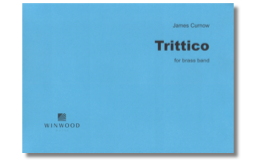
Trittico (Score only) - James Curnow
Trittico was commissioned by the Swiss Brass Band Association for their national championships in 1988. A trittico is a tripych or group of three paintings or musical compositions based on a common theme and presented or performed together. The present work is a set of three extended variations on the American shaped-note hymn Consolation. The work opens in grand style with motives based on intervals of the hymn tune. The opening motif, and smaller fragments of it reappear throughout the piece and serve as an underlying element alongside the theme itself. The first variation is essentially a scherzo which echoes the minor mood of the theme. The hemiolic opposition of compound and duple time is used to good effect and, again, the main motif is never far away. This is music with energy and forward movement. The second variation gives the soloists a chance to shine. The mood is tranquil, yet there is always some activity and the musical material pre-echoes the third variation. The third variation is another scherzo-like section, the main theme accompanied by a rhythmic ostinato. Toward the conclusion there is a short aeleatoric passage - a variation within a variation allowing half the band to make their own variaitions in a cachophony of sound. An energetic coda draws together several elements to round off a work brim full of drive, energy, and self-propelled enthusiasm. Duration: 13:30
Estimated dispatch 7-9 working days
 View Music