
Results
-
 £59.99
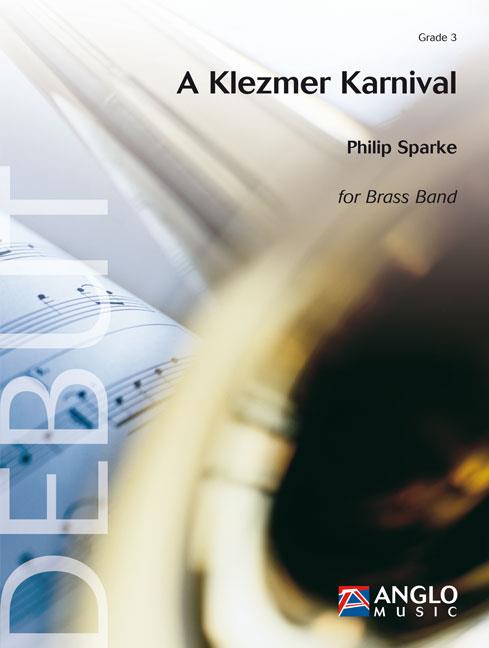
A Klezmer Karnival (Brass Band - Score and Parts) - Sparke, Philip
Klezmer music originated in the 'shtetl' (villages) and the ghettos of Eastern Europe, where itinerant Jewish troubadours, known as 'klezmorim', had performed at celebrations, particularly weddings, since the early Middle Ages. Since the 16th century, lyrics had been added to klezmer music, due to the 'badkhn' (the master of ceremony at weddings), to the 'Purimshpil' (the play of Esther at Purim) and to traditions of the Yiddish theatre, but the term gradually became synonymous with instrumental music, particularly featuring the violin and clarinet. In recent years it has again become very popular and in A Klezmer Karnival Philip Sparke has used three contrasting traditional tunes to form a suite that will bring a true karnival atmosphere to any concert.Duration: 4:30
Estimated dispatch 7-14 working days
-
 £19.99
Elegy (Brass Band - Score and Parts) - Hesketh, Kenneth
Elegy is a consortium commission in celebration of the 75th birthday of the distinguished wind band conductor Timothy Reynish. The music derives from a youthful symphony written when Hesketh was 16, the same source as his popular Masque. Full of big tunes and bitter-sweet harmonies, Elegy is a heartfelt thank you to a conductor who has done more than most to widen the vision of the wind orchestra movement.Suitable for 1st Section Bands and aboveDuration: 7.00
Estimated dispatch 7-14 working days
-
 £40.00
Slavonic Dance No.8 (Brass Band - Score and Parts) - Dvorak, Antonin - Littlemore, Phillip
Antonin Dvorak composed his first set of eight Slavonic Dances in 1878. The music is lively and overtly nationalistic, although the tunes themselves are all original and are not taken from any Slavic folk dances. Slavonic Dance No.8 is high-spirited and in the style of a furiant, the boldest of Czech folk dances. Although written in a 3/4 metre throughout, Dvorak creates cross-rhythms that shift this metre in to 2/4, which is an important characteristic of the furiant. Duration: 4.10
Estimated dispatch 7-14 working days
-
 £44.95
Deus Solus (Brass Band - Score and Parts) - Wainwright, Andrew
Deus Solus (meaning God Alone) was composed for the Melbourne Staff Band's 130th anniversary at the request of Bandmaster Ken Waterworth. It is based on three Christian tunes - the 18th century hymn O God, our help in ages past, and the more contemporary songs God and God alone (Phill McHugh) and Chris Bowater's Faithful God. The work begins quietly and with a sense of the unknown, with references to O God, our help in ages past, alluding to the formation and early days of the band.
Estimated dispatch 7-14 working days
-
£34.95
Salsalvation (Brass Band - Score and Parts) - Mackereth, Andrew
In writing this piece the composer set out to emulate the sound of the Stan Kenton big band and music of that 'golden' era. The piece itself is based around two Salvation Army tunes that are associated with the word, 'salvation'; Steadily forward march! (T.B. 799) and Hark, hark, my soul (T.B.542). The music is intentionally flamboyant and requires a secure grasp of the style and rhythm to be successful. It was featured at the Belfast Temple Music School to great effect.
Estimated dispatch 7-14 working days
-
£17.50
Salsalvation (Brass Band - Score only) - Mackereth, Andrew
In writing this piece the composer set out to emulate the sound of the Stan Kenton big band and music of that 'golden' era. The piece itself is based around two Salvation Army tunes that are associated with the word, 'salvation'; Steadily forward march! (T.B. 799) and Hark, hark, my soul (T.B.542). The music is intentionally flamboyant and requires a secure grasp of the style and rhythm to be successful. It was featured at the Belfast Temple Music School to great effect.
Estimated dispatch 7-14 working days
-
£69.95
Dance Music (Brass Band - Score and Parts) - Downie, Kenneth
This music takes the form of a suite in four movements. The ever-changing spirit of the dance is reflected in the contrasting styles of each movement, ranging from the gentle lullaby to more boisterous and lively moods. Careful listeners will identify references to dance-associated tunes in each movement, concluding with the Christmas carol, 'Tomorrow shall be my dancing day'. The music is planned to be versatile and any one movement could be performed as a stand-alone item if required.
Estimated dispatch 7-14 working days
-
£34.95
Dance Music (Brass Band - Score only) - Downie, Kenneth
This music takes the form of a suite in four movements. The ever-changing spirit of the dance is reflected in the contrasting styles of each movement, ranging from the gentle lullaby to more boisterous and lively moods. Careful listeners will identify references to dance-associated tunes in each movement, concluding with the Christmas carol, 'Tomorrow shall be my dancing day'. The music is planned to be versatile and any one movement could be performed as a stand-alone item if required.
Estimated dispatch 7-14 working days
-
 £29.95
Dalaro (Brass Band - Score and Parts) - Gregson, Edward
The name of Edward Gregson is well known in Salvationist circles as well as in the wider music world, his music receiving performances and being recorded and published regularly. This music is individual and of high worth with an assured technique. It is always a pleasurable task for the musician to handle music with these qualities, whether one is editor, conductor or player.Written in connection with the International Salvation Army Students' Fellowship Conference held in Dalaro, Sweden in 1964, this is a 'festival' rather than processional march. Section C is a tune from the Swedish Tune Book (No. 303 in the 1945 edition), Jag gar till det land dar ovan (I go to that Land above). There is a slight divergence from the tune book version (labelled, by the way, as an English tune); this could well be the manner in which the tune is sung - we are all aware of the way in which congregations modify tunes.
Estimated dispatch 7-14 working days
-
£29.95
A Joy Untold (Euphonium Solo with Brass Band - Score and Parts) - Camsey, Terry
This short, light-hearted solo has been described as The Salvation Army's answer to 'The flight of the bumble bee' and requires facility from the soloist and accurate accompaniment from the band. The solo opens and closes with whimsical references to Erik Leidzen's famous euphonium solo 'The Song of the Brother' and includes the tunes 'A robe of white' and 'I'll serve Thee'.
Estimated dispatch 7-14 working days
 View Music