
Results
-
 £44.95
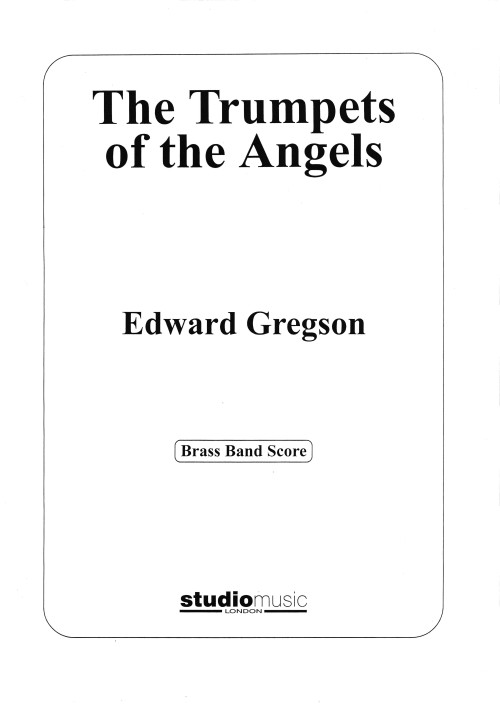
The Trumpets of the Angels (Brass Band - Score only) - Gregson, Edward
The Trumpets of the Angels was commissioned by the Fodens (Courtois) Band for their centenary concert at The Bridgewater Hall in 2000. It is based on a work written for the BBC Philharmonic and Huddersfield Choral Society in 1998, the starting point of which was a quotation from the Book of Revelation:and I saw the seven angels which stood before God; and to them were given seven trumpetsThus the idea behind the work is dramatic and I have tried to achieve this by the spatial deployment of seven solo trumpets around the band, four on-stage, the others off-stage. Six of the solo trumpets eventually join the band, but Trumpet 7 remains off-stage and, indeed, has the most dramatic and extended cadenza representing the words of the seventh angel ...and time shall be no more.The Trumpets of the Angels is a large-scale work, scored for seven solo trumpets, brass band, organ and percussion (deploying 'dark' instruments such as tam-tams, bass drum and two sets of timpani). The work opens with a four-note motif announced by off-stage horns and baritones and answered by fanfare figures on solo trumpets. In turn, each of the first four solo trumpets play cadenzas and then all four join together, independently playing their own music. The organ enters dramatically with its own cadenza, leading to the entry of solo trumpets 5 and 6 with music that is more urgent and rhythmic, describing the horsemen of the Apocalypse.The music reaches another climax, more intense this time, with the horns and baritones (now on-stage) again sounding the transformed motif, before subsiding into what might be described as a lament for humanity, slow music which builds from low to high, from soft to loud, with a melody that is both simple and poignant. At the climax, Trumpet 7 enters playing the opening four-note motif, dramatically extended to almost three octaves. This cadenza (to the partial accompaniment of tam-tams) introduces new material and foreshadows the ensuing scherzo which is fast and aggressive. Despite the somewhat desolate mood of this music, it slowly moves towards an optimistic conclusion, transforming the 'humanity' music into an affirmative and triumphant statement.- Edward Gregson
Estimated dispatch 7-14 working days
-
 £99.95
Carols for Band (Brass Band Set) - Sparke, Philip
Designed to be playable by any combination from quartet to full brass band, wind band or orchestra, the arrangements in this book with provide a practical solution to all your carolling needs. Parts are divided into Soprano, Alto, Tenor and Bass so that any suitable instrumentation will sound well, providing an equal balance of players per voice is maintained. The carols are printed in alphabetical order so they are easy to find, and comprehensively indexed under both first line and name of tune.Score, Timpani and Percussion parts are available separately.Instrumentation is as follows: Brass BandWind BandStringsSopranoEb Soprano CornetSolo Bb CornetBb Repiano & Flugel1st Flute & Piccolo2nd FluteOboe1st Bb Clarinet1st Bb Trumpet/Cornet1st ViolinAlto2nd & 3rd Bb CornetSolo Eb Horn1st Bb Trombone2nd & 3rd Bb ClarinetsEb Alto Saxophone2nd Bb Trumpet/Cornet1st F Horn2nd ViolinTenor1st & 2nd Eb Horns1st & 2nd Bb Baritones2nd Bb Trombone1st Bb EuphoniumEb Alto ClarinetBb Tenor Saxophone2nd F Horn1st & 2nd TrombonesViolaBassBass Trombone2nd Bb EuphoniumEb BassBb BassBassoonBb Bass ClarinetEb Baritone SaxophoneBass TromboneEuphoniumTubaCello/BassTitles included:Angels from the Realms of GloryAs with Gladness Men of OldAway in a MangerBrightest and BestChristians AwakeCoventry CarolDeck the HallsDing Dong, Merrily on HighFirst NowellGod Rest ye Merry, GentlemenGood King WenceslasHark the Glad SoundHark, the Herald Angels SingHolly and the IvyI Saw Three ShipsIn Dulci JubiloIn the Bleak Mid-WinterInfant HolyInfant KingIt Came Upon a Midnight ClearJingle BellsLo, He Comes with Clouds DescendingLove Came Down at ChristmasO Come, All ye FaithfulO Come, O Come, EmmanuelO Little Town of BethlehemOf the Father's Love BegottenOnce in Royal David's CitySans Day CarolSee Amid the Winter's SnowSilent NightSussex CarolThou Didst Leave Thy ThroneUnto Us is Born a SonWe Wish You a Merry ChristmasWhile Shepherds WatchedThe Brass Band Set consists of 25 Parts:1 x Eb Soprano Cornet4 x Solo Bb Cornet2 x Bb Repiano & Flugel4 x 2nd & 3rd Bb Cornet1 x Solo Eb Horn2 x 1st & 2nd Eb Horn2 x 1st & 2nd Bb Baritone1 x 1st Bb Trombone1 x 2nd Bb Trombone1 x Bass Trombone1 x 1st Bb Euphonium1 x 2nd Bb Euphonium2 x Eb Bass2 x Bb Bass
Estimated dispatch 7-14 working days
-
 £29.95
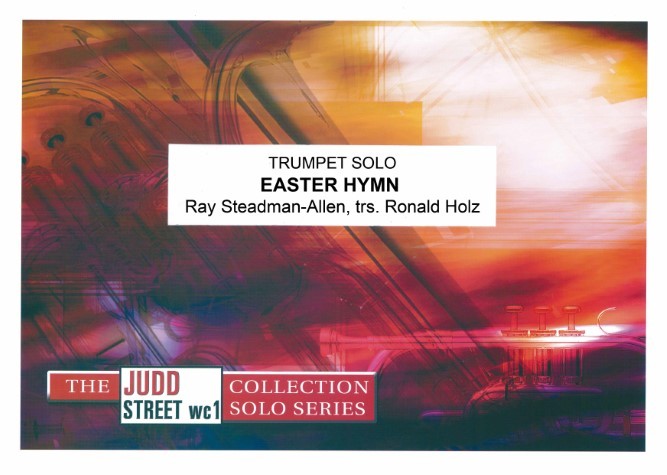
Easter Hymn (Trumpet Solo with Brass Band - Score and Parts) - Steadman-Allen, Ray - Holz, Ronald
Ray Steadman-Allen sketched this short, festive arrangement in the early 1990s.While labelled by RSA as a Trumpet Solo, a Cornet soloist would also be appropriate. The piece should not prove difficult to prepare except in terms of maintaining balance between the soloist and the band. Some of the harmonies are quite unexpected, even curiously dissonant in the late RSA style. However, such sounds should help the listener hear this traditional hymn in a new and vital manner. The piece would serve well as an Intrada on Easter Sunday, or during any celebratory occasion in Eastertide.
Estimated dispatch 7-14 working days
-
 £98.00
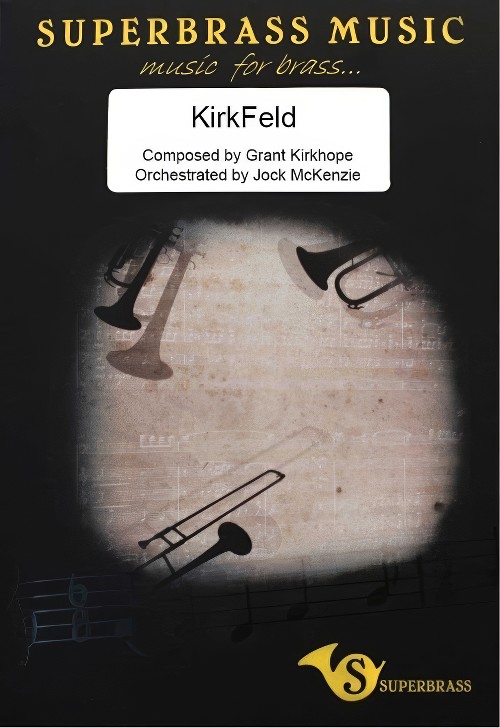
KirkFeld (Trombone Solo with Brass Band - Score and Parts) - Kirkhope, Grant - McKenzie, Jock
Written for Ian Bousfield and the International Trombone Festival 2017. Grant Kirkhope is a BAFTA nominated British composer who has created the soundtrack for video games that have sold in excess of 30 million copies. From "GoldenEye" to "Banjo-Kazooie", "Viva Pi?ata" to "Donkey Kong", "Kingdoms of Amalur: Reckoning" to "Civilization: Beyond Earth" and "Perfect Dark" to "Castle of Illusion starring Mickey Mouse". He has also recently scored the feature film "The King's Daughter" starring Pierce Brosnan and William Hurt and is currently working on "Yooka Laylee" and "Dropzone". Grant's score for "Viva Pi?ata" was nominated by BAFTA in the Original Score category in its 2007 awards. Grant is represented by the prestigious Gorfaine/Schwartz Agency by Cheryl Tiano and Kevin Korn. Grant has a degree in music from the Royal Northern College of Music, Manchester, where he majored in classical trumpet, is a green card holder and now lives in Agoura Hills, LA with his wife and two children. "Ian and I first met when we were around 15 years old. We both played in our county orchestra, the North Yorkshire Schools Symphony Orchestra (I was a trumpet player). I think we hit it off straight away, as we were definitely a couple of cheeky kids, if you know what I mean! We both ended up playing in Rowntree Mackintosh Brass Band for a while too which Ian's Dad, Trevor conducted. We bumped into each other again when we both went for the Shell/LSO Scholarship. I got to the area finals in Manchester so I was pretty pleased with myself but then I saw Ian and I knew it was all over! Of course Ian went on to win and the rest is history. I saw him again when I was attending the Royal Northern College of Music around 1983 by which time Ian had just got the principal chair at the Halle Orchestra. Then I guess 30 something years went by as we both went about our lives and lost touch. We re-kindled our friendship due to his wife really. She emailed me to say it was Ian's 50th birthday and she was collecting stories from all his friends over the years. After that we got back in touch and then one day on Facebook I got a message from him in typical dry Yorkshire fashion "now then Grant, I had a listen to your music and I think it's good, how about writing a piece for me ?" I was a little bit unsure at first but of course I loved Ian's playing and of course I said yes. Over a Skype call in 2016, he asked me what I thought I'd write. I said since I live in LA I'd like to write a "Hollywood" trombone piece. Imagine if John Williams had written a piece for solo trombone, that's what I'd like to write - well I'd certainly like to try" - Grant Kirkhope
Estimated dispatch 7-14 working days
-
 £56.00
Rompe Sprezza (Vocal and Piccolo Trumpet Duet with Brass Band - Score and Parts) - Scarlatti, Alessandro - Lorriman, Howard
for Voice (Soprano), Piccolo Trumpet in A and Brass Band
Estimated dispatch 7-14 working days
-
 £34.95
March Of The Hours (Brass Band - Score and Parts) - Soderstrom, Emil
March of the Hours was first performed at Star Lake Music Camp in 1962 with the composer supplying an informative listening guide which was printed in the published score; "The phrases are of 12 crotchets each (three bars) signifying the 12 hours. Up to the trio, the music describes the headlong search for pleasure by the thoughtless. Abruptly, the trio brings 'I need thee every hour', but an episode employing the original theme pushes it aside until it reappears, this time against a background of chimes of the full hour (Westminster chimes). While the hour strikes 12, a paraphrase of the opening strains of 'When the trumpet of the Lord shall sound and time shall be no more' is heard. Here the music stops, to be followed by the trumpet sounding (cornets and trombones) and the rest of the band responds with 'When the roll is called up yonder' with a final 'I'll be there'."
Estimated dispatch 7-14 working days
-
£17.50
March Of The Hours (Brass Band - Score only) - Soderstrom, Emil
March of the Hours was first performed at Star Lake Music Camp in 1962 with the composer supplying an informative listening guide which was printed in the published score; "The phrases are of 12 crotchets each (three bars) signifying the 12 hours. Up to the trio, the music describes the headlong search for pleasure by the thoughtless. Abruptly, the trio brings 'I need thee every hour', but an episode employing the original theme pushes it aside until it reappears, this time against a background of chimes of the full hour (Westminster chimes). While the hour strikes 12, a paraphrase of the opening strains of 'When the trumpet of the Lord shall sound and time shall be no more' is heard. Here the music stops, to be followed by the trumpet sounding (cornets and trombones) and the rest of the band responds with 'When the roll is called up yonder' with a final 'I'll be there'."
Estimated dispatch 7-14 working days
-
 £26.50
 -
£33.00
One Note Bugler (Novelty) (Trumpet/Brass Band)
Trumpet Solo with Brass Band. Novelty piece.
Estimated dispatch 7-14 working days
-
 £28.95
Gypsy Trumpeter (Trumpet Solo with Brass Band - Score and Parts) - Smith, Peter B.
A solo for trumpet and brass band
Estimated dispatch 7-14 working days
 View Music