
Results
-
 £69.99
Thumbs Up! - André Waignein
This piece definitely gets a Thumbs Up! Andre Waignein has created an exciting and varied original work in which the solo part can be played, depending on setting, availability, and occasion, by a cornet or vibraphone. Thumbs Up! consists of a slow and a fast movement that are linked together, which are fun to play and will delight the audience at your next concert.
Estimated dispatch 5-14 working days
-
 £154.99
Bulgarian Dances (Part II) - Franco Cesarini
Bulgarian folk music has a long tradition and numerous typical characteristics, such as particular dissonances and complex, irregular rhythms. In Bulgarian Dances (Part II) (which can be performed together with the previously published title Bulgarian Dances) Franco Cesarini has preserved the original spirit of Bulgarian folk music, yet has imbued it with a symphonic character and brought it into the concert hall. The three different movements give us a meditative, moving folksong and a lively dance, before a distinctly symphonic part leads to a glittering finale.
Estimated dispatch 5-14 working days
-
 £69.99
Sunset Serenade - Thomas Doss
Sunset Serenade is a tribute by the composer to a music colleague, whose life was unexpectedly cut short. In spite of the sad circumstances of its creation, the music reflects overwhelmingly happy memories and thoughts of gratitude for timespent together and shared experiences. The overall peaceful nature of this composition symbolises a reconciliation with, and acceptance of, the transient nature of man.
Estimated dispatch 5-14 working days
-
 £102.99
The Three Towers - Marc Jeanbourquin
The Three Towers is an attractive suite about three historical monuments that still adorn the old ramparts of the Suisse town of Fribourg. The three towers are depicted in as many contrasting movements, with solo passages featuring in the second movement. Together they form a concert piece, accessible for the lower divisions, which is interesting for the audience as well as the musicians.
Estimated dispatch 5-14 working days
-
 £79.99
Liberty Fanfare - John Williams
Liberty Fanfare follows the successful pattern that John Williams has made his own in a series of ceremonial fanfares. The grandeur and energy that are heard in this exciting short work form a juxtaposition and eventual combination of lively fanfare figures together with a broader theme. It's concise form and simple directness makes a bold opening statement for any concert.
Estimated dispatch 5-14 working days
-
 £134.99
Tuba Concerto - Philip Sparke
When writing his tuba concerto, Philip Sparke wanted to create a work which explored the many aspects of the instrument's technical and vocal qualities but without resorting to caricature. The result is a concerto in two joined movements, which can both be programmed individually, that contains both many lyrical lines together with stunning virtuosic passages. An outstanding concerto that tuba players and brass band audiences alike will enjoy and applaud.
Estimated dispatch 5-14 working days
-
 £87.99
Moon Song, Sun Dance - Philip Sparke
Moon Song, Sun Dance was commissioned by Flugel Horn virtuoso, Claude Romailler, and premiered by him at the Swiss National Solo and Quartet Championships in April 2012. As the title implies, the work is in two contrasting movements, which can be performed separately or together.Moon Song opens with a flowing modal theme, which the soloist embellishes before the band takes centre stage. A central section brightens the mood with a new melody over the lightest of accompaniments; this is once again developed by the soloist until the original theme reappears, played by the band. This introduces a cadenza for the soloist which either closes the movement, or canbe extended to link directly to the second movement.Sun Dance is a vivace 6/8 scherzo which opens with a flourish from the band. The soloist then introduces the main theme, which in turn is taken up by the band. A short bridge passage heralds a change of key and a new melody from the soloist. A brief central interlude then introduces a change of meter and recalls the main melody of Moon Song, before a recapitulation leads to a florid coda, which brings the work to a close.
Estimated dispatch 5-14 working days
-
 £164.99
Diamond Concerto - Philip Sparke
Diamond Concerto was commissioned by Musikverein Morschied from Germany - Dr. Eric Grandjean, conductor - for a special concert featuring Steven Mead as guest soloist. Together they gave the world premiere on 28th April 2012 in the town theatre of Idar-Oberstein.The commission is a highlight in the 30-year friendship between composer and soloist, which has included many mutual CD projects and concerts and, now, a concerto. Sparke had Steven Mead's special euphonium sound in his head throughout the composition process and made free use of the variety of styles which the world-renowned virtuoso has made his own during his highly successful solo career.The village ofMorschied lies to the west of Frankfurt am Main in the area known as the German Road of Precious Stones, which is famous for its thriving gem industry. Because of this it was decided to give the commission a local connection by choosing the title, Diamond Concerto. Each of the three movements is named after a famous diamond:1 EARTH STARis rather stern in mood, opening with a free fantasy for the soloist over a static chord from the band. This leads to an Allegro Moderato in minor mode where small motives are gradually repeated and developed by both band and soloist.2 OCEAN DREAMuses a varied quote from the composer's Music for Battle Creek, including a melting slow melody that was originally written with Steven Mead in mind.3 BLUE HEARTwas written, at Steven Mead's suggestion, in bebop style and takes the form of a jazz waltz. The quasi-improvisatory central section features a call-and-response passage for the soloist and upper woodwinds.Soloist: Difficulty 6Diamond Concerto is available for euphonium and piano (AMP 374-401) as well as for euphonium and concert band (AMP 354-010).
Estimated dispatch 5-14 working days
-
 £69.99
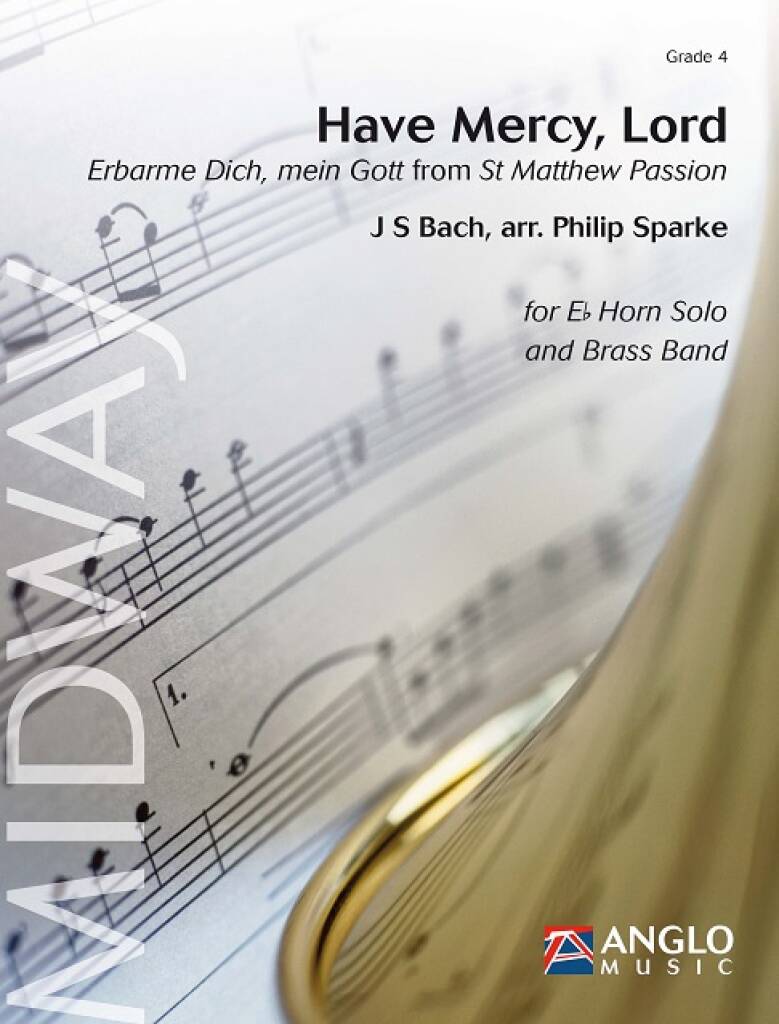
Have Mercy, Lord - Johann Sebastian Bach - Philip Sparke
Have Mercy, Lord from J.S. Bach's St Matthew Passion is one of the most beautiful arias from the baroque period. In Philip Sparke's arrangement, it is envisaged that the soloists stand together as a group stage right, while the other musicians stand behind to form the tutti group. This piece is easily playable for both the soloists and the band, and will create a beautiful moment of reflection whether performed on the concert stage or in a church.
Estimated dispatch 5-14 working days
-
 £72.99
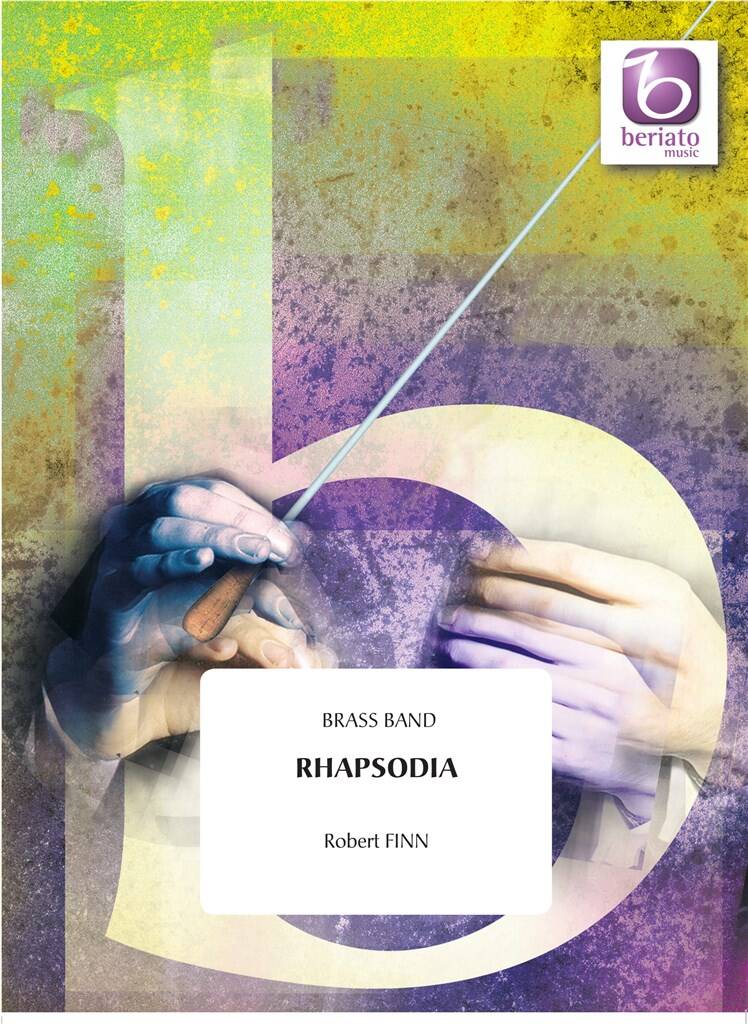
Rhapsodia - Robert Finn
Rhapsodia is a composition full of contrasts, where listener and performer are pulled along together in a musical and emotional adventure. Many human feelings are expressed in the characteristic cinematic style of Robert Finn, making this work an absolute must for every band.
Estimated dispatch 5-14 working days
 View Music