
Results
-
 £115.60
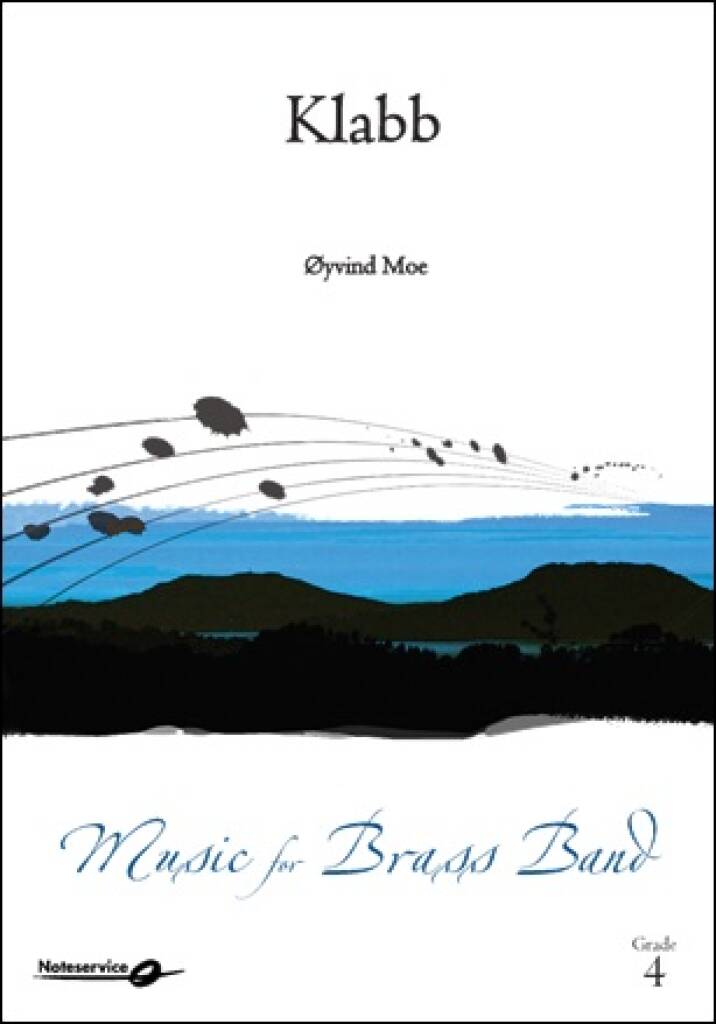
Klabb - Øyvind Moe
Klabb was written in 2010 for the brass band at Manger Folkehogskule and conductor Bjorn Sagstad. The piece consists of a series of short related episodes based on the whole-tone scale, but intermittently tending towards traditional "major" tonality. "Klabb" can refer to punching someone - and the piece is certainly meant to pack a punch - but the common meaning of the word comes from snow clumping to the undersides of skis, or more generally, something that makes for laborious progress. The whole-tone scale is directionless in that it has no implicit pull towards a tonal center, complicating the creation of meaningful and believable harmonic development. In thisrespect, the title can be seen as the composer's expression of frustration with his own choice of basic material (it seemed like a good idea at the time ...). For the performers, the unusual fingering combinations are what constitute the "klabb". Good luck, and don't forget to wax!
Estimated dispatch 5-14 working days
-
 £127.30
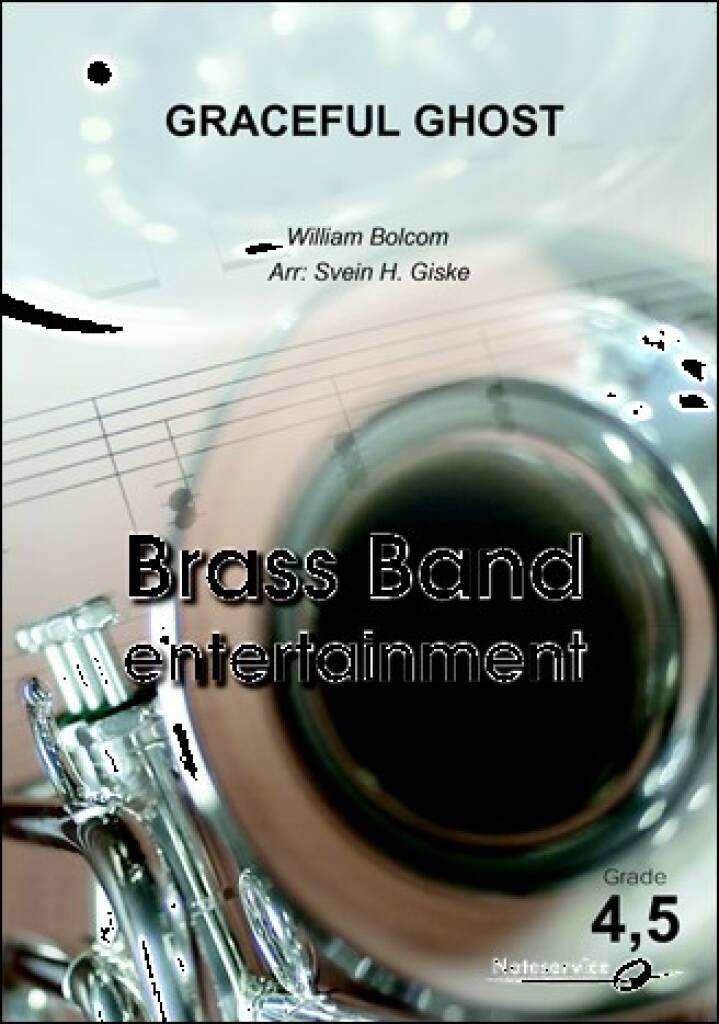
Graceful Ghost - William Bolcom
I came to know of this piece when hearing famous Norwegian ragtime pianist Morten Gunnar Larsen playing it at a concert with the Norwegian Navy Band Bergen. I was struck by its melancholic beauty and wanted to arrange it for band.Ragtimes are rarely in a minor key (which this one is) and when you first hear it, you might think it was written around the time when Scott Joplin was the main ragtime composer. But, if you listen more carefully, you notice that some of theharmonies are more advanced than one might expect in traditional ragtime, giving the piece a slightly more contemporary feel. The composer William Bolcom wrote Graceful Ghost in 1970 to honour the memory of his father and it is one of hismost popular pieces.
Estimated dispatch 5-14 working days
-
 £88.10
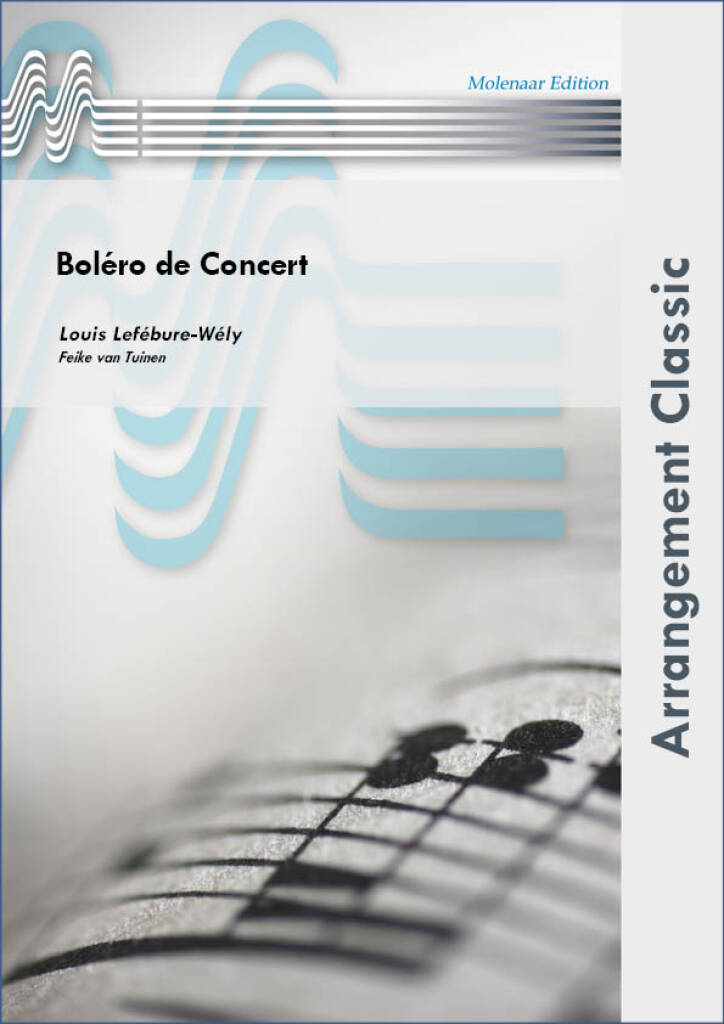
Bolero De Concert - Louis Jaime Alfred Lefebure-Wely - Feike van Tuinen
After having heard this piece for the first time at an organ recital, Feike van Tuinen was convinced that an orchestral version would be fantastic and would work very well. This piece has a stimulating character and the use of castanets will create a Spanish atmosphere at your next concert. Strongly recommended!
Estimated dispatch 5-14 working days
-
 £59.80
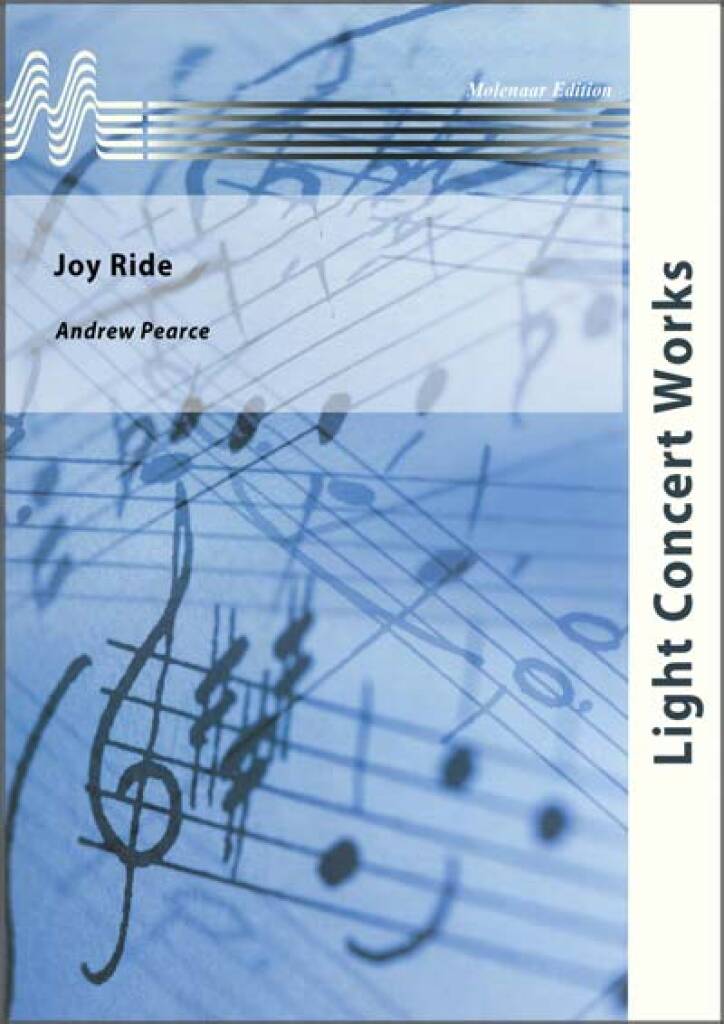
Joy Ride - Andrew Pearce
While conducting younger groups in the UK, Andrew Pearcer wrote a funky and accessible piece that younger musicians would appreciate playing. The piece begins with a repeated quaver motif in low brass which is answered by a funky riff in Saxophones. It is cool, fun and will keep the younger bands entertained and cheerful as they learn it in no time.
Estimated dispatch 5-14 working days
-
£127.30
Dancing Trolls [Norwegian Dance] - Øystein Olsen Vadsten
"Dancing Trolls" is a sequel to "The Battle of the Hats", which was published in 2015. Like "The Battle of the Hats", "Dancing Trolls" is a piece of music based on Norwegian traditional dances. This time around,its the reinlender dance which takescentre stage.The music is composed by Oystein Olsen Vadsten who keeps the strong melodic and tempo, which is dear to this kind of dance. Admittedly given a make-over with a more rhythmic accompaniment and more exciting harmonization.Thismakes it a fun piece, both to Listen to and play. The reinlender dance derives from the Rhineland in Germany,and is also known as the German Polka.To the conductor:Because this is a dance form whichis dependent on the right "swing",it is of great importance to keep as close to the metronome mark as possible. A steady groove, primarily specified by the drum set, is also essential for a good result. Remember to keep a good balance between the melody carrying instruments and theaccompaniment. Good luck and have fun with this "crazy" little tune.
Estimated dispatch 5-14 working days
-
 £271.60
Aubade - Dawn Songs of the Fabulous Birds - Torstein Aagaard-Nilsen
Commissioned by The Norwegian Band Federation for The European Brass Band Championship 2003, in Bergen, Norway (Third edition) I remember as a kid the very early morning wake-up ceremonies caused by Seagulls having a "party" outside our home. Very few would describe it as beautiful, particularly not at 4:30 in the morning... But by listening carefully to birds I was fascinated by their diversity and musical language: they dont sing tunes or long phrases, they rather make sounds and signals, based on short motives. Aubade is based on musical pictures of the imaginary birds: the creatures with wings that exists only in myths and legends. The whole story starts with aBaritone-cadenza that evoke all the sleeping creatures. Very soon they all start to sing their songs in one way or another. The composition has a burlesque scherzo-character including slow espressive intersections. Traditional elements like melody and harmony is combined with extensive sounds and textural effects created by use of multiple muting, singing and playing at the same time. I am not too concerned about having a program for the piece. I just know that by thinking of the unheard dragon-songs, griffin-songs, the sound of the dodo, my creativity was stimultated. As a piece of music, Aubade follows its own rules based on well-known elements like melodies, arpeggio-figures, harmonies, rhythms, variations and recapitulation of ideas. - Torstein Aagaard-Nilsen
Estimated dispatch 5-14 working days
-
 £137.70
Why Not? - Michel A. Camilo - Lars Erik Gudim
"Why Not?" is the most well-known piece by Dominican Republic pianist/composer Michel Camilo. It appeared for the fist time on his 1984 album record "French Toast". He re-recorded it in 1985 for the "Why Not?"-album whoich is among his best-selling to date. The song has also been recorded by other artist like the vocal group The Manhattan Transfer. "Why Not?" ia a modern latin-jazz classic and this demaning arrangement for Brass Band captures the featureless and musical challenges of the original piece.
Estimated dispatch 5-14 working days
-
 £115.60
Run Away - Hans Offerdal
This piece is about running away. First there is restlessness, then the escape begins. But what are we running away from? That is for you to find out!Playing time: appx. 4:30 To the conductor:There are challenges in the use of dynamics and rhythm. It is important that energy and pace is upheld all the way up until the next to last page. Dissonances are present several places, but the voice leading is diatonic within the given scale.The whole piece is based on one single scale: F melodic minor with lowered second degree. It is notated as a concert F major scale with two accidentals. Feel free to use it during warm-ups!
Estimated dispatch 5-14 working days
-
 £115.60
Humlens flukt - Nikolai Rimaky-Korsakov - Ingebjørg Vilhelmsen
This arrangement of Rimsky-Korsakov's famous piece "Flight of the Bumblebee" was originally written for tuba soloist (!) And concert band, commissioned by Lilleaker skoles musikkorps.The target group for this arrangement are bands who want to show off a virtuoso instrumental soloist, without having to spend a lot of time on the accompaniment parts. Unlike other arrangements of this piece, virtually all of the technical challenges lie in the soloist's part.
Estimated dispatch 5-14 working days
-
 £154.99
Spiriti - Thomas Doss
A Bach chorale stands at the centre of this work (Fur deinen Thron tret ich hiermit).Anton Bruckner was one of Johann Sebastian Bach's great admirers. His work is full of the spirit of that musical genius. For Thomas Doss, it was Bruckner's spirit that always seemed to be with him while working on Spiriti. Bruckner's spirit is captured in this composition by a quote from the chorale of his Fifth Symphony at the end of the piece.The introduction, written in the style of a funeral march, already displays the first fragments of the chorale. Like splinters they are strewn throughout the first Allegro, combining and recombining in turbulent, powerful tuttipassages. As the music becomes more rambunctious, the Bach-like fragments begin to swirl around each other, only to be scattered once more.The middle-section is of a more pensive nature. The Religioso character gives the audience time to reflect. The music is meditative and the quarter-note (or crotchet) elements mimic a soul that is yearning and crying out.The third part of the piece finally leads, by way of minimalist elements and the fragments mentioned earlier, to a magnificent presentation of the Bach chorale. As the church bells ring out, one can almost hear the great masters presiding at the organ.
Estimated dispatch 5-14 working days
 View Music