
Results
-
 £35.00
Tis the Season (Brass Band - Score and Parts) - McKenzie, Jock
Based on Deck the Halls. This carol has its origins in 16th Wales. The melody, which dates from the 16th century, comes from the winter carol of that time "Nos Galan" (New Years' Eve). The lyrics were written by the Scottish composer Thomas Oliphant in 1862. This truly celtic carol is sung throughout the Christmas, Yuletide and New Year season. This arrangement steps away from any celtic 'feel' and instead presents the material in a full-on swing style. Duration: 2.30
Estimated dispatch 7-14 working days
-
 £95.00
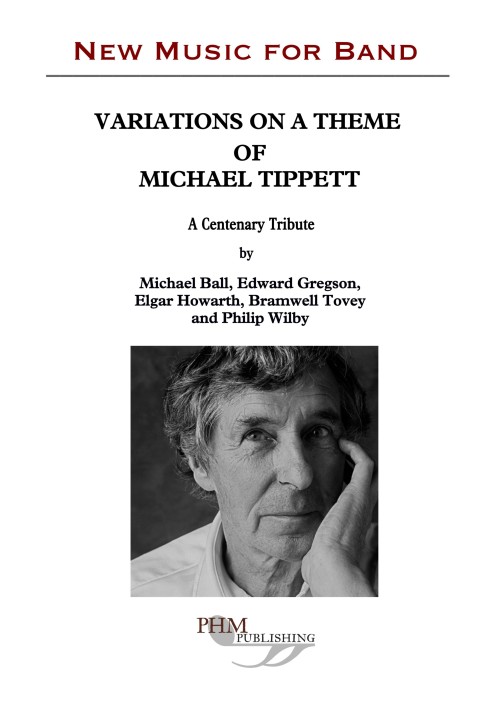
Variations on a Theme of Michael Tippett (Brass Band - Score and Parts) - Hindmarsh, Paul
A Centenary Tribute by Michael Ball, Edward Gregson, Elgar Howarth, Bramwell Tovey and Philip WilbyThis unique 'pice d'occasion' arose out of a telephone conversation in 2004 with Alan Wycherley, who was the soprano cornet player of the Foden's Richardson Band at the time. He indicated that the band would like to include an original birthday tribute for Edward Gregson (60) and Elgar Howarth (70) in its concert at the 2005 RNCM Festival of Brass in Manchester. I have been Artistic Director of Manchester's Festival of Brass since it was established in 1990 as a BBC Radio 3 series, As the centenary of the birth of Sir Michael Tippett fell on 5 January 2005, I devised this collective work as a way of embracing all three anniversaries in a novel way.The idea of joint compositions is not a new one in the classical music world. In the 1860s, Verdi was joined by a number of his contemporaries in a Requiem Mass for Rossini. In this country there have been a number of orchestral examples over the past fifty years, but never before for the brass band. Although Tippett composed only one work for brass band, Festal Brass with Blues, his orchestral works and operas are full of idiomatic brass writing. The theme I chose for this celebration is one of Tippet's most memorable miniatures featuring wind and brass. In the opera Midsummer Marriage it marks the entry of the Ancients. It is also included in the orchestral Suite in D (1948), for the Birthday of Prince Charles.I invited five of the leading contemporary voices in brass band music to add their own creative perspectives to the little Tippett theme, with it's characteristic rhythms, embellishments and modality - the Lydian mode. Each contribution was designed to fit into a tonal and formal template to give the whole work a flow and continuity. In Danse des Amis, Bramwell Tovey has composed a jazzy, humorous variation. Inspiration came from Tippett's love of jazz and, more personally, from the characteristically syncopated gait of the distinguished music critic John Amis, who Tovey once observed leaving a performance of Tippett's opera King Priam before the end. Incidentally, that performance was conducted by Elgar Howarth.We hear Edward Gregson in lyrical mode. His Midsummer Song is redolent of the sound world of Tippett's opera A Midsummer Marriage and it ends with a brief reference to a favourite of Gregson's, Tippett's Concerto for Orchestra. Michael Ball provides a brief moment of light, airy activity bringing to mind perhaps Tippett's love of Shakespearian fantasy, especially The Tempest. Elgar Howarth juxtaposes a slowed down version of the processional theme with distant recollections of fanfares from King Priam. Philip Wilby has rounded the tribute off with a spectacular fugue. During its inexorable progress Wilby ingeniously introduces the two other birthday references - the three-note musical signature that Elgar Howarth includes in much of his music and the characteristic theme which begins Edward Gregson's substantial work for brass an organ The Trumpets of the Angels. An elaborated reprise of Tippett's little theme is followed by a dynamic coda.- Paul HindmarshDuration: 13.00
Estimated dispatch 7-14 working days
-
£40.00
Variations on a Theme of Michael Tippett (Brass Band - Score only) - Hindmarsh, Paul
A Centenary Tribute by Michael Ball, Edward Gregson, Elgar Howarth, Bramwell Tovey and Philip WilbyThis unique 'pice d'occasion' arose out of a telephone conversation in 2004 with Alan Wycherley, who was the soprano cornet player of the Foden's Richardson Band at the time. He indicated that the band would like to include an original birthday tribute for Edward Gregson (60) and Elgar Howarth (70) in its concert at the 2005 RNCM Festival of Brass in Manchester. I have been Artistic Director of Manchester's Festival of Brass since it was established in 1990 as a BBC Radio 3 series, As the centenary of the birth of Sir Michael Tippett fell on 5 January 2005, I devised this collective work as a way of embracing all three anniversaries in a novel way.The idea of joint compositions is not a new one in the classical music world. In the 1860s, Verdi was joined by a number of his contemporaries in a Requiem Mass for Rossini. In this country there have been a number of orchestral examples over the past fifty years, but never before for the brass band. Although Tippett composed only one work for brass band, Festal Brass with Blues, his orchestral works and operas are full of idiomatic brass writing. The theme I chose for this celebration is one of Tippet's most memorable miniatures featuring wind and brass. In the opera Midsummer Marriage it marks the entry of the Ancients. It is also included in the orchestral Suite in D (1948), for the Birthday of Prince Charles.I invited five of the leading contemporary voices in brass band music to add their own creative perspectives to the little Tippett theme, with it's characteristic rhythms, embellishments and modality - the Lydian mode. Each contribution was designed to fit into a tonal and formal template to give the whole work a flow and continuity. In Danse des Amis, Bramwell Tovey has composed a jazzy, humorous variation. Inspiration came from Tippett's love of jazz and, more personally, from the characteristically syncopated gait of the distinguished music critic John Amis, who Tovey once observed leaving a performance of Tippett's opera King Priam before the end. Incidentally, that performance was conducted by Elgar Howarth.We hear Edward Gregson in lyrical mode. His Midsummer Song is redolent of the sound world of Tippett's opera A Midsummer Marriage and it ends with a brief reference to a favourite of Gregson's, Tippett's Concerto for Orchestra. Michael Ball provides a brief moment of light, airy activity bringing to mind perhaps Tippett's love of Shakespearian fantasy, especially The Tempest. Elgar Howarth juxtaposes a slowed down version of the processional theme with distant recollections of fanfares from King Priam. Philip Wilby has rounded the tribute off with a spectacular fugue. During its inexorable progress Wilby ingeniously introduces the two other birthday references - the three-note musical signature that Elgar Howarth includes in much of his music and the characteristic theme which begins Edward Gregson's substantial work for brass an organ The Trumpets of the Angels. An elaborated reprise of Tippett's little theme is followed by a dynamic coda.- Paul HindmarshDuration: 13.00
Estimated dispatch 7-14 working days
-
 £75.00
Iceni Autumn (Brass Band - Score and Parts) - Barry, Darrol
The piece is in four movements; SPQR, Cockley Cley, Boudicca - Battles and Requiem and Venta Icenorum.S.P.Q.R. is an initialism of a Latin noun phrase, Senatus Populusque Romanus ("The Senate and the Roman People"). This movement attempts to portray the mood in England under Roman occupation and contains important themes developed throughout the suite.Cockley Cley is a reconstruction of the type of village occupied by the Iceni. For many years it was a popular tourist attraction in Norfolk.Boudicca (also known as Boadicea) was the wife of King Prasutagus of the Iceni, a British tribe that lived in East Anglia during the time of the Roman Emperor Nero. When Prasutagus, an ally of the Romans died, the local Roman government officials decided that they would seize her wealth and lands for themselves. When Boudicca protested, saying she was a Roman ally who was being treated no better than a slave, the Roman soldiers fogged her and raped her daughters. Boudicca called her tribe to arms and revolted against their Roman oppressors; this saw the complete devastation of Colchester, St Albans and London. In the final battle the Romans slaughtered about 80,000 Britons including women, children and old men, repaying atrocities in kind. Boudicca and her two daughters poisoned themselves rather than be captured and taken to Rome as prisoners of war.Venta Icenorum was the capital of the Iceni Tribe, who inhabited the flatlands and marshes of Norfolk and earned immortality for their revolt against Roman rule under their queen Boudicca in the winter of 61 AD. This triumphant march brings various themes together and ends with a final reference.
Estimated dispatch 7-14 working days
-
 £30.00
Iceni Autumn (Brass Band - Score only) - Barry, Darrol
The piece is in four movements; SPQR, Cockley Cley, Boudicca - Battles and Requiem and Venta Icenorum.S.P.Q.R. is an initialism of a Latin noun phrase, Senatus Populusque Romanus ("The Senate and the Roman People"). This movement attempts to portray the mood in England under Roman occupation and contains important themes developed throughout the suite.Cockley Cley is a reconstruction of the type of village occupied by the Iceni. For many years it was a popular tourist attraction in Norfolk.Boudicca (also known as Boadicea) was the wife of King Prasutagus of the Iceni, a British tribe that lived in East Anglia during the time of the Roman Emperor Nero. When Prasutagus, an ally of the Romans died, the local Roman government officials decided that they would seize her wealth and lands for themselves. When Boudicca protested, saying she was a Roman ally who was being treated no better than a slave, the Roman soldiers fogged her and raped her daughters. Boudicca called her tribe to arms and revolted against their Roman oppressors; this saw the complete devastation of Colchester, St Albans and London. In the final battle the Romans slaughtered about 80,000 Britons including women, children and old men, repaying atrocities in kind. Boudicca and her two daughters poisoned themselves rather than be captured and taken to Rome as prisoners of war.Venta Icenorum was the capital of the Iceni Tribe, who inhabited the flatlands and marshes of Norfolk and earned immortality for their revolt against Roman rule under their queen Boudicca in the winter of 61 AD. This triumphant march brings various themes together and ends with a final reference.
Estimated dispatch 7-14 working days
-
 £39.00
King Cotton (Brass Band - Score and Parts) - Sousa, John Philip - Wilkinson, Keith M.
This march was written in 1895 when the Sousa Band played for three weeks at the Cotton States And International Exposition. This was a time when in southern USA cotton production was vitally important - the phrase Cotton is King was appropriate and widely used.This arrangement was prepared for the 2010 Summer concerts of Brass Band of the Western Reserve, musical director Dr Keith M Wilkinson. The staging directions for back-row cornets in the last section will enhance the performance.
Estimated dispatch 7-14 working days
-
 £44.95
Euphony (Euphonium Solo with Brass Band - Score and Parts) - Redhead, Robert
Previously only available in manuscript form, this euphonium solo with brass band accompaniment is now available in printed format. Euphony (meaning a pleasant, sweet sound) is based on the tunes of Sidney Cox with material taken from the songs; 'He found me', 'This one thing I know', 'You can tell out the sweet story' and 'Deep and wide'. At the time of writing, the composer remarked; 'The euphonium is often associated with melodies and harmonies that lend themselves to pleasing sounds'. That is true of this solo but it also presents considerable technical challenges for the soloist in terms of range and technique.
Estimated dispatch 7-14 working days
-
£22.50
Euphony (Euphonium Solo with Brass Band - Score only) - Redhead, Robert
Previously only available in manuscript form, this euphonium solo with brass band accompaniment is now available in printed format. Euphony (meaning a pleasant, sweet sound) is based on the tunes of Sidney Cox with material taken from the songs; 'He found me', 'This one thing I know', 'You can tell out the sweet story' and 'Deep and wide'. At the time of writing, the composer remarked; 'The euphonium is often associated with melodies and harmonies that lend themselves to pleasing sounds'. That is true of this solo but it also presents considerable technical challenges for the soloist in terms of range and technique.
Estimated dispatch 7-14 working days
-
 £60.99
Minerva (Brass Band - Score and Parts) - Van der Roost, Jan
Minerva by Jan Van der Roost was composed on the commission of the German "Musikverein Braunshausen" on the occasion of the 75th anniversary of the orchestra. The composition, first performed on September 17, 1999, is not a street march but a concert march, just like Mercury and Arsenal. The use and variation of different rhythmic patterns gives the first part of this march a distinctly dynamic character. Two main themes are presented in several instrumental combinations. The theme from the trio, on the other hand, is characterized by a broad melodic approach using large intervals. This theme, wreathed by high woodwinds, is heard one more time after a contrasting new part, but now in a somewhat slower tempo. The counterpoint in this part refers to the first part of the march. The brilliant ending suits a festive anniversary march!Duration: 4:00
Estimated dispatch 7-14 working days
-
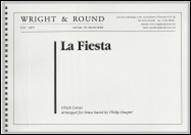 £45.00
LA FIESTA (Brass Band) - Corea, Chick - Harper, Philip
Chick Corea is an American pianist and composer of Sicilian and Spanish descent, whose long career in jazz music continues to this day. A member of Miles Davis's hand in the 1960s, lie formed his own band Return to Forever in the 1970s before establishing himself as one of the greats of modern jazz. La Fiesta was composed in 1972 and included on Return to Forever's debut album. The music is in one in a bar waltz time and switches between Latin carnival style and jazz waltz, with stand-up solos for cornet, baritone and tenor horn. This arrangement was performed as part 01 the Cory Band's winning Brass in Concert programme in 2012. The publisher of this works suggests that it should be playable by championship section bands.
Estimated dispatch 7-14 working days
 View Music