
Results
-
 £94.99
Brass Miniatures (Brass Band - Score and Parts) - Curnow, James
Brass Miniatures features four contrasting sections, each linked by the fact they are based on the same interval. The opening is an exciting fanfare which leads into a lovely ballad, introduced by a solo cornet. The third section is a playful pseudo-blues and the work comes to a thrilling close with fanfare and march.Duration: 6:30.
Estimated dispatch 7-14 working days
-
 £104.99
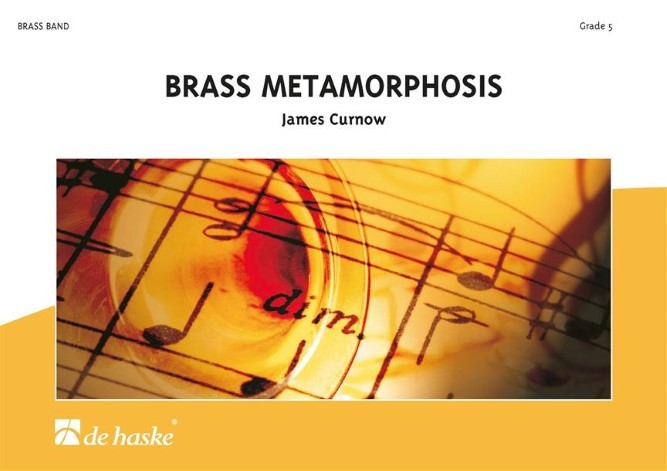
Brass Metamorphosis (Brass Band - Score and Parts) - Curnow, James
Brass Metamorphosis as the title suggests is a set of variations based on an original theme. Each of the five variations is in a different style with the first being a lively rondo, the second slow and intense, the third an agile scherzando, the fourth slow and expressive and the fifth full of majesty as it brings the piece to a triumphal close.Duration: 12:30
Estimated dispatch 7-14 working days
-
 £89.95
Diversions, Op.97 (Brass Band - Score and Parts) - Bourgeois, Derek
This work was commissioned in1985 by Skellerup, Christchurch, New ZealandMovements:Allegro VivaceAndante Con Moto Molto ExpressivoAllegro VivaceDerek Bourgeois wrote Diversions in the summer of 1985 to a commissioned from the Skellerup Brass Band.Bourgeois previous test piece, Blitz, was aggressive and forceful, therefore the composer decided to write a work of a completely different character, which although technically very demanding, is light-hearted in style, and easy on the ear, as the title suggests.The first and third movements share the same tempo, but are rather different in character. The first movement is a sonata allegro contrasting two main themes. The first is bold and jaunty and is heavily scored, the second announced by the solo horn is more lyrical in character. The development section and recapitulation are merged into a continuous interplay of the two themes.The second movement is an expressive andante in free rondo form. It is lightly scored for the most part with a lot of solo passages that make demands on the musicianship of the players and conductor alike. The very simplicity of its textures and the breadth of its melodic writing demand firm control of vibrato, phrasing and rubato.The brief finale is nothing short of a romp. Its ternary structure is highly rhythmic in character and only rarely do the performers enjoy the luxury of two consecutive bars in the same time signature!Duration: 11.00
Estimated dispatch 7-14 working days
-
£44.95
Diversions, Op.97 (Brass Band - Score only) - Bourgeois, Derek
This work was commissioned in1985 by Skellerup, Christchurch, New ZealandMovements:Allegro VivaceAndante Con Moto Molto ExpressivoAllegro VivaceDerek Bourgeois wrote Diversions in the summer of 1985 to a commissioned from the Skellerup Brass Band.Bourgeois previous test piece, Blitz, was aggressive and forceful, therefore the composer decided to write a work of a completely different character, which although technically very demanding, is light-hearted in style, and easy on the ear, as the title suggests.The first and third movements share the same tempo, but are rather different in character. The first movement is a sonata allegro contrasting two main themes. The first is bold and jaunty and is heavily scored, the second announced by the solo horn is more lyrical in character. The development section and recapitulation are merged into a continuous interplay of the two themes.The second movement is an expressive andante in free rondo form. It is lightly scored for the most part with a lot of solo passages that make demands on the musicianship of the players and conductor alike. The very simplicity of its textures and the breadth of its melodic writing demand firm control of vibrato, phrasing and rubato.The brief finale is nothing short of a romp. Its ternary structure is highly rhythmic in character and only rarely do the performers enjoy the luxury of two consecutive bars in the same time signature!Duration: 11.00
Estimated dispatch 7-14 working days
-
 £34.95
AL SHARQ (An Arabic-Jazz Fusion) (Brass Band) - Hall, Daniel
Al Sharq (pronounced al-sha-rak) was commissioned by Tredegar Town Band as part of their programme for the 2014 Brass in Concert Championships at the Sage, Gateshead.The piece is an exciting and exotic concert work for brass band, which is heavily influenced by the genres 'Third Stream' and 'Arabic'. The composition is highly rhythmical and percussion heavy, which makes use of 'Tam-tam vibrato' - a technique which was invented by the composer especially for this composition.There are plenty of opportunities for the musicians to try something different, such as the aleatoric harmonic framework at the opening of the composition, shouting, 'hi-fiving', special choreography and even playing a didgeridoo!Al Sharq is a technically demanding piece which exploits the talents of all sections of the ensemble, especially the principal solo cornet, who starts the piece with an atmospheric cadenza. All of this makes Al Sharq a powerful and entertaining experience for both performer and listener.Grade: Advanced Duration:4:17
Estimated dispatch 7-14 working days
-
 £25.00
BRITISH ISLES SUITE FOR BRASS BAND AND PERCUSSION, A (Brass Band Extra Score) - Bates, Jonathan
2012 National Championships Finals - Fourth Section. The four movement work quotes hallowed poets and prose writers. The first movement uses Robert Burns's 'When Chill November's surly blast made field and forest bare' - a musical depiction of a Scottish highland landscape in crisp mid-winter. Movement 2 takes Dylan Thomas's 'Though lovers be lost, love shall not' and showcases soloists performing their individual love stories, finishing with an adaptation of the Welsh national anthem, whilst the third movement quotes the Irish poer, Yeats. The music links the Isle of Man and Ireland, opening with the Manx national anthem and traditional Manz dancing, before leading to a Dublin dance scene. Movement 4 quotes Shakespeare's 'Be not afraid of greatness', opening with a fanfare by percussion, then moving into Holst's In the Bleak Mid Winter and to the seventh variation of Elgar's Enigma Variations, Nimrod.
Estimated dispatch 7-14 working days
-
£64.95
BRITISH ISLES SUITE FOR BRASS BAND AND PERCUSSION, A (Brass Band Set - Score and Parts) - Bates, Jonathan
2012 National Championships Finals - Fourth Section. The four movement work quotes hallowed poets and prose writers. The first movement uses Robert Burns's 'When Chill November's surly blast made field and forest bare' - a musical depiction of a Scottish highland landscape in crisp mid-winter. Movement 2 takes Dylan Thomas's 'Though lovers be lost, love shall not' and showcases soloists performing their individual love stories, finishing with an adaptation of the Welsh national anthem, whilst the third movement quotes the Irish poer, Yeats. The music links the Isle of Man and Ireland, opening with the Manx national anthem and traditional Manz dancing, before leading to a Dublin dance scene. Movement 4 quotes Shakespeare's 'Be not afraid of greatness', opening with a fanfare by percussion, then moving into Holst's In the Bleak Mid Winter and to the seventh variation of Elgar's Enigma Variations, Nimrod.
Estimated dispatch 7-14 working days
-
£54.99
Candyman (Brass Band - Score and Parts)
Candyman was the third worldwide hit from Cristina Aguilera?s albumBack to Basics. It's jazzy 1940s feel makes this an extremely catchymelody that works well in this arrangement for concert band. This is areal 'feel good' song and will bring a feeling of joy to any concert. 03:00
Estimated dispatch 7-14 working days
-
£25.00
DARKWOOD (Brass Band Extra Score) - Price, Dan
Brass Band Extra Score only. National Brass Band Championships of Great Britain Area Test Piece 2017 - Third Section.
Estimated dispatch 7-14 working days
-
£65.00
DARKWOOD (Brass Band Set - Score and Parts) - Price, Dan
Brass Band Set and Score. National Brass Band Championships of Great Britain Area Test Piece 2017 - Third Section.
Estimated dispatch 7-14 working days
 View Music