
Results
-
 £44.95
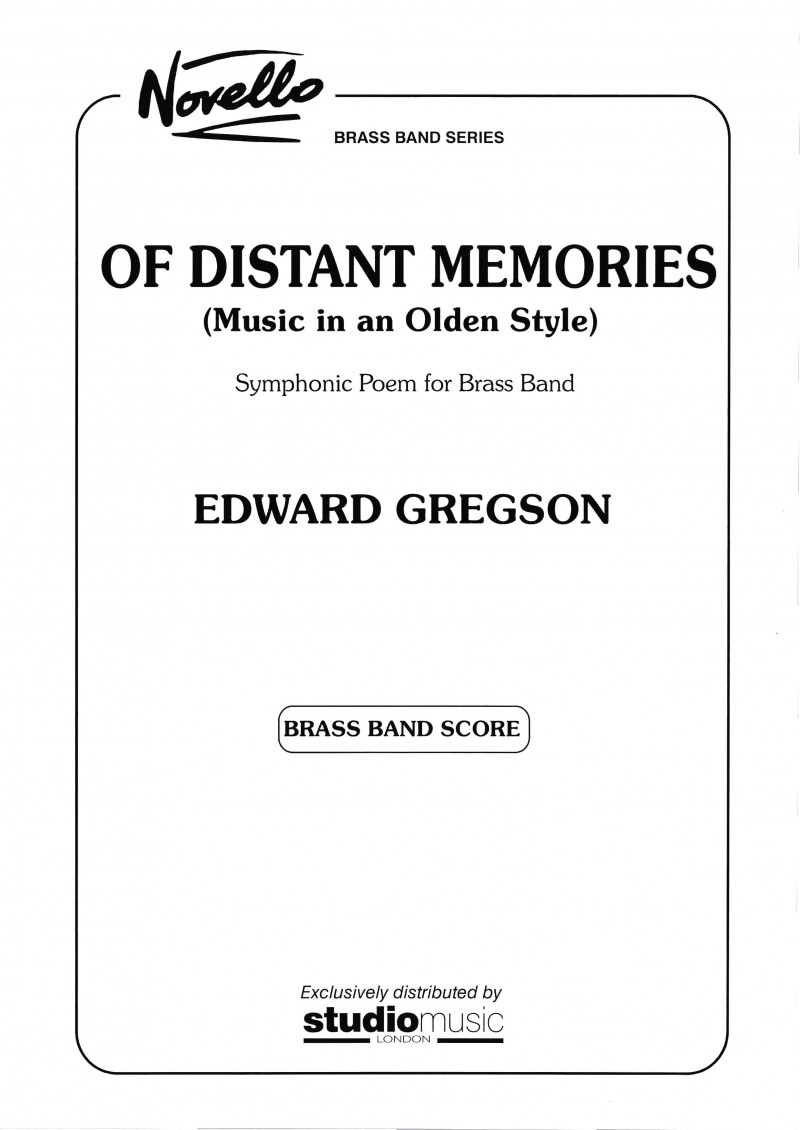
Of Distant Memories (Music in an Olden Style) (Brass Band - Score only) - Gregson, Edward
Of Distant Memories pays homage to the brass band composers that form the backbone of the brass band repertoire, and their music, and in the process summons up a kind of subconscious memory bank of the musical languages, styles and forms used by them. The music is conceived in the form of a 'traditional' tone poem, reflecting certain aspects (e.g. melodic, harmonic, textural) of those early test pieces. Although fairly traditional concepts have been kept in planning the architecture of the work, certain aspects of the instrumentation, or scoring, are more contemporary in colouristic terms, as befits a composer writing in the 21st century. However, the percussion requirements are fairly modest, similar to those used in the works of that period. The brass band tradition owes much to the composers of that period, for through their music they established a truly homogenous 'British' brass band sound which has spread throughout many parts of the world. That tradition flourishes today and remains important for today's composers, even if their musical language is far removed from that of their predecessors. Of Distant Memories is the composers own way of repaying that gratitude.Duration: 15.00
Estimated dispatch 7-14 working days
-
 £32.50
Kingdom of Dragons (Brass Band - Score only) - Harper, Philip
The 'Kingdom of Dragons' is Gwent in South Wales, known in ancient times as the Kingdom of Gwent, and more recently home to the Newport Gwent Dragons Rugby Union team.This piece was commissioned by the Gwent Music Service with additional funding from Ty Cerdd - Music Centre Wales to celebrate the 50th anniversary in 2010 of the formation of the Gwent Youth Brass Band.Although the music is continuous, it is divided into four distinct sections, each one representing one of the unitary authorities which make up the County of Gwent.Monmouthshire, which has a large number of ancient castlesBlaenau Gwent, an historic area of iron and coal miningTorfaen, where Pontypool Park is a notable landmarkNewport, the largest city in the regionThe music begins with a two-bar fanfare, which sets out all the thematic material of the piece. The mood of pageantry that follows describes some of the ancient castles in Monmouthshire, with rolling tenor drums and fanfaring cornets. After a majestic climax the music subsides and quite literally descends into the coal mines of Blaenau Gwent. The percussion provides effects that suggest industrial machinery clanking into life, and the music accelerates to become a perilous white-knuckle ride on the underground railroad. There is a brief respite as a miner's work-song is introduced and, after a protracted build-up, this is restated at fortissimo before the music comes crashing to an inglorious close, much like the UK's mining industry itself. The middle sonorities of the band portray the tranquillity of Pontypool Park, a place of great natural beauty. Brief cadenzas for cornet and euphonium lead to a full band reprise of the pastoral mood. At the end of this section we find ourselves at the top of the park's 'Folly Tower' from which the distant castle turrets of Monmouthshire are visible. Pontypool RFC was one of eleven clubs in the first Welsh league in 1881 and a brief but bruising musical portrayal of the formidable Pontypool front-row, the 'Viet Gwent' leads into the work's final section. This portrays Newport, a symbol for progress and optimism for the future, ideals shared by the Gwent Youth Band itself. The music is a vigorous fugue which advances through various keys and episodes before the final triumphant augmented entry which brings the work to a magnificent conclusion.Duration: 12:00
Estimated dispatch 7-14 working days
-
£74.99
Kingdom of Dragons (Brass Band - Score and Parts) - Harper, Philip
The 'Kingdom of Dragons' is Gwent in South Wales, known in ancient times as the Kingdom of Gwent, and more recently home to the Newport Gwent Dragons Rugby Union team.This piece was commissioned by the Gwent Music Service with additional funding from Ty Cerdd - Music Centre Wales to celebrate the 50th anniversary in 2010 of the formation of the Gwent Youth Brass Band.Although the music is continuous, it is divided into four distinct sections, each one representing one of the unitary authorities which make up the County of Gwent.Monmouthshire, which has a large number of ancient castlesBlaenau Gwent, an historic area of iron and coal miningTorfaen, where Pontypool Park is a notable landmarkNewport, the largest city in the regionThe music begins with a two-bar fanfare, which sets out all the thematic material of the piece. The mood of pageantry that follows describes some of the ancient castles in Monmouthshire, with rolling tenor drums and fanfaring cornets. After a majestic climax the music subsides and quite literally descends into the coal mines of Blaenau Gwent. The percussion provides effects that suggest industrial machinery clanking into life, and the music accelerates to become a perilous white-knuckle ride on the underground railroad. There is a brief respite as a miner's work-song is introduced and, after a protracted build-up, this is restated at fortissimo before the music comes crashing to an inglorious close, much like the UK's mining industry itself. The middle sonorities of the band portray the tranquillity of Pontypool Park, a place of great natural beauty. Brief cadenzas for cornet and euphonium lead to a full band reprise of the pastoral mood. At the end of this section we find ourselves at the top of the park's 'Folly Tower' from which the distant castle turrets of Monmouthshire are visible. Pontypool RFC was one of eleven clubs in the first Welsh league in 1881 and a brief but bruising musical portrayal of the formidable Pontypool front-row, the 'Viet Gwent' leads into the work's final section. This portrays Newport, a symbol for progress and optimism for the future, ideals shared by the Gwent Youth Band itself. The music is a vigorous fugue which advances through various keys and episodes before the final triumphant augmented entry which brings the work to a magnificent conclusion.Duration: 12:00
Estimated dispatch 7-14 working days
-
 £54.99
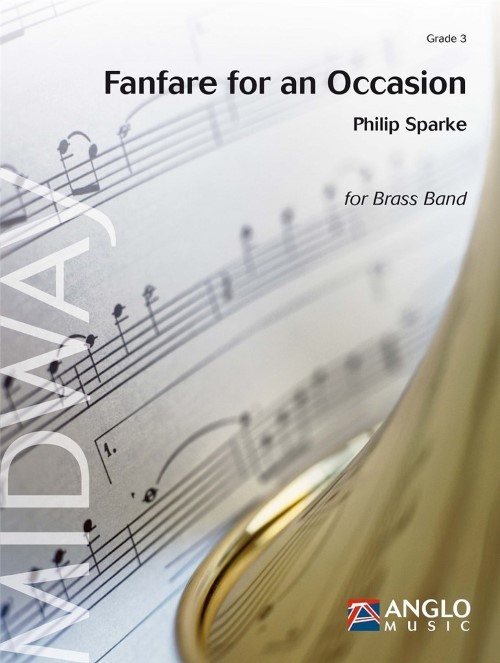
Fanfare for an Occasion (Brass Band - Score and Parts) - Sparke, Philip
Fanfare for an Occasion was written to celebrate the 20th anniversary of the founding of Anglo Music Press, the publishing company dedicated to the works of British composer, Philip Sparke. It is a bright and festive work in which the main theme starts on the tenor instruments of the band before appearing as canonical imitation by all sections in turn. A short, repeated bridge passage leads to a second theme on the horns that is taken up by the full band and leads back to a return of the main theme and a repeat of the second subject, which brings the fanfare to a brilliant close. Duration: 2.00
Estimated dispatch 7-14 working days
-
 £59.99
Ballad for Benny (Brass Band - Score and Parts) - Sparke, Philip
The birth of Philip Sparke's second son, Benjamin, was the inspiration for composing Ballad for Benny. A short calm introduction leads to the main ballad theme, a gentle waltz melody. Following the work's climax in which the complete band plays the main theme the sound fades and the piece ends in calm and serenity.Duration: 5:00
Estimated dispatch 7-14 working days
-
 £75.00
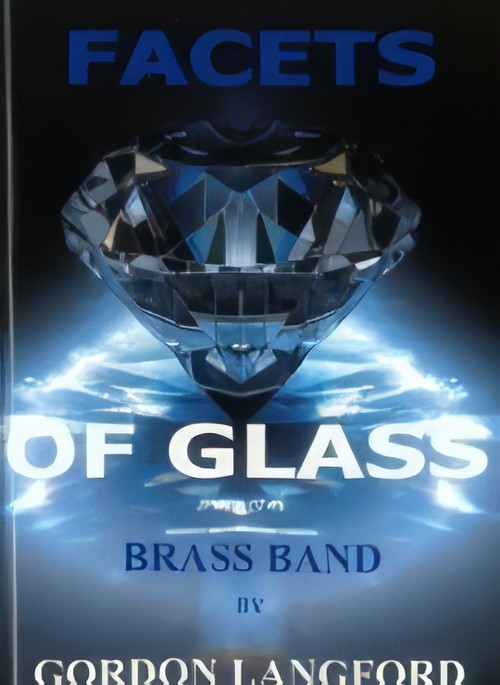
Facets of Glass (Brass Band - Score and Parts) - Langford, Gordon
Set as the Third Section test piece for the 2022 Regional Championships of the British Brass Band Championships of Great Britain. This a new edition prepared especially for the 2022 Regionals.The works consists of four contrasting movements movements:Prelude - Fusion (Andante Moderato)Scherzo - Celebration (Presto)Meditation - Lathom Park Chapel (Andante Religioso)Finale - Visions (Allegretto con Spirito)Duration: 10.15
Estimated dispatch 7-14 working days
-
 £30.00
Exegesis - Tim Paton
An exciting, original composition for brass band by Tim Paton. A complex work which entwines melodic lyricism amidst contemporary harmonies and scoring. A tour de force of Tim's creativity and a rewarding challenge for the performers and audience.Tim comments: The term exegesis is applied to a study which works out the meaning of something, an interpretation of a series of events, a comparison of ideas within a given medium, for example, "Biblical exegesis". This brass band piece is a musical exegesis.Section one is made up of three main themes, and although these themes are tonal within themselves, there is a sense that they are trying to understand one another. From the very beginning of this section, there is an element of bi-tonality and dissonance.The middle section is ponderous, where we hear elements of these three themes. It could be called the 'thinking section'.Section three almost interrupts this middle section, with fanfares displaying a realisation, still containing bi-tonality, but in harmony! We are soon led in to a hymn like celebration, followed by a determined, militaristic section for the percussion. Finally, the fanfares which opened this third section, reappear, taking us to a final conclusion.
In Stock: Estimated dispatch 3-5 working days
-
 £30.00
Sortie in E Flat - Louis Lefebure-Wely
Louis James Alfred Lefebure-Wely is historically associated with the development of French organ music, as well as with organ technique. As a composer he was instrumental in the evolution of the French symphonic organ style and his works include many pieces for church use, and lighter fare like marches and sorties.It is probably in the latter genre that Lefebure-Wely scored his most enduring successes on the organ, with pieces like the sorties in B flat and E flat.Sue Hopkins has artfully captured the magic of Lefebure-Wely's writing and produced this great new piece which offers a perfect complement to your concert programme.
In Stock: Estimated dispatch 3-5 working days
-
 £30.00
Mischief! - Lucy Pankhurst
This fun and frantic, hoe-down styled original work from Lucy Pankhurst works just as well as an attention-grabbing opener, as it would as a showcase finisher or encore!Lots of surprises and exciting details that show off all areas of the band. Mischief! was first featured by the Wingates Band in their 2009 performance at the Butlin's Mineworker's Brass Band Championships.
In Stock: Estimated dispatch 3-5 working days
-
 £30.00
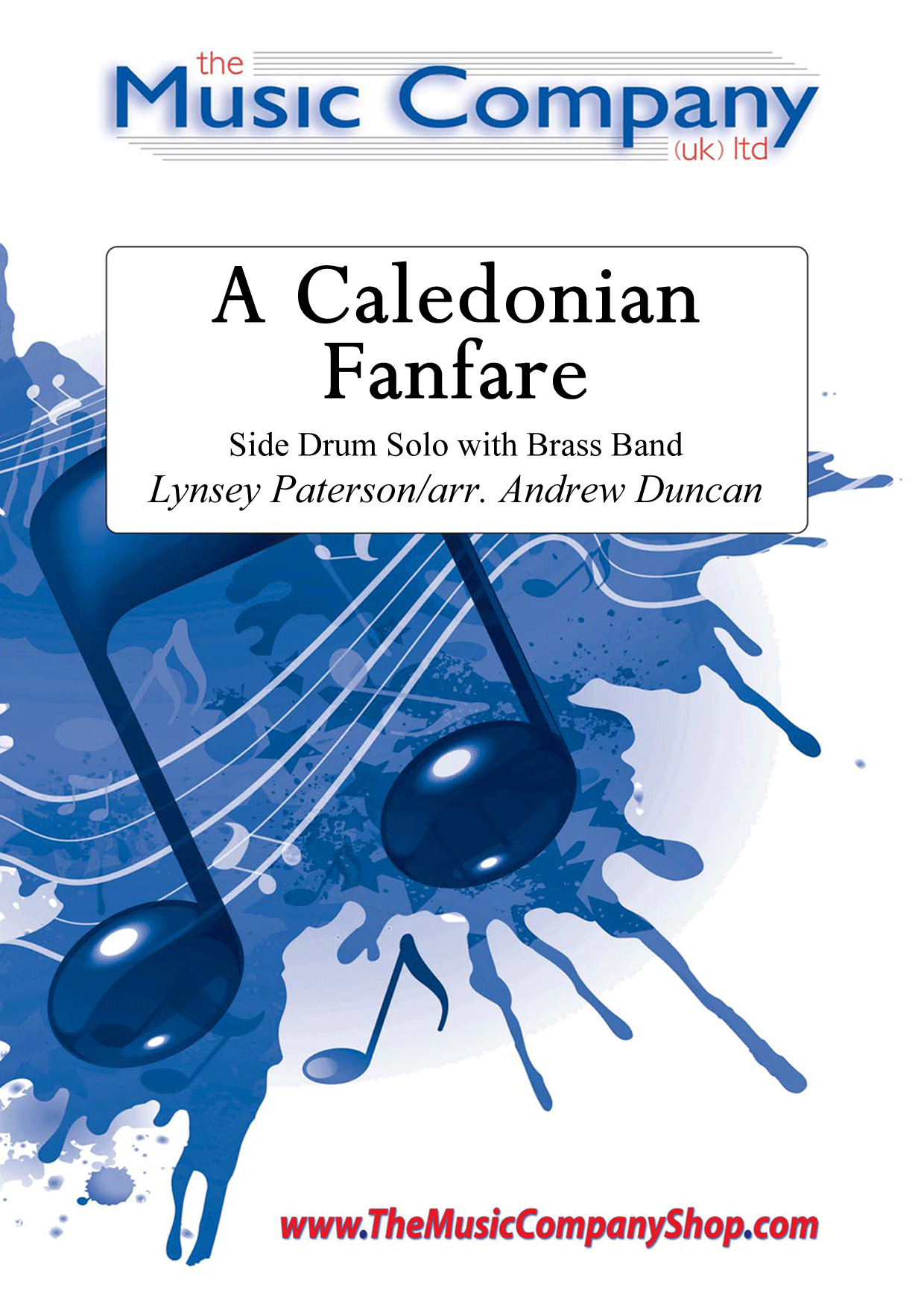
A Caledonian Fanfare - Lynsey Paterson
An extravaganza of a side drum and percussion feature with brass band.A refreshing addition to the solo works of our catalogue, this side drum feature has been composed by accomplished and widely recognised percussionist Lynsey Paterson, and scored for brass band by Andrew Duncan.A great feature for any concert or contest programme, adding a new and engaging dimension to the solo spot.
In Stock: Estimated dispatch 3-5 working days
 View Music