
Results
-
 £115.60
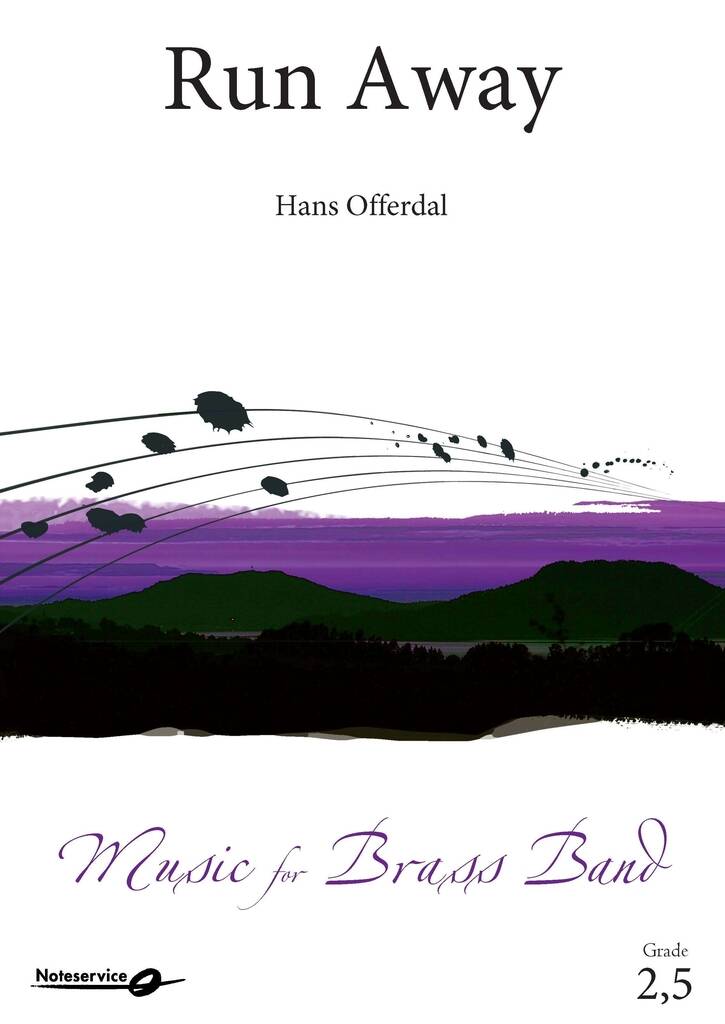
Run Away - Hans Offerdal
This piece is about running away. First there is restlessness, then the escape begins. But what are we running away from? That is for you to find out!Playing time: appx. 4:30 To the conductor:There are challenges in the use of dynamics and rhythm. It is important that energy and pace is upheld all the way up until the next to last page. Dissonances are present several places, but the voice leading is diatonic within the given scale.The whole piece is based on one single scale: F melodic minor with lowered second degree. It is notated as a concert F major scale with two accidentals. Feel free to use it during warm-ups!
Estimated dispatch 5-14 working days
-
 £115.60
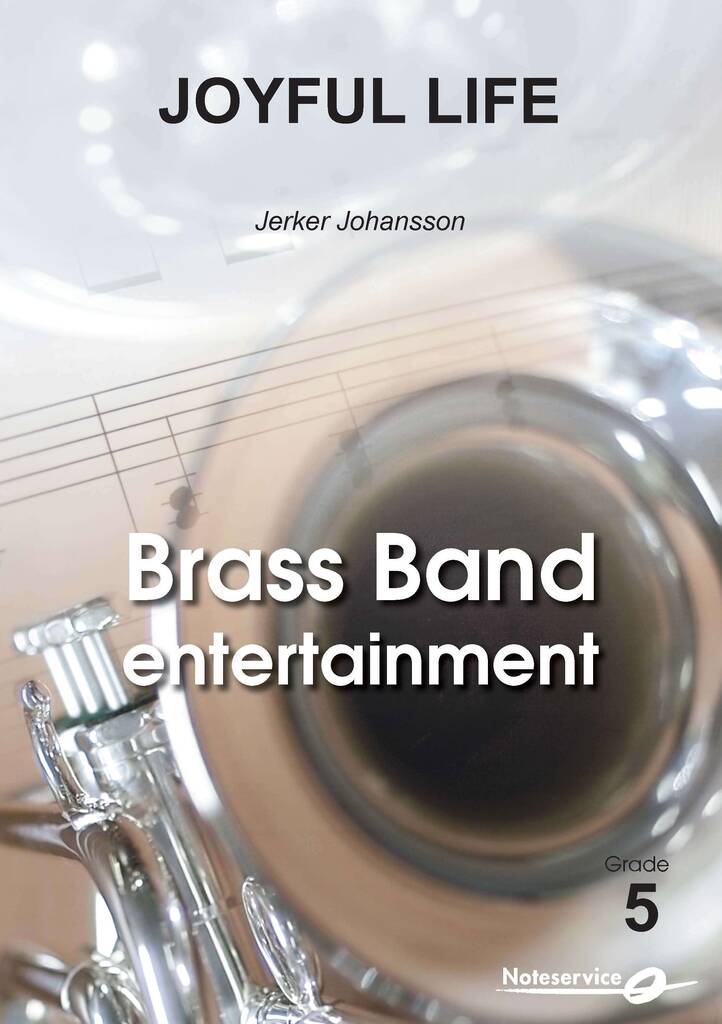
Joyful Life - Jerker Johansson
When Jerker Johansson in the 80's started to compose he was for a while obsessed with writing music in odd time signatures, more specifically 7/8. He was asked during the fall of 2020 by Leif Karlsson (former member of the legendary percussion ensemble Kroumata and nowadays conductor) to write something challenging for Uppsala Blasarsymfoniker and this resulted in Joyful Life. The piece is, to say the least, difficult to tap the pulse along to and is something of a baptism of fire for the musicians, regarding rhythmic precision. Joyful Life is dedicated to the always likeable Leif Karlsson (Joyful Leif!) and was premiered on the 15th November 2020 by The Swedish Air Force Band under the baton of the composer.
Estimated dispatch 5-14 working days
-
 £115.60
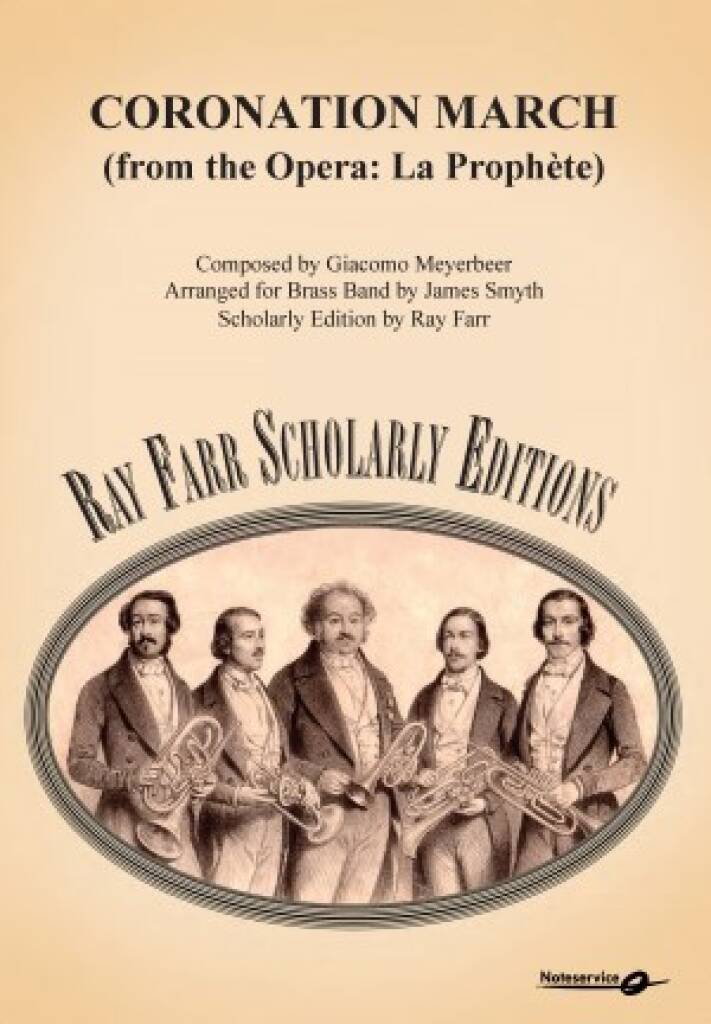
Coronation March - Giacomo Meyerbeer - Ray Farr
This Coronation March is from the opera Le Prophete (The Prophet) by Giacomo Meyerbeer and was arranged for brass band by James Smyth. The march was performed during a series of brass band events which took place at the Crystal Palace, London 1860 - 1863. Enderby Jackson was the organiser of these historically important occasions and also conducted the massed band concerts.The purpose of this scholarly edition is to produce a performing version, clearing ambiguities and errors, that can be enjoyed by today's performers and listeners, bearing in mind the original function and context. At the same time the edition is an analytical, musicological study of one of the rare treasures of the brass band repertory.
Estimated dispatch 5-14 working days
-
 £106.50
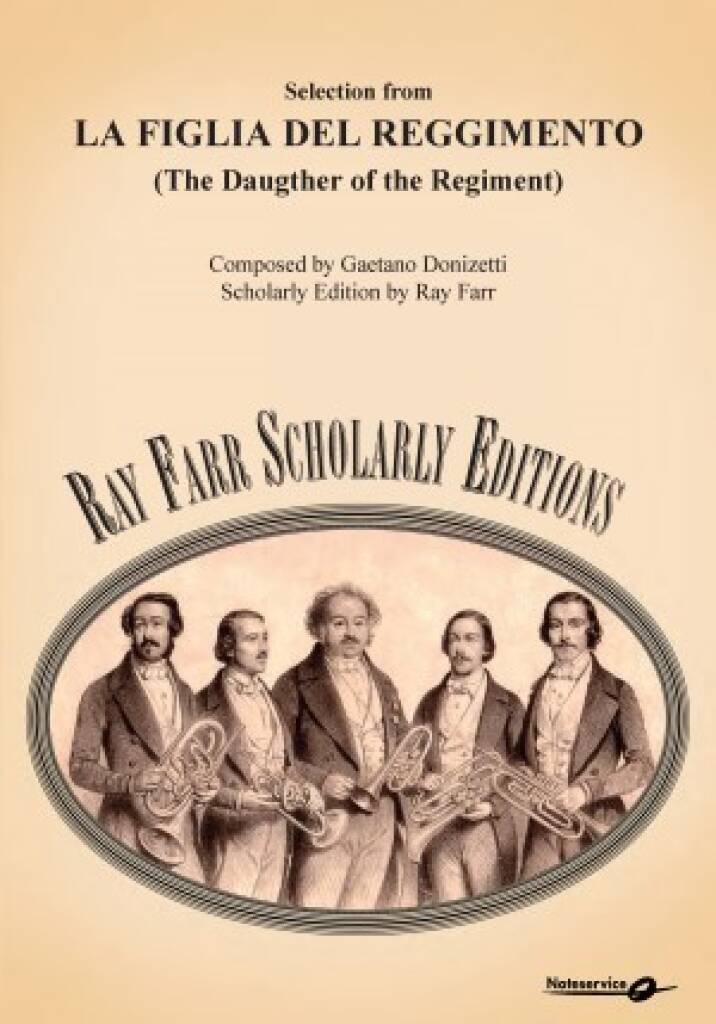
La Figlia del Reggimento - Gaetano Donizetti - Ray Farr
The Selection from La Figlia del Reggimento (The Daughter of the Regiment) by Gaetano Donizetti comes from the second of a series of works (No. 6 in the advertisement below) called Distin's Brass Band Scores published in 1855 by Henry Distin. These publications represent an important stage in the history of bands in Britain. The popular music of the day was mostly opera extracts, and the music of Donizetti was particularly popular.The purpose of this scholarly edition is to produce a performing version, clearing ambiguities and errors, that can be enjoyed by today's performers and listeners, bearing in mind the original function and context. At the same time the edition is an analytical, musicological study of one of the rare treasures of the brass band repertory.
Estimated dispatch 5-14 working days
-
 £115.60
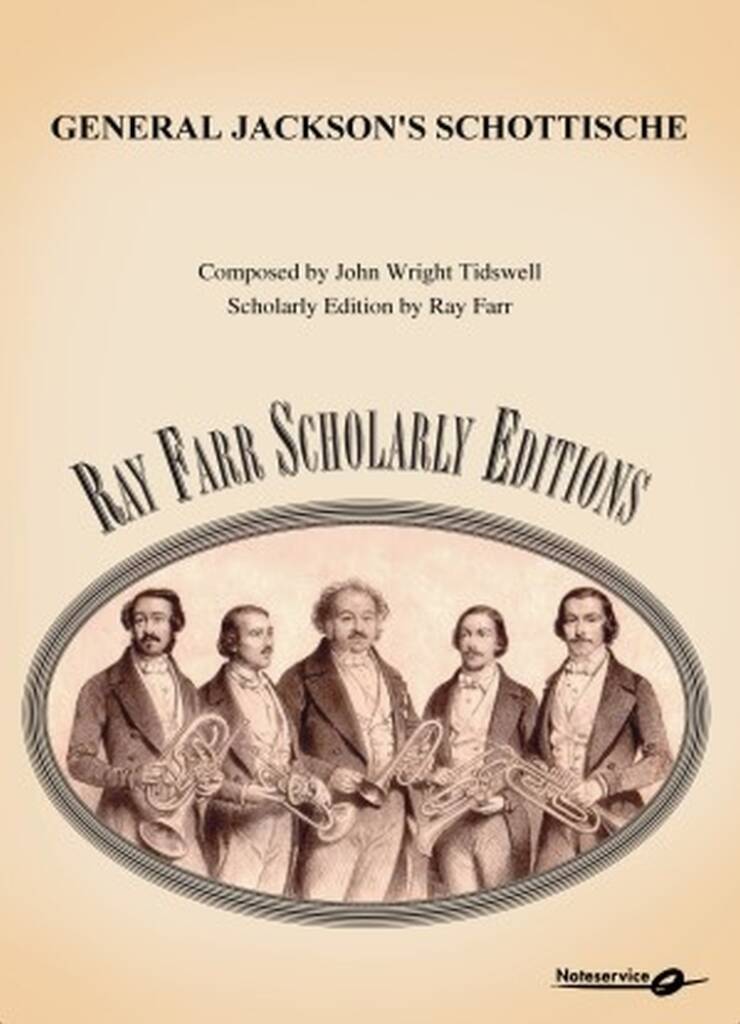
General Jackson's Schottische - John Wright Tidswell - Ray Farr
The piece was written by John Wright Tidswell and performed during Enderby Jackson's series of brass band events which took place at the Crystal Palace, London 1860 - 1863. Enderby Jackson was the organiser of these historically important occasions and also conducted the massed band concerts.The purpose of this scholarly edition is to produce a performing version, clearing ambiguities and errors, that can be enjoyed by today's performers and listeners, bearing in mind the original function and context. At the same time the edition is an analytical, musicological study of one of the rare treasures of the brass band repertory.
Estimated dispatch 5-14 working days
-
 £115.60
Minnen fran Holmen - Jerker Johansson
The first theme was written the summer 1997 when Jerker Johansson was composing in Swedish folk music style for an intended radio programme in which his father should participate reading poems in local dialect. Unfortunately, the project was discontinued. In the spring 2015 Mr. Johansson however started to work on the theme again, this time adding a song theme of broader character. Holmen is the name of the homestead where Mr. Johansson's father Arne grew up. It is beautifully located in the parish of Skarv, situated east of Skara, one of the oldest towns in Sweden. At Holmen, the composer spent his childhood summers and his recollections are filled with many bright moments andhappy memories. The piece was premiered May 22, 2015 by the Goteborg Wind Orchestra conducted by the composer.
Estimated dispatch 5-14 working days
-
 £54.99
Ding-a-Dong - Thijs Oud
The group Teach-In, from the Netherlands, won the Eurovision Song Contest in 1975 with the song Ding-a-Dong. It was the fourth time that a Dutch entry had won the prestigious festival but since then no Dutch artist has even come near first place again. The original Ding-a-Dong was performed, in keeping with tradition, with the accompaniment of a large orchestra. This sparkling arrangement of the catchy song provides a cheerful note in every concert. The melody will certainly stay in the audience's memory long after the performance.
Estimated dispatch 5-14 working days
-
 £60.99
Horns Enjoying Themselves - Bertrand Moren
This composition highlights the tenor horns. Long understated and unfairly relegated to the accompaniment, the tenor horn has gained prominence in the brass band during recent years.Horns Enjoying Themselves is an entertaining piece that will delight performers and audience alike. The first part is inspired by circus, with playful themes featuring humorous dissonances. The second part is a slow and calm journey through the mellow and luminous sound colours of the tenor horn. The third and last movement opens with a cadenza played by the soloists (alone). Written in triple time, it showcases the technical skills of the soloists.
Estimated dispatch 5-14 working days
-
 £89.99
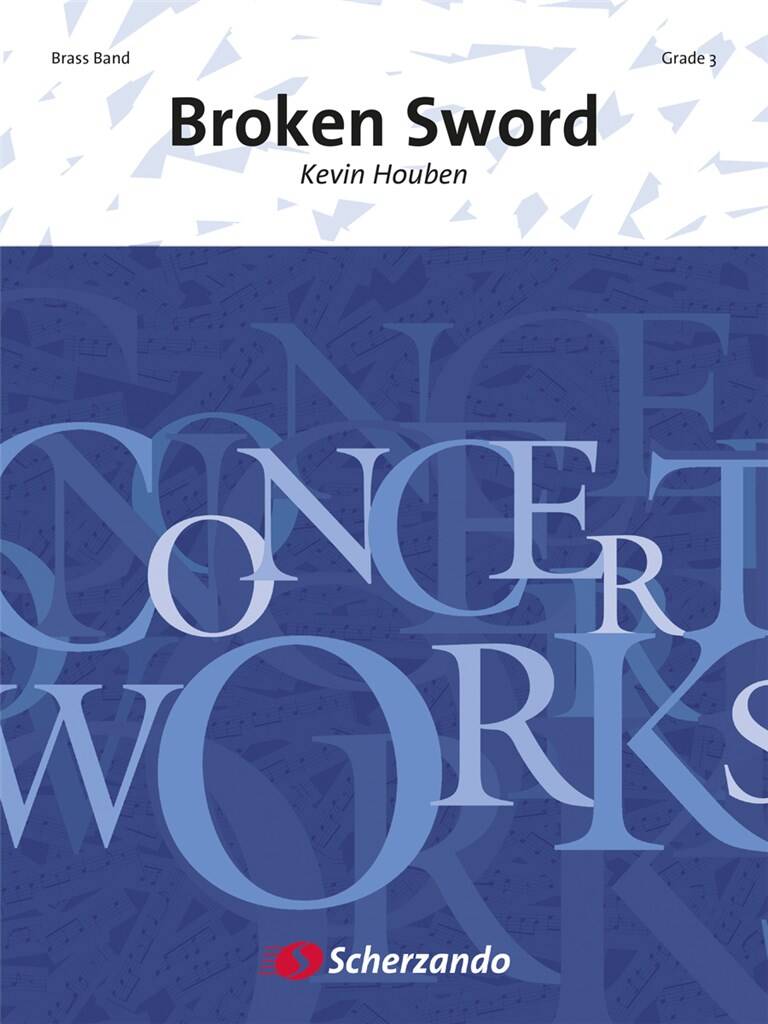
Broken Sword - Kevin Houben
The Broken Sword is one of the five ceremonial swords kept in the Tower of London and is used during the coronation of a new king or queen. Legend has it that an angel broke off the tip of the sword in an effort to prevent an unjust killing. Composer Kevin Houben lets his music retell this intriguing legend. Broken Sword resembles a film score in many ways and will paint vivid images as the band plays its way through the legend. Many different moods create a contrast-rich work that makes for an exciting listening and playing experience every time!
Estimated dispatch 5-14 working days
-
 £59.99
Largo from Winter - Antonio Vivaldi - Philip Sparke
Antonio Vivaldi (1678-1741) stands, with Handel and J.S. Bach, as one of the titanic figures of late Baroque composition. Not only was he lauded as a composer of vocal and instrumental works both sacred and secular, he was without doubt, the most prolific composer of his age. In addition to hundreds of vocal works, including forty-nine operas, he composed five hundred concertos. The Four Seasons are probably the best known of his concerti with the second movement, Largo, portraying time spent by a roaring fire listening to the rain pounding against the window. This new arrangement for brass band retains all the warmth of the original.
Estimated dispatch 5-14 working days
 View Music