Results
-
£35.00
Song of Hope - Peter Meechan
Song of Hope is dedicated to my good friend Ryan Anthony (principal trumpet with the Dallas Symphony Orchestra) and his charity, Cancer Blows - a foundation set up to raise awareness and money to further the research that has helped give their family a hope for a future following Ryanas diagnosis of Multiple MyelomaUpon hearing the middle movement (simply titled aSonga) of my cornet concerto, Milestone, Ryan asked me if I could change the end from its current reflective ending to something more uplifting, and to title it Song of Hope, giving it much more meaning than I could have ever imagined.As well as a wind band scoring without soloist, Song of Hope exists with 1, 2 or 3 soloists, accompanied by either wind band, brass band, brass ensemble or symphony orchestra.For my friend Ryan.Each set comes with the soloist part for 1 soloist. Please download the alternative 2 or 3 soloist parts from the link above.
Estimated dispatch 12-14 working days
-
 £30.00
Aviator - Keiron Anderson
Aviator is a bright, lively piece, which attempts to show the fast moving and complex world of the stunt pilot who mixes simplicity and style with mad aerobatic prowess. The work shows the take-off and landing, but in the middle, a multiple time signature section mixes cut common and triple time signatures to take the Band on a white-knuckle ride before returning to the main theme for a safe landing.
-
£40.00
Elephant Patrol - Harper, P
A real feel-good concert item to put a smile on your audience's faces. The music is in the style of a patrol, starting quietly in the distance, reaching its peak in the middle and then fading to close and depicts a majestic line of elephants passing by. Featuring the bass section!Check out Cory Band's video3rd section +Duration 4 mins
In Stock: Estimated dispatch 1-3 working days
-
 £44.99
Whirlegigg (Brass Band - Score and Parts)
Whirlegigg is the middle English word for a contraption that continuously spins. A great fascination with many inventors of the medieval period was to develop a perpetual motion machine constantly turning and giving off energy. This idea is particularly apt for this piece. A simple ternary structure gives ample opportunity for both boisterous and reflective material with gyrating accompaniment figures never far away. The machine almost stops near the end, but finally musters one last burst of excitement and energy to bring the work to its close. Suitable for 1st Section Bands and above. Duration: 5.00
Estimated dispatch 7-14 working days
-
£50.00
Whirlegigg - Kenneth Hesketh
'Whirlegigg' is the middle English word for a contraption that continuously spins. A great fascination with many inventors of the medieval period was to develop a perpetual motion machine constantly turning and giving off energy. This idea is particularly apt for this piece. A simple ternary structure gives ample opportunity for both boisterous and reflective material with gyrating accompaniment figures never far away. The machine almost stops near the end, but finally musters one last burst of excitement and energy to bring the work to its close.Brass Band Grade 5: 1st SectionDuration: 5 minutes.Whirlegigg has been recorded by the Leyland Band, conducted by Jason Katsikaris, and is available on the CD Penlee.
In Stock: Estimated dispatch 1-3 working days
-
 £34.95
With His First Breath - Paul Lovatt-Cooper
"With His First Breath" is the lovely slow melody taken from the middle movement of my larger work Breath of Souls. It has been composed for performance by any B-flat soloist within the ensemble - Cornet, Euphonium, Baritone, Flugel or Trombone.
Estimated dispatch 10-14 days
-
£35.00
Song (from Milestone) - Peter Meechan
Song (from Milestone) is the middle movement of a concerto for cornet, titled Milestone. Commissioned by Mark Wilkinson, with funds provided by the Arts Council England, this song allows the soloist to demonstrate their lyrical skills.
Estimated dispatch 12-14 working days
-
 £96.99
Viking Age (Brass Band - Score and Parts)
The Viking age lasted from the late eighth, to the middle of the eleventh century. During this period, Scandinavian warriors and merchants explored, plundered and left their mark on numerous territories. This work is based on a series of four notes that appear in different forms, consisting of 4 movements: Northern Men, Explorer, Raids and Heritage. It is an impressive and spectacular piece, with lots of interesting and playful parts for all sections. This is a perfect contest piece or an outstanding work for thematic concerts.Duration: 10.40
Estimated dispatch 7-14 working days
-
£15.99
Viking Age (Brass Band - Score Only)
The Viking age lasted from the late eighth, to the middle of the eleventh century. During this period, Scandinavian warriors and merchants explored, plundered and left their mark on numerous territories. This work is based on a series of four notes that appear in different forms, consisting of 4 movements: Northern Men, Explorer, Raids and Heritage. It is an impressive and spectacular piece, with lots of interesting and playful parts for all sections. This is a perfect contest piece or an outstanding work for thematic concerts.Duration: 10.40
Estimated dispatch 7-14 working days
-
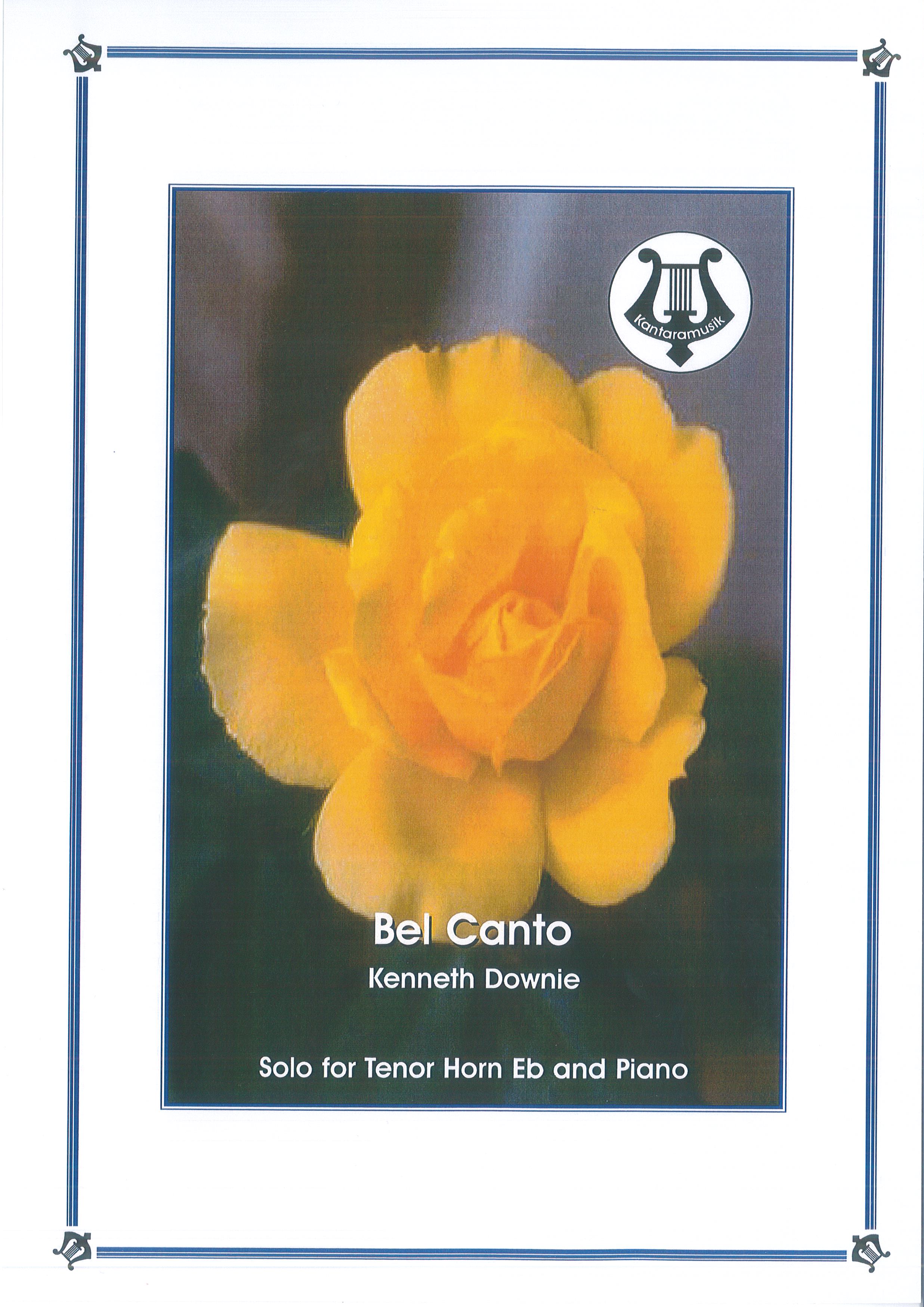 £14.95
Bel Canto (Tenor Horn and Piano)
Bel Canto, a solo for Eb Tenor Horn and band, was written for Sheona White. As the title suggests the music is very song-like and features soaring melodic lines which exploit the middle and upper registers of the tenor horn.
Estimated dispatch 7-14 working days
 View Music