
Results
-
 £73.60
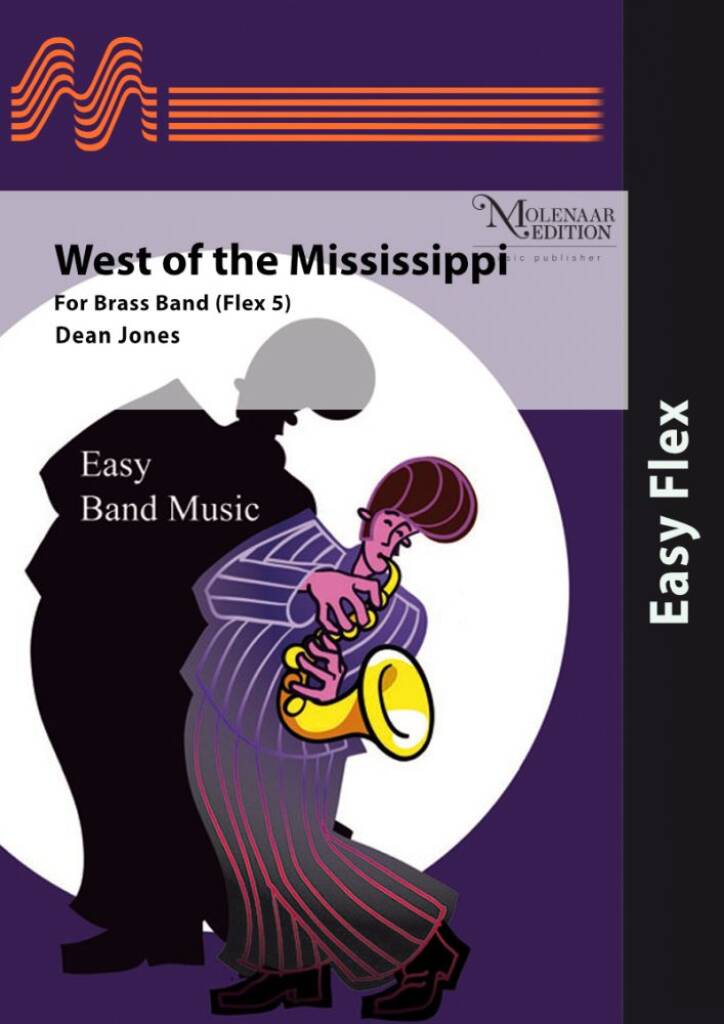
West of the Mississippi - Dean Jones
There's always a sense of adventure about America that makes it a really exciting topic to write about. The 3 States that sprang to mind in bringing a piece of music together were: California, Hawaii and Texas.We start out our American journey on the West Coast....California has provided much in the way of film and music for over 100 years. Combining this sense of free expression with the 'Surfing' culture, this initial section of the piece has an easy-going, fun feel in a pop idiom. Maybe wearing some shades might be quite a good look for this section!We move even further West now to the island of Hawaii where the free and easy goes onto a new level! The use of chromatics is a feature of Hawaiian melodies and has a feel a 'sliding' between notes that somehow sums up this feel of living on a tropical island! Have some fun with this section and have a Hawaiian garland to wear!Back into the USA mainland, and the fabulous state of Texas! Here we have the concept of the old fashioned rodeo and the 'Wild West'. Even today, the culture of horses, cowboys and tales of adventure are celebrated in places such as Fort Worth. The music captures some of these themes and has a fun and enjoyment...some get your Cowboy hats at the ready and enjoy the finale!
Estimated dispatch 5-14 working days
-
 £84.95
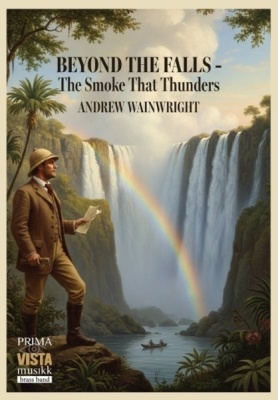
Beyond the Falls - The Smoke That Thunders (Brass Band - Score and Parts)
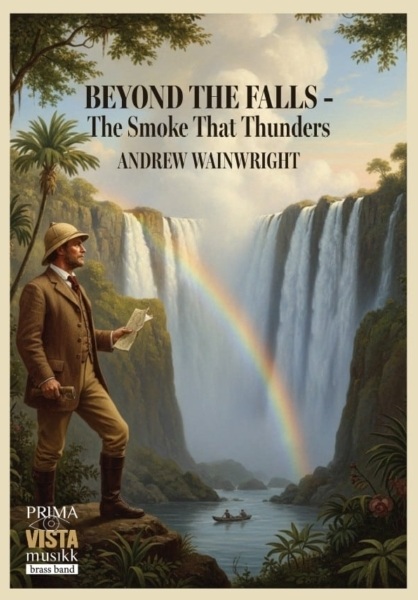
David Livingstone was a renowned Scottish missionary and explorer whose legendary expeditions from 1841 until his death in 1873 took him deep into the interior of central and southern Africa. While his initial aim was to spread Christianity and commerce, his legacy became defined by his relentless spirit of discovery.This work captures the harrowing and ultimately triumphant journey that led to his discovery of Victoria Falls. Originally composed for the GUS Band's performance at the 2012 Brass in Concert Championships, the work was expanded in 2026 for the Black Dyke Band's recording, Gothique Fantasy - The Music of Andrew Wainwright.The music opens with an air of trepidation, reflecting the weight of the mission ahead. This tension soon gives way to a more optimistic section featuring the Scottish folk song A Man's a Man for a' That. Livingstone reportedly hummed this Rabbie Burns tune to bolster his spirits while travelling. The score then depicts the immense hardships of the expedition (letters F to L), illustrating skirmishes with suspicious local tribes, wild animal attacks, and bouts of African fever.Following these trials, a more reflective, emotive movement (Letters L to R) explores Livingstone's internal struggle and his doubts about continuing. This emotional core is built upon the hymn Lord, Send Me Anywhere, a melody composed by Livingstone himself. Emerging from this prayer with renewed purpose, the final section (Letter R to the end) follows his path along the Zambezi River. The music builds to a triumphant climax, capturing his elation at seeing the magnificent Victoria Falls - known locally as 'Mosi-oa-Tunya' (The Smoke that Thunders).Duration: 13.30
Estimated dispatch 7-14 working days
-
£31.95
Beyond the Falls - The Smoke That Thunders (Brass Band - Score only)
David Livingstone was a renowned Scottish missionary and explorer whose legendary expeditions from 1841 until his death in 1873 took him deep into the interior of central and southern Africa. While his initial aim was to spread Christianity and commerce, his legacy became defined by his relentless spirit of discovery.This work captures the harrowing and ultimately triumphant journey that led to his discovery of Victoria Falls. Originally composed for the GUS Band's performance at the 2012 Brass in Concert Championships, the work was expanded in 2026 for the Black Dyke Band's recording, Gothique Fantasy - The Music of Andrew Wainwright.The music opens with an air of trepidation, reflecting the weight of the mission ahead. This tension soon gives way to a more optimistic section featuring the Scottish folk song A Man's a Man for a' That. Livingstone reportedly hummed this Rabbie Burns tune to bolster his spirits while travelling. The score then depicts the immense hardships of the expedition (letters F to L), illustrating skirmishes with suspicious local tribes, wild animal attacks, and bouts of African fever.Following these trials, a more reflective, emotive movement (Letters L to R) explores Livingstone's internal struggle and his doubts about continuing. This emotional core is built upon the hymn Lord, Send Me Anywhere, a melody composed by Livingstone himself. Emerging from this prayer with renewed purpose, the final section (Letter R to the end) follows his path along the Zambezi River. The music builds to a triumphant climax, capturing his elation at seeing the magnificent Victoria Falls - known locally as 'Mosi-oa-Tunya' (The Smoke that Thunders).Duration: 13.30
Estimated dispatch 7-14 working days
-
£21.95
Beyond the Falls - The Smoke That Thunders (Brass Band - Study Score)
David Livingstone was a renowned Scottish missionary and explorer whose legendary expeditions from 1841 until his death in 1873 took him deep into the interior of central and southern Africa. While his initial aim was to spread Christianity and commerce, his legacy became defined by his relentless spirit of discovery.This work captures the harrowing and ultimately triumphant journey that led to his discovery of Victoria Falls. Originally composed for the GUS Band's performance at the 2012 Brass in Concert Championships, the work was expanded in 2026 for the Black Dyke Band's recording, Gothique Fantasy - The Music of Andrew Wainwright.The music opens with an air of trepidation, reflecting the weight of the mission ahead. This tension soon gives way to a more optimistic section featuring the Scottish folk song A Man's a Man for a' That. Livingstone reportedly hummed this Rabbie Burns tune to bolster his spirits while travelling. The score then depicts the immense hardships of the expedition (letters F to L), illustrating skirmishes with suspicious local tribes, wild animal attacks, and bouts of African fever.Following these trials, a more reflective, emotive movement (Letters L to R) explores Livingstone's internal struggle and his doubts about continuing. This emotional core is built upon the hymn Lord, Send Me Anywhere, a melody composed by Livingstone himself. Emerging from this prayer with renewed purpose, the final section (Letter R to the end) follows his path along the Zambezi River. The music builds to a triumphant climax, capturing his elation at seeing the magnificent Victoria Falls - known locally as 'Mosi-oa-Tunya' (The Smoke that Thunders).Duration: 13.30
Estimated dispatch 7-14 working days
-
 £84.95
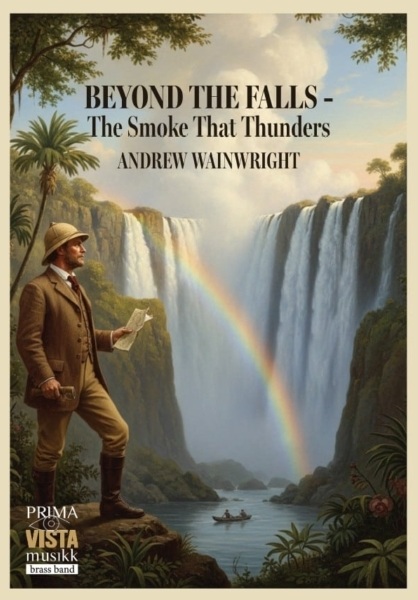
Beyond the Falls - The Smoke That Thunders (Brass Band - Score and Parts) - Wainwright, Andrew
David Livingstone was a renowned Scottish missionary and explorer whose legendary expeditions from 1841 until his death in 1873 took him deep into the interior of central and southern Africa. While his initial aim was to spread Christianity and commerce, his legacy became defined by his relentless spirit of discovery.This work captures the harrowing and ultimately triumphant journey that led to his discovery of Victoria Falls. Originally composed for the GUS Band's performance at the 2012 Brass in Concert Championships, the work was expanded in 2026 for the Black Dyke Band's recording, Gothique Fantasy - The Music of Andrew Wainwright.The music opens with an air of trepidation, reflecting the weight of the mission ahead. This tension soon gives way to a more optimistic section featuring the Scottish folk song A Man's a Man for a' That. Livingstone reportedly hummed this Rabbie Burns tune to bolster his spirits while travelling. The score then depicts the immense hardships of the expedition (letters F to L), illustrating skirmishes with suspicious local tribes, wild animal attacks, and bouts of African fever.Following these trials, a more reflective, emotive movement (Letters L to R) explores Livingstone's internal struggle and his doubts about continuing. This emotional core is built upon the hymn Lord, Send Me Anywhere, a melody composed by Livingstone himself. Emerging from this prayer with renewed purpose, the final section (Letter R to the end) follows his path along the Zambezi River. The music builds to a triumphant climax, capturing his elation at seeing the magnificent Victoria Falls - known locally as 'Mosi-oa-Tunya' (The Smoke that Thunders).Duration: 13.30
Estimated dispatch 7-14 working days
-
 £31.95
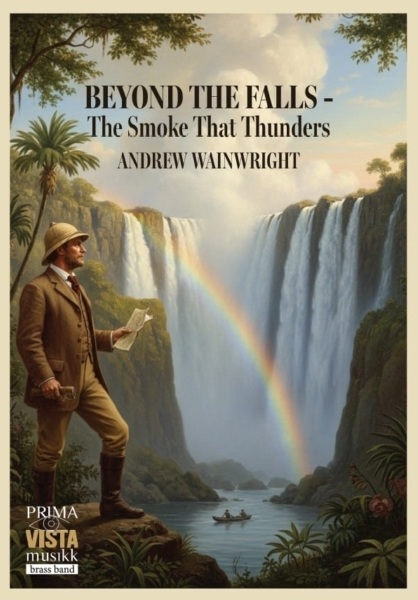
Beyond the Falls - The Smoke That Thunders (Brass Band - Score only) - Wainwright, Andrew
David Livingstone was a renowned Scottish missionary and explorer whose legendary expeditions from 1841 until his death in 1873 took him deep into the interior of central and southern Africa. While his initial aim was to spread Christianity and commerce, his legacy became defined by his relentless spirit of discovery.This work captures the harrowing and ultimately triumphant journey that led to his discovery of Victoria Falls. Originally composed for the GUS Band's performance at the 2012 Brass in Concert Championships, the work was expanded in 2026 for the Black Dyke Band's recording, Gothique Fantasy - The Music of Andrew Wainwright.The music opens with an air of trepidation, reflecting the weight of the mission ahead. This tension soon gives way to a more optimistic section featuring the Scottish folk song A Man's a Man for a' That. Livingstone reportedly hummed this Rabbie Burns tune to bolster his spirits while travelling. The score then depicts the immense hardships of the expedition (letters F to L), illustrating skirmishes with suspicious local tribes, wild animal attacks, and bouts of African fever.Following these trials, a more reflective, emotive movement (Letters L to R) explores Livingstone's internal struggle and his doubts about continuing. This emotional core is built upon the hymn Lord, Send Me Anywhere, a melody composed by Livingstone himself. Emerging from this prayer with renewed purpose, the final section (Letter R to the end) follows his path along the Zambezi River. The music builds to a triumphant climax, capturing his elation at seeing the magnificent Victoria Falls - known locally as 'Mosi-oa-Tunya' (The Smoke that Thunders).Duration: 13.30
Estimated dispatch 7-14 working days
-
 £21.95
Beyond the Falls - The Smoke That Thunders (Brass Band - Study Score) - Wainwright, Andrew
David Livingstone was a renowned Scottish missionary and explorer whose legendary expeditions from 1841 until his death in 1873 took him deep into the interior of central and southern Africa. While his initial aim was to spread Christianity and commerce, his legacy became defined by his relentless spirit of discovery.This work captures the harrowing and ultimately triumphant journey that led to his discovery of Victoria Falls. Originally composed for the GUS Band's performance at the 2012 Brass in Concert Championships, the work was expanded in 2026 for the Black Dyke Band's recording, Gothique Fantasy - The Music of Andrew Wainwright.The music opens with an air of trepidation, reflecting the weight of the mission ahead. This tension soon gives way to a more optimistic section featuring the Scottish folk song A Man's a Man for a' That. Livingstone reportedly hummed this Rabbie Burns tune to bolster his spirits while travelling. The score then depicts the immense hardships of the expedition (letters F to L), illustrating skirmishes with suspicious local tribes, wild animal attacks, and bouts of African fever.Following these trials, a more reflective, emotive movement (Letters L to R) explores Livingstone's internal struggle and his doubts about continuing. This emotional core is built upon the hymn Lord, Send Me Anywhere, a melody composed by Livingstone himself. Emerging from this prayer with renewed purpose, the final section (Letter R to the end) follows his path along the Zambezi River. The music builds to a triumphant climax, capturing his elation at seeing the magnificent Victoria Falls - known locally as 'Mosi-oa-Tunya' (The Smoke that Thunders).Duration: 13.30
Estimated dispatch 7-14 working days
-
 £30.00
Wired - Lucy Pankhurst
A fantastically funky piece! So good it was featured on BBC television during the 2010 general election campaign coverage for the North West and at the 2014 International Women's Brass Conference.Originally written in 2009 for Jason Katsikaris and the Leyland Band, Lucy Pankhurst has created a vivacious, energetic work which is strong on percussion and style!It's fast-moving, completely engaging and makes for compulsive toe-tapping and the need to 'get into the groove'! Huge opportunities for the kit player/percussion section to show their wild side and, so as not to be outdone, plenty of other moments for improvisation-esque solos from other quarters.If you can keep up, this is a really great contribution to your concert programme.Look and Listen (performance courtesy of Oslofjord Brass from their appearance at the 2010 Grenland International Brass Festival 2010):
In Stock: Estimated dispatch 3-5 working days
-
 £76.99
A Western Suite - Andreas Ludwig Schulte - David Well
The atmosphere of the Wild West is caught in a striking and most imaginative way by young composer Andreas Schulte in this work. A caravan of gold- and fortuneseekers launch themselves into a big adventure and begin their rush westward. The first movement desciribes these first days of buoyancy and optimism in a crisp march. Near the campfire the pioneers rest themselves, and the music expresses feelings of romance, nostalgia for the past and hopes for the future. A wistful melody very characteristically communicates these feelings. Relaxation takes place in the third movement which is a musical characterization of a rodeo and its attendant festivities.It is obvious that sometimes something goes wrong and this aspect can also be heard. Nevertheless, the valiant rider wins in the end. With a flashback to the beginning, the journey is completed musically, thus giving the composition a dignified finale. Let the mystic Wild West entrance you. (Wagons ho ....!!) De sfeer van het Wilde Westen wordt door de jonge componist Andreas Ludwig Schulte op een uiterst treffende en beeldende wijze geschetst. Een karavaan van goud- en gelukzoekers stort zich in het grote avontuur en begint de grote reis naar het westen. Het eerste gedeelte beschrijft de eerste dagen van opgewektheid en optimisme in een vlotte mars. Bij het kampvuur komen de pioniers tot rust en worden gevoelens van romantiek, heimwee (verleden) en hoop (toekomst) muzikaal weergegeven. Een weemoedige melodie verwoordt die gevoelens op een zeer kenmerkende wijze. De ontspanning vindt plaats in het derde deel waarin een rodeofeest muzikaal wordt verklankt. Met een flashback van het begin wordt de tocht voltooid en de compositie waardig afgesloten. Raak in de ban van het wilde westen!
Estimated dispatch 5-14 working days
-
 £134.99
West Wind - Oliver Waespi
West Wind is structured in three parts, each bearing a subtitle drawn from poems of Emily Bronte (1818-1848). Poetry of the Romantic period, Bronte's in particular, often presents a gentle, almost innocent surface, beneath which lies the most elemental and volatile emotional forces capable of erupting at any moment.Accordingly, the opening movement, West-wind, in the glory and pride!, begins with a mellow, warm soundscape, underpinned by lightly pulsating patterns, almost like an aquarelle. Gradually however, the music transitions into far rougher, forward-driven gestures - turbulent, restless, and at times unpredictable, much like the west wind itself.The ensuing Adagio reflects on the poem Stars, in which a fundamental tension between exaltation and regret, another recurring feature of Bronte's poetry, is palpable throughout. Introspective solo and chamber music statements give way to a broad ecstatic sound field involving the full ensemble, before finally receding into a solitary euphonium soliloquy.The final movement, Wild words of an ancient song, takes the form of an extended rondo-scherzo, driven by virtuosic, perpetual motion. The sense of relentless pursuit bears a nod to The Boy on the Moor by the German poet Annette von Droste-Hulshoff, a contemporary of Bronte who explored similar narratives, albeit from a different perspective.Although certain core musical elements recur - pulsating patterns, a chorale, a tone row - the work is guided less by systematic symphonic development than by an intuitive stream of variants. These generate a sequence of metamorphoses that illuminate the material from shifting vantage points, projecting the emotional landscapes of Romantic poetry into the present day.West Wind was commissioned by the Flowers Band and was first performed under Musical Director Paul Holland, at the 2026 European Brass Band Championships in Linz (AT), where they also became European Champions.
Estimated dispatch 5-14 working days
 View Music