
Results
-
 £50.00
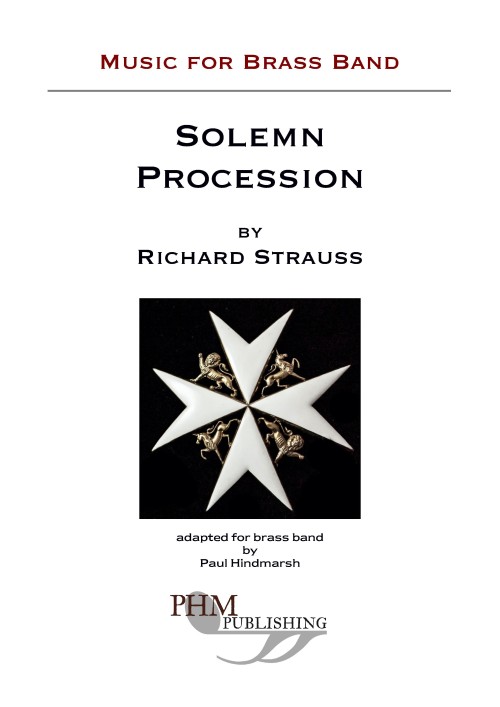
Solemn Procession (Brass Band - Score and Parts) - Strauss, Richard - Hindmarsh, Paul
Richard Strauss (1864 - 1949) was a famous conductor and composer when he wrote Feierlicher Einzug der Ritter des Johanniter-Ordens (Solemn Entrance of the Knights of the Order of Saint John) in 1909. One of only a handful of his works written exclusively for winds, Strauss composed Feierlicher Einzug for the investiture ceremonies of the Order of St. John, a Christian military order that was founded in Jerusalem in 1023 to care for poor, sick, or injured pilgrims journeying to the Holy Land.Strauss scored Feierlicher Einzug (TrV 224) for a large ensemble of fifteen trumpets, four horns, four trombones, two tubas and timpani. He saw enough potential in its stately character and majestic conclusion to produce a version for symphony orchestra with organ and it has been arranged for a variety of brass ensembles with or without organ since then.This version for British style brass band was adapted from the original in 1990 by Paul Hindmarsh for the exclusive use of Besses o' th' Barn Band, of which he was then the musical director. Now that the music of Richard Strauss published in his lifetime is in the public domain, Solemn Procession, as it has been rendered in English, can be enjoyed by all brass bands and their audiences.- Paul HindmarshDuration: 6.00
Estimated dispatch 7-14 working days
-
 £44.95
Life Divine (Brass Band - Score and Parts) - Jenkins, Cyril
Programme Notes:Certain phases of Life are common to most if not all men and the music of the Tone Poem carries the listener through four of such phases.a) In the Andante Molto Maestoso a man's outlook on Life as a thing of seriousness and dignity is shown.b) The Allegro Vivace which follow shows him facing its problems with a spirit of vigorous optimism, while two tributary themes suggest that Life, with all its seriousness, is not devoid of humour and happiness.c) The short section which follows, Maestoso, is a reminder that times of stress and trouble are inevitable but these are quickly dispelled by thed) Andante Nobilemente, portraying the helping and ennobling power of true love.The music again proceeds to review these four phases of Life, the concluding section showing Love triumphant over all.
Estimated dispatch 7-14 working days
-
 £95.00
Tenor Horn Concerto 'Three Gods' (Tenor Horn Solo with Brass Band - Score and Parts) - Gregson, Edward
Edward Gregson's Tenor Horn Concerto (Three Gods) was commissioned by the Belgian tenor horn soloist Tim de Maeseneer for a recording of commissioned works he made in 2024 with his own band, Brass Band Willebroek.The subtitle of 'Three Gods' refers to three mythological Greek Gods: Zeus, Hermes and Apollo. The idea for this came from Gregson's Viola Concerto, which he composed in 2023 and which was similarly subtitled 'Three Goddesses'. Indeed, the first movement of the horn concerto shares some common material with the viola concerto, although the other movements are newly composed.The concerto exploits the noble character of the horn, but the writing is also virtuosic in character as well as lyrical and melodic, demanding an extended playing range of nearly four octaves with a variety of colouration in its sonorities. The unifying motif of the whole concerto is the interval of a rising 5th, heard at the outset. The opening also has some other surprises (both seen and heard).The musical ideas, cast in three separate movements, take their starting point from the characters of the Three Gods in the title:Zeus, ruled as King of the Gods on Mount Olympus, and was the God of Thunder and Lightning and of War. His music is often threatening and violent, but also has a more tender side as portrayed in the lyrical second subject. However, the dominant mood is one of foreboding.Hermes was the great messenger to the Gods who could travel between realms on his winged sandals. Thus, his music is fast, fleet of foot, and mercurial - a dashing scherzo, but with lyrical and expressive moments.Apollo, the God of Music and Dance (and the Sun), symbolises virtue and beauty. This final movement, 'Hymn to Apollo', is mainly slow and hymn-like and cast in a continuous stream of melody passed between soloist and band. Brief fanfares herald a triumphant march, before the music returns to its quiet opening, gradually rising to a triumphant climax with glittering melodic percussion leading the way. The music ends in a blaze of glory!Duration: 17.00
Estimated dispatch 7-14 working days
-
£40.00
Tenor Horn Concerto 'Three Gods' (Tenor Horn Solo with Brass Band - Score only) - Gregson, Edward
Edward Gregson's Tenor Horn Concerto (Three Gods) was commissioned by the Belgian tenor horn soloist Tim de Maeseneer for a recording of commissioned works he made in 2024 with his own band, Brass Band Willebroek.The subtitle of 'Three Gods' refers to three mythological Greek Gods: Zeus, Hermes and Apollo. The idea for this came from Gregson's Viola Concerto, which he composed in 2023 and which was similarly subtitled 'Three Goddesses'. Indeed, the first movement of the horn concerto shares some common material with the viola concerto, although the other movements are newly composed.The concerto exploits the noble character of the horn, but the writing is also virtuosic in character as well as lyrical and melodic, demanding an extended playing range of nearly four octaves with a variety of colouration in its sonorities. The unifying motif of the whole concerto is the interval of a rising 5th, heard at the outset. The opening also has some other surprises (both seen and heard).The musical ideas, cast in three separate movements, take their starting point from the characters of the Three Gods in the title:Zeus, ruled as King of the Gods on Mount Olympus, and was the God of Thunder and Lightning and of War. His music is often threatening and violent, but also has a more tender side as portrayed in the lyrical second subject. However, the dominant mood is one of foreboding.Hermes was the great messenger to the Gods who could travel between realms on his winged sandals. Thus, his music is fast, fleet of foot, and mercurial - a dashing scherzo, but with lyrical and expressive moments.Apollo, the God of Music and Dance (and the Sun), symbolises virtue and beauty. This final movement, 'Hymn to Apollo', is mainly slow and hymn-like and cast in a continuous stream of melody passed between soloist and band. Brief fanfares herald a triumphant march, before the music returns to its quiet opening, gradually rising to a triumphant climax with glittering melodic percussion leading the way. The music ends in a blaze of glory!Duration: 17.00
Estimated dispatch 7-14 working days
-
 £32.50
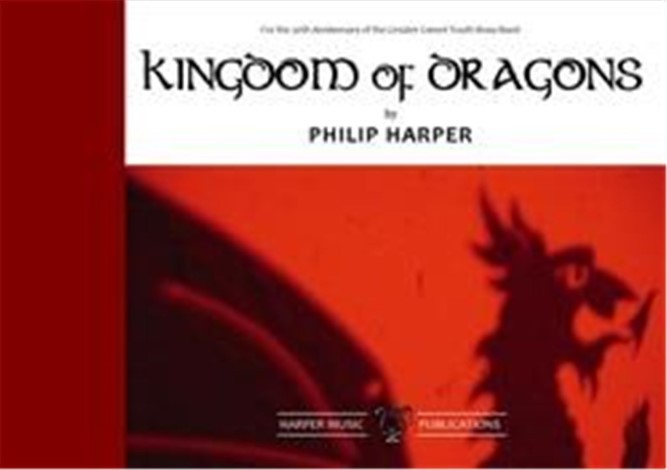
Kingdom of Dragons (Brass Band - Score only) - Harper, Philip
The 'Kingdom of Dragons' is Gwent in South Wales, known in ancient times as the Kingdom of Gwent, and more recently home to the Newport Gwent Dragons Rugby Union team.This piece was commissioned by the Gwent Music Service with additional funding from Ty Cerdd - Music Centre Wales to celebrate the 50th anniversary in 2010 of the formation of the Gwent Youth Brass Band.Although the music is continuous, it is divided into four distinct sections, each one representing one of the unitary authorities which make up the County of Gwent.Monmouthshire, which has a large number of ancient castlesBlaenau Gwent, an historic area of iron and coal miningTorfaen, where Pontypool Park is a notable landmarkNewport, the largest city in the regionThe music begins with a two-bar fanfare, which sets out all the thematic material of the piece. The mood of pageantry that follows describes some of the ancient castles in Monmouthshire, with rolling tenor drums and fanfaring cornets. After a majestic climax the music subsides and quite literally descends into the coal mines of Blaenau Gwent. The percussion provides effects that suggest industrial machinery clanking into life, and the music accelerates to become a perilous white-knuckle ride on the underground railroad. There is a brief respite as a miner's work-song is introduced and, after a protracted build-up, this is restated at fortissimo before the music comes crashing to an inglorious close, much like the UK's mining industry itself. The middle sonorities of the band portray the tranquillity of Pontypool Park, a place of great natural beauty. Brief cadenzas for cornet and euphonium lead to a full band reprise of the pastoral mood. At the end of this section we find ourselves at the top of the park's 'Folly Tower' from which the distant castle turrets of Monmouthshire are visible. Pontypool RFC was one of eleven clubs in the first Welsh league in 1881 and a brief but bruising musical portrayal of the formidable Pontypool front-row, the 'Viet Gwent' leads into the work's final section. This portrays Newport, a symbol for progress and optimism for the future, ideals shared by the Gwent Youth Band itself. The music is a vigorous fugue which advances through various keys and episodes before the final triumphant augmented entry which brings the work to a magnificent conclusion.Duration: 12:00
Estimated dispatch 7-14 working days
-
£74.99
Kingdom of Dragons (Brass Band - Score and Parts) - Harper, Philip
The 'Kingdom of Dragons' is Gwent in South Wales, known in ancient times as the Kingdom of Gwent, and more recently home to the Newport Gwent Dragons Rugby Union team.This piece was commissioned by the Gwent Music Service with additional funding from Ty Cerdd - Music Centre Wales to celebrate the 50th anniversary in 2010 of the formation of the Gwent Youth Brass Band.Although the music is continuous, it is divided into four distinct sections, each one representing one of the unitary authorities which make up the County of Gwent.Monmouthshire, which has a large number of ancient castlesBlaenau Gwent, an historic area of iron and coal miningTorfaen, where Pontypool Park is a notable landmarkNewport, the largest city in the regionThe music begins with a two-bar fanfare, which sets out all the thematic material of the piece. The mood of pageantry that follows describes some of the ancient castles in Monmouthshire, with rolling tenor drums and fanfaring cornets. After a majestic climax the music subsides and quite literally descends into the coal mines of Blaenau Gwent. The percussion provides effects that suggest industrial machinery clanking into life, and the music accelerates to become a perilous white-knuckle ride on the underground railroad. There is a brief respite as a miner's work-song is introduced and, after a protracted build-up, this is restated at fortissimo before the music comes crashing to an inglorious close, much like the UK's mining industry itself. The middle sonorities of the band portray the tranquillity of Pontypool Park, a place of great natural beauty. Brief cadenzas for cornet and euphonium lead to a full band reprise of the pastoral mood. At the end of this section we find ourselves at the top of the park's 'Folly Tower' from which the distant castle turrets of Monmouthshire are visible. Pontypool RFC was one of eleven clubs in the first Welsh league in 1881 and a brief but bruising musical portrayal of the formidable Pontypool front-row, the 'Viet Gwent' leads into the work's final section. This portrays Newport, a symbol for progress and optimism for the future, ideals shared by the Gwent Youth Band itself. The music is a vigorous fugue which advances through various keys and episodes before the final triumphant augmented entry which brings the work to a magnificent conclusion.Duration: 12:00
Estimated dispatch 7-14 working days
-
 £89.95
TUBA CONCERTO (Gregson) (Tuba Solo with Brass Band - Score and Parts) - Gregson, Edward
This work was commissioned by the Besses o' th' Barn Band with funds provided by the Arts Council of Great Britain. It was written for, and is dedicated to, John Fletcher, who gave the first performance in Middleton Civic Hall, near Manchester, on 24 April, 1976, with Besses o' th' Barn Band conducted by the composer. Another interesting feature about the premire was that it was recorded by BBC Television for an Omnibus programme with Andr Previn as presenter. The concerto exists in four versions: with brass band (1976), orchestra (1978), wind band (1984) and piano reduction.The concerto is in three movements, following the usual, quick-slow-quick pattern: Allegro deciso,Lento e mesto, Allegro giocoso. The first movement has a sonata form shell with two contrasting themes, the first one being rhythmic in character, the second lyrical. There is a reference made in passing to the Vaughan Williams Tuba Concerto, but this merges into the other material in the development section.The second movement begins with a chorale, but after the entry of the tuba it leads to a cantabile theme, softly unfolded by the soloist. The opening chorale passage returns, this time briefly on muted brass, and leads to a middle section which is more chromatic in style and soon builds to a powerful climax, where the opening cantabile theme triumphantly returns. The music subsides, returning to the opening chorale and ending peacefully.The finale is light and breezy in style, and is cast in rondo form. After a brief introduction the tuba announces the main rondo theme, which is dance-like and a little jaunty. There are two episodes: the first a broad sweeping tune, the second a slowish waltz and a little jazz-like. After a virtuoso cadenza reference is made to the very opening of the concerto before the work ends with a triumphal flourish.The Tuba Concerto has established itself as one of the main works in the solo tuba repertoire. It has been performed and broadcast in over 40 countries all over the world. There are currently six commercial recordings of the concerto in its various versions.resolution in C major, pointed by a simple but expansive melody towards which the piece has been heading, and ending in a blaze of joyful colour.Duration: 18 mins
Estimated dispatch 7-14 working days
-
 £74.95
A Tale of Hope (Brass Band - Score and Parts) - Ponsford, Steven
The piece tells the story of Chicago lawyer and Presbyterian church elder Horatio Gates Spafford. In 1873, the Spafford family planned a vacation to England, but last-minute business demands prevented Horatio from sailing with them. Tragedy struck when the ship collided with an iron sailing vessel while crossing the Atlantic, killing 226 people, including all four of Spafford's daughters. His wife, Anna, survived the tragedy, and upon arriving in Cardiff, Wales, she sent a telegram to Spafford that simply read "Saved alone." Shortly afterwards, as Spafford travelled to meet his grieving wife, he was inspired to write the hymn It Is Well with My Soul as his ship passed near where his daughters had died. The hymn was subsequently set to music by fellow American Philip Bliss, with the tune named after the ship on which Spafford's daughters died, Ville du Havre.Composer Steven Ponsford has chosen to portray this story in a substantial composition for brass band. Much of the early music is turbulent, reflecting the long voyage, and then the disaster that claimed Spafford's daughters. After a darker 'Grave' section, the hymn It Is Well With My Soul softly emerges, with the piece ending on a note of optimism and hope.Duration: 11.30
Estimated dispatch 7-14 working days
-
 £31.95
A Tale of Hope (Brass Band - Score only) - Ponsford, Steven
The piece tells the story of Chicago lawyer and Presbyterian church elder Horatio Gates Spafford. In 1873, the Spafford family planned a vacation to England, but last-minute business demands prevented Horatio from sailing with them. Tragedy struck when the ship collided with an iron sailing vessel while crossing the Atlantic, killing 226 people, including all four of Spafford's daughters. His wife, Anna, survived the tragedy, and upon arriving in Cardiff, Wales, she sent a telegram to Spafford that simply read "Saved alone." Shortly afterwards, as Spafford travelled to meet his grieving wife, he was inspired to write the hymn It Is Well with My Soul as his ship passed near where his daughters had died. The hymn was subsequently set to music by fellow American Philip Bliss, with the tune named after the ship on which Spafford's daughters died, Ville du Havre.Composer Steven Ponsford has chosen to portray this story in a substantial composition for brass band. Much of the early music is turbulent, reflecting the long voyage, and then the disaster that claimed Spafford's daughters. After a darker 'Grave' section, the hymn It Is Well With My Soul softly emerges, with the piece ending on a note of optimism and hope.Duration: 11.30
Estimated dispatch 7-14 working days
-
 £69.95
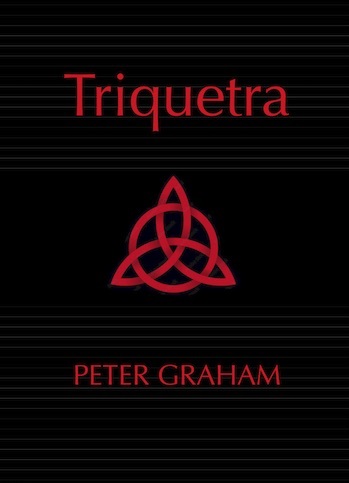
Triquetra (Brass Band - Score and Parts) - Graham, Peter
Triquetra takes the form of a free fantasia on the familiar hymn Old Hundreth. The tune appears in full in four different guises - harmonically and rhythmically altered on each occasion. Fragments of the melody are also used to generate new ideas, most notably in the contrasting middle section where the opening phrase of the hymn appears in inversion.As to the title, the Triquetra (from the Latin triquetrus meaning three-corned) symbol is representative of the Christian Trinity and in that respect relates to the final line of text in Old Hundreth, also known as the Doxology: Praise God from whom all blessings flow; Praise Him, all creatures here below; Praise Him above, ye heavenly host; Praise Father, Son and Holy Ghost.Triquetra was written for Stephen Cobb in recognition of 30 years outstanding service as conductor of the International Staff Band of the Salvation Army.Duration: 7.00
Estimated dispatch 7-14 working days
 View Music