
Results
-
 £29.50
Lovely Jubilee
2012 marked a year of celebration for the Queen's Diamond Jubilee. Now with this special patriotic release, your band can to pay tribute to all that is great about Great Britain. There's fun to be had with suggested choreography featured during "The British Grenadiers" and a salute to the "Men Of Harlech" (along with some other surprises!) before the gorgeous tune 'Suo Gan' takes the limelight. Of course, your audience will most likely join in the fun too, with music such as 'Land Of Hope & Glory' & 'Rule Britannia!' to finish, this item will surely leave your audiences on a patriotic high. This is the perfect item for concerts and contests, a must have in this years concert program.
Estimated dispatch 7-14 working days
-
 £54.99
One Night Only (from Dreamgirls) (Brass Band - Score and Parts) - Eyen & Krieger - Bond, Christopher
From the movie musical Dreamgirls, this arrangement begins as a slow and emotional ballad, later kicking into high gear for a fast and powerful rendition. This absolutely fantastic and spectacular arrangement by Christopher Bond will surely create a positive vibe within the band and will undoubtedly be liked by the audience.Duration: 3.15
Estimated dispatch 7-14 working days
-
 £125.00
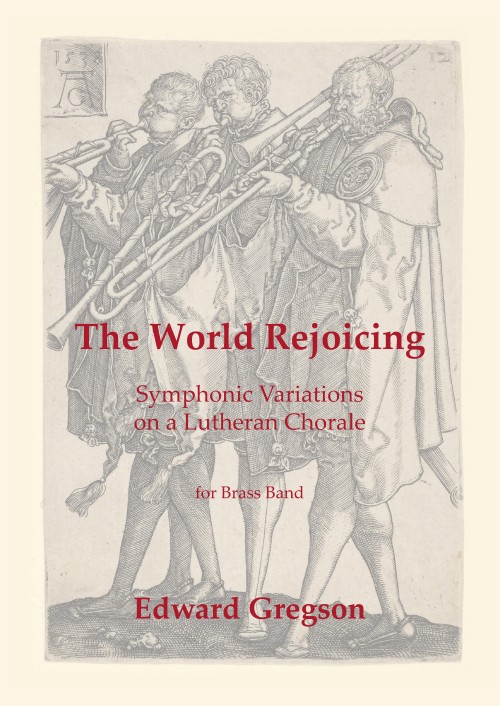
The World Rejoicing (Brass Band - Score and Parts) - Gregson, Edward
The World Rejoicing was commissioned by the National Brass Band Associations of Belgium, Netherlands, Norway, Switzerland, and the British Open, as the test piece for their competitions in 2020/21. Although the work was completed in 2019, the pandemic of 2020 meant that these competitions were postponed until 2021/22. The premiere took place in September 2021 at Symphony Hall, Birmingham, UK.In searching for a common link between the brass band traditions of the various European countries that commissioned this work, I considered the fact that hymns have always played an important role in the relationship that brass bands have with their particular communities; and thus I turned to a well- known Lutheran chorale, Nun danket alle Gott (Now thank we all our God), written around 1636 by Martin Rinkart, with the melody attributed to Johann Cruger. A number of composers have incorporated this chorale into their music, most famously J.S. Bach in his Cantatas no. 79 and 192, and Mendelssohn in the Lobsegang movement of his 2nd Symphony (the harmonisation of which is usually used when this hymn is sung).It seemed fitting therefore for me to return to a compositional form I have used many times before (Variations) and to write a work based on this hymn. I have used it in a similar way to that which I employed in my Variations on Laudate Dominum of 1976 - that is, rather than writing a set of variations using elaborations of the complete tune, I have taken various phrases from the chorale and used them within the context of other musical material, applying an overall symphonic process of continuous variation and development. The structure, or sub-divisions of the work, which is through composed and plays without a break, is as follows:Prelude, Capriccio, La Danza 1, Processional, La Danza 2, Arias and Duets, Fuga Burlesca, Chorale, and Postlude.The work, which is around 16 minutes in length, is also partly autobiographical - in the manner say of Strauss's Ein Heldenleben - in that I have incorporated into the score brief quotations from many of my other major works for brass band. In that respect, The World Rejoicing sums up a particular facet of my life as a composer, and reflects the admiration I have always had for what is surely one of the great amateur music-making traditions in the world.Duration: 16.00
Estimated dispatch 7-14 working days
-
£40.00
The World Rejoicing (Brass Band - Score only) - Gregson, Edward
The World Rejoicing was commissioned by the National Brass Band Associations of Belgium, Netherlands, Norway, Switzerland, and the British Open, as the test piece for their competitions in 2020/21. Although the work was completed in 2019, the pandemic of 2020 meant that these competitions were postponed until 2021/22. The premiere took place in September 2021 at Symphony Hall, Birmingham, UK.In searching for a common link between the brass band traditions of the various European countries that commissioned this work, I considered the fact that hymns have always played an important role in the relationship that brass bands have with their particular communities; and thus I turned to a well- known Lutheran chorale, Nun danket alle Gott (Now thank we all our God), written around 1636 by Martin Rinkart, with the melody attributed to Johann Cruger. A number of composers have incorporated this chorale into their music, most famously J.S. Bach in his Cantatas no. 79 and 192, and Mendelssohn in the Lobsegang movement of his 2nd Symphony (the harmonisation of which is usually used when this hymn is sung).It seemed fitting therefore for me to return to a compositional form I have used many times before (Variations) and to write a work based on this hymn. I have used it in a similar way to that which I employed in my Variations on Laudate Dominum of 1976 - that is, rather than writing a set of variations using elaborations of the complete tune, I have taken various phrases from the chorale and used them within the context of other musical material, applying an overall symphonic process of continuous variation and development. The structure, or sub-divisions of the work, which is through composed and plays without a break, is as follows:Prelude, Capriccio, La Danza 1, Processional, La Danza 2, Arias and Duets, Fuga Burlesca, Chorale, and Postlude.The work, which is around 16 minutes in length, is also partly autobiographical - in the manner say of Strauss's Ein Heldenleben - in that I have incorporated into the score brief quotations from many of my other major works for brass band. In that respect, The World Rejoicing sums up a particular facet of my life as a composer, and reflects the admiration I have always had for what is surely one of the great amateur music-making traditions in the world.Duration: 16.00
Estimated dispatch 7-14 working days
-
£15.00
The World Rejoicing (Brass Band - Study Score) - Gregson, Edward
The World Rejoicing was commissioned by the National Brass Band Associations of Belgium, Netherlands, Norway, Switzerland, and the British Open, as the test piece for their competitions in 2020/21. Although the work was completed in 2019, the pandemic of 2020 meant that these competitions were postponed until 2021/22. The premiere took place in September 2021 at Symphony Hall, Birmingham, UK.In searching for a common link between the brass band traditions of the various European countries that commissioned this work, I considered the fact that hymns have always played an important role in the relationship that brass bands have with their particular communities; and thus I turned to a well- known Lutheran chorale, Nun danket alle Gott (Now thank we all our God), written around 1636 by Martin Rinkart, with the melody attributed to Johann Cruger. A number of composers have incorporated this chorale into their music, most famously J.S. Bach in his Cantatas no. 79 and 192, and Mendelssohn in the Lobsegang movement of his 2nd Symphony (the harmonisation of which is usually used when this hymn is sung).It seemed fitting therefore for me to return to a compositional form I have used many times before (Variations) and to write a work based on this hymn. I have used it in a similar way to that which I employed in my Variations on Laudate Dominum of 1976 - that is, rather than writing a set of variations using elaborations of the complete tune, I have taken various phrases from the chorale and used them within the context of other musical material, applying an overall symphonic process of continuous variation and development. The structure, or sub-divisions of the work, which is through composed and plays without a break, is as follows:Prelude, Capriccio, La Danza 1, Processional, La Danza 2, Arias and Duets, Fuga Burlesca, Chorale, and Postlude.The work, which is around 16 minutes in length, is also partly autobiographical - in the manner say of Strauss's Ein Heldenleben - in that I have incorporated into the score brief quotations from many of my other major works for brass band. In that respect, The World Rejoicing sums up a particular facet of my life as a composer, and reflects the admiration I have always had for what is surely one of the great amateur music-making traditions in the world.Duration: 16.00
Estimated dispatch 7-14 working days
-
 £124.95
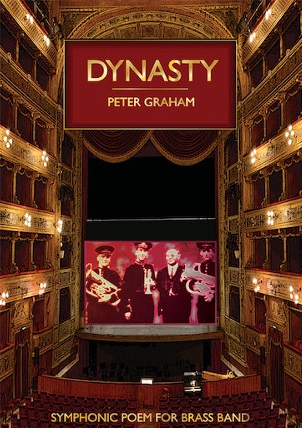
Dynasty (Brass Band - Score and Parts) - Graham, Peter
Dynasty takes the form of a Symphonic Poem, a musical form first introduced to a contest audience at the Crystal Palace in 1913 by Percy Fletcher in his work Labour and Love.Using key passages from the autobiography of Harry Mortimer, On Brass, as the source for the narrative, the work opens with a four-note leitmotif (Harry's theme, "as if descending from the heavens"), and the timeline unfolds as follows:Harry - One's destiny decided at birth "I'll make him the best cornet player in England"War - Why do the nations so furiously rage together? Fred volunteers for military serviceTheatre - And suddenly "I dashed to the rescue like a hero in the silent movies I was about to get to know so well"Journey - Comfort Ye A new life and new challengesTogether - Come unto me "A golden age"Farewell - For behold, darkness "Fred's death surely marked the passing of an era"Amen - The Trumpet shall soundListeners familiar with brass band repertoire will recognise a few pertinent quotes within the piece.In my imagination Harry is joined by Fred on cornet and the euphoniums of Alex and Rex for the quartet cadenza from Sovereign Heritage by Jack Beaver in Together.The Amen section from Handel's Messiah provides the basis for a contrapuntal flight of fancy as the work moves towards a conclusion. Other less overt fragments contribute to the story.Dynasty was co-commissioned by the British Open Brass Band Championships for the September 2019 contest, and the Brass Band Committee VLAMO for the Belgian Brass Band Championships 2019.- Peter GrahamDuration: 17.00
Estimated dispatch 7-14 working days
-
 £55.00
A Christmas Overture (Brass Band - Score and Parts) - Hess, Nigel - Littlemore, Phillip
Nigel Hess' vivacious and colourful A Christmas Overture, originally commissioned as an orchestral work by John Rutter for his 2007 Christmas Festival, proved an instant success with audience and orchestra alike. Traditional carols, skillfully juxtaposed and interwoven, provide the thematic material. These include Ding Dong! Merrily On High; Il Est N? Le Divin Enfant; Infant Holy, Infant Lowly; Personent Hodie; We Wish You A Merry Christmas and Angels From The Realms Of Glory, which brings the overture to a majestic close. Fragments of other carols appear along the way to enrich the texture of what is surely one of the most attractive pieces written for the festive season. Suitable for Premier Youth/2nd Section Bands and above. Duration: 7.30
Estimated dispatch 7-14 working days
-
 £24.95
My Love Is Like A Red, Red Rose - Euphonium Solo (Brass Band - Score and Parts) - Downie, Kenneth
An arrangement for Euphonium solo with brass band accompaniment of surely one of the world's greatest melodies. Its wide-ranging intervals and exquisitely shaped climax near the end give it a natural line that is truly memorable.
Estimated dispatch 7-14 working days
-
£12.50
My Love Is Like A Red, Red Rose - Euphonium Solo (Brass Band - Score Only) - Downie, Kenneth
An arrangement for Euphonium solo with brass band accompaniment of surely one of the world's greatest melodies. Its wide-ranging intervals and exquisitely shaped climax near the end give it a natural line that is truly memorable.
Estimated dispatch 7-14 working days
-
 £69.99
Summer Isles (from Hymn of the Highlands) (Euphonium Solo with Brass Band - Score and Parts) - Sparke, Philip
The Summer Isles are a group of islands located off the North West coast of Scotland which are famous for their wildlife. This piece, written for solo euphonium and brass band, reflects the natural beauty and relaxing atmosphere of the islands. The wonderful melodious nature of the euphonium is displayed in this piece and the opening theme is followed by melodic interplay between the soloist and cornets. This piece will surely be enjoyed by any audience.Duration: 4:10
Estimated dispatch 7-14 working days
 View Music