
Results
-
 £34.95
Life in the Sun (Brass Band - Score and Parts) - Wiffin, Rob
This bright and attractive concert overture was written while the comp0ser was living in Spain and enjoying life in the sun - a rare experience for an Englishman! It is intended to be an effervescent and cheerful piece, enjoyable both to play and to listen to. There are no great technical challenges in the music but it is essential that the performers play with a firm grasp of the rhythmic nature of the piece.It opens with a bold fanfare, giving the first statement of a theme that is to be used throughout. Once the broad opening is over the music has a feeling of energy and joy that drives all the way through the piece. The style is light and jazz-inflected and owes much to the compositional idiom of Goff Richards, the guru of entertaining band music.Duration: 5.00
Estimated dispatch 7-14 working days
-
 £28.95
Hopak (Brass Band - Score and Parts) - Wiffin, Rob
An extended fanfare/opener, A New Beginning is a joyous and exuberant outburst, an affirmation of the eternal hope of the human spirit. It starts and ends with the drama and splendour of a simple fanfare and the sections in between are full of energy, drive and purpose.The musical language is typically American in style with its typical feel of openness, space and grandeur. There are plenty of big moments but players and conductors are asked to pay careful attention to the various layers to prevent it all being performed at full volume.Duration: 4.30
Estimated dispatch 7-14 working days
-
 £28.95
A New Beginning (Brass Band - Score and Parts) - Wiffin, Rob
An extended fanfare/opener, A New Beginning is a joyous and exuberant outburst, an affirmation of the eternal hope of the human spirit. It starts and ends with the drama and splendour of a simple fanfare and the sections in between are full of energy, drive and purpose.The musical language is typically American in style with its typical feel of openness, space and grandeur. There are plenty of big moments but players and conductors are asked to pay careful attention to the various layers to prevent it all being performed at full volume.Duration: 4.30
Estimated dispatch 7-14 working days
-
 £42.95
Christmas in the Nursery (Brass Band - Score and Parts) - Wiffin, Rob
This arrangement of Christmas Carols was made in the same format and style as the highly successful Dancing 'round the Nursery.It includes:Here We Come A-WassailingIn Dulci JubiloI Saw Three Ships Come Sailing InWe Three KingsSussex CarolDing Dong Merrily on HighDeck the HallsGood King WenceslasThe Twelve Days of ChristmasJingle BellsWe Wish You a Merry ChristmasDuration: 4.30
Estimated dispatch 7-14 working days
-
 £56.00
Bonnie Teviotdale (Brass Band - Score and Parts) - Pringle, Thomas - Fernie, Alan
As sung by Scocha, this folk song style work evokes strong visions of Scotland.
Estimated dispatch 7-14 working days
-
 £92.60
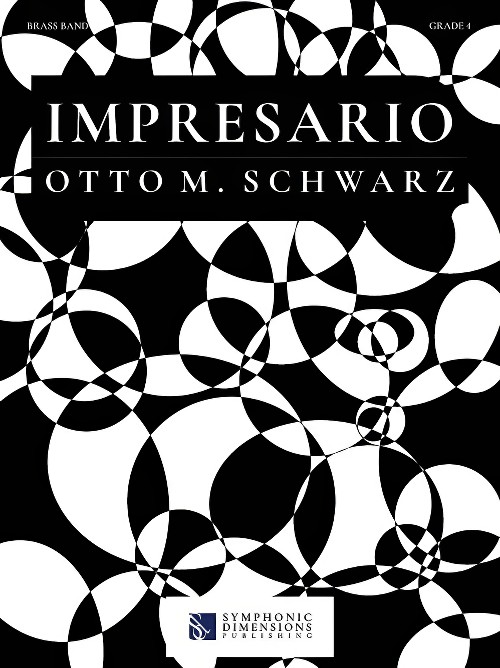
Impresario (Brass Band - Score and Parts) - Schwarz, Otto M.
Impresario is a solemn concert march by Otto M. Schwarz, equally suitable as a work to open a concert or indeed as a finale. The main theme of the first section is processed in different harmonic and rhythmic variations and finally leads to a trio with numerous technical refinements and a catchy melody. This somewhat out-of-the-ordinary concert march in Otto M. Schwarz' well-known style ends with a frenzied finale.Duration: 3.45
Estimated dispatch 7-14 working days
-
 £94.90
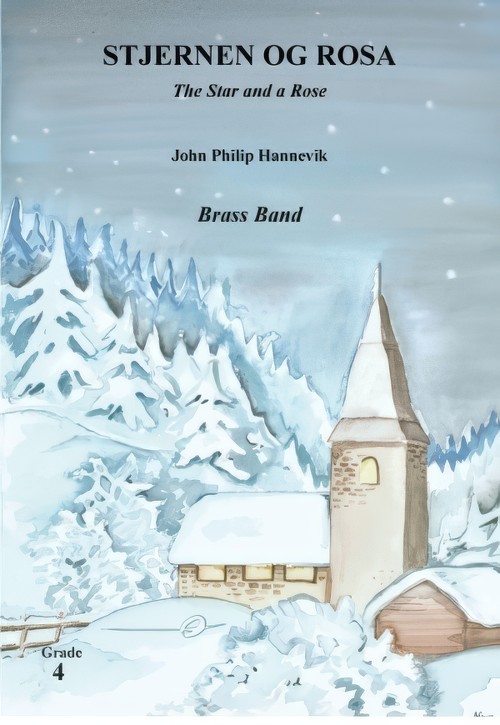
Stjernen og Rosa (The Star and a Rose) (Brass Band - Score and Parts) - Hannevik, John Philip
The Star and a Rose is a big-scale Christmas piece for band, featuring four seasonal chorales.The first is a Gregorian-like chant Hodie Christus natus est.In this section of the piece, a soloist can be placed away from the band, maybe on a gallery. The soloist can be a tenor instrument, maybe trombone, or you can feature a vocal soloist. After this, the music leads us on to the old German Christmas chorale Lo, how a rose e'er blooming. This song is given a fairly rhythmical treatment, but make sure that the melody is presented in a cantabile style. An interlude follows, before the piece presents one of the most used and loved Scandinavian Christmas chorales, Mitt hjerte alltid vanker (My Heart will always wander), composed by the Danish bishop Hans Adolph Brorson around 1732. This song is building towards a climax, before the solo horn brings it all down to the Stable view described in the lyrics. Then comes a transition that brings us in to the final section of the piece, which presents the international Christmas Carol Adeste Fideles. As many will notice, I have borrowed a section from David Wilcocks majestic harmonization towards the end.The title of the piece has its background form the lyrics in My heart will always wander, where the text speaks about the stars in the sky. But also in the Latin text for Adeste Fideles: Stella duce, Magi, Christum adorantes. The Rose is of course from the lyrics in the chorale Lo, how a Rose.Duration: 10.30
Estimated dispatch 7-14 working days
-
 £29.95
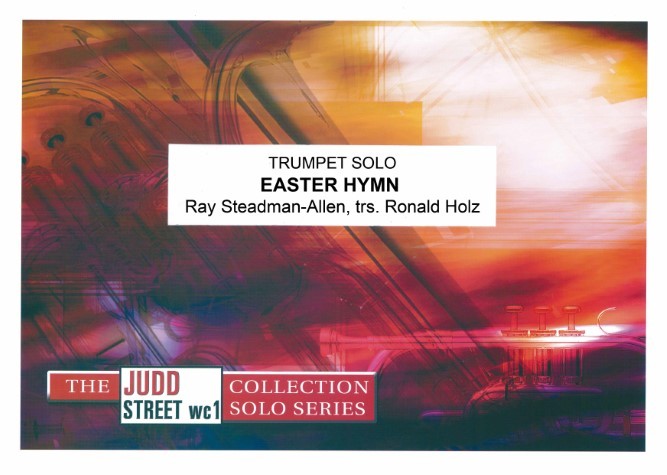
Easter Hymn (Trumpet Solo with Brass Band - Score and Parts) - Steadman-Allen, Ray - Holz, Ronald
Ray Steadman-Allen sketched this short, festive arrangement in the early 1990s.While labelled by RSA as a Trumpet Solo, a Cornet soloist would also be appropriate. The piece should not prove difficult to prepare except in terms of maintaining balance between the soloist and the band. Some of the harmonies are quite unexpected, even curiously dissonant in the late RSA style. However, such sounds should help the listener hear this traditional hymn in a new and vital manner. The piece would serve well as an Intrada on Easter Sunday, or during any celebratory occasion in Eastertide.
Estimated dispatch 7-14 working days
-
 £55.00
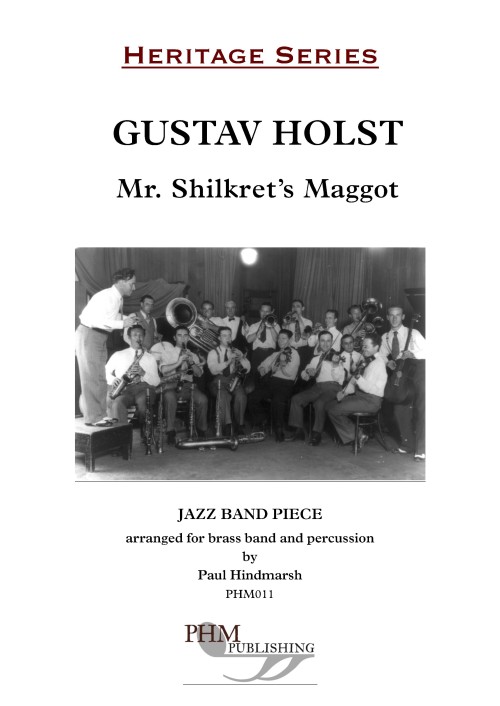
Mr Shilkret's Maggot (Brass Band - Score and Parts) - Holst, Gustav - Hindmarsh, Paul
This short piece was composed in 1932 during a visit Gustav Holst was making to the USA. He was invited by the band leader Nathaniel Shilkret to contribute to a series of piece for concert jazz band based on a folk song. Rather than using a traditional tune, Holst invented one of his own in folk song style and therefore the piece was not performed. Holst considered various titles for the piece including Mr. Shilkret's Dump, Folly and Maggot. On the manuscript he described it as a Jazz Band Piece. When the composer's daughter Imogen re-scored the piece for the English Chamber Orchestra to record under her direction in 1967, she changed decided to use the title Capriccio.Her re-orchestration involved removing the saxophone quartet, adding cor anglais and a second bassoon and changing cornet parts to trumpets. She retained the harp, extensive percussion, piano and celesta. My brass band version is based on the composer's manuscript, held at the British Library. It retains the composer's cornet parts, re-voices the woodwinds and strings, and places keyboards and harp onto glockenspiel, marimba, vibraphone and xylophone.I have selected the title Mr. Shilkret's Maggot for my scoring of Jazz Band Piece, which was first performed by The Cory Band, conducted by Philip Harper, at the Royal Northern College of Music Brass Band Festival, 29 January 2017.- Paul HindmarshDuration: 5.30
Estimated dispatch 7-14 working days
-
 £28.95
La Chica sin Nombre (Trombone Solo with Brass Band - Score and Parts) - Wiffin, Rob
A vibrant, rhythmic solo for trombone and bandLa Chica sin Nombre was written in March 2020 at the request of Brett Baker. He wanted something in Latin style so I chose to go for a Mambo-type dance piece. In obtaining the right percussion sound I would always ask for Conga drums and Mambo Bell/Timbales rather than drum kit. The piece needs to be played with an appropriate feel for Latin music. It should sound light and easy to play but has a few tricky moments- especially the cadenza-like sections from F to H. The virtuosic section at letter G can be cut if required.- Rob WiffinDuration: 4.15
Estimated dispatch 7-14 working days
 View Music