
Results
-
 £40.00
One Night Only (From Dreamgirls)
ABOUT THIS PIECE: Looking for a show-stopper for your next concert? Look no further than this electrifying arrangement of One Night Only from the hit musical Dreamgirls. With music by Henry Krieger and lyrics by Tom Eyen, this iconic number serves as a pivotal moment in the show, performed in two contrasting styles: a soulful ballad by Effie White and an upbeat dance version by Deena Jones & the Dreams. This arrangement expertly captures the essence of both renditions, bringing their energy and passion to the brass band stage. One Night Only delivers all the excitement and glamour of the original, leaving audiences tapping their feet and humming the unforgettable melody long after the final note. A must-have addition for bands seeking a dynamic and memorable highlight for their next programme! ENSEMBLE: Standard British Brass Band WHEN YOU BUY THIS PRODUCT, YOU GET: High-quality printed score and parts LEVEL: 2 LISTEN: DURATION: 4-minutes, 30-seconds EXAMPLE SCORE: Click here LEVEL GUIDE: Level 1- Accessible to all Level 2 - c. UK third section and higher Level 3 - c. UK second section and higher Level 4 - c. UK first section and higher Level 5 - c. UK championship section level
Estimated dispatch 5-7 working days
-
 £89.95
Songs of Ascent - Jonathan Bates
DURATION: 14 minutes. DIFFICULTY: Championship. 'Songs of Ascent' was composed for the Royal Northern College of Music Brass Band, as part of their programme for the 2019 RNCM Festival of Brass. In my view, the festival itself is the leading showcase for original contemporary music for the medium (in a concert setting) in the world and therefore an ideal place to explore new ideas and sounds, which was a notion fundamental to the construction of this work. The piece is subtitled 'Out of the Depths, I cry to you, O Lord'; the opening line of Psalm 130 (which forms part of a set of 15 psalsm, 120-134 known as the Songs of Ascent") which forms the main inspiration for much of the musical material. Following an extended opening for four individual tuba lines, there are a number of solos for members of the band off stage, with bleak and deep accompaniment lines, reflecting the words of Psalm 130. Amongst these 'songs of ascents', the most common and strong themes are repentance and redemption; with the central core of this work emerging 'from the depths' to reveal one of very few calming and reflective passages of the work utilising the tune of 'Guide Me O Thy Great Redeemer' in a new setting, featuring the Solo Horn and Bass Trombone, before returning to the ethereal and dark timbres that form much of the music up to this point. In terms of compositional technique, this work is solely based on a set of 4 9-note scales in their various unique transpositions (below). Each of these scales provide a set of 2 whole tone scales, 6 minor triads, 6 major triads and is built on 9 augmented triads. Whilst most of the music in this work is based melodically on the set of notes (heard right at the outset in the motif in the tuba line), the central section delves into the harmonic capabilities of these 'modes', using a number of the 7 'keys' which can be derived from the minor & major chords derived in each scale. All 4 scales are used independantly to each other, with whole sections of the work focussing on each mode. 'Songs of Ascent' was selected as the set work for the Championship Section at the Butlin's Mineworker's Championships in 2020.
In Stock: Estimated dispatch 1-3 working days
-
 £30.00
Edward Gregson: Music of the Angels, for Symphonic Brass and Percussion
DescriptionProgramme NoteMusic of the Angels is a dramatic work of some 16 minute's duration, scored for a large symphonic brass ensemble, including seven trumpets, and percussion. The percussion section deploys 'dark' instruments such as three tam-tams, a bass drum and two sets of timpani.The title of the work is based on a quotation from the Book of Revelations:And I saw the seven angels which stood before God; and to them were given seven trumpetsThus, the idea behind the work is a dramatic one and the composer has emphasised this by the partial spatial arrangement of the ensemble, with six solo trumpets standing centre stage, but behind the main ensemble, and the seventh trumpet off-stage throughout.The work opens with a four-note motif, dominant throughout the work, announced initially by four off-stage horns and answered by fanfare figures on four solo trumpets. Then in turn each of the first four solo trumpets announce their own cadenzas before joining together, independently playing their own music. This reaches an intense climax before subsiding into slow music which might be described as a Kyrie eleison - a lament for humanity - a cantilena for flugel horn and euphonium, accompanied by trombones. The drama soon returns with the entry of trumpets 5 and 6, playing music that is fast, more urgent and foreboding, and describing in musical terms the horsemen of the Apocalypse.At the climax of this section trumpet 7 enters dramatically, representing the words of the seventh angel ... and time shall be no more. The opening four-note motif is here transformed into a cadenza of epic proportions, to the partial accompaniment of three tam-tams (representing the Holy Trinity). The ensuing scherzo, scored for the ensemble, is fast and furious, but despite the somewhat desolate mood of this music (briefly interrupted by the re-appearance of trumpet 7), it slowly moves towards a more optimistic conclusion, transforming the 'lament for humanity' music into an affirmative and triumphant climax.This work has been commercially recorded on a critically acclaimed CD from London Brass on the Chandos label, available HERE.For more information on Edward Gregson's music please visit the composer's website: www.edwardgregson.com
Estimated dispatch 7-14 working days
-
£29.95
BEFORE THE CROSS (Cornet Solo with Brass Band Set) - Edward Gregson
Written at the request of David Daws for his solo album The Sound of David Daws, this meditation for cornet and brass band uses the composer's own song Before the cross (originally published in The Musical Salvationist, April 1965), the first lines of which are Before the cross I stand in fear and wonder, and see that all my sirs on Thee are laid. The song was written at an early stage of the composer's career, just before commencing study at The Royal Academy of Music, London. After a brief introduction the melody is heard twice, first played by the soloist, then on Euphonium and Flugel Horn with the soloist adding ornate counterpoint before taking up the melody once again, this time leading to a quiet and reflective conclusion.
Estimated dispatch 7-14 working days
-
 £25.00
Cabaret (Life is a ...) - John Kander, words by Fred Ebb
The title song from the timeless hit musical, film and stage show 'Cabaret', skillfully arranged here by Jon Bennett for brass band.
In Stock: Estimated dispatch 3-5 working days
-
 £84.95
In League with Extraordinary Gentlemen (Euphonium Solo with Brass Band)
Concerto for EuphoniumIn League with Extraordinary Gentlemen combines two of composer Peter Graham's life interests - composition and 19th century popular fiction. Each of the concerto's three movements takes its musical inspiration from extraordinary characters who have transcended the original genre and have subsequently found mass audiences through film, television and comic book adaptations.The first movement follows a traditional sonata form outline with one slight modification. The order of themes in the recapitulation is reversed, mirroring a plot climax in the H.G. Wells novella The Time Machine (where the protagonist, known only as The Time Traveller, puts his machine into reverse bringing the story back full circle).The Adventure of the Final Problem is the title of a short story published in The Memoirs of Sherlock Holmes by Arthur Conan Doyle. This is an account of the great detective's final struggle with his long-time adversary Professor Moriarty at the Reichenbach Falls in Switzerland. The music takes the form of a slowed down lndler (a Swiss/Austrian folk dance) and various acoustic and electronic echo effects call to mind the alpine landscape. The final bars pose a question paralleling that of Conan Doyle in the story - have we really seen the last of Sherlock Holmes?The final movement, The Great Race, (available separately) follows Phileas Fogg on the last stage of his epic journey "Around the World in Eighty Days" (from the novel by Jules Verne). The moto perpetuo nature of the music gives full rein to the soloist's technical virtuosity. As the work draws to a conclusion, the frantic scramble by Fogg to meet his deadline at the Reform Club in Pall Mall, London, is echoed by the soloist's increasingly demanding ascending figuration, set against the background of Big Ben clock chimes.In League with Extraordinary Gentlemen was first performed in the brass band version by David Thornton and the Black Dyke Band, conductor Nicholas Childs, at the RNCM Concert Hall Manchester on January 30, 2009.
Estimated dispatch 7-14 working days
-
 £29.95
Judd: Before The Cross
Written at the request of David Daws for his solo album The Sound of David Daws, this meditation for cornet and brass band uses the composer's own song Before the cross (The Musical Salvationist, April 1965), the first lines of which are "Before the cross I stand in fear and wonder, and see that all my sins on Thee are laid". The song was written at an early stage of the composer's career, just before commencing study at The Royal Academy of Music, London. After a brief introduction the melody is heard twice, first played by the soloist, then on euphonium and flugel horn with the soloist adding ornate counterpoint before taking up the melody once again, this time leading to a quiet and reflective conclusion.
Estimated dispatch 7-14 working days
-
 £46.50
Semper Fidelis (Brass Band - Score and Parts)
This march was written in 1888 and dedicated to the US Marine Corps, later being adopted as its official march. At the time of its composition Sousa was director of the US Marine Band.This brass band version contains a small amount of optional movement around the stage and a percussion feature. These will enhance the presentation.The arrangement was prepared for the Summer concerts presented by Brass Band of the Western Reserve, musical director Keith M Wilkinson, in 2008.
Estimated dispatch 7-14 working days
-
 £29.95
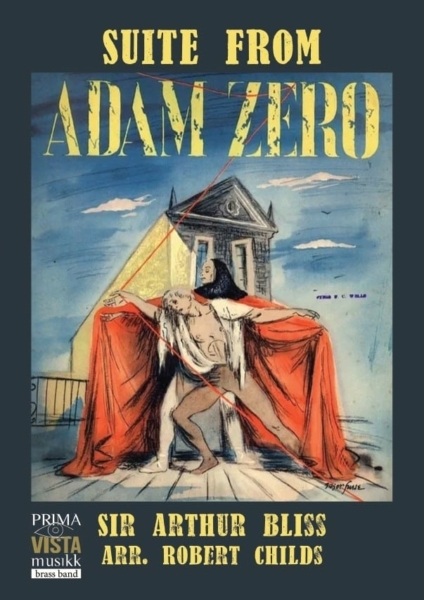
Adam Zero, Suite from (Brass Band - Score only) - Bliss, Arthur - Childs, Robert
Selected as the Section 2 test piece for the National Brass Band Championships of Great Britain 2025Following his ballet Checkmate, Bliss composed another score for the, by then, Sadler's Wells Ballet, Miracle in the Gorbals, which was choreographed by Robert Helpmann, to a scenario by Michael Benthall. Premired in 1944, the ballet made a considerable impact and was a box-office success. It was followed in turn by a further collaboration with Helpmann and Benthall, Adam Zero. This would serve Helpmann, in the eponymous role, as a vehicle in two respects: demonstrating his gifts as a dancer-actor and as a choreographer. First performed at the Royal Opera House, Covent Garden, on 8 April 1946, Adam Zero was conducted by Constant Lambert, the work's dedicatee. Bliss considered it 'his most varied and exciting ballet score'. Benthall provided a synopsis for the programme:There is a philosophy that life moves in an endless series of timeless cycles. As Nature passes through Spring, Summer, Autumn and Winter, so man is born, makes a success in his own particular sphere, loses his position to a younger generation, sees his world crumble before his eyes and only finds peace in death. This age-old story is told in terms of a Company creating a ballet and calling on the resources of the theatre to do so. Lighting, stage mechanism, dance conventions, musical forms and costumes and scenery of all periods are used to symbolize the world of 'Adam Zero'.Apart from Adam, as the Principal Dancer, other main roles included the Stage Director (representing Omnipotence), and Adam's Fates (Designer, Wardrobe Mistress, and Dresser). 'The Woman in this allegory', wrote Bliss, 'under the symbol of the Choreographer, was both the creator and destroyer of Adam: his first love, his wife, his mistress, and finally the figure of beneficent Death.' When the curtain rose, the 'audience saw the Covent Garden stage right back to the wall, completely empty except for the protagonists, 'the Company poised, still and expectant, as they await the birth of... Adam Zero.'Unfortunately, soon after the premire, Helpmann injured himself and had to withdraw from the remaining performances. Despite generally positive reviews, the ballet did not capture the imagination of audiences and, to Bliss's considerable disappointment, was not revived. Seventy years would elapse before its first major return to the stage, in 2016, performed by the ballet company of Stadttheater Bremerhaven with choreography by Sergei Vanaev.Bliss extracted a concert suite from the ballet, conducting its first performance with the City of Birmingham Symphony Orchestra on 28 October 1948. For his own suite, arranged for brass band in 2023, Dr Robert Childs chose three dances linked to the seasons, book-ending them with the ebullient 'Fanfare Overture' and 'Fanfare Coda'. After Adam has grown to manhood, his Fates clothe him in a costume synonymous with confident youth, appropriate for the virile, ardent 'Dance of Spring'. In the 'Approach of Autumn', Adam, now wearing a sombre costume, has grown older: his Fates have streaked grey in his hair and put lines on his face. But they had earlier raised Adam to the zenith of his power, and the 'Dance of Summer' depicts him in the prime of life, in music of sweeping grandeur. The 'Fanfare Coda' signals that the next cycle of life is about to begin.Duration: 10.30
Estimated dispatch 7-14 working days
-
£19.65
Adam Zero, Suite from (Brass Band - Study Score) - Bliss, Arthur - Childs, Robert
Selected as the Section 2 test piece for the National Brass Band Championships of Great Britain 2025Following his ballet Checkmate, Bliss composed another score for the, by then, Sadler's Wells Ballet, Miracle in the Gorbals, which was choreographed by Robert Helpmann, to a scenario by Michael Benthall. Premired in 1944, the ballet made a considerable impact and was a box-office success. It was followed in turn by a further collaboration with Helpmann and Benthall, Adam Zero. This would serve Helpmann, in the eponymous role, as a vehicle in two respects: demonstrating his gifts as a dancer-actor and as a choreographer. First performed at the Royal Opera House, Covent Garden, on 8 April 1946, Adam Zero was conducted by Constant Lambert, the work's dedicatee. Bliss considered it 'his most varied and exciting ballet score'. Benthall provided a synopsis for the programme:There is a philosophy that life moves in an endless series of timeless cycles. As Nature passes through Spring, Summer, Autumn and Winter, so man is born, makes a success in his own particular sphere, loses his position to a younger generation, sees his world crumble before his eyes and only finds peace in death. This age-old story is told in terms of a Company creating a ballet and calling on the resources of the theatre to do so. Lighting, stage mechanism, dance conventions, musical forms and costumes and scenery of all periods are used to symbolize the world of 'Adam Zero'.Apart from Adam, as the Principal Dancer, other main roles included the Stage Director (representing Omnipotence), and Adam's Fates (Designer, Wardrobe Mistress, and Dresser). 'The Woman in this allegory', wrote Bliss, 'under the symbol of the Choreographer, was both the creator and destroyer of Adam: his first love, his wife, his mistress, and finally the figure of beneficent Death.' When the curtain rose, the 'audience saw the Covent Garden stage right back to the wall, completely empty except for the protagonists, 'the Company poised, still and expectant, as they await the birth of... Adam Zero.'Unfortunately, soon after the premire, Helpmann injured himself and had to withdraw from the remaining performances. Despite generally positive reviews, the ballet did not capture the imagination of audiences and, to Bliss's considerable disappointment, was not revived. Seventy years would elapse before its first major return to the stage, in 2016, performed by the ballet company of Stadttheater Bremerhaven with choreography by Sergei Vanaev.Bliss extracted a concert suite from the ballet, conducting its first performance with the City of Birmingham Symphony Orchestra on 28 October 1948. For his own suite, arranged for brass band in 2023, Dr Robert Childs chose three dances linked to the seasons, book-ending them with the ebullient 'Fanfare Overture' and 'Fanfare Coda'. After Adam has grown to manhood, his Fates clothe him in a costume synonymous with confident youth, appropriate for the virile, ardent 'Dance of Spring'. In the 'Approach of Autumn', Adam, now wearing a sombre costume, has grown older: his Fates have streaked grey in his hair and put lines on his face. But they had earlier raised Adam to the zenith of his power, and the 'Dance of Summer' depicts him in the prime of life, in music of sweeping grandeur. The 'Fanfare Coda' signals that the next cycle of life is about to begin.Duration: 10.30
Estimated dispatch 7-14 working days