
Results
-
 £158.00
Spiritus Vita - Anton Weeren
Spiritus Vita stands for "Breath of Life". The breath of life that is literally blown into instruments to produce beautiful wind music. This piece is a virtuosic fantasy for brass band. Extremely rhythmic, groovy, cheerful, flashy, and danceable, interspersed with long dramatic lines, sometimes combined with less common harmonies. The spirit and fire of life, with all its ups and downs, cheerfulness, sadness, reflection, peace, but also madness and despair. All emotions and energy expressed in this special, colorful, rhythmic composition.
Estimated dispatch 10-14 working days
-
 £75.00
On Fire - Michael Geisler
The energy-charged work "On Fire" is the perfect beginning or end of a modern concert part. A fanfare-like introduction is followed by the first chorus, in which the catchy melody is introduced; as it progresses, it is played more and more - but always underpinned by a funky rhythm. Solos for trumpet and drums give it a special touch. This great number won't fail to deliver an impact on the audience!
Estimated dispatch 10-14 working days
-
 £58.00
Fascinating Drums / Pavane In Blue - Ted Huggens
'Fascinating Drums', one the most famous compositions of Ted Huggens. Great fun for your audience and band, with a special feature for your percussion section in Fascinating Drums!! 'Pavane in Blue', a real nice slow blues.
Estimated dispatch 10-14 working days
-
 £50.00
Dragon Dances
DescriptionDragon Dances was commissioned by Owen Farr, who is also the work's dedicatee, gave the first performance with the Cornwall Youth Band conducted by Richard Evans on 5 April 2010 and has recorded it on his solo CD "A New Dawn" accompanied by the Cory Band conducted by Philip Harper.Being a Welsh composer, writing music for a Welsh soloist, I was naturally keen to reflect this in the music, and I drew inspiration from two particularly Welsh concepts - "hiraeth" and "hwyl". "Hiraeth" is a word that has no direct translation into English, but an approximation would be 'yearning for home'. Like the other celtic nations, Wales has a widespread diaspora of people who left to seek new lives out in the empire and "hiraeth" is a way of summing up the homesickness felt by these exiles, some of whom return each year for a special ceremony at the Royal National Eisteddfod. "Hwyl" is an even more complicated word, variously meaning ecstatic joy, fervour, equable temperament and even the characteristic sing-song oration style of the great Welsh Methodist preachers.I have attempted to make the music reflect both of these, with the melancholy first part of the work inspired by the hymns and solo songs for which Wales is famous, and the second part having a much more dance-like, joyful quality.Performance Notes:2 solo cornets, 2nd and 3rd cornets require cup mutes. 2 solo cornets require harmon mutes with tubes removed (marked 'TR' in the score).1st horn and 1st baritone require straight mutes, preferably fibre. 1st trombone requires a straight mute, 2nd and bass require cup mutes.Percussion instruments required are vibraphone, glockenspiel, timpani, snare drum, suspended cymbal and tam tamWatch/Listen to the score below:
Estimated dispatch 7-14 working days
-
£36.00
Big Big World - Lars Andersson & Emilia Rydberg - Scott Rogers
"Big Big World" is a ballad by Swedish pop artist Emilia Rydberg. The song won the Swedish Grammis, the prize for "Song of the Year 1998", and the Swedish "Rockbjornen" prize. The song's simple and vulnerable melody has a special strength that creates its emotional character.
Estimated dispatch 7-14 working days
-
£132.00
James Bond 007 Medley - Various - Lars Erik Gudim
The Movie series about the British special agent 007 are among the greatest success in the history. The films has also produced a lot of musical hits performed by the worlds greatest artists.This arrangemt for vocal solo with Concert Band consists of the following four songs:James Baond Theme | Goldfinger | For Your Eyes Only | Licence to Kill
Estimated dispatch 7-14 working days
-
 £49.95
Hjalar-Ljod Overture - Eivind Groven - Ray Farr
Eivind Groven (1901 - 1977) was a Norwegian composer with a special interest in folk music. The theme of this composition is based on signature tunes sung by shepherds in the vast mountain areas in Telemark, Norway. The shepherds would...
Estimated dispatch 5-7 working days
-
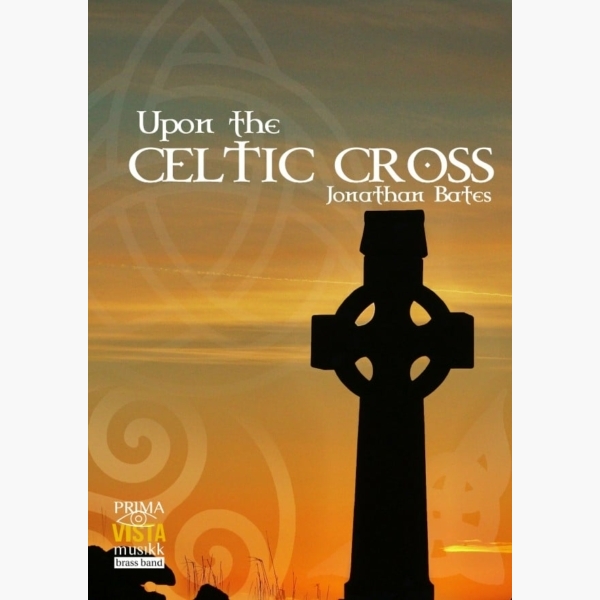 £44.95
Upon the Celtic Cross - Jonathan Bates
Upon the Celtic Cross is an effective opener, overture or finale to any programme. With choreography, special percussion effects, and impressive virtuosity showcasing the various sections of the band, this new concert work has great entertainment value and was used...
Estimated dispatch 5-7 working days
-
£29.95
TORCHBEARERS! (Brass Band Set) - Eric Ball
This march was written for the Musical Troopers of 1933 to feature as a signature tune on their campaigns. This band was part of the Torchbearers session at the Salvation Army Training College (or School for Officer Training) and their sessional song can be heard sounding majestically in the third strain, the composer giving special emphasis to the first two words; Out there! Out there! Where the darkness reigns out there! Torchbearers are going...
Estimated dispatch 7-14 working days
-
£24.95
LOVE DIVINE (Brass Band Set) - Brian Bowen
Sir John Stainer's fine tune is often associated with Charles Wesley's hymn, 'Love divine, all loves excelling'. The introduction is designed to evoke a feeling of awe, and a broad, confident style will set the pattern for the whole arrangement. Contrast in colour has been sought in the scoring but special effects must not be allowed to obscure the melody. The arrangement ends in an atmosphere suggested by the final line of the hymn, 'Lost in wonder, love and praise'.
Estimated dispatch 7-14 working days
 Listen to MP3
 View Music