
Results
-
 £15.99
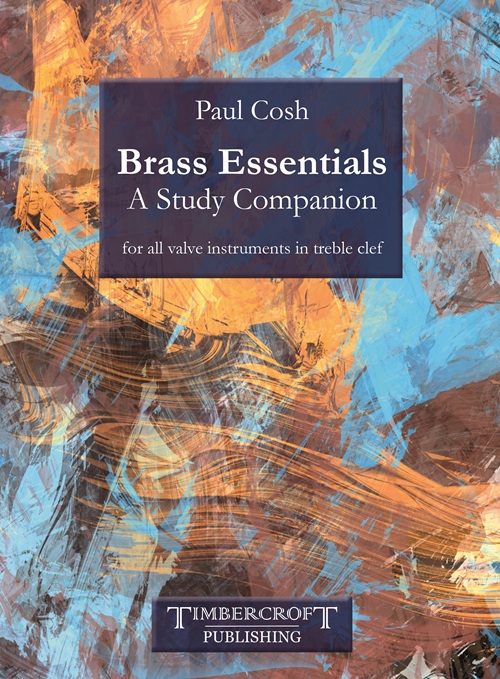
Brass Essentials - An Study Companion (for all valve instruments in treble clef)
This book of 32 studies has been drawn from those Paul Cosh used as a student at the Royal Academy of Music, throughout his years as a professional player and as a teacher at the Guildhall School of Music & Drama.The studies are divided into four main sections: Articulation, Finger Technique, Lyrical & Flexibility and Stamina & Technique and are drawn from those written by Arban, Charlier, Boehme, Brandt, Kopprasch and Sachse. Some of the studies have been re-imagined and edited to include new tempi and expression.There are helpful tips at the start of each section with most of the studies given suggested practice and performance tempi, although these are just a guide. Slow practise of the highly technical passages is vital to adhere to the overriding principle that every note counts.The Brass Essentials Study Companion can also work in conjunction with both the Brass Essentials: Arban Companion and the Brass Essentials: Practice Companion to vary your practice diet.
Estimated dispatch 7-14 working days
-
 £59.95
Aftershock (Brass Band - Score and Parts)
In this piece, the term "aftershock" serves as a metaphor for the Christian Church: commissioned by Jesus to carry forward the impact of his ministry and message. The Church is the spiritual aftershock of Christ's life, death, and resurrection - reverberating through history and into the present.Musically, the piece is constructed in three movements and built around motifs that pulse, echo, and resonate, symbolising the ongoing influence of Christ through his Church. Several well-known Christian songs are woven into its fabric, each contributing to the narrative of mission and worship. Build your Kingdom here (Rend Collective) affirms the Church's identity as "the hope on earth," while Major Leonard Ballantine's And you will be my witnesses (M.S. 1992-10) recalls Jesus' call to spread the gospel.The reflective central section features Matt Redman's I will offer up my life in spirit and truth, expressing personal devotion of a believer seeking to serive within the global Church.The finale draws on a traditional Salvation Army song by William Drake Pennick (S.A.S.B. 937), urging believers to proclaim the gospel far and wide: Tell the world, O tell the world!Make salvation's story heard;In the highways, in the byways,And in lands beyond the sea,do some witnessing for JesusWheresoever you may be.
Estimated dispatch 7-14 working days
-
 £34.95
Light Song (Brass Band - Score and Parts)
This energetic arrangement was written for the Canadian Staff Band's visit to Los Angeles, California, USA, in 2016, to participate in the first ever gathering of five top North American Salvation Army bands. Two well-known songs are given an atypical stylistic treatment, featuring some unusual harmonic and metric variations to keep both players and listeners 'on their toes'.The music itself is a study in contrasts, starting with the dynamics in the whole tone scalic figures in the opening bars. The melody Jesus is my light (T.B. 709) is used with changing time-signatures along with a soft, yet rhythmic approach to the tune Walk in the light (T.B. 909). The work finished with a bright and energetic ending.
Estimated dispatch 7-14 working days
-
 £7.99
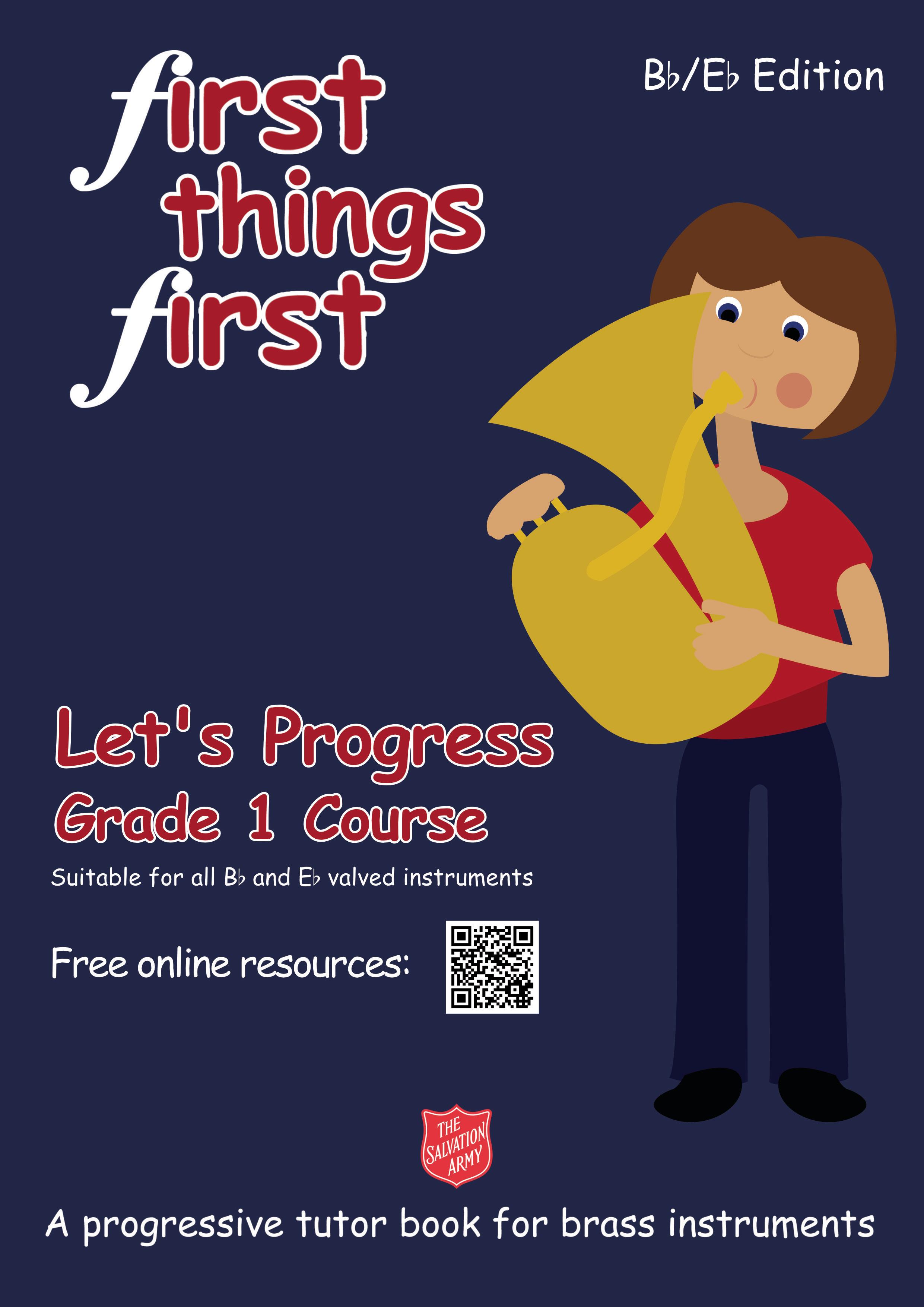
£7.99First Things First - Let's Progress (Grade 1 Course) Bb/Eb Edition
Let's Progress (Grade 1 Course) extends the range to middle C and sets out to provide beginners with the basic essentials, preparing them to tackle some of the challenges they will meet in their first experience of playing in a band.Includes link to downloadable resources including backing and demonstration tracks, online course assessment sheets and personalised course certificates.In this book you will meet:new notes, extending you rage both higher and lowernew rhythms, 3/4 timesharps, flats and key signaturesslurringquavers
Estimated dispatch 7-14 working days
-
£70.00
First Things First - Let's Progress (Grade 1 Course) Bb/Eb Edition (Pack of 10)
Let's Progress (Grade 1 Course) extends the range to middle C and sets out to provide beginners with the basic essentials, preparing them to tackle some of the challenges they will meet in their first experience of playing in a band.Includes link to downloadable resources including backing and demonstration tracks, online course assessment sheets and personalised course certificates.In this book you will meet:new notes, extending you rage both higher and lowernew rhythms, 3/4 timesharps, flats and key signaturesslurringquavers
Estimated dispatch 7-14 working days
-
 £38.95
Unity Series Band Journal - Numbers 518 - 521, June 2023
518: March - A Christmas cavalcade (Morgan Juel Stavik)This march contains several Christmas carols and songs. Some are easy to recognise and are identified in the score, while other references are more subtle.519: Christmas bossa nova (Kevin Larsson)Using Jingle Bells, The First Nowell, It came upon the midnight clear and Ding dong! merrily on high, here is a great bossa nova to liven up your Christmas concert.520 (1): In te Domine speravi (Des Prez trs. Zachary Docter)This piece is a transcription of an early 16th century choral work by the Renaissance composer Josquin des Prez. Josquin was a well-known and highly regarded composer in his day. Like many composer of this period, Josquin wrote linearly, valuing independent free-flowing lines over vertical harmonies. As a result, the interlocking counterpoint in this work can be quite complex and the tied rhythms challenging.520 (2): Excerpt from 'Vespers' (Rachmaninoff trs. Andrew Poirier)Sergei Rachmaninoff's setting of the All-Night Vigil (Vespers) Op.37, of which this excerpt is taken, was composed in January and February 1915. The outbreak of World War I in August 1914 took many people by surprise, and to Rachmaninoff it was a severe shock. This compelled him to write a piece that reminded him of his childhood and the importance of the Russian Orthodox Church within the national identity of Russia. The excerpt transcribed here has a quality and enigmatic charm that never fails to move the souls of those that listen to it.521: March - Walk of faith (Stanley Makau)This march introduces Stanley Makau to the band journals. Stanley is currently the Deputy and Youth Bandmaster at Quarry Road Citadel Corps in Nairobi, Kenya. His inspiration for the march primarily came from Psalm 91: 11-12, and the march is in keeping with the traditional style that has been a staple for Salvation Army music-making.
Estimated dispatch 7-14 working days
-
 £29.95
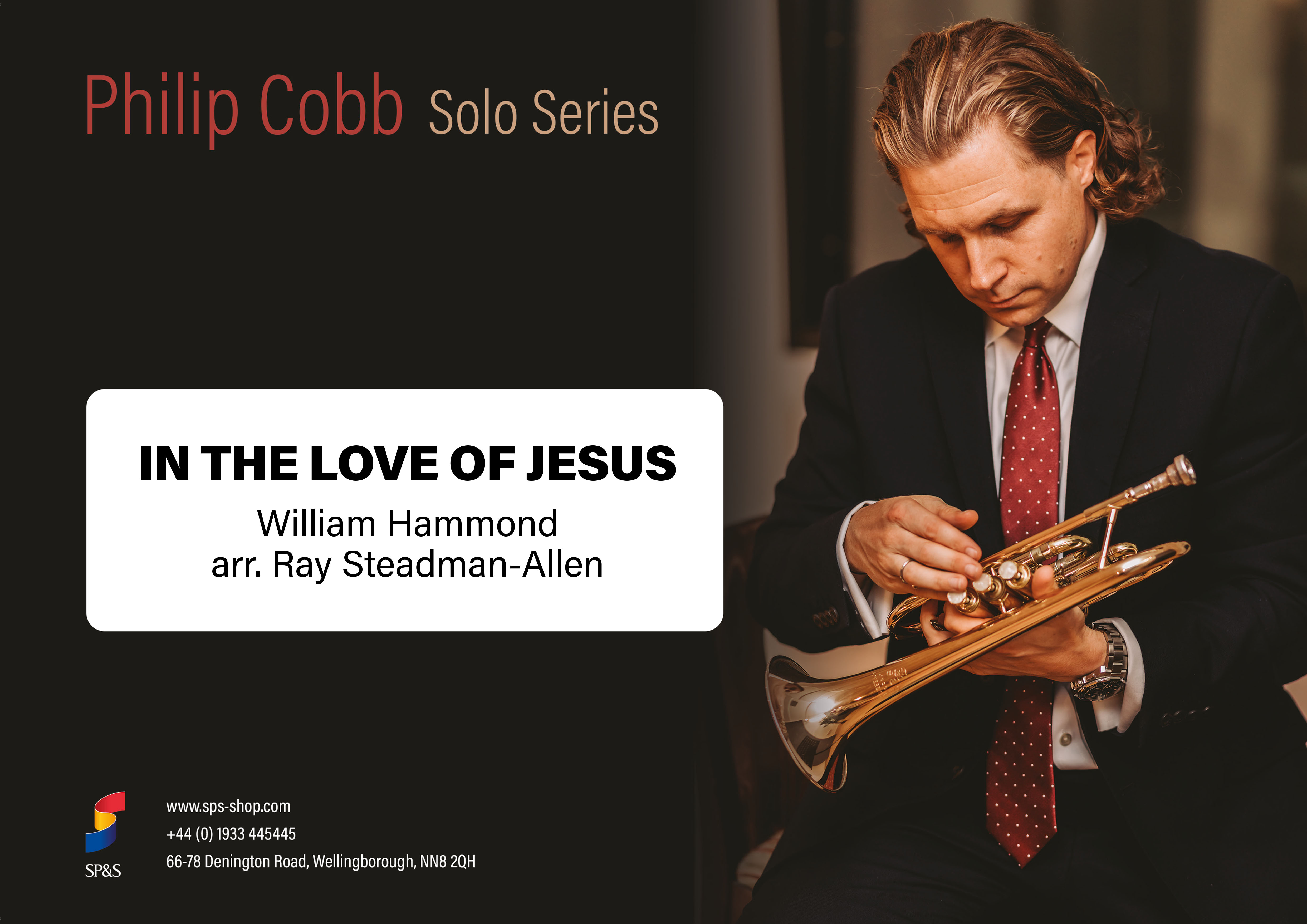
In the Love of Jesus (Cornet Solo with Brass Band - Score and Parts)
There are some pieces of music that evoke a sense of belonging, not only for the message it conveys, but the association of what it represents. In the Love of Jesus, by William Hammond and Ivy Mawby, the song brings an emotive response to words of commitment and devotion to Jesus. The melodic line starts with a somewhat hypnotic charm and expands into a beautifully shaped line of music.Duration: 3.30
Estimated dispatch 7-14 working days
-
 £49.95
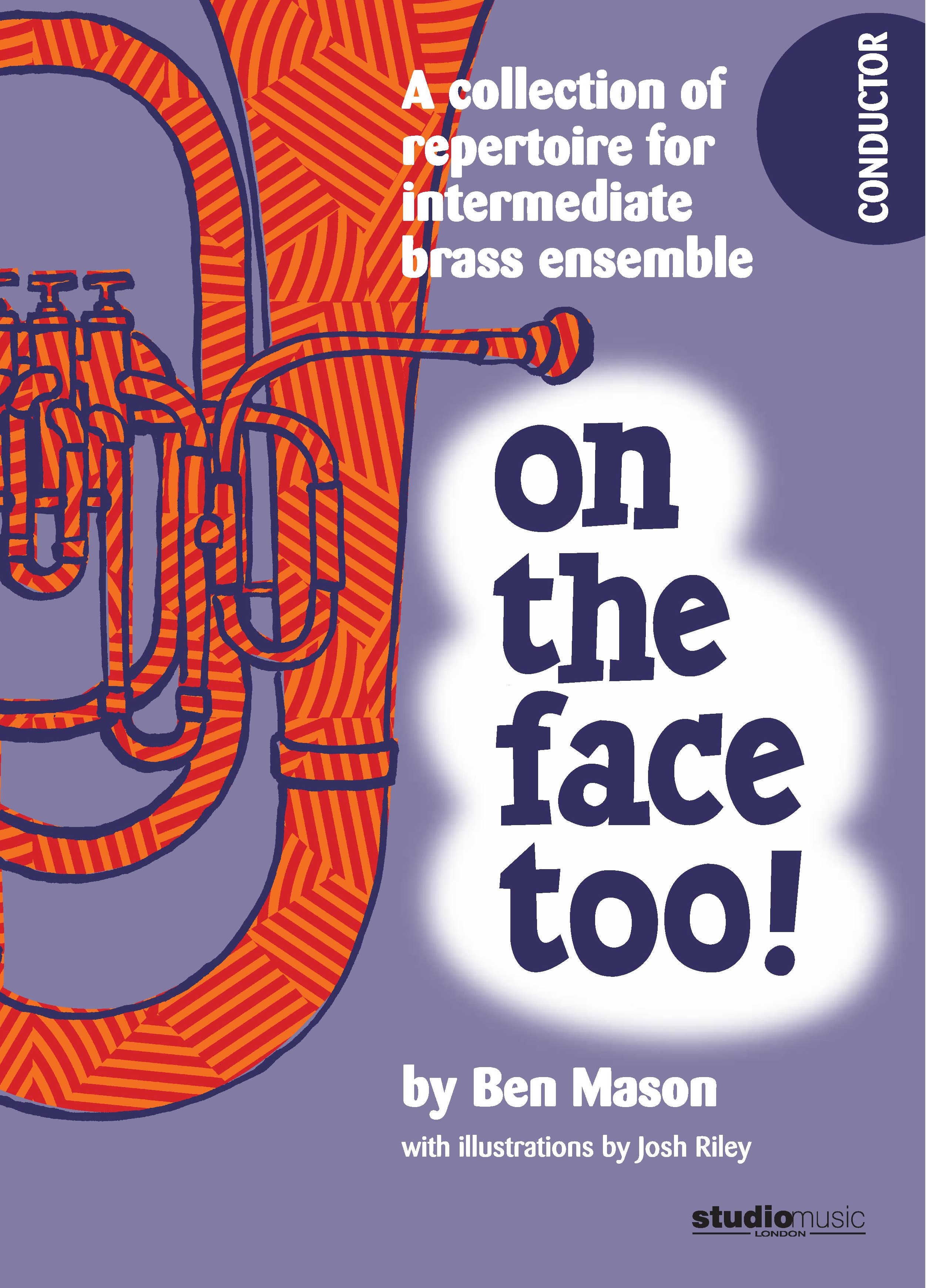
On the Face Too! (Value Set)
Value Set includes: a score and one of each part:Part A: Trumpet 1 in BbPart B: Trumpet 2 in BbPart C: Horn in EbPart C: Horn in FPart C: Trombone/Euphonium TCPart C: Trombone/Euphonium BCPart D: Trombone TCPart D: Trombone BCPart D: Bass in EbPart D: Tuba BDPercussionAdditional score and parts are also available individually.On the Face Too! is to the secondary school brass teacher as On the Face! is to the primary: namely a collection of pieces for intermediate brass ensemble in various jazz and popular styles, aiming to give a ready supply of material for concerts and assemblies, which nevertheless still allows for the developing technique of the young players to whom it is addressed.Generally speaking, the technical difficulty of the material here goes no further than grade 4 or 5 (even the first trumpet part never goes higher than a written G), though some pieces will offer considerable rhythmic challenges.
Estimated dispatch 7-14 working days
-
 £29.95
Easter Hymn (Trumpet Solo with Brass Band - Score and Parts)
Ray Steadman-Allen sketched this short, festive arrangement in the early 1990s. While labelled by RSA as a Trumpet Solo, a Cornet soloist would also be appropriate. The piece should not prove difficult to prepare except in terms of maintaining balance between the soloist and the band. Some of the harmonies are quite unexpected, even curiously dissonant in the late RSA style. However, such sounds should help the listener hear this traditional hymn in a new and vital manner. The piece would serve well as an Intrada on Easter Sunday, or during any celebratory occasion in Eastertide.
Estimated dispatch 7-14 working days
-
 £95.00
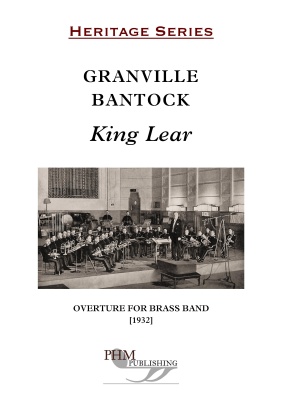
King Lear (Brass Band - Score and Parts)
Sir Granville Bantock (1868 - 1946) composed the second of his five major brass band work for Callender's Cableworks Band, completing the commission on 30 November 1932. Based in the Thames-side district of Belvedere near Erith, the band was active between 1898 and 1961. The works band of the Callender Cable & Construction Co. Ltd, it was at the peak of its popularity during the 1930s and was a frequent broadcaster on the radio. The band employed an in-house arranger and played saxophones in its lighter material. King Lear was one of the band's major commissions and was not published in Bantock's lifetime. The manuscript score and parts were thought to be lost for decades, but were found in the library of the Haydock Band (Lancashire), which had inherited part of Callender's library of manuscripts material and bespoke arrangements after it has been transferred to nearby Prescott Cables Band after Callender's Cable Works closed.King Lear is a substantial work, in essence a dramatic tone poem in the romantic Tchaikovskian manner, presenting a series of character portraits of the foolish old king and his three daughters, Goneril, Regan and Cordelia. The music is dramatic and lyrical by turns, with the most generous lyrical episode revealing perhaps the warm-hearted Cordelia. An expansive melody that flows from this is brought back towards the end as the main climax of the work.In 2001, Bantock's score was recorded by the University of Salford Brass Band, conducted by Dr. Roy Newsome. The original is serviceable, but in comparison with the orchestral version he made in 1936 (part of which was recorded on a Paxton 78 rpm) and later brass band scores, performing editions of which were prepared by others, it lacks colour and range typical of Bantock's orchestral work. Above all it lacks percussion, which can be heard on the recorded extract. With the kind permission of the Bantock Estate, I have prepared a performing edition for publication that incorporates percussion, derived from the orchestral recording and added editorially in similar manner elsewhere. I have revoiced some of the low- lying instrumental parts to present the material in more comfortable ranges. Editorial interventions more elaborate than revoicing the original text have been identified as cue notes.- Paul HindmarshDuration: 15.00
Estimated dispatch 7-14 working days