
Results
-
 £33.62
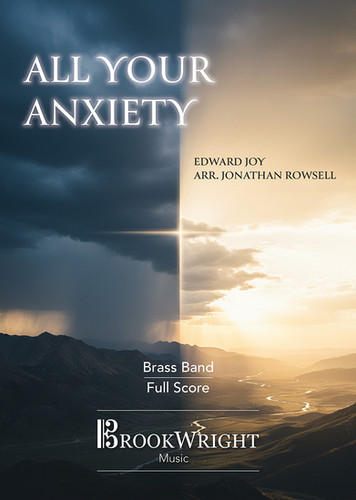
All Your Anxiety (Brass Band) Edward Joy arr. Jonathan Rowsell
All Your Anxiety is a reflective and expressive work for brass band inspired by Edward Joy's sacred song of the same name. Drawing deeply from the hymn's text and message, the piece explores the tension between human unease and the promise of peace found in faith. The work opens with a distinctive eighth-note figure in the euphonium that immediately establishes an unsettled character. Wide intervallic leaps and atypical slur groupings evoke a sense of fragility and uncertainty, musically portraying the weight of sorrow and care described in the opening verse of the hymn. This motivic material becomes the foundation of the entire arrangement, reappearing in varied forms as counter-melody, accompaniment, and featured solo lines across the ensemble. As the piece unfolds, the music gradually broadens and warms, reflecting the invitation of the text to "come to the cross" and leave one's burdens behind. Moments of lyricism and calm contrast with the earlier unease, leading toward a more settled and hopeful conclusion that mirrors the refrain's assurance: "Never a burden He cannot bear, never a friend like Jesus." To view a video of the Canadian Staff Band playing the piece please visit https://www.youtube.com/watch?v=5Ms8ubug4yA Sheet music available from www.brassband.co.uk or https://satradecentral.org Difficulty Level: 3rd Section + Length: 3.30 minutes Instrumentation: Soprano Cornet Eb Solo Cornet Bb 1st Cornet Bb 2nd Cornet Bb Flugel Horn Bb Solo Horn Eb 1st Horn Eb 2nd Horn Eb 1st Baritone Bb 2nd Baritone Bb 1st Trombone Bb 2nd Trombone Bb Bass Trombone Euphonium Bb Bass Eb Bass Bb Timpani Percussion
In Stock: Estimated dispatch 1-3 working days
-
 £33.62
Both Sides, Now (Brass Band) Joni Mitchell arr. Andrew Wainwright
Joni Mitchell's Both Sides, Now is a timeless reflection on the shifting landscapes of life, love, and self-understanding. First released in 1969, this iconic song has become a signature of Mitchell's extraordinary songwriting, capturing the delicate interplay between youthful innocence and hard-earned wisdom. With its poignant lyrics and haunting melody, Both Sides, Now continues to resonate across generations. This evocative brass band arrangement by Andrew Wainwright was commissioned by the Fountain City Brass Band for its 2023 tour of England, including a performance at the prestigious Brass in Concert Championships. Featuring prominent solos for baritone and flugel horn, the arrangement makes full use of their lyrical warmth and tonal richness. BrookWright is delighted to be able to now make this arrangement available to brass bands. To view an excerpt of Fountain City Brass Band performing the work please visit www.youtube.com/watch?v=OYaoF_b9wHo Duration: approx. 3.30 minutes Difficulty Level: 4th Section + This PDF download includes parts and score. Sheet music available at www.brassband.co.uk (UK) or https://satradecentral.org (USA) Instrumentation: Soprano Cornet Eb Solo Cornet Bb Repiano Cornet Bb 2nd Cornet Bb 3rd Cornet Bb Flugel Horn Bb Solo Horn Eb 1st Horn Eb 2nd Horn Eb 1st Baritone Bb 2nd Baritone Bb 1st Trombone Bb 2nd Trombone Bb Bass Trombone Euphonium Bb Bass Eb Bass Bb Timpani Percussion 1-3
In Stock: Estimated dispatch 1-3 working days
-
 £37.35
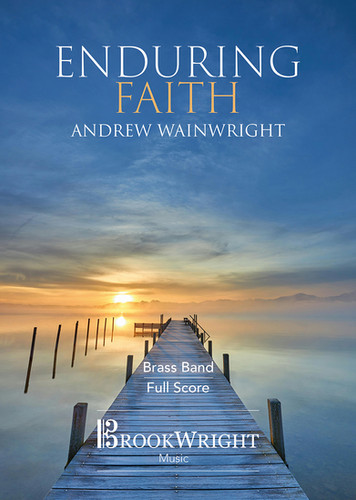
Enduring Faith (Brass Band) Andrew Wainwright
Enduring Faith was commissioned by Christopher Ward and the Five Lakes Silver Band and is a lyrical work for brass band that explores the intersection of hope, resilience, and conviction. Designed with a focus on melodic clarity and expressive phrasing, the composition moves through a series of nuanced emotional shifts - ranging from quiet, reflective passages to moments of expansive lyricism and affirmation. The harmonic structure travels through several keys, serving as a musical metaphor for the changing seasons of life. Throughout the piece, the texture is enriched by featured soloists from across the ensemble, including flugel horn, cornet, euphonium, baritone, and trombone. This work is dedicated to Doug and Stephanie Bayne, long-standing members of the Five Lakes Silver Band, in recognition of their commitment to their community and their steadfast support of the ensemble. It was recorded by the Five Lakes Silver Band on their 2025 album, Legacy. To view a video of the Five Lakes Silver Band performing the work please visit https://youtu.be/84NU_OXMs3Y Duration: Approx. 5.30 minutes Difficulty Level: 3rd Section + This PDF download includes the full score and parts. Sheet music available at www.brassband.co.uk (UK) or https://satradecentral.org (USA) Instrumentation: Soprano Cornet Eb Solo Cornet Bb Repiano Cornet Bb 2nd Cornet Bb 3rd Cornet Bb Flugel Horn Bb Solo Horn Eb 1st Horn Eb 2nd Horn Eb 1st Baritone Bb 2nd Baritone Bb 1st Trombone Bb 2nd Trombone Bb Bass Trombone Euphonium Bb Bass Eb Bass Bb Timpani Percussion 1-2
In Stock: Estimated dispatch 1-3 working days
-
 £48.56
Finale from Symphony No.3 (Organ Symphony) (Brass Band) Saint-Saens arr. Norbury
Saint-Saens' magnificent Finale from Symphony No.3 (widely known as the 'Organ Symphony') has here been arranged for brass band with optional organ by Kevin Norbury. It was recorded by The International Staff Band on its CD Manuscripts, although this version has been revised in places. Saint-Saens decided to add the organ and piano to his 3rd symphony as a pragmatic orchestration innovation. The composition of this symphony was probably started in 1885 and a first draft was completed in Prague in 1886. Saint-Saens later recalled its eventful genesis: 'The Symphony in C was three-quarters sketched out when I found it impossible to write the finale. I did not know how to resolve this situation, until one night I suddenly woke up and, in a sort of hallucination, I heard the whole finale, which I hastily wrote down in outline, knowing that if I went back to sleep without having put anything on paper, I would have forgotten it all the next day.' The symphony was first performed under the composer's direction at Saint James's Hall in London on May 19, 1886. This arrangement by Kevin Norbury can both function as a stand-alone brass band piece, and be performed with an organ by omitting the notes found in square brackets in the parts and score. To view a rolling score video please visit www.youtube.com/watch?v=OlUd_FppBY8 PDF download includes score and parts. Additional parts (Horn in F and Baritone, Trombone, Euphonium & Tuba in Bass Clef) available here. Sheet music available from: UK - www.brassband.co.uk USA - https://satradecentral.org Difficulty Level: 1st Section + Length: 8.30 minutes Instrumentation: Soprano Cornet Eb Solo Cornet Bb Repiano Cornet Bb 2nd Cornet Bb 3rd Cornet Bb Flugel Horn Bb Solo Horn Eb 1st Horn Eb 2nd Horn Eb 1st Baritone Bb 2nd Baritone Bb 1st Trombone Bb 2nd Trombone Bb Bass Trombone Euphonium Bb Bass Eb Bass Bb Timpani Glockenspiel Percussion Organ (optional)
In Stock: Estimated dispatch 1-3 working days
-
 £33.62
Gobsmacked! (Brass Band) Robbert Vos
VIEW SCORE PDF Gobsmacked was commissioned by Ravnanger Brass Band (Norway). The composer Robbert Vos writes: 'Gobsmacked is composed as an opening or encore piece which, as the title already reveals, is meant to surprise or overwhelm the audience! After a brief opening fanfare, the main theme is introduced by the solo cornet and euphonium. An accelerando leads to a quick movement, where this main theme is transformed into a con brio. In this section there's a lot of energy to be unleashed and every band member plays a roll in creating that. Throughout the piece there are many surprises, for example some unexpected time changes, percussion effects to wake you and some trombone glissandi to make you smile. After a short and atmospheric reminiscence by the flugel to the solos from the beginning of the piece, there comes a brief percussion interruption which leads to a reprise of the con brio, but this time in slightly different form. This all comes together in the finale where a big accelerando will lead to an exciting close.' Sheet music available from: UK - www.brassband.co.uk USA - www.solidbrassmusic.com Difficulty Level: 1st Section + Instrumentation: Soprano Cornet Eb Solo Cornet Bb Repiano Cornet Bb 2nd Cornet Bb 3rd Cornet Bb Flugel Horn Bb Solo Horn Eb 1st Horn Eb 2nd Horn Eb 1st Baritone Bb 2nd Baritone Bb 1st Trombone Bb 2nd Trombone Bb Bass Trombone Euphonium Bb Bass Eb Bass Bb Timpani Percussion 1-4
In Stock: Estimated dispatch 1-3 working days
-
 £29.88
March - His Royal Banner (Brass Band) Jonathan Mead
This upbeat, foot-tapping march by Welsh composer Jonathan Mead features the two well known Welsh tunes of Aberystwyth and God Bless The Prince of Wales. Aberystwyth is set as a big bold bass solo and careful attention will need to be paid to make sure that it sounds clean and together. God Bless The Prince of Wales first appears as a traditional hymn tune, before returning in a more vibrant, lively style, with florid scalic passages for the solo cornets and euphoniums. The march was written with St David's Day in mind, although will be an appropriate addition to concert programme throughout the year as either an opener or finisher. Difficulty Level: 3rd Section + Sheet music available from: UK - www.brassband.co.uk USA - www.solidbrassmusic.com Instrumentation: Soprano Cornet Eb Solo Cornet Bb Repiano Cornet Bb 2nd Cornet Bb 3rd Cornet Bb Flugel Horn Bb Solo Horn Eb 1st Horn Eb 2nd Horn Eb 1st Baritone Bb 2nd Baritone Bb 1st Trombone Bb 2nd Trombone Bb Bass Trombone Euphonium Bb Bass Eb Bass Bb Percussion Clash Cymbals Glockenspiel
In Stock: Estimated dispatch 1-3 working days
-
 £29.88
Still, Still, Still (Horn Section Feature with Brass Band) arr. Stephen Tighe
Still, still, still is an Austrian Christmas carol and lullaby. The melody is a folk tune from the Salzburg area and the tune appeared for the first time in 1865 in a folksong collection. The words describe the peace of the infant Jesus and his mother as the baby is sung to sleep. They have changed slightly over the years, but the modern standard German version was established in the mid-19th century. This arrangement by Stephen Tighe features the flugelhorn and horn section with brass band. PDF download includes score and parts. Sheet music available from: UK - www.brassband.co.uk USA - www.solidbrassmusic.com Difficulty Level: 4th Section + Instrumentation: Soprano Cornet Eb Solo Cornet Bb Repiano Cornet Bb 2nd Cornet Bb 3rd Cornet Bb Flugel Horn Bb Solo Horn Eb 1st Horn Eb 2nd Horn Eb 1st Baritone Bb 2nd Baritone Bb 1st Trombone Bb 2nd Trombone Bb Bass Trombone Euphonium Bb Bass Eb Bass Bb Timpani Sleigh Bells Drum Kit Glockenspiel
In Stock: Estimated dispatch 1-3 working days
-
 £33.62
Swan Theme from 'Swan Lake' (Brass Band) Tchaikovsky arr. Jack Lythaby
Tchaikovsky's Swan Lake is made up of folk tales from Germany and Russia, and tells the story of Odette, a princess turned into a swan by an evil sorcerer's curse. The ballet was premiered on 4th March 1877 by the Bolshoi Ballet company in the Bolshoi Theatre in Moscow, and despite its initial failure, has become one of the greatest ballets ever written. The Swan Theme depicts the magic and mystery of the lake, with the oboe (solo horn in this version) playing the famous melody, which returns in various guises throughout the ballet. Tchaikovsky's symphonic approach to ballet music was called "undanceable" by some critics after its premiere, but the score to Swan Lake has now become considered as the epitome of ballet music. Sheet music available from: UK - www.brassband.co.uk USA - www.solidbrassmusic.com Difficulty Level: 4th Section + Instrumentation: Soprano Cornet Eb Solo Cornet Bb Repiano Cornet Bb 2nd Cornet Bb 3rd Cornet Bb Flugel Horn Bb Solo Horn Eb 1st Horn Eb 2nd Horn Eb 1st Baritone Bb 2nd Baritone Bb 1st Trombone Bb 2nd Trombone Bb Bass Trombone Euphonium Bb Bass Eb Bass Bb Timpani Vibraphone
In Stock: Estimated dispatch 1-3 working days
-
 £63.51
Temperamental (Brass Band) Fendall Hill
This work by Fendall Hill was the set test for the 2021 National Brass Band Championships of New Zealand, B Grade. The composer writes: 'J.S. Bach (1685-1750) is deemed by many to be the 'Ulimate Composer'. He added an incredible proportion to the DNA of western music, and his influence is heard in the music of today. Like many artists, he was not overly recognised as a composer during his lifetime, and it took an 1829 performance of the St Matthew Passion by Mendelssohn to ignite a recognition of his place in the music world, a place he has maintained ever since. This piece starts with a similar spark of rediscovery of the music of Bach. It contains arrangements of various works, interspersed with composition based on Bach's chord structures, sections in the style of Bach, and original sections inspired by the moods created along the way. The first section explores the Toccata, and great organ works. This leads into an exploration of his choral works, and a finale based on the Preludes. The word 'Tempered' has different meanings, and all seem to apply to the music of Bach, and these appeal to the musical, engineering and spiritual aspects of my personal life. His music reaches to the humanity and divinity, it has strength, structure and order that creates frameworks in which incredible complexity reigns; and the complexity leads to a wildness, a kind of craziness that represents a range of human moods, and can change without warning. The same piece of music affects people in very different ways. I don't know if it's Bach's music, or us, but it can seem out of control and under control at the same time - the combination is highly temperamental. To view a follow-the-score video of the work please visit: https://youtu.be/zpNxITUqXZU Sheet music available from: UK - www.brassband.co.uk USA - www.solidbrassmusic.com Difficulty Level: 1st Section + Instrumentation: Soprano Cornet Eb Solo Cornet 1&2 Bb Solo Cornet 3&4 Bb 2nd Cornet Bb 3rd Cornet Bb Flugel Horn Bb Solo Horn Eb 1st Horn Eb 2nd Horn Eb 1st Baritone Bb 2nd Baritone Bb 1st Trombone Bb 2nd Trombone Bb Bass Trombone Euphonium Bb Bass Eb Bass Bb Timpani Percussion 1-4
In Stock: Estimated dispatch 1-3 working days
-
 £33.62
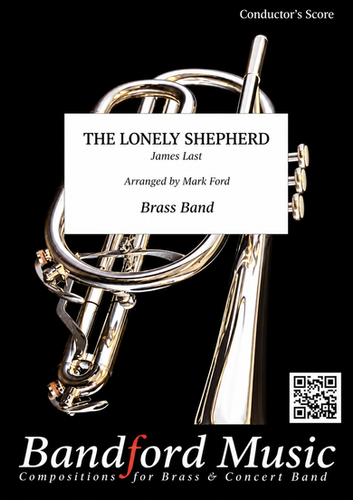
The Lonely Shepherd (Brass Band) James Last arr. Mark Ford
Few melodies possess the haunting beauty and instant recognizability of The Lonely Shepherd. Originally composed by legendary bandleader James Last for a solo project titled Filmmusik Ohne Filme (Film Music Without Films), the track eventually found its home on the 1977 album Memories of Russia. It was this recording that catapulted pan flutist Gheorghe Zamfir to international superstardom, reaching the Top 25 on the German charts and becoming a permanent fixture in the global musical lexicon. While the original album title suggested "films without movies," the track didn't stay "homeless" for long. Its evocative, melancholic atmosphere has made it a favorite for directors across decades and continents. This brass band arrangement preserves the ethereal quality of the original, the soaring melodic lines and rhythmic intensity of the finale offering a brilliant showcase of phrasing and emotional depth. To view a rolling score video of the work please visit https://youtu.be/DgwjIij93Os Duration: Approx. 4.00 minutes Difficulty Level: 3rd Section + This PDF download includes the full score and parts. Sheet music available at www.brassband.co.uk (UK) or https://satradecentral.org (USA) Instrumentation: Soprano Cornet Eb Solo Cornet Bb Repiano Cornet Bb 2nd Cornet Bb 3rd Cornet Bb Flugel Horn Bb Solo Horn Eb 1st Horn Eb 2nd Horn Eb 1st Baritone Bb 2nd Baritone Bb 1st Trombone Bb 2nd Trombone Bb Bass Trombone Euphonium Bb Bass Eb Bass Bb Drum Kit Percussion 1-2
In Stock: Estimated dispatch 1-3 working days
 Watch video