
Results
-
 £115.00
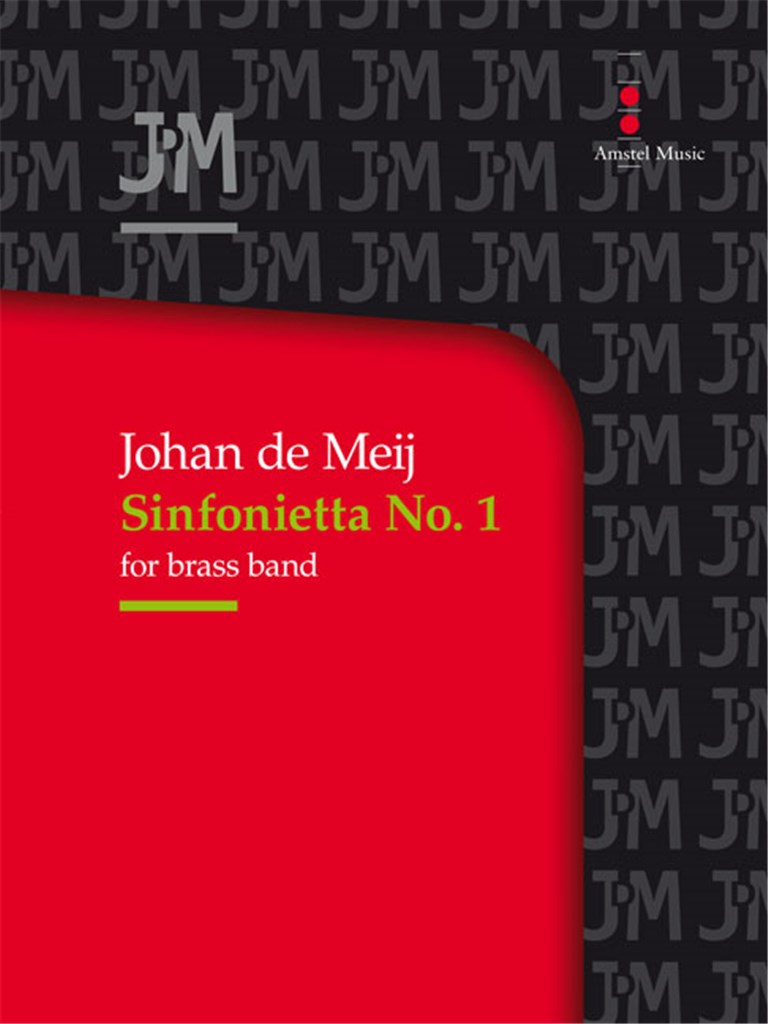
Sinfonietta No.1 (Brass Band - Score and Parts) - De Meij, Johan
Sinfonietta No.1, written for brass band, was commissioned by the Dutch National Championships 2011 in Groningen. It also served as the test piece for the Swiss National Championships 2011 in Montreux, Switzerland. Unlike most of Johan de Meij's compositions, Sinfonietta No.1 is an abstract, non-programmatic work. It consists of three movements, in which the thematic material of the opening measures, an upward fifth jump, returns in various shapes and forms throughout the piece. The slow middle section features solo passages by cello, English horn and bassoon, all starting with the same fifth jump. The final movement presents an Elgar-like march theme, interspersed with quotes from the second movement, and ending with the opening theme of movement I.Duration: 15.00
Estimated dispatch 7-14 working days
-
 £69.99
Berceuse (Brass Quartet with Brass Band - Score and Parts) - Olsen, Ole - Brevik, Tom
Ole Olsen (4 July 1850 - 4 November 1927) was a Norwegian organist, composer, conductor and military musician. Originally written for piano, this lovely, tender lullaby has been arranged by Tom Brevik for brass band and four solo instruments: Cornet, Flugel, Tenor Horn and Euphonium.Duration: 3.30
Estimated dispatch 7-14 working days
-
 £54.99
Till We Meet Again (Brass Band - Score and Parts) - Sparke, Philip
Till We Meet Again was commissioned by Floraskulen Brassband, Floro, Norway, as a tribute to their former tuba player, Gunstein Stromsnes, who died tragically young in a traffic accident in 2017. They gave the premiere in December 2018. After a short introduction, a solo euphonium intones a modal, folk-like melody. This is taken up by the flugel horn and leads to a series of short solos which build to a majestic chorale for the full band. The mood subsides to reintroduce the modal melody before hints of the introduction and a short euphonium cadenza bring the work peacefully to a close.Duration: 4.00
Estimated dispatch 7-14 working days
-
 £59.99
Jeanie with the light brown hair (Brass Band - Score and Parts) - Foster, Stephen C. - Sparke, Philip
One of the most beautiful songs ever written. Philip Sparke's sumptuous arrangement of this Stephen Foster classic will make a perfect item to bring a few minutes of peace and calm tranquillity to any concert. The lush harmonies, so characteristic of Philip Sparke's arranging, are augmented with exquisite solo figures for cornet and flugel horn. Once you have played this you will want it on every concert programme.Duration: 3:45
Estimated dispatch 7-14 working days
-
 £168.50
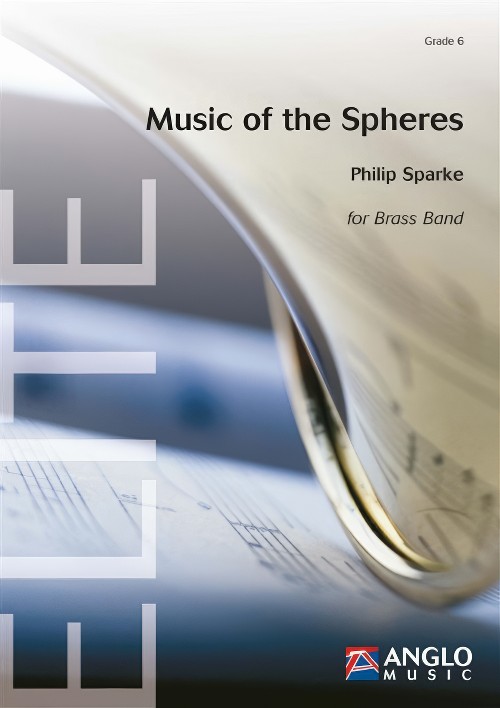
Music of the Spheres (Brass Band - Score and Parts) - Sparke, Philip
Music of the Spheres was commissioned by the Yorkshire Building Society Band and first performed by them at the European Brass Band Championships in Glasgow, May 2004. The piece reflects the composers fascination with the origins of the universe and deep space in general. The title comes from a theory, formulated by Pythagoras, that the cosmos was ruled by the same laws he had discovered that govern the ratios of note frequencies of the musical scale. ('Harmonia' in Ancient Greek, which means scale or tuning rather than harmony - Greek music was monophonic). He also believed that these ratios corresponded to the distances of the six known planets from the sun and thatthe planets each produced a musical note which combined to weave a continuous heavenly melody (which, unfortunately, we humans cannot hear). In this work, these six notes form the basis of the sections Music of the Spheres and Harmonia. The pieces opens with a horn solo called t = 0, a name given by some scientists to the moment of the Big Bang when time and space were created, and this is followed by a depiction of the Big Bang itself, as the entire universe bursts out from a single point. A slower section follows called The Lonely Planet which is a meditation on the incredible and unlikely set of circumstances which led to the creation of the Earth as a planet that can support life, and the constant search for other civilisations elsewhere in the universe. Asteroids and Shooting Stars depicts both the benign and dangerous objects that are flying through space and which constantly threaten our planet, and the piece ends with The Unknown, leaving in question whether our continually expanding exploration of the universe will eventually lead to enlightenment or destruction.Duration: 18:00
Estimated dispatch 7-14 working days
-
£42.50
Music of the Spheres (Brass Band - Score only) - Sparke, Philip
Music of the Spheres was commissioned by the Yorkshire Building Society Band and first performed by them at the European Brass Band Championships in Glasgow, May 2004. The piece reflects the composers fascination with the origins of the universe and deep space in general. The title comes from a theory, formulated by Pythagoras, that the cosmos was ruled by the same laws he had discovered that govern the ratios of note frequencies of the musical scale. ('Harmonia' in Ancient Greek, which means scale or tuning rather than harmony - Greek music was monophonic). He also believed that these ratios corresponded to the distances of the six known planets from the sun and thatthe planets each produced a musical note which combined to weave a continuous heavenly melody (which, unfortunately, we humans cannot hear). In this work, these six notes form the basis of the sections Music of the Spheres and Harmonia. The pieces opens with a horn solo called t = 0, a name given by some scientists to the moment of the Big Bang when time and space were created, and this is followed by a depiction of the Big Bang itself, as the entire universe bursts out from a single point. A slower section follows called The Lonely Planet which is a meditation on the incredible and unlikely set of circumstances which led to the creation of the Earth as a planet that can support life, and the constant search for other civilisations elsewhere in the universe. Asteroids and Shooting Stars depicts both the benign and dangerous objects that are flying through space and which constantly threaten our planet, and the piece ends with The Unknown, leaving in question whether our continually expanding exploration of the universe will eventually lead to enlightenment or destruction.Duration: 18:00
Estimated dispatch 7-14 working days
-
 £24.95
CONCERTINO CATALONIA (Brass Band) - Bates, Jonathan
Composed for the Flowers Band, this fiery paced Spanish showpiece stays true to the 'concertino' name by featuring many sections within the band. Percussion gives the piece its rhythmic drive, whilst there are a number of individual contributions, starting with euphoniums and baritones, before moving to flugel/solo horn and finally through to the cornets.Duration: 2:15 Grade: Intermediate-Difficult
Estimated dispatch 7-14 working days
-
 £79.95
Introduction, Elegy and Caprice (Brass Band - Score and Parts) - Calvert, Morley
This work was written by Morley Calvert, the Canadian composer, especially for the first European Brass Band Championships held in 1978.The piece consists of three contrasting movements. The Introduction opens with a slow, mysterious figure after the first fanfare-like unison notes. This leads to the main section, a quick 'one-in-a-bar' movement centred around a persistent figure.The Elegy opens with an unaccompanied Euphonium solo, which is then passed through to horn, cornet, and basses in the manner of a passacaglia. This is broken and then the movement fragments.After the tension of the Elegy, the Caprice provides much needed relief: a spritely dance, very rhythmical in character, the theme of which is thrown around the band with great abandon.
Estimated dispatch 7-14 working days
-
£39.95
Introduction, Elegy and Caprice (Brass Band - Score only) - Calvert, Morley
This work was written by Morley Calvert, the Canadian composer, especially for the first European Brass Band Championships held in 1978.The piece consists of three contrasting movements. The Introduction opens with a slow, mysterious figure after the first fanfare-like unison notes. This leads to the main section, a quick 'one-in-a-bar' movement centred around a persistent figure.The Elegy opens with an unaccompanied Euphonium solo, which is then passed through to horn, cornet, and basses in the manner of a passacaglia. This is broken and then the movement fragments.After the tension of the Elegy, the Caprice provides much needed relief: a spritely dance, very rhythmical in character, the theme of which is thrown around the band with great abandon.
Estimated dispatch 7-14 working days
-
 £59.70
Two Gershwin Classics (Brass Band - Score and Parts) - Gershwin, George - Hume, Rob J.
Slightly reduced Brass Band instrumentation (no rep cornet, no 2nd horn, no 2nd trombone part)Includes:But Not For Me (Flugelhorn Solo)Summertime
Estimated dispatch 7-14 working days
 View Music