
Results
-
 £89.95
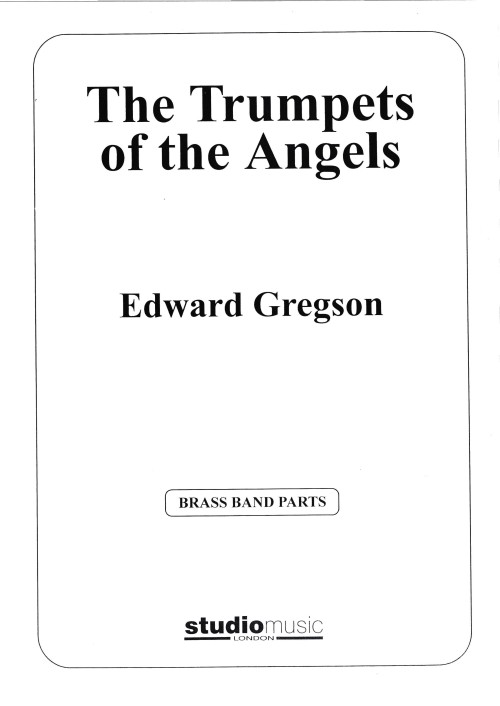
The Trumpets of the Angels (Brass Band - Score and Parts) - Gregson, Edward
The Trumpets of the Angels was commissioned by the Fodens (Courtois) Band for their centenary concert at The Bridgewater Hall in 2000. It is based on a work written for the BBC Philharmonic and Huddersfield Choral Society in 1998, the starting point of which was a quotation from the Book of Revelation:and I saw the seven angels which stood before God; and to them were given seven trumpetsThus the idea behind the work is dramatic and I have tried to achieve this by the spatial deployment of seven solo trumpets around the band, four on-stage, the others off-stage. Six of the solo trumpets eventually join the band, but Trumpet 7 remains off-stage and, indeed, has the most dramatic and extended cadenza representing the words of the seventh angel ...and time shall be no more.The Trumpets of the Angels is a large-scale work, scored for seven solo trumpets, brass band, organ and percussion (deploying 'dark' instruments such as tam-tams, bass drum and two sets of timpani). The work opens with a four-note motif announced by off-stage horns and baritones and answered by fanfare figures on solo trumpets. In turn, each of the first four solo trumpets play cadenzas and then all four join together, independently playing their own music. The organ enters dramatically with its own cadenza, leading to the entry of solo trumpets 5 and 6 with music that is more urgent and rhythmic, describing the horsemen of the Apocalypse.The music reaches another climax, more intense this time, with the horns and baritones (now on-stage) again sounding the transformed motif, before subsiding into what might be described as a lament for humanity, slow music which builds from low to high, from soft to loud, with a melody that is both simple and poignant. At the climax, Trumpet 7 enters playing the opening four-note motif, dramatically extended to almost three octaves. This cadenza (to the partial accompaniment of tam-tams) introduces new material and foreshadows the ensuing scherzo which is fast and aggressive. Despite the somewhat desolate mood of this music, it slowly moves towards an optimistic conclusion, transforming the 'humanity' music into an affirmative and triumphant statement.- Edward Gregson
Estimated dispatch 7-14 working days
-
 £44.95
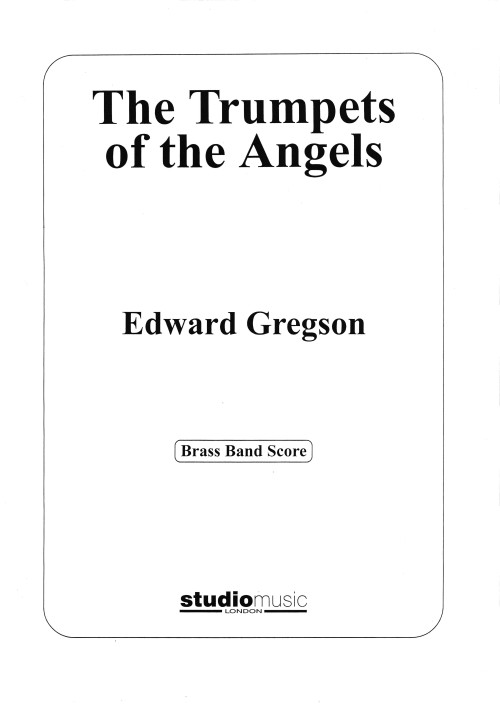
The Trumpets of the Angels (Brass Band - Score only) - Gregson, Edward
The Trumpets of the Angels was commissioned by the Fodens (Courtois) Band for their centenary concert at The Bridgewater Hall in 2000. It is based on a work written for the BBC Philharmonic and Huddersfield Choral Society in 1998, the starting point of which was a quotation from the Book of Revelation:and I saw the seven angels which stood before God; and to them were given seven trumpetsThus the idea behind the work is dramatic and I have tried to achieve this by the spatial deployment of seven solo trumpets around the band, four on-stage, the others off-stage. Six of the solo trumpets eventually join the band, but Trumpet 7 remains off-stage and, indeed, has the most dramatic and extended cadenza representing the words of the seventh angel ...and time shall be no more.The Trumpets of the Angels is a large-scale work, scored for seven solo trumpets, brass band, organ and percussion (deploying 'dark' instruments such as tam-tams, bass drum and two sets of timpani). The work opens with a four-note motif announced by off-stage horns and baritones and answered by fanfare figures on solo trumpets. In turn, each of the first four solo trumpets play cadenzas and then all four join together, independently playing their own music. The organ enters dramatically with its own cadenza, leading to the entry of solo trumpets 5 and 6 with music that is more urgent and rhythmic, describing the horsemen of the Apocalypse.The music reaches another climax, more intense this time, with the horns and baritones (now on-stage) again sounding the transformed motif, before subsiding into what might be described as a lament for humanity, slow music which builds from low to high, from soft to loud, with a melody that is both simple and poignant. At the climax, Trumpet 7 enters playing the opening four-note motif, dramatically extended to almost three octaves. This cadenza (to the partial accompaniment of tam-tams) introduces new material and foreshadows the ensuing scherzo which is fast and aggressive. Despite the somewhat desolate mood of this music, it slowly moves towards an optimistic conclusion, transforming the 'humanity' music into an affirmative and triumphant statement.- Edward Gregson
Estimated dispatch 7-14 working days
-
 £82.95
The Flowers of the Forest (Brass Band - Score and Parts) - Bennett, Richard Rodney - Hindmarsh, Paul
In a preface to the score, the composer explains that 'the folk song The Flowers of the Forest is believed to date from 1513, the time if the battle of Flodden, in the course of which the archers of the Forest (a part of Scotland) were killed almost to a man'. Bennett had already used the same tune in his Six Scottish Folksongs (1972) for soprano, tenor and piano, and it is the arrangement he made then that forms the starting-point for the brass-band piece. A slow introduction (Poco Adagio) presents the folk song theme three times in succession - on solo cornet, on solo cornets and tenor horns, and on muted ripieno cornets in close harmony - after which the work unfolds through five sections and a coda. Although played without a break, each of these five sections has its own identity, developing elements of the tune somewhat in the manner of variations, but with each arising from and evolving into the next. The first of these sections (Con moto, tranquillo) is marked by an abrupt shift of tonality, and makes much of the slow rises and falls characteristic of the tune itself. The tempo gradually increases, to arrive at a scherzando section (Vivo) which includes the first appearance of the theme in its inverted form. A waltz-like trio is followed by a brief return of the scherzando, leading directly to a second, more extended, scherzo (con brio) based on a lilting figure no longer directly related to the theme. As this fades, a single side drum introduces an element of more overtly martial tension (Alla Marcia) and Bennett says that, from this point on, he was thinking of Debussy's tribute to the memory of an unknown soldier (in the second movement of En Blanc et noir, for two pianos). Bennett's march gradually gathers momentum, eventually culminating in a short-lived elegiac climax (Maestoso) before the music returns full-circle to the subdued melancholy of the opening. The work ends with a haunting pianissimo statement of the original tune.
Estimated dispatch 7-14 working days
-
£44.95
The Flowers of the Forest (Brass Band - Score only) - Bennett, Richard Rodney - Hindmarsh, Paul
In a preface to the score, the composer explains that 'the folk song The Flowers of the Forest is believed to date from 1513, the time if the battle of Flodden, in the course of which the archers of the Forest (a part of Scotland) were killed almost to a man'. Bennett had already used the same tune in his Six Scottish Folksongs (1972) for soprano, tenor and piano, and it is the arrangement he made then that forms the starting-point for the brass-band piece. A slow introduction (Poco Adagio) presents the folk song theme three times in succession - on solo cornet, on solo cornets and tenor horns, and on muted ripieno cornets in close harmony - after which the work unfolds through five sections and a coda. Although played without a break, each of these five sections has its own identity, developing elements of the tune somewhat in the manner of variations, but with each arising from and evolving into the next. The first of these sections (Con moto, tranquillo) is marked by an abrupt shift of tonality, and makes much of the slow rises and falls characteristic of the tune itself. The tempo gradually increases, to arrive at a scherzando section (Vivo) which includes the first appearance of the theme in its inverted form. A waltz-like trio is followed by a brief return of the scherzando, leading directly to a second, more extended, scherzo (con brio) based on a lilting figure no longer directly related to the theme. As this fades, a single side drum introduces an element of more overtly martial tension (Alla Marcia) and Bennett says that, from this point on, he was thinking of Debussy's tribute to the memory of an unknown soldier (in the second movement of En Blanc et noir, for two pianos). Bennett's march gradually gathers momentum, eventually culminating in a short-lived elegiac climax (Maestoso) before the music returns full-circle to the subdued melancholy of the opening. The work ends with a haunting pianissimo statement of the original tune.
Estimated dispatch 7-14 working days
-
 £58.60
BREEZIN' DOWN BROADWAY! (Brass Band) - Richards, Goff
Medium - Includes: Another Opening, Another Show; There's No Business Like Show Business: Get Me To The Church On Time; Oklahoma!; That's Entertainment; Seventy Six Trombones.
Estimated dispatch 7-14 working days
-
 £60.00
Capriol Suite (Brass Band - Score and Parts) - Warlock, Peter - Littlemore, Phillip
Peter Warlock's set of set of six dances in renaissance style, Capriol Suite, is by far his most famous work. The suite consists of Basse-Danse, a lively dance for older folk; a stately Pavane; a delicate, yet lively Tordion; Bransles (pronounced 'Brawl'), a fast country dance which works its way into a frenzy, continuously building in speed and excitement; Pieds-en-l'air, with its beautifully serene lines and Mattachins, an exhilarating sword dance with its driving rhythm, culminating in violent dissonances bringing the piece to a spirited close. This is a new arrangement suitable for any band, including those in the 4th Section that relish a challenge. Percussion has been added in all but one of the movements, and is for two players. Duration: 10:00
Estimated dispatch 7-14 working days
-
 £45.00
Carmen Suite (Brass Band - Score and Parts) - Bizet, Georges - Littlemore, Phillip
Incredible as it seems today, Bizet's opera?Carmen?was met with a lukewarm reception at its premiere at the Paris Opera-Comique in 1875; critics condemned its subject matter as lurid and its music overly Wagnerian, and it ran for a mere 37 performances. Bizet died with a few days of it opening at the tragically early age of just thirty-six. Now hailed as the composer's supreme achievement, this colourful, passionate work continues to delight listeners around the world with its emotional, atmospheric music and the originality of its conception. Two orchestral suites were created in the latter part of the 19th Century each containing six pieces. This brass band arrangement brings together three of these pieces, the?Aragonaise, the Habanera?and?Les Toreadors. Duration: 7:00
Estimated dispatch 7-14 working days
-
 £60.99
Charming Salzburg (Brass Band - Score and Parts)
Salzburg, birthplace of Wolfgang Amadeus Mozart, inspired Dutch composer Henk Hogestein to write this musical tribute. Mozart was born in this charming Austrian town in January 1756. He was a musical prodigy - at the age of four he began receiving lessons from his father Leopold and at the age of six he was composing smart minuets and other short pieces. The composition Charming Salzburg is based on a theme from Mozart's opera Die Zauberfl?te, which he completed in 1791. The greatest composer of his day - the greatest of all time according to some - the brilliant Mozart wrote some of the world's best operas with Die Zauberfl?te was his last. 03:00
Estimated dispatch 7-14 working days
-
£69.95
FANFARE FOR THE COMMON MAN / HOE DOWN (Brass Band - Score and Parts) - Copland, Aaron - Snell, Howard
Hoe Down Recorded on Polyphonic QPRL073D Master Brass (Volume Six)
Estimated dispatch 7-14 working days
-
£32.95
FANFARE FOR THE COMMON MAN / HOE DOWN (Brass Band - Score only) - Copland, Aaron - Snell, Howard
Hoe Down Recorded on Polyphonic QPRL073D Master Brass (Volume Six)
Estimated dispatch 7-14 working days
 View Music