
Results
-
 £34.95
Carol of the Bells (Brass Band - Score and Parts)
Christmas time is my favourite time of year. I love the festive spirit and all the Christmas music both traditional and modern.This piece is based on the traditional Ukrainian Bell Carol that was composed by the Ukrainian composer Mykola Dmytrovych Leontovych. Throughout the piece you hear a four note ostinato that is the backbone to the music. I have taken those ideas and motifs and have mixed them with some of my own to create this piece of Christmas music.For something different I have given this piece two endings for the conductor to choose. The first ending is at bar 189 (page 18 in the score) where there is the repeated four bar ostinato section in the solo cornets and percussion that is marked "Keep repeating and fade to nothing". This is so the piece can either fade to nothing or for a bit of originality the piece can fade into the next piece during a concert programme.For ending number two you need to cut from bar 189 to 193 (bypassing ending one). And continue to the end. The choice of endings should bring some interesting performances of this wonderful traditional Christmas piece.Paul Lovatt-Cooper
Estimated dispatch 7-14 working days
-
 £54.95
Festiva Brazilia (Brass Band - Score and Parts)
Using a variety of Latin American musical influences the piece opens with a bass riff that is to be the prominent feature in this work. Accompanied with lively Latin American Samba Percussion section the work is reminiscent of the music heard at the world famous Rio Carnival. There are lots of Latin 'Riffs' and 'Licks' throughout the piece that keep returning in true samba style. This is a real fun piece to perform and the performing notes below act as a guide to getting the most out of this performance.Performing Notes:There are opportunities for soloists within the piece, particularly Solo Cornet, Soprano and Bongo's.When the Cornet and Soprano soloist play their solo part they have an instruction to stand out at the front to perform. It is at the players and conductors discretion where they would like to stand for their solo line.Obviously the Drum Kit soloist is restricted to their current positioning within the band. However, the other percussionists are quite at liberty to come out to the front of the band to perform their solo at rehearsal figure P at the conductors discretion.NB - At the 5th bar of figure P there is an optional repeat section. Performers can repeat this section over and over to extend the percussion feature. Or even add more players from the band to play percussion. If you do not wish to use this opportunity then dismiss the repeat so that there is a 16 bar section between figure P and figure R.There are also a variety of cameo roles for other soloists and musical sections during the piece. Other players and sections can stand to perform various motifs during the piece again at the conductor's discretion.Festiva Brazilia was composed for performers to have fun and enjoy performing the piece as much as possible. Just like the many Samba festivals around Brazil.
Estimated dispatch 7-14 working days
-
 £34.95
The Canadian (Brass Band - Score and Parts)
The centrepiece of this decidedly patriotic and stately march is the Canadian anthem 'O Canada' although the original score (1932) refers to a different set of words ('O Canaan'). The anthem is presented in successively more ornate fashion in the trio section, the musical drama building like a Sousa march so that a da capo is not required. While now considered to be bit of a 'war horse', the march remains great fun to play.
Estimated dispatch 7-14 working days
-
 £34.95
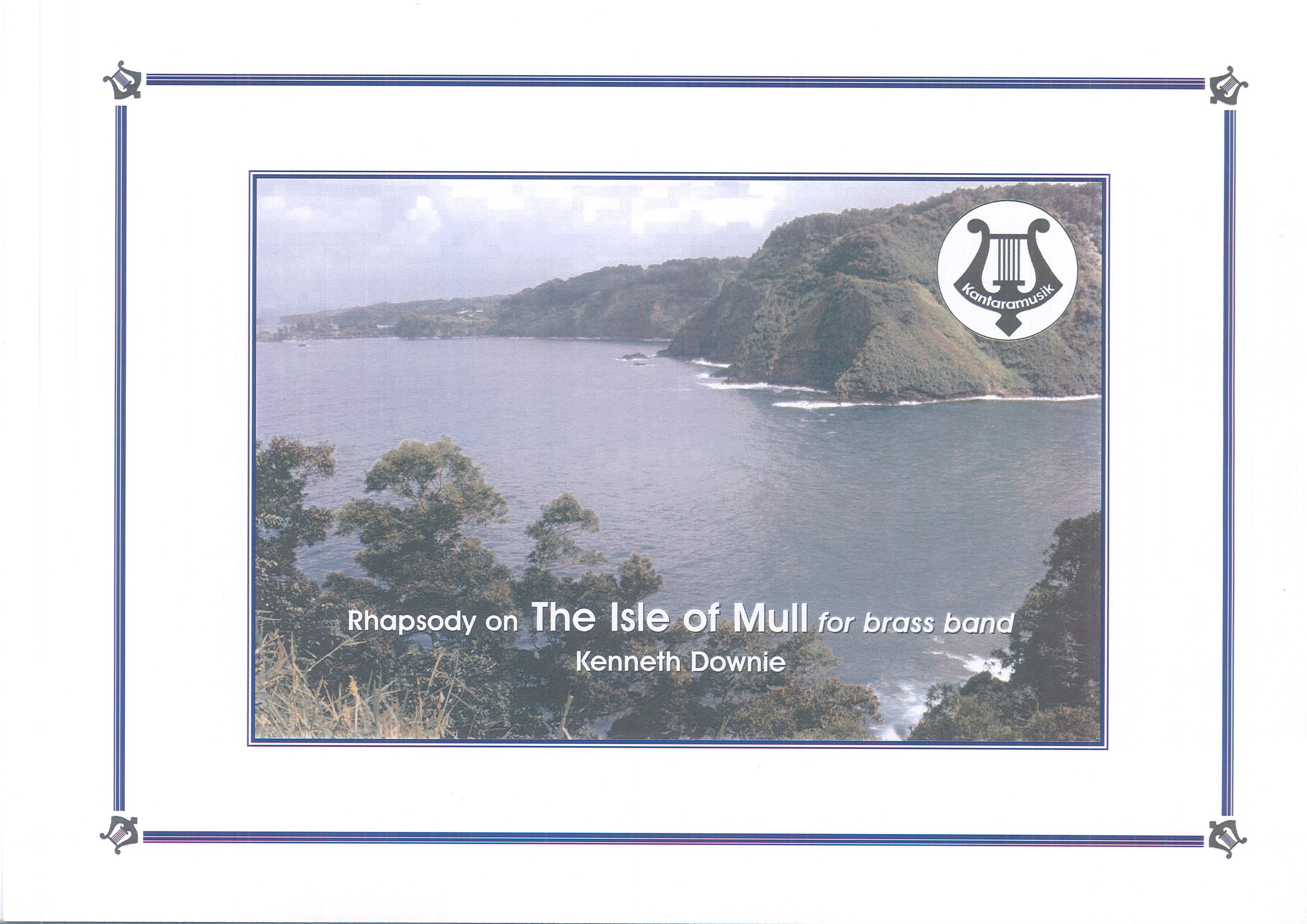
Rhapsody on the Isle of Mull (Brass Band - Score and Parts)
Mull is an island off the west coast of Scotland and it gives its name to the lovely tune which forms the basis of this music. It is very scenic, with some beautiful mountains and the composer has tried to suggest something of the atmosphere of grandeur in his score. The largely pentatonic nature of the tune heavily colours the musical texture.
Estimated dispatch 7-14 working days
-
 £34.95
Tribute Music (Brass Band - Score and Parts)
The composer writes: Having received delightful reports about Neil Ferguson from his colleagues in Granite City Brass, I thought it might be a good idea to incorporate the musical initials from his name, EFEG, in the opening idea of the music. I used this short idea as a motif during the piece. A recurring comment in the tributes referred to his dry sense of humour, and particularly his ability to deliver a one-liner when least expected. The music does therefore contain a few surprises and sudden changes of direction. I also thought that it might be in character for me to include a little "joke" of my own, which is there to be heard by the very careful listener! Such listeners would do well to remember that the Granite City Brass, the commissioning band, is based in Aberdeen. The idea of commemorating such a faithful member of the band with a piece of music led me to try and write a noble, upright theme, which might be remembered as a melody in the future. I hope that it is a fitting tribute.
Estimated dispatch 7-14 working days
-
 £32.00
Blaenwern (Brass Band - Score and Parts)
This arrangement is dedicated to the memory of a much-loved friend and wonderful cornet player, Stephen Howard. Stephen played with the Clacton-on-Sea Band, conducted by his father Robert, and was a frequent guest with the G.U.S. Band directed by Dr. Keith M Wilkinson. Indeed, only a few weeks before his untimely death in 1984, Stephen had played principal cornet with the G.U.S. Band on a tour of Switzerland, performing outstandingly at each concert.The arrangement was first performed at Stephen's Memorial Service in October, 1984."Changed from glory into glory,Till in Heaven we take our place,Till we cast our crowns before Thee,Lost in wonder, love and praise." Charles Wesley
Estimated dispatch 7-14 working days
-
 £55.00
Purcell Variations (Brass Band - Score and Parts)
Purcell Variations, composed in 1995, the year of the tercentenary of the death of the great English composer, was a watershed work in that it was Downie's first extended composition to be published independently of The Salvation Army and intended for wider use.For his theme, Downie has chosen what has come down to us as the hymn tune Westminster Abbey, which is in fact an adaptation made in 1842 by Ernest Hawkins, who was a Canon of Westminster Abbey where Purcell himself had been organist. Purcell's original is actually the closing section of an anthem, O God, Thou art my God, where it provides the final paean of praise, sung to repeated 'Hallelujahs'. Purcell's tune, particularly the opening triadic gesture, is used as a source of thematic and harmonic material - a quarry for ideas if you like: "I was obsessed with the intervals of thirds in Purcell's tune, rather like Brahms in his Third Symphony", the composer says.There are five variations, preceded by an extended introduction and theme. In the first variation, Purcell's lilting dance pulse has been transformed into a bright, playful sequence, in which each phrase of the melody is given its own transformation. In the second, Purcell's opening gambit is extended into a graceful, flowing waltz, featuring solo and first horn at the top of the register. The composer offers a range of metronome speeds in this movement, in which he is emulating the wistful elegance of Erik Satie's famous Gymnopedie. We enter the world of big band jazz in variation three, where Purcell's tune strides along with added syncopation and bluesy major/minor thirds to the fore. After the breathless energy and blazing brass of the big band, Downie moves into his 'home territory' for a beautifully worked lyrical variation. There is an enhanced urgency about the final variation, which opens with an extended reprise of the work's introduction. Purcell's second and third phrases provide the preparation for the exuberant return, in customary triumph of Purcell's 'Hallelujah'.
Estimated dispatch 7-14 working days
-
 £34.95
Gaudete (Cornet Solo with Brass Band - Score and Parts)
Soprano Cornet Solo with Brass BandGaudete is a sacred Christmas carol, which is thought to have been composed in the 16th century, but could easily have existed as a monophonic hymn in the late medieval period. Within the lyrics, there are references to Christ, Virgin Mary, Grace, Ezekiel and Salvation.This arrangement takes the striking tune and re-works it for Soprano Cornet and band, transforming the melody in places, whilst also keeping that familiar tune in its original form. Gaudete was recorded by Steve Stewart & Cory Band in 2016, featuring on its album 'A Festival of Fanfares & Carols'.
Estimated dispatch 7-14 working days
-
 £37.95
Benvenuto Cellini (Brass Band - Score only)
Berliozs opera Benvenuto Cellini was first produced in Paris in 1838 but was withdrawn as a failure, and it was not until the production in Dresden in 1888 that it was finally acclaimed by the Germans as a triumph. Adapted from certain episodes recorded in the memoirs of Benvenuto Cellini, Tuscan sculptor and goldsmith, the story, laid in Rome during the mid-sixteenth century, is not strictly historical. The short opening Allegro, marked deciso con impeto, is conceived in the most brilliant Berlioz manner, utilising full instrumentation. In the Larghetto we meet at once the first of the opera themes " the Cardinals aria (from the last act) introduced in the bass, quasi pizzicato. A second melody leads to a resumption of the Allegro, the contrasting second subject in the tenor horns being an adaptation of Teresas aria (Act I). Towards the end the Cardinal theme is re-introduced by trombones, fortissimo against an energetic cornet and euphonium passage (senza stringendo " without hurry, says the score). After a unison passage storming skywards, there is a sudden, dramatic three-bar silent pause broken by Eb basses alone, again stating the Cardinal theme. A simple molto crescendo on the dominant, begun piano, leads to the long, resounding chord.
Estimated dispatch 7-14 working days
-
 £82.95
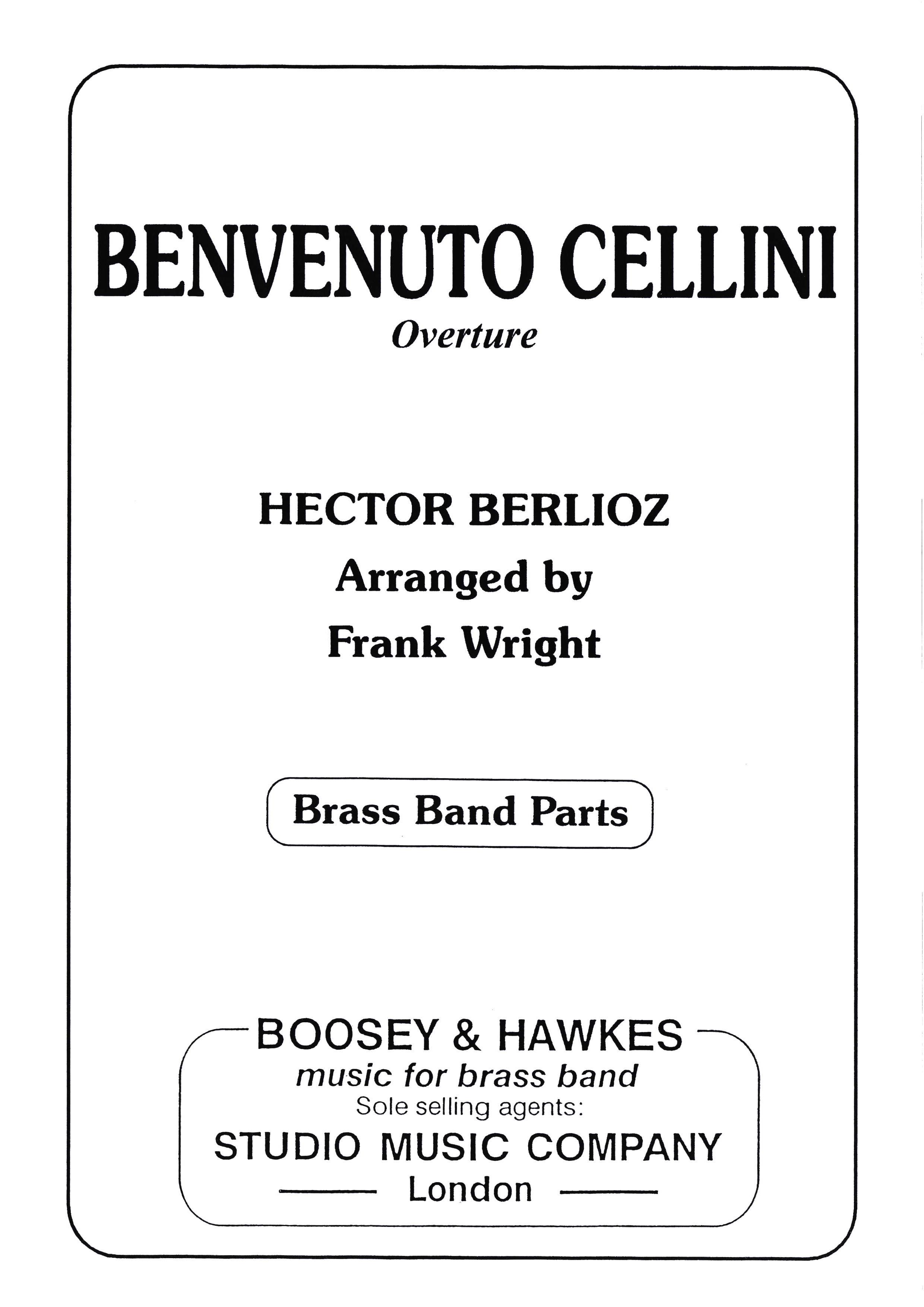
Benvenuto Cellini (Brass Band - Score and Parts)
Berliozs opera Benvenuto Cellini was first produced in Paris in 1838 but was withdrawn as a failure, and it was not until the production in Dresden in 1888 that it was finally acclaimed by the Germans as a triumph. Adapted from certain episodes recorded in the memoirs of Benvenuto Cellini, Tuscan sculptor and goldsmith, the story, laid in Rome during the mid-sixteenth century, is not strictly historical. The short opening Allegro, marked deciso con impeto, is conceived in the most brilliant Berlioz manner, utilising full instrumentation. In the Larghetto we meet at once the first of the opera themes " the Cardinals aria (from the last act) introduced in the bass, quasi pizzicato. A second melody leads to a resumption of the Allegro, the contrasting second subject in the tenor horns being an adaptation of Teresas aria (Act I). Towards the end the Cardinal theme is re-introduced by trombones, fortissimo against an energetic cornet and euphonium passage (senza stringendo " without hurry, says the score). After a unison passage storming skywards, there is a sudden, dramatic three-bar silent pause broken by Eb basses alone, again stating the Cardinal theme. A simple molto crescendo on the dominant, begun piano, leads to the long, resounding chord.
Estimated dispatch 7-14 working days