
Results
-
£59.95
PLANTAGENETS, The (Brass Band Set) - Edward Gregson
The Plantagenets was composed for the Championship Section of the Regional contests of the National Brass Band Championships of Great Britain 1973. The work is not intended to be programme music but rather it tries to portray the mood and feelings of an age, that of the House of Plantagenet, which lasted from the middle of the 12th century to the end of the 14th century. To many, it conjures up an Age of Chivalry and this is represented by fanfare motifs which occur throughout the work in varied form. The opening thematic figure, rising through the band in thirds and followed by the fanfares, is important as nearly all the subsequent material is based upon it. There follows two themes, the second of which is lyrical and introduced by horns. In the long, slow middle section, a new theme is introduced by a solo horn (recurring on cornet and euphonium in canon) and is developed at some length. A lively fugato scherzino, however, leads to a recapitulation of the opening section music and the work ends with a maestoso statement of the slow movement theme. A final reference to the fanfares ends the work.
Estimated dispatch 7-14 working days
-
 £32.00
Coventry Variations (Score only) - Bramwell Tovey
A work which has quickly found a place in the repertoire of many brass bands - it is so full of invention, glorious melodies, energy, and exciting sounds. Players will enjoy both rehearsal and performance, and while there are technical demands, they always serve the music. The famous Coventry Carol is used as a basis - and it appears triumphantly at the work's conclusion, like the new city of Coventry rising, Phoenix-like, from the ashes of the old.
Estimated dispatch 7-9 working days
-
 £42.00
Coventry Variations (Parts only) - Bramwell Tovey
A work which has quickly found a place in the repertoire of many brass bands - it is so full of invention, glorious melodies, energy, and exciting sounds. Players will enjoy both rehearsal and performance, and while there are technical demands, they always serve the music. The famous Coventry Carol is used as a basis - and it appears triumphantly at the work's conclusion, like the new city of Coventry rising, Phoenix-like, from the ashes of the old.
Estimated dispatch 7-9 working days
-
 £55.00
Triumph Series Brass Band Journal, Numbers 1383 - 1386, March 2026
1383: Festival March - Lead On! (Andrew Wainwright)A dynamic march, commissioned by Majors Paul and Dawn McFarland during their appointment as Area Commanders of The Salvation Army's Dallas-Fort Worth Area, premiered at the 2023 Thanksgiving service at the Dallas Adult Rehabilitation Centre. Featuring the classic hymns Storm the forts of darkness (S.A.S.B. 980) and Lead on, O King eternal (S.A.S.B. 964), the piece captures the drive, hope, and mission at the heart of The Salvation Army's work in North Texas.1384: Confession (Kenneth Downie)This arrangement is based on the tune Lord of all (T.B. 440), one of the welcome additions to the 2015 Salvation Army tune book. Introduced to the arranger by Andrew Blyth, whose appreciation for the melody highlighted its gentle charm, the piece is dedicated to Andrew and the Peterborough Citadel Band, where he served as Bandmaster and continues to play.The music pairs the tune with the reflective words of We have not known thee as we ought (S.A.S.B. 630), a hymn often used in worship as a moment of confession and heart-searching before God. Its inclusion encourages both performers and listeners to approach worship with humility and sincerity.Although labelled simply as "German traditional," the tune's graceful simplicity is immediately evident. This arrangement preserves that character while introducing subtle harmonic colour and developing the tune's rising fourth motif as a unifying musical thread. The gentle nature of the melody remains central throughout, with a slightly heightened energy in the fifth phrase carefully drawn out without disrupting the overall serenity. The sharing of thematic material between Cornets and Horns calls for smooth, unobtrusive ensemble playing, allowing the tune's beauty to speak naturally.1385: God in good (Stephen Hull) This arrangement brings together two much'loved melodies: Goodness of God, a favourite from the final years of the arranger's service as Divisional Music Director in the Wisconsin/Upper Michigan Division, and the simple, enduring chorus God is so good. Heard often at summer camps, the song's message stayed with him, eventually inspiring this thoughtful musical pairing that highlights God's unwavering goodness throughout our lives.1386: A march in time (Martin Cordner)Written to celebrate the 130th anniversary of Thetford Corps (UKI Territory), this lively march pays tribute to a legacy of faithful witness, joyful service, and a community moving forward in God's light. Premiered by Cambridge Citadel Band during the anniversary weekend, the piece weaves together three cherished songs: Marching on in the light of God (S.A.S.B. 968), Jesus, precious Saviour (S.A.S.B. 501), and Light up the sunshine in your heart.
Estimated dispatch 7-14 working days
-
 £65.00
Smoke Sketches (Brass Band - Score and Parts)
Smoke Sketches is Daniel Hall's first original work to be published in the Faber Music Brass Band Series. Daniel is one of the most gifted of the rising generation of composers writing for brass bands. Smoke Sketches was composed at the invitation of Brass Bands England for the Intermediate Section of the 2017 National Youth Brass Band Championships of Great Britain.This colourful, jazzy suite draws inspiration from the ancient art of gazing into smoke from fire to find stories through the act of divination. Into the Blaze suggests someone briskly fire-walking, barefoot, with unexpected sparks fizzling from the ground. A Lonesome Ember captures the fleeting life of a small ember, beginning insignificantly and gradually evolving into a larger being before disappearing into ash, while Spark of Light bristles with life and energy.Band Grade 3/4, duration 8 minutes.
Estimated dispatch 7-14 working days
-
£11.99
Smoke Sketches (Brass Band - Score only)
Smoke Sketches is Daniel Hall's first original work to be published in the Faber Music Brass Band Series. Daniel is one of the most gifted of the rising generation of composers writing for brass bands. Smoke Sketches was composed at the invitation of Brass Bands England for the Intermediate Section of the 2017 National Youth Brass Band Championships of Great Britain.This colourful, jazzy suite draws inspiration from the ancient art of gazing into smoke from fire to find stories through the act of divination. Into the Blaze suggests someone briskly fire-walking, barefoot, with unexpected sparks fizzling from the ground. A Lonesome Ember captures the fleeting life of a small ember, beginning insignificantly and gradually evolving into a larger being before disappearing into ash, while Spark of Light bristles with life and energy.Band Grade 3/4, duration 8 minutes.
Estimated dispatch 7-14 working days
-
 £30.00
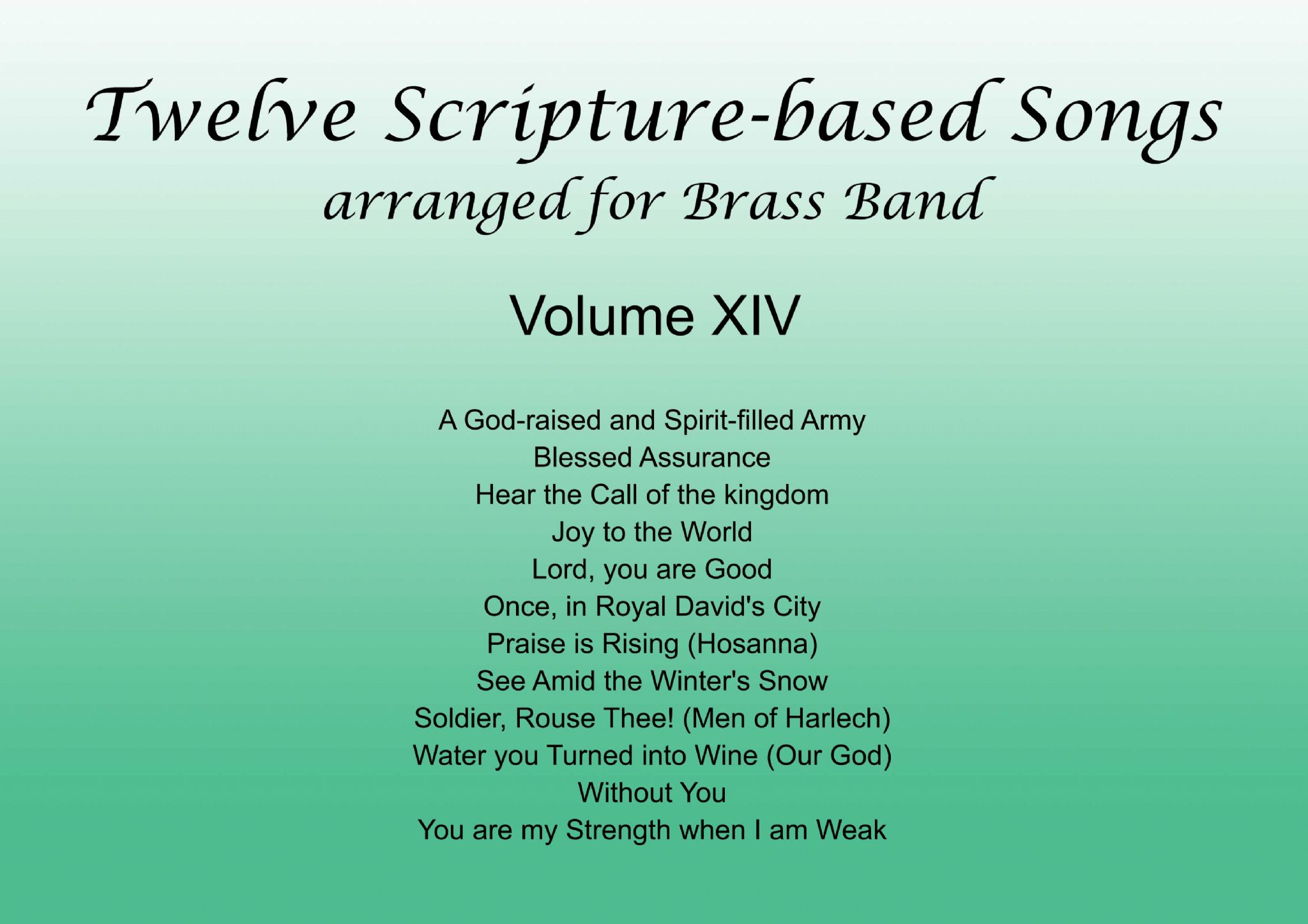
Twelve Scripture-based Songs Volume XIV
Twelve scripture-Based Songs arranged for Brass Band (Volume XIV) are packaged and marketed in complete sets which include a full score and a set of master parts. It is intended that these parts be used as 'masters', for the purpose of photocopying a quantity of parts to accommodate the precise instrumentation needs of the band for which this has been purchased.A God-raised and Spirit-filled ArmyBlessed AssuranceHear the Call of the kingdomJoy to the WorldLord, you are GoodOnce, in Royal David's CityPraise is Rising (Hosanna)See Amid the Winter's SnowSoldier, Rouse Thee! (Men of Harlech)Water you Turned into Wine (Our God)Without YouYou are my Strength when I am Weak
Estimated dispatch 7-14 working days
-
 £24.95
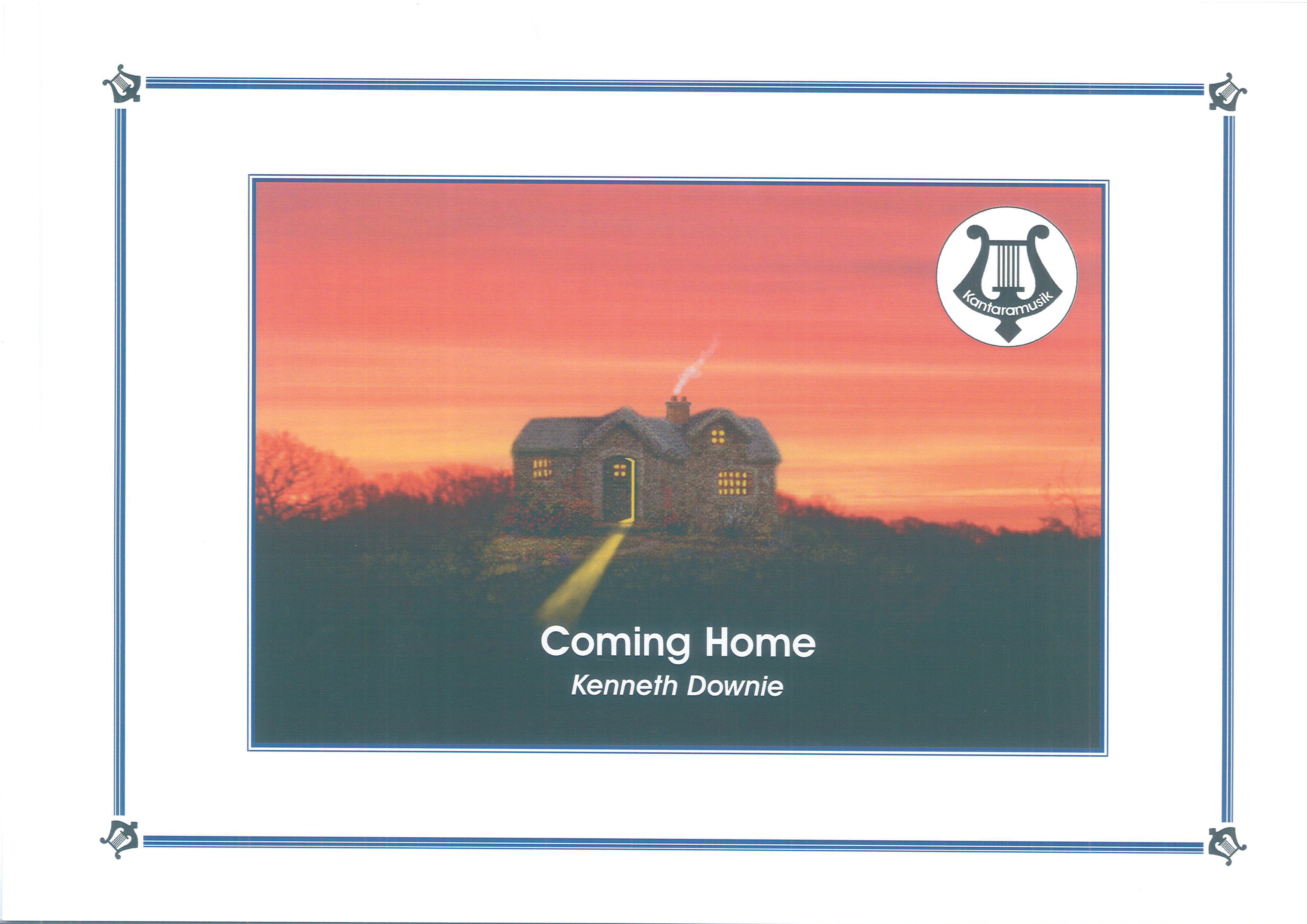
Coming Home (Brass Band - Score and Parts)
The arranger has described Coming Home! as music of reconciliation. In a world of conflict, at both national and personal level, it would be good to think that this music could bring a message of hope and resolution of problems for people who are hurting. It is a setting of Will Lamartine Thompson's melody to his own words beginning 'Softly and tenderly Jesus is calling'. The chorus starts 'Come home, come home! Ye who are weary,come home!'. The rising interval of a fifth is always associated with the words 'Come home'. It is the arrangers hope that the gentle and moving nature of this music will create for all listeners, whether or not they possess religious faith, a spirit of harmony and reconciliation.
Estimated dispatch 7-14 working days
-
 £34.95
The Fire and the Phoenix (Trombone Solo)
Trombone Solo with Brass BandThe Fire & the Phoenix (2015) was commissioned by Brett Baker in early 2015 as the opening track to his solo CD 'Myths & Legends'. Whilst structurally a single-movement work, it is presented so that it can link directly into the next work on the CD, adding to a continuous theme comprising a number of pieces from a number of composers.Opening with huge strident chords in the full band, the representation of the phoenix is instantly reflected; bold, powerful and a bird of great intensity. This makes way for a more mystical section marked 'distant' which reflect the beauty of the Phoenix and it's mythical nature where the trombone soars up into its higher register with a sweeping melody.Soon after, the music takes a sharp turn, becoming dramatic and instantly moving away from the mystical mood created previously. Here, we imagine the Phoenix catching fire, burning intensely with huge flames as it gradually turns into ash. We reach a tonic pedal point in the music, over which chord progressions subtly weave in and out of the texture. Here, we imagine the Phoenix rising from the ashes, with the dynamics gradually increasing to reflect this, slowly taking shape as it is born again.A return to earlier material follows, this time manipulated to reflect the Phoenix in its new form - the same bird; the same animal; but at the same time different. A beautiful chorale-like passage is heard before the music transports us back into a magical land, where delicate rhythmic ideas are juxtaposed against bolder lower chords; both ideas together transporting the listener forward into the next piece.
Estimated dispatch 7-14 working days
-
 £24.95
A Welsh Cameo
This set is march card sizedIncludes: Land of My Fathers; Men of Harlech; The Rising of the Lark and the Dove.
Estimated dispatch 7-14 working days