
Results
-
 £59.99
Easy On Me - Christopher Bond
Adele made a triumphant return to the pop charts with this poignant and soaring hit single.This setting uses varying textures and dramatic builds in bringing it to the concert stage.
Estimated dispatch 10-14 working days
-
 £34.95
Time Eternal - Christopher Bond
Time Eternal (2011) was written as a showcase for band in the form of a seven-minute journey which demonstrates the ability of the band and its soloists. As the title suggests, the idea of time is important in the work, with bell-like gestures forming the opening and closing sections. Rhythmic material is heard, often juxtaposing more lyrical passages, sometimes with dramatic percussion or semiquaver running accompaniments in the cornets.A slow and expressive middle section hears soloistic contributions from the flugel horn and euphoniums, as well as fuller tutti passages, before a return to the energetic tempo of the opening where material is heard again, often presented in different ways with a real sense of drive through to the close.
Estimated dispatch 10-14 working days
-
 £30.00
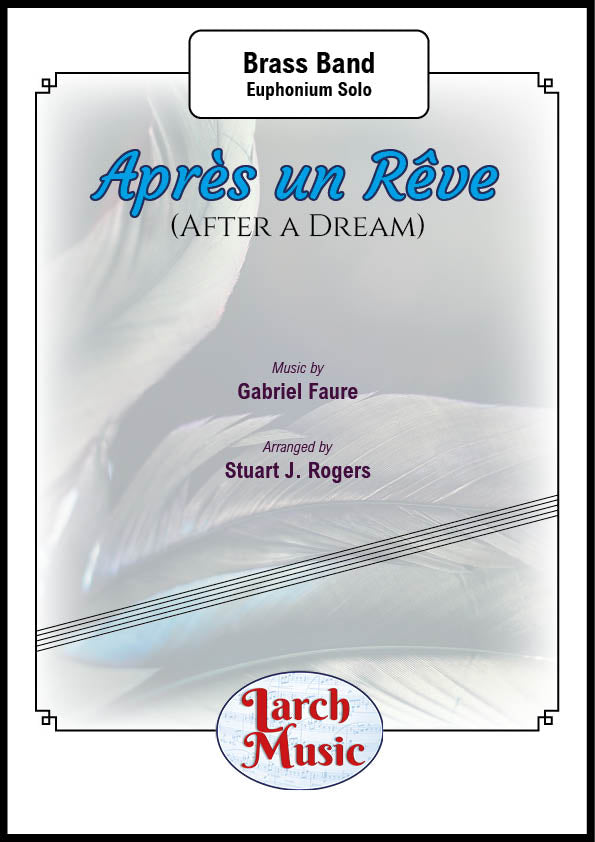
Apres un Reve - Euphonium & Brass Band Sheet Music Full Score & Parts - LM563
COMPOSER: Gabriel FaureARRANGER: Stuart J. RogersTrois melodiesis a set ofmelodiesfor solo voice and piano, byGabriel Faure.It consists of "Apres un reve" (Op. 7, No. 1), one of Faure's most popular vocal pieces,"Hymne" (Op. 7, No. 2), and "Barcarolle" (Op. 7, No. 3).The songs were written between 1870 and 1877, and published in 1878.They were not, however, originally conceived together as a set of three;theopus number7 was imposed on them retrospectively in the 1890s,almost 20 years after their first publications.In "Apres un Reve" (After a Dream),a dream of romantic flight with a lover,away from the earth and "towards the light", is described.However, upon awakening,the dreamer longs to return to the "mysterious night"and the ecstatic falsehood of his dream.LM563 - ISMN : 9790570005635
In Stock: Estimated dispatch 3-5 working days
-
 £58.00
Balkan Gipsies - Paul Voet
Gipsies are wizards with the fiddle. Eastern European folk musicians and gipsies are using a lot of brass in their music. Their brass ensembles are very impressive, so the link to brassbands is quickly made. Based on the folk theme of Manea Tsigailor all cornets join the theme in an up tempo 7/8 bar. Gathered around a campfire gipsies are telling stories and making music. When the lower brass is telling their story all others clap hands. All of a sudden a cornet soloist appears. When we return to the basic theme the story ends with some dazzling bars.
Estimated dispatch 10-14 working days
-
£34.95
CONCERT PIECE (Morceau Symphonique) (Trombone Solo with Brass Band Set) - Guilmant - Ray Steadman-Allen
Guilmant was an organist of the Church of Trinity, Paris and was also a staff member at the Paris Conservatoire. Concert Piece (also known as Morceau Symphonique) consists of a slow prelude followed by a quicker, more brilliant section, the two linked by a cadenza. A lyrical element persists in the second section and there is a brief return to the theme of the prelude following which the music is brought to a fiery and exciting conclusion.
Estimated dispatch 7-14 working days
-
 £30.00
La Perla Negra - Colin Skinner
For this brooding piece the composer has used the following storyline. "A sad elderly man sits alone in a bar whilst an accordionist plays a slowtango. A beautiful woman walks in wearing a single black pearl necklace and proceeds to dance with the old man. Gradually the music becomesmore and more spirited and the dance faster as the old man becomes youthful again. With a passionate kiss he passes out in thegirl's arms and when he awakens he is back in the bar alone save for the accordionist. As he contemplates his dream he notices a single black pearlleft behind on the bar. The sombre mood is lightened in the middle section by a deliberately trite and stylised trumpet duet, but we soon returnto the opening material for a slow fade-out"
-
 £73.99
Festivus Americas (Brass Band - Score and Parts)
Dedicated to the North American Brass Band Association, this is music that is full of energy and dynamic extremes. In form it draws from the overture style, although the themes are self-existing and the piece is programmatic. Working well as a festival opener, it sets a mood of excitement. Following the rhythmic fanfares of the opening, the first theme is presented in the cornets followed by a return to the same rhythmic material. A second theme appears in the horn section and is developed, changing into a darker and sinister form of the same motif. Eventually a Maestoso section is reached, full of sustained block chords in the cornets and trombones, as the rest of the band counters with cascading lines that weave straight through the brighter instruments. Duration: 5.00
Estimated dispatch 7-14 working days
-
 £34.95
Judd: Concert Piece For Trombone
Guilmant was an organist of the Church of Trinity, Paris and was also a staff member at the Paris Conservatoire. Concert Piece (also known as Morceau Symphonique) consists of a slow prelude followed by a quicker, more brilliant section, the two linked by a cadenza. A lyrical element persists in the second section and there is a brief return to the theme of the prelude following which the music is brought to a fiery and exciting conclusion.
Estimated dispatch 7-14 working days
-
 £34.95
Time Eternal (Brass Band - Score and Parts)
Time Eternal (2011) was written as a showcase for band in the form of a seven-minute journey which demonstrates the ability of the band and its soloists. As the title suggests, the idea of time is important in the work, with bell-like gestures forming the opening and closing sections. Rhythmic material is heard, often juxtaposing more lyrical passages, sometimes with dramatic percussion or semiquaver running accompaniments in the cornets.A slow and expressive middle section hears soloistic contributions from the flugel horn and euphoniums, as well as fuller tutti passages, before a return to the energetic tempo of the opening where material is heard again, often presented in different ways with a real sense of drive through to the close.
Estimated dispatch 7-14 working days
-
£72.00
Bogoroditse Devo (From All-Night Vigil) - Sergei Rachmaninov - John Philip Hannevik
The All Night Vigil is an a-cappella composition that Sergei Rachmaninov composed in January/ February 1915. It was one of Rachmaninoff's favorite among his own compositions, and it has also been called "the greatest musical achievement of the Russian Orthodox Church"."Bogoroditse Devo" is movement number 6, and the lyrics are: Hail Mary, full of grace,the Lord is with thee;blessed art thou amongst women,and blessed is the fruit of thy womb, Jesus.Performance suggestion:Solo Clarinet, 1st Altosax, 1st Horn amd Solo Euphonium stand, preferably some distance away from the band. The remaining players of the band can sing from the "choir" sheet. At letter A, 1st Horn and Solo Euphonium return to their seats while Solo Clarinet and 1st Altosax remains standing until letter C
Estimated dispatch 7-14 working days
 View Music