
Results
-
£45.00
Country Ways - Duprez, P
Poppies in the CornRustic DanceNoonday RestThe Merry PeasantLove Song at TwilightValse Des FleursIncludes a full band set (no score)
In Stock: Estimated dispatch 1-3 working days
-
£13.00
Christmas Music No. 4 - Various
The First Nowell arranged G. HawkinsGood King Wenceslas arranged G. HawkinsGod Rest You, Merry Gentlemen arranged G. HawkinsIt Came Upon the Midnight Clear arranged G. HawkinsOnce in Royal David's City arranged G. HawkinsGood Christian Men, Rejoice arranged G. HawkinsHere We Come A-Wassailing arranged G. HawkinsThe Old Hundredth arranged G. HawkinsA Guid New Year arranged G. Hawkins
In Stock: Estimated dispatch 1-3 working days
-
£45.00
Glenn Miller Christmas - Harper, P
Everyone loves Glenn Miller, so what better than a brand new Glenn Miller Christmas show-stopper in this great new arrangement from Philip Harper? The featured carols are:Hark the Herald Angels SingAngels, from the Realms of GloryGod Rest Ye Merry GentlemenWhat Child is This?O Come All Ye FaithfulAll give the 'full-on' Miller treatment and all guaranteed to have your audiences both singing along and tapping their feet at the same time! . . . playable by all levels of band, this is sure to be a hit in your Christmas programmes4th section +
In Stock: Estimated dispatch 1-3 working days
-
 £15.00
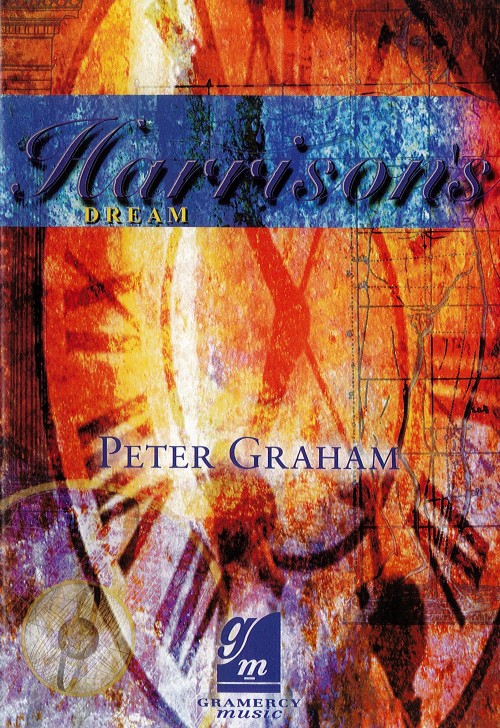
Harrison's Dream (Brass Band - Study Score) - Graham, Peter
At 8.00pm on the 22nd of October 1707, the Association, flagship of the Royal Navy, struck rocks off the Scilly Isles with the loss of the entire crew. Throughout the rest of the evening the remaining three ships in the fleet suffered the same fate. Only 26 of the original 1,647 crew members survived. This disaster was a direct result of an inability to calculate longitude, the most pressing scientific problem of the time. It pushed the longitude question to the forefront of the national consciousness and precipitated the Longitude Act. Parliament funded a prize of �20,000 to anyone whose method or device would solve the dilemma.For carpenter and self-taught clockmaker John Harrison, this was the beginning of a 40 year obsession. To calculate longitude it is necessary to know the time aboard ship and at the home port or place of known longitude, at precisely the same moment. Harrison's dream was to build a clock so accurate that this calculation could be made, an audacious feat of engineering.This work reflects on aspects of this epic tale, brilliantly brought to life in Dava Sobel's book Longitude. Much of the music is mechanistic in tone and is constructed along precise mathematical and metrical lines. The heart of the work however is human - the attraction of the �20,000 prize is often cited as Harrison's motivation. However, the realisation that countless lives depended on a solution was one which haunted Harrison. The emotional core of the music reflects on this, and in particular the evening of 22ndOctober 1707.- Peter GrahamJuly 2000 Recorded on Polyphonic QPRL219D Master Brass (Volume Fifteen). Duration: 14'30"
Estimated dispatch 7-14 working days
-
 £42.95
Fairy Doll (Brass Band - Score and Parts) - Wiffin, Rob
This is a version of Bizet's Farandole using Christmas melodies. Having already made an arrangement of Bizet's famous Farandole, Rob Wiffin felt a novel Christmas piece could be produced by re-writing it using appropriate tunes. This work uses phrases from God Rest You Merry, Gentlemen and Joy to the World to form the main theme and counters with Hark, the Herald Angels Sing, with a few other favourites making brief appearances.Duration: 3.45
Estimated dispatch 7-14 working days
-
 £118.90
How To Train Your Dragon (Brass Band - Score and Parts) - Powell, John - Schjelderup, Fredrick
"How to Train Your Dragon" is an American animated film about a small Viking village that is constantly being attacked by dragons. In the film, the shy teenager, Hiccup, must convince his father and the rest of the village that he can become a true Viking warrior and fight the dragons. The tension in the film revolves around the fact that the young warrior would rather befriend the dragons than fight them. The original score is composed by John Powell and conveys excitement, drama, and romance that unfolds throughout. In this arrangement, you will find the themes "This is Hiccup" and "Dragon Battle" linked together.
Estimated dispatch 7-14 working days
-
 £56.00
In Paradisum (In Paradise) (Cornet Solo with Brass Band - Score and Parts) - Faure, Gabriel - Preece, Mark
Finale from Requiem, Op.48, dedicated to the Eternal Rest of Canadian composer, conductor and dear friend, Malcolm Forsyth (1936 - 2011).
Estimated dispatch 7-14 working days
-
 £104.99
The Baltic Way (Brass Band - Score and Parts) - De Haan, Jan
In 1989, the demonstration named the Baltic Way also known as the Baltic Chain-- was held in the Baltic states of Estonia, Latvia and Lithuania by its citizens in a call for independence from the Soviet Union. On 23rd August 1989, some two million participants formed a human chain, hand-in-hand all the way from the Estonian capital of Tallinn its Latvian counterpart, Riga, through to the Lithuanian capital of Vilnius - six hundred kilometres long. It became the longest human chain ever created and turned out to be the final push needed for much sought-after independence. This historic event became the source of inspiration for this composition. The introduction of thefirst movement, 'Struggle for Independence', is based on a nocturne for piano by the renowned Lithuanian composer and painter Mikalojus Konstantinas iurlionis (1875-1911), thematic material from which has been incorporated throughout the whole composition. The melancholic beginning is followed by a powerful theme which reflects the resolve of the Baltic people. The sudden aggressive, dissonant chords and a dominant and--in rhythmic terms--contrary bass drum announce that the resistance is not going smoothly. Just for a moment, we hear the anthem of the Soviet Union in the lower brass, but this is relentlessly pushed to the background by the rest of the band playing the Lithuanian national anthem, 'Tautika giesm ' (Lithuania, our homeland). The second movement, 'Decades of Suffering', echoes life under the Soviet Union's thumb. In the pursuit of independence, a peaceful protest is planned in which a human chain is formed across the Baltic states of Estonia, Latvia and Lithuania. This 'Chain of Freedom' is depicted in the final movement of the work. Duration: 10.30
Estimated dispatch 7-14 working days
-
 £75.00
Scottish Suite (Brass Band - Score and Parts) - Skinner, Colin
A? four movement Gaelic suite for brass band. Includes: Simmer Dim (The night-long twilight in Orkney and Shetland in midsummer, when dusk runs more or less directly into dawn and it is never truly dark); Dance o' the Tattie-Bogles (Another name for scarecrows. We imagine them in the fields, one by one coming to life and joining in an extraordinary and chaotic dance); Sweetheart Abbey (Inspired by the ruined abbey near Dumfries founded by Dervorguilla of Galloway, in memory of her husband. After his death, she kept his embalmed heart with her for the rest of her life and it was buried alongside her when she died); Clanjamfrie (A drunken rabble meet in a remote Highland pub and proceed to talk nonsense and dance the night away). Duration: 11.15
Estimated dispatch 7-14 working days
-
 £9.99
£9.99Christmas Collection - 1st Trombone Bb - Large Print A4
Christmas Collection is a newly revised carol book with original, additional and rearranged carols from New Christmas Praise as well as 10 extended pieces. Parts are now also available in large print A4 size!Titles:A child this day is bornA Christmas lullabyA great and mighty wonderAll I want for Christmas is youAll my heart this night rejoicesAngels, from the realms of Glory (Come and worship)Angels, from the realms of Glory (Iris)Angels we have heard on highA starry nightAs with gladness men of oldAuld lang syneA virgin most pureAway in a manger (The manger scene)Away in a manger (Traditional)A winter's taleBethlehemBrightest and best (Spean)Brightest and best (Traditional)Calypso CarolCarol for the NativityCarol of the bellsCarol of the drumChild of MaryChristians Awake!Christ is born (Il est n)Christ was born on Christmas DayCome and join the celebrationCome, children, come quicklyCoventry CarolDeck the hallDing dong! merrily on highDo you hear what I hear?Frosty the snowmanGabriel's MessageGaudeteGlory in the highestGlory in the highest HeavenGod of God, the uncreatedGod rest you merry, gentlemenGood Christian men, rejoiceGood King WenceslasGo, tell it on the mountain!Happy Christmas (War is over)Hark the glad sound!Hark! the herald angels singHave yourself a merry little ChristmasHere we come a-wassailingHow far is it to Bethlehem?Huron CarolInfant HolyIn the bleak midwinter (Cranham)In the bleak midwinter (Darke)I saw mommy kissing Santa ClausI saw three ships come sailing inIt came upon a midnight clear (Traditional)It came upon a midnight clear (Willis)It's beginning to look a lot like ChristmasIt's the most wonderful time of the yearI wish it could be Christmas everydayI wonder as I wanderJesus, good above all otherJingle BellsJingle bell rockJoy to the world!Last ChristmasLet it snow!Little baby JesusLittle children, wake and listenLittle DonkeyLittle Jesus, sweetly sleepLo! he comes with clouds descendingLong, long agoLove came down at ChristmasMary's boy childMary's ChildMasters in this hallMerry Christmas everyoneMistletoe and wineNoelO Christmas treeO come, all ye faithfulO come, ImmanuelO Heaven-sent KingO holy night!O little town of Bethlehem (Christmas Carol)O little town of Bethlehem (Forest Green)O little town of Bethlehem (St Louis)Once in royal David's cityPast three o'clockPatapanPersonent HodiePraise ye the LordRing the bellsRise up, shepherd!Rockin' around the Christmas treeRudolph, the red-nosed reindeerSans day carolSanta Claus is comin' to townSaviour's DaySee, amid the winter's snowSilent Night!Sleigh RideSoftly the night is sleepingSo here it is, merry ChristmasStars are shiningStill, still, stillStop the cavalrySussex CarolSweet chiming bellsSweet chiming Christmas bellsThe candle songThe cherry tree carolThe Christmas songThe first NowellThe holly and the ivyThe infant KingThe light has comeThe shepherds' farewellThe stable doorThe star in the eastThe twelve days of ChristmasThe virgin Mary had a baby boyThey all were looking for a kingThou didst leave thy throneThree kings' marchUnto us a boy is bornWalking in the airWe gather round the manger-bedWe three kings of Orient areWe wish you a merry ChristmasWhat child is this?When a child is bornWhen Santa got stuck up the chimneyWhence is that goodly fragrance flowing?When wise men came seekingWhile shepherds watched (Cranbrook)While shepherds watched (Handel)While shepherds watched (Winchester Old)White ChristmasWho is he?Winter WonderlandWorldwide Christmas messageZither CarolA starry nightChristmas JoyChristmas PraiseCoventry CarolInfant HolyMid-winterRudolph, the red-nosed reindeerThe everlasting lightTo celebrate his birthYuletide Rag
Estimated dispatch 7-14 working days
 View Music