
Results
-
 £54.00
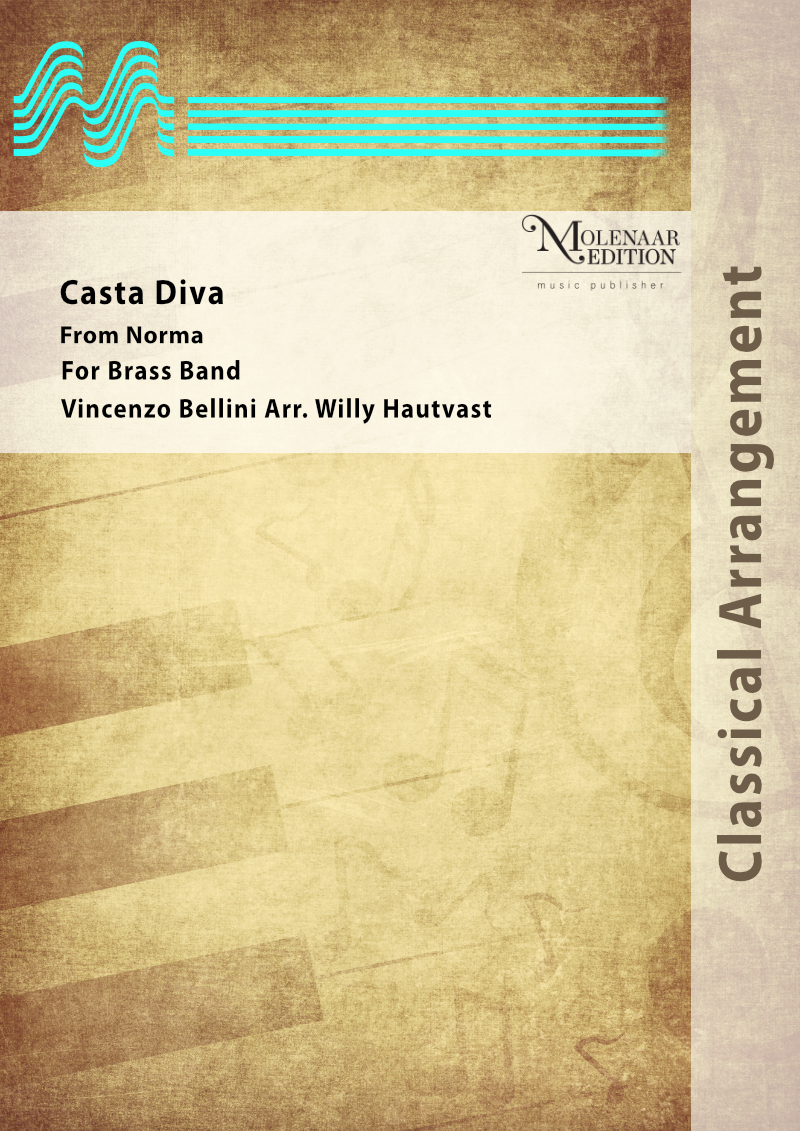
Casta Diva - Vincenzo Bellini/Willy Hautvast
Casta Diva is possibly the most famous aria by Bellini. This is Norma's prayer to the moon goddess, and shows Bellini's high craftsmanship with melodies. The most famous version of this aria, was sung by Maria Callas in the 1950's, and a recording of this is still available. This is possibly the first arrangement of this tune for wind band, and will no doubt make a good impression.
Estimated dispatch 10-14 working days
-
 £31.50
Edward Gregson: Postcard to Grimethorpe
DescriptionComposer's NoteI composed the original version of Postcard to Grimethorpe in 1993 at the request of Elgar Howarth, for a concert at the Queen Elizabeth Hall, London, given by the Grimethorpe Colliery Band. This was at a time when after the Grimethorpe Colliery pit closed the future of the band was in severe jeopardy. The concert was given in aid of the band, both through publicity and funding.Then in late 2022 Jack Stamp, the American composer, conductor and educator, and at that time international composer-in-association with Grimethorpe, contacted me to say that he had discovered my short piece in the band library, and asked if I might extend it for a recording he was sponsoring for the band - the repertoire to consist entirely of music specially composed for Grimethorpe.I agreed and decided to extend the piece by using the miner's hymn Gresford, as a symbolic gesture of protest at the many thousands of miners in the UK who were made redundant from their jobs. After an angular (atonal) first section, the hymn enters, softly at first, but with each phrase it becomes more powerful and insistent, ending with the final phrase triumphantly accompanied by melodic percussion (replacing the drums and cymbals of the earlier phrases, as if the band were then on the march). However, this short work ends softly and gently, as if anger has been replaced by quiet resolution and determination, looking to the future with confidence.For more information on Edward Gregson's music please visit the composer's website: www.edwardgregson.com
Estimated dispatch 7-14 working days
-
 £18.00
Scarborough Fair
DescriptionScarborough Fair is a traditional English ballad about the Yorkshire town of Scarborough. The song relates the tale of a young man who instructs the listener to tell his former love to perform for him a series of impossible tasks, such as making him a shirt without a seam and then washing it in a dry well, adding that if she completes these tasks he will take her back. Often the song is sung as a duet, with the woman then giving her lover a series of equally impossible tasks, promising to give him his seamless shirt once he has finished.As the versions of the ballad known under the title Scarborough Fair are usually limited to the exchange of these impossible tasks, many suggestions concerning the plot have been proposed, including the theory that it is about the Great Plague of the late Middle Ages. The lyrics of "Scarborough Fair" appear to have something in common with an obscure Scottish ballad, The Elfin Knight which has been traced at least as far back as 1670 and may well be earlier. In this ballad, an elf threatens to abduct a young woman to be his lover unless she can perform an impossible task.As the song spread, it was adapted, modified, and rewritten to the point that dozens of versions existed by the end of the 18th century, although only a few are typically sung nowadays. The references to the traditional English fair, "Scarborough Fair" and the refrain "parsley, sage, rosemary, and thyme" date to 19th century versions. A number of older versions refer to locations other than Scarborough Fair, including Wittingham Fair, Cape Ann, "twixt Berwik and Lyne", etc.The earliest notable recording of it was by Ewan MacColl and Peggy Seeger, a version which heavily influenced Simon and Garfunkel's later more famous version. Amongst many other recordings, the tune was used by the Stone Roses as the basis of their song "Elizabeth my Dear".
Estimated dispatch 7-14 working days
-
 £15.00
Perseverance
DescriptionPerseverance was commissioned by Middleton Band to mark their 140th anniversary in 2016, supported using public funding by the National Lottery through Arts Council England, and featured on Middleton Band's CD of the same name.The title is taken from the original name of the 1876 band, the Middleton Perseverance Drum and Fife Band. According to the band's historical records, the Drum and Fife band was formed by six Middleton youngsters eager to learn music but short of funds. Following a whip round, they visited a music shop in Oldham where they purchased a 'one key flute' for six shillings and sixpence, and ('later on') a drum.This determination to make music despite the odds has been a characteristic of the band ever since; at the end of the second world war the band was again down to six players, who rebuilt the 'Middleton Borough Band' back to twenty-six players. After a period of some considerable success throughout the sixties and seventies culminating in winning the National Third Section title in 1983 the band hit hard times again in the late eighties and was down to only four members in 1987 before again being brought back to life. In recent decades the band has built a strong relationship with the East Lancashire Railway, another organisation which has battled sometimes mighty obstacles in its struggle to survive, and has maintained a thriving and successful youth band.The band's will to survive through adversity is reflected in the music, which builds from a sextet of four brass and two percussion players three times, only to fall back to the sextet twice. In the central slow movement the bass drum plays a 'heartbeat' rhythm as the remaining players remember those lost in the war. The relentless pace of the final section culminates in the band triumphing over the adversity which has curtailed the previous two sections. As a former member of Middleton Band (and one of the team that regained the National Third Section title in 2007) it is my pleasure to dedicate this work to the 'Pop and Ale Boys', Middleton Band.You can read more about the piece here.To view the accompanying video by Andy Marshall, designed to precede the piece, clickhereand find out more about the link between the video and the music here.Recording with Score VideoPerformance NotesIn performance the four brass members of the sextet (soprano, solo horn, solo trombone and solo euphonium) should stand at the sides of the band - soprano and horn behind the cornets, trombone and euphonium behind the trombones. Percussion may stand with them at the conductor's discretion, but only if the band has TWO snare drums and TWO concert bass drums available, as these are also needed at the back of the band in the tutti sections. In the second sextet snare drum should be muffled with a heavy cloth OR have the snares turned off (not both).Percussion and mutesPercussion required:snare drum (muffled with a heavy cloth at one point)concert bass drum, kit bass drum, hi-hat, suspended (crash) cymbal2 x tom-tomswood blockclash cymbals3 x timpanitam-tamglockenspielSoprano cornet, repiano and 2nd cornets, flugel and all trombones require metal straight mutes. Soprano, Solo Cornet 3/4, Repiano 2nd and 3rd cornets require cup mutes. Solo Cornet 1/2, Repiano, 2nd and 3rd cornets require harmon mutes.
Estimated dispatch 7-14 working days
-
 £16.00
Coventry Carol
DescriptionCoventry Carol is a traditional English Christmas carol dating back to at least the sixteenth century, where it formed part of the Pageant of the Shearmen and Tailors, one of the Coventry mystery plays. The plays themselves date back to at least 1392, but the earliest surviving record of the music is in a manuscript writen in 1534. Religious suppression put a stop to the plays by the end of the sixteenth century, but the manuscript recording the Coventry Carol survived and was published in 1817 as part of a revival of interest in the medieval and renaissance periods. The carol refers to the 'Massacre of the Innocents' from chapter two of the Gospel of Matthew, in which Herod orders the massacre of all Hebrew children under the age of two.This arrangement was first performed by the Blackley Band conducted by Andrew Baker in 2004.You can follow the score with and audio preview below: Duration approximately 3'05".Playable by all standards of band.
Estimated dispatch 7-14 working days
-
£73.00
Root Beer Rag - Billy Joel - Svein H. Giske
Root Beer Rag was written for the 1974 album release Streetlife Serenade by American pianist/vocalist/composer Billy Joel.After the success his own recording, several other pianists have performed it both on record and stage. There's also many arrangements of the song made, some of them featuring soloist(s).This arrangement for Brass Band by Svein H. Giske was written to Askoy Brass Band for their participation in the entertainment-competition Siddis Brass in 2016. It's very virtuosic and challenge almost all sections of the band.
Estimated dispatch 7-14 working days
-
£72.00
Walk on By - Bacharach-David - Haakon Esplo
"Walk on By" is an American song written by Burt Bacharach and Hal David. It was written for Dionne Warwick. Her recording was released in April 1964 to great success.It reached a sixth place on the American Billboard Hot 100 list and a first place at Cashbox 'R & B. The song was a short time on Top 10 on the Billboard Easy Listening List. Warwick also recorded a German version entitled "Geh vorbei".Like many of Warwicks Bacharach-composed songs from the 1960s, many cover versions were made. Some of them with great success all over the world.Solo Options:Vocal | Flute/Oboe | Bb Clarinet | Altosax | Tenorsax | Trumpet/Cornet | Eb-horn | F-horn | Euphonium/Trombone BC | Euphonium/Trombone TC
Estimated dispatch 7-14 working days
-
£72.00
Fairytale of New York - Finer-MacGowan - Idar Torskangerpoll
Once upon a time a band set out to make a Christmas song. Not about snow or sleigh rides or mistletoe or miracles, but lost youth and ruined dreams. A song in which Christmas is as much the problem as it is the solution. A kind of anti-Christmas song that ended up being, for a generation, the Christmas song.With the recording of "Fairytale of New York", The Pogues and Kirsti MacColl (1959-2000) created a modern Christmas Classic
Estimated dispatch 7-14 working days
-
 £34.95
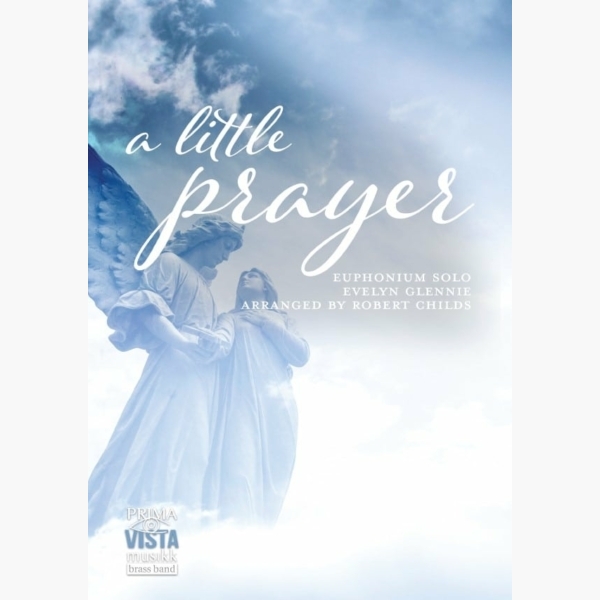
A Little Prayer - Evelyn Glennie - Robert Childs
Originally composed for solo marimba, this popular version ofA Little Prayerwas made in 1998 following Evelyn Glennie's collaboration with Black Dyke Band during the recording of their Grammy nominatedReflected in BrassCD.Robert Childs, then principal euphonium with Black Dyke, requested Evelyn's...
Estimated dispatch 5-7 working days
-
£34.95
MONTCLAIR CITADEL (Brass Band Set) - Stephen Bulla
Stephen Bulla is a former member of Monclair Citadel Band and gladly supplied Bandmaster Charles Baker with this fine march for a recording made by the band in 2001. The tune 'Onward Christian Soldiers' forms the bulk of the trio, first being tossed around in various registers and then, just the chorus, in the festive ending.
Estimated dispatch 7-14 working days
 View Music