
Results
-
 £45.00
Toccata (from Symphony No.8) (Brass Band - Score and Parts) - Vaughan Williams, Ralph - Littlemore, Phillip
Ralph Vaughan Williams' Symphony in D minor (his eighth) was composed in 1956, when he was in his 84th year. It is noticeably different from its predecessors in its diminutive scale and comparatively short length. However, the symphony is scored for an unusually large percussion ensemble including vibraphone, xylophone, tubular bells, glockenspiel, tuned gongs and celeste. In the Toccata, the fourth and final movement, Vaughan Williams uses the enlarged percussion forces extensively - the eight symphony is therefore in some ways a highly imaginative work, perhaps even an experimental one.. This brass band transcription tries to remain as true to the original percussion writing as possible, but with the omission of the tuned gongs and celeste--for obvious practical performance reasons. Duration: 5:00
Estimated dispatch 7-14 working days
-
 £69.95
ENGLISH FOLK-SONG SUITE (Vaughan-Williams) (Brass Band - Score and Parts) - Vaughan Williams, Ralph - Wright, Frank
This masterwork by Ralph Vaughan Williams has stood the test of time and continues to receive numerous performances on a yearly basis.A must for any library!
Estimated dispatch 7-14 working days
-
£32.95
ENGLISH FOLK-SONG SUITE (Vaughan-Williams) (Brass Band - Score only) - Vaughan Williams, Ralph - Wright, Frank
Score onlyThis masterwork by Ralph Vaughan Williams has stood the test of time and continues to receive numerous performances on a yearly basis.A must for any library!
Estimated dispatch 7-14 working days
-
£74.95
Variations for Brass Band - Ralph Vaughan Williams
Estimated dispatch 5-14 working days
-
£69.95
Henry V - Ralph Vaughan Williams
Estimated dispatch 5-14 working days
-
£69.95
English Folk-Song Suite - Ralph Vaughan Williams
Estimated dispatch 5-14 working days
-
£24.95
Sea Songs - Ralph Vaughan Williams
Estimated dispatch 5-14 working days
-
 £30.00
Prelude On Rhosymedre - Ralph Vaughan Williams
Estimated dispatch 5-14 working days
-
 £59.99
In the Bleak Mid-Winter - Gustav Holst - Philip Sparke
Christina Rossetti wrote the words to this famous Christmas carol in 1872 in response to a request from the magazine Scribner's Monthly for a Christmas poem. They were set to music by Gustav Holst (1874-1934) for inclusion in the first edition (1906) of The English Hymnal, edited by his life-long friend, Ralph Vaughan Williams. Philip Sparke has carefully arranged the beautiful melody into this delightful version for brass band. A must for any Christmas concert.
Estimated dispatch 5-14 working days
-
 £45.00
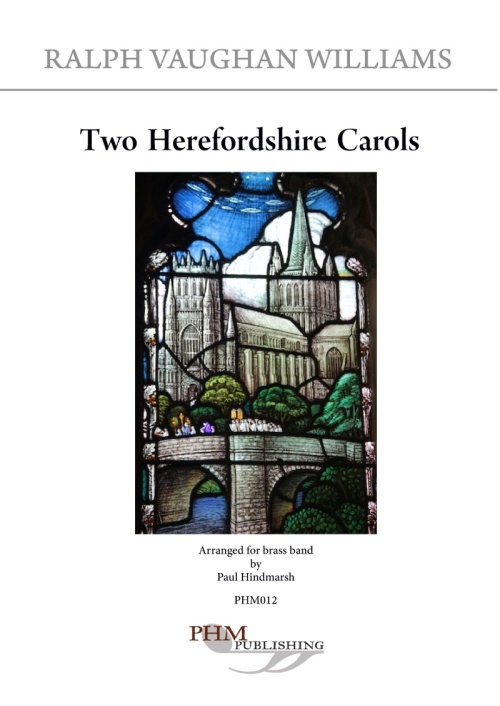
Two Herefordshire Carols (Brass Band - Score and Parts)
The two traditional tunes that comprise this straightforward setting were sung to Ralph Vaughan Williams (1872-1958) by Mrs. Esther Smith of Dilwyn, near Hereford, during one of the great composer's folk song collecting tours of England in the early years of the twentieth century. They were included in Twelve Traditional Carols from Herefordshire, edited by E.M. Leather and Vaughan Williams. The words to which Mrs. Smith sung the first tune were probably drawn from eighteenth century evangelical sources. The editors replaced these with six of the 16 verses of a traditional seventeenth century carol text, Joseph and Mary.The second melody, which appears as the centre piece of this arrangement, was sung to a carol that tells of a farmer who ploughed on Christmas Day. It is in fact a translation of a German traditional carol Gelobet seist du Jesu Christ that was published in Goodly Psalmes and Spiritualle Songes (1546) translated by Miles Coverdale. Vaughan Williams used the title Coverdale's Carol.The brass band settings follow the settings made by Vaughan Williams in 1920 for the Oxford Book of Carols. Since his simple harmonic approach is similar in both settings, three verses of his haunting version of Coverdale's Carol have been folded inside four verses of the slightly more animated treatment of Joseph and Mary. The harmonisations of Vaughan Williams have been given some brass band colour, with some verses taken by soloists from the ensemble. The accompaniment figuration that embellishes the second verse of Joseph and Mary has been used to open and close this arrangement and to bind the verses together.- Paul HindmarshDuration: 5.00
Estimated dispatch 7-14 working days
 View Music