
Results
-
 £69.99
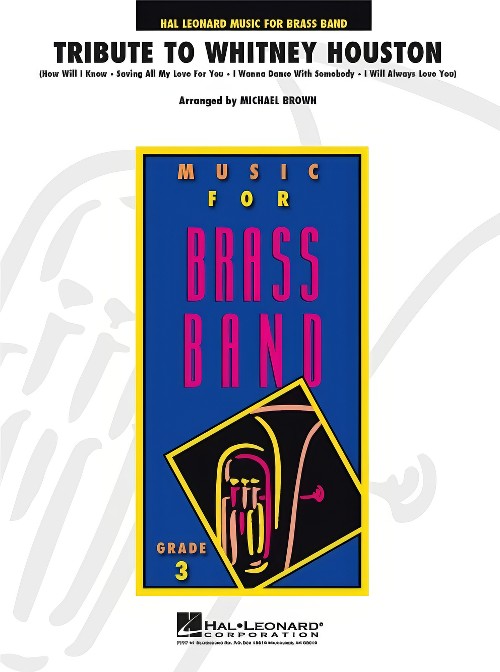
Tribute to Whitney Houston (Brass Band - Score and Parts) - Bond & Brown
It has been too many years since the American pop singer Whitney Houston passed away, but the world has not forgotten her beautiful voice. Her timeless hits, from ballads to wonderful dance tracks, are still heard on the radio. This attractive medley includes some of her greatest successes:How Will I KnowSaving All My Love for YouI Wanna Dance with SomebodyI Will Always Love YouDuration: 5.45
Estimated dispatch 7-14 working days
-
 £29.95
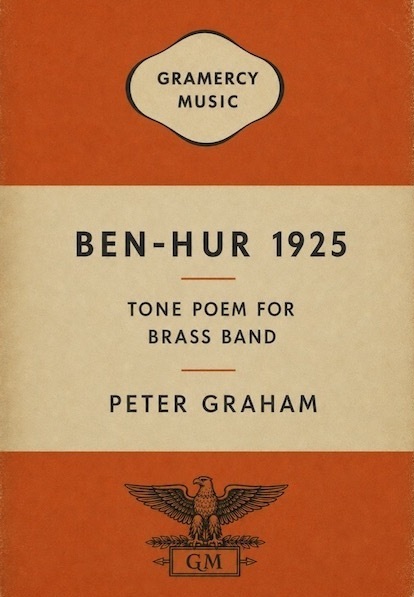
Ben-Hur 1925 (Brass Band - A4 Study Score) - Graham, Peter
Lew Wallace's Ben-Hur: A Tale of the Christ has inspired numerous adaptations for film, television and radio, each distilling the vast eight-part novel while preserving its enduring themes of compassion and forgiveness.Using the 1925 silent film as a starting point, I have reimagined the story as Ben-Hur, late in life, looks back on its defining moments, his memories coming alive before him.Part I: Ben-Hur's life unfolds in epic flashes: from Rome's splendour and tyranny to the haunting strains of Veni, Veni Emmanuel hinting at Christ's coming; a family betrayed, the galleys, heroic battles, and a chariot triumph--yet even victory offers no peace.Part II: Ben-Hur is torn by inner turmoil as he discovers his suffering family. In desperation he turns to Christ whose message of compassion and forgiveness transforms him, his thirst for vengeance giving way to healing and reconciliation.The work also acknowledges the profound infuence of Eric Ball, whose biblical tone poems -- including King of Kings (1931) and Exodus (1937) -- helped shape the brass band repertoire of their time.The hymn Veni, Veni Emmanuel, symbolising the parallel narrative of Christ within this story, was likewise central to Ball's epic The Kingdom Triumphant.The work concludes with the well-known Dresden Amen, also heard in the closing bars of The Kingdom Triumphant.Ben-Hur 1925 was commissioned by The Whitburn Band, MD Nicholas Childs, and is dedicated to the memory of Derek Smith.
Estimated dispatch 7-14 working days
-
 £44.95
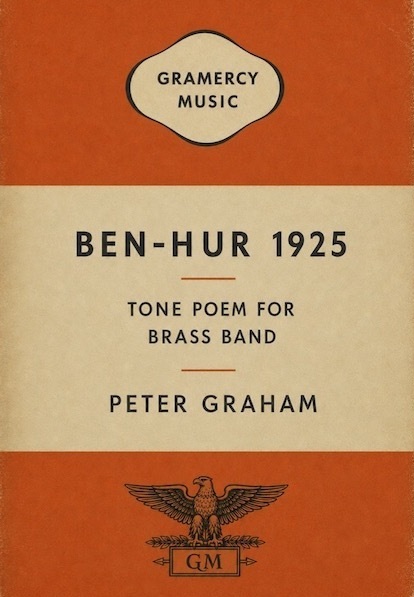
Ben-Hur 1925 (Brass Band - B4 Score only) - Graham, Peter
Lew Wallace's Ben-Hur: A Tale of the Christ has inspired numerous adaptations for film, television and radio, each distilling the vast eight-part novel while preserving its enduring themes of compassion and forgiveness.Using the 1925 silent film as a starting point, I have reimagined the story as Ben-Hur, late in life, looks back on its defining moments, his memories coming alive before him.Part I: Ben-Hur's life unfolds in epic flashes: from Rome's splendour and tyranny to the haunting strains of Veni, Veni Emmanuel hinting at Christ's coming; a family betrayed, the galleys, heroic battles, and a chariot triumph--yet even victory offers no peace.Part II: Ben-Hur is torn by inner turmoil as he discovers his suffering family. In desperation he turns to Christ whose message of compassion and forgiveness transforms him, his thirst for vengeance giving way to healing and reconciliation.The work also acknowledges the profound infuence of Eric Ball, whose biblical tone poems -- including King of Kings (1931) and Exodus (1937) -- helped shape the brass band repertoire of their time.The hymn Veni, Veni Emmanuel, symbolising the parallel narrative of Christ within this story, was likewise central to Ball's epic The Kingdom Triumphant.The work concludes with the well-known Dresden Amen, also heard in the closing bars of The Kingdom Triumphant.Ben-Hur 1925 was commissioned by The Whitburn Band, MD Nicholas Childs, and is dedicated to the memory of Derek Smith.
Estimated dispatch 7-14 working days
-
 £144.95
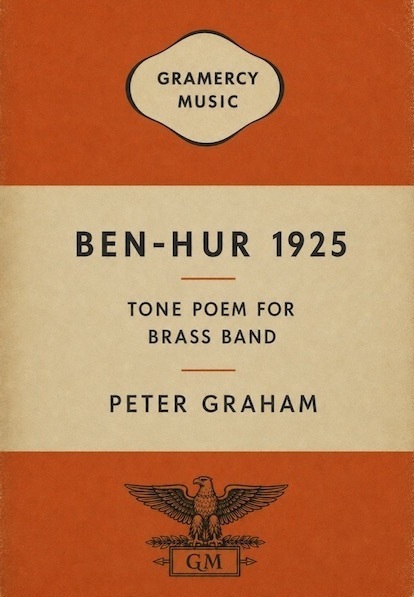
Ben-Hur 1925 (Brass Band - Score and Parts) - Graham, Peter
Lew Wallace's Ben-Hur: A Tale of the Christ has inspired numerous adaptations for film, television and radio, each distilling the vast eight-part novel while preserving its enduring themes of compassion and forgiveness.Using the 1925 silent film as a starting point, I have reimagined the story as Ben-Hur, late in life, looks back on its defining moments, his memories coming alive before him.Part I: Ben-Hur's life unfolds in epic flashes: from Rome's splendour and tyranny to the haunting strains of Veni, Veni Emmanuel hinting at Christ's coming; a family betrayed, the galleys, heroic battles, and a chariot triumph--yet even victory offers no peace.Part II: Ben-Hur is torn by inner turmoil as he discovers his suffering family. In desperation he turns to Christ whose message of compassion and forgiveness transforms him, his thirst for vengeance giving way to healing and reconciliation.The work also acknowledges the profound infuence of Eric Ball, whose biblical tone poems -- including King of Kings (1931) and Exodus (1937) -- helped shape the brass band repertoire of their time.The hymn Veni, Veni Emmanuel, symbolising the parallel narrative of Christ within this story, was likewise central to Ball's epic The Kingdom Triumphant.The work concludes with the well-known Dresden Amen, also heard in the closing bars of The Kingdom Triumphant.Ben-Hur 1925 was commissioned by The Whitburn Band, MD Nicholas Childs, and is dedicated to the memory of Derek Smith.
Estimated dispatch 7-14 working days
-
 £38.00
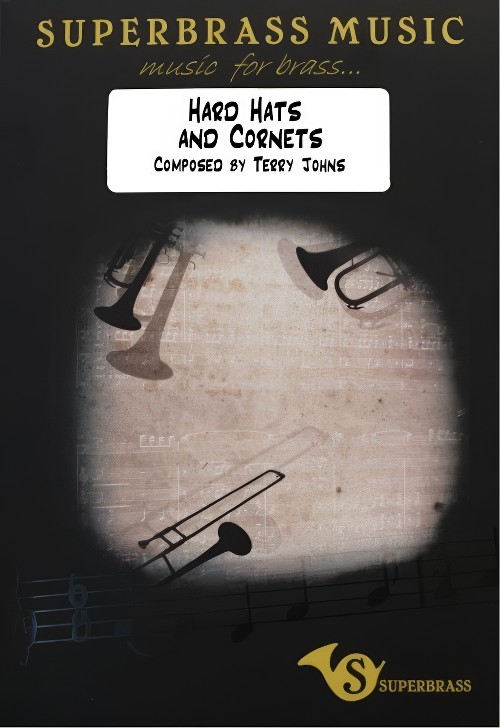
Hard Hats and Cornet (Cornet Section Feature with Brass Band - Score and Parts) - Johns, Terry
This lively and melodic piece was commissioned by Maltby Colliery Band in 2000. It was written as a feature for solo cornet and the cornet section. For its first broadcast performance on Radio Scotland, from Edinburgh in 2009 Mark O'Keefe played the solo part with the band of COOP Glasgow. This piece makes an impressive encore or opening to a band concert and is also available in a version for ten brass. Duration: 3.30
Estimated dispatch 7-14 working days
-
 £29.95
Minneapolis IV (Brass Band - Score and Parts) - Soderstrom, Emil
This march was the outcome of a request from Minneapolis IV Corps to write a march to celebrate its 60th anniversary. At the time of its writing, Soderstrom had become a leading arranger for NBC Radio in Chicago and had mastered many contemporary American styles. His lush harmonies remind one of Gershwin, Porter, Berlin and Rodgers while even the scoring suggests an American big-band of the swing era! These and other novel touches make the march interesting to listen to, as well as to play, over 60 years on.
Estimated dispatch 7-14 working days
-
£14.95
Minneapolis IV (Brass Band - Score only) - Soderstrom, Emil
This march was the outcome of a request from Minneapolis IV Corps to write a march to celebrate its 60th anniversary. At the time of its writing, Soderstrom had become a leading arranger for NBC Radio in Chicago and had mastered many contemporary American styles. His lush harmonies remind one of Gershwin, Porter, Berlin and Rodgers while even the scoring suggests an American big-band of the swing era! These and other novel touches make the march interesting to listen to, as well as to play, over 60 years on.
Estimated dispatch 7-14 working days
-
 £79.99
Scaramouche (Baritone Solo with Brass Band - Score and Parts) - Sparke, Philip
Scaramouche was commissioned by Katrina Marzella with a grant from the BBC Performing Arts Fund.Undoubtedly the finest baritone player of her generation, Katrina was granted an education bursary from the BBC Performing Arts Fund as a result of winning the BBC Radio 2 Young Brass Soloist of the Year in 2004. This has allowed her to commission a series of new works for her instrument, including Scaramouche.Duration: 7.00
Estimated dispatch 7-14 working days
-
 £59.95
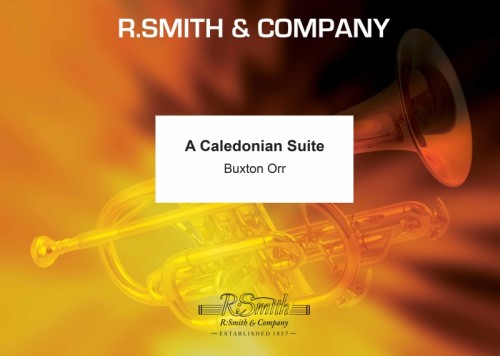
A Caledonian Suite (Brass Band - Score and Parts) - Orr, Buxton
Commissioned by BBC Scotland for the Radio Brass Band Contest "Fanfare 1980"In the spirit of the occasion of the commission and in celebration of the composers Scottish boyhood, is was the intention to invoke the feeling of authentic melodies rather than to use any. The composer has used fragments of characteristic scales, rhythms and melodic patterns, rarely complete melodies, and and has concentrated on varied treatment and juxtaposition rather than direct presentation.Duration: 12.30
Estimated dispatch 7-14 working days
-
£34.95
FUN AND GAMES (Brass Band) - Wood, Gareth
This overture is festive in mood, rich in melody and powerfully rhythmic. Written for the Pencampwriaeth Pres BBC Radio Cymru competition, it has all the technical challenges of a test piece, but is just good fun!
Estimated dispatch 7-14 working days
 View Music