
Results
-
 £134.99
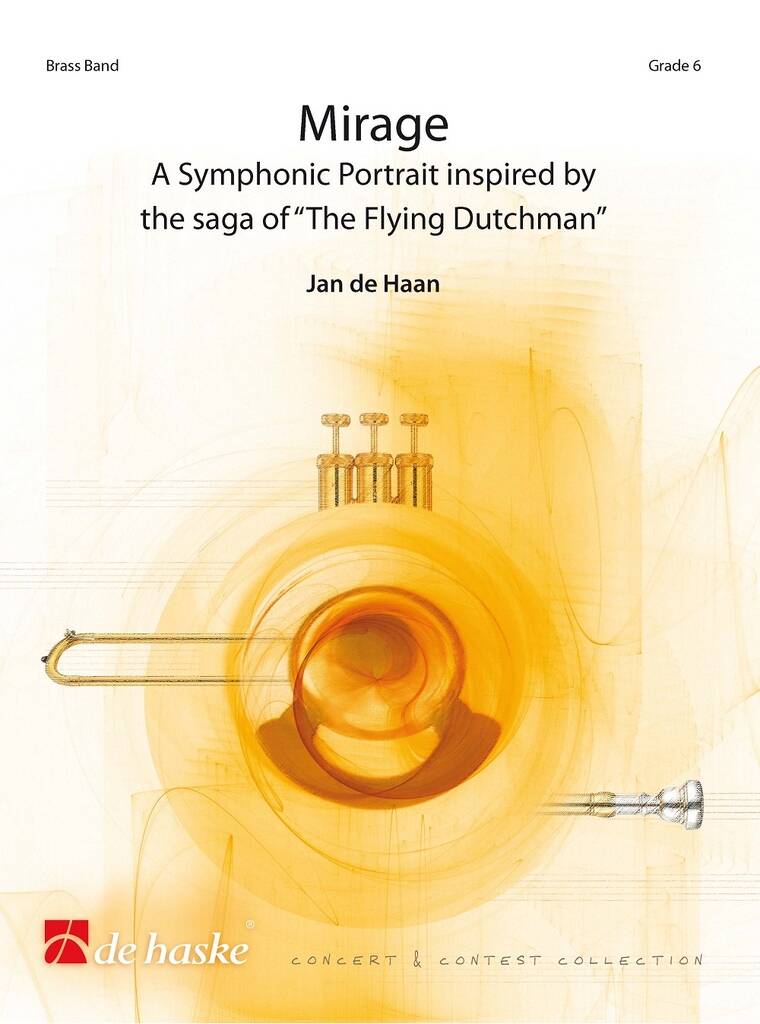
Mirage - Jan de Haan
The composition Mirage takes inspiration from the legendary ghost ship "The Flying Dutchman", a story deeply rooted in maritime folklore. Cursed to wander the oceans forever, the ship often looms like a mirage on the horizon - a mysterious apparition in which reality and illusion blend intangibly.In Mirage the music tries to bring this mystical appearance to life. The piece begins with an atmosphere of mystery and wonder, creating the illusion of a mirage. The listener is taken to the vast sea, where the boundaries between the real and the unreal blur and the ghostly silhouette of the ship gradually becomes visible. Suddenly the tone changes. Powerful rhythms and stormy harmonies follow, expressing the ship's battle against the raging forces of nature. After this intense section, in which the musicians are pushed to their limits, the tranquility of the sea returns. The recurring mirages inspired the composer to create a lyrical middle section, in which various soloists tell their stories within this legend. In the final part, the sails are hoisted again, and the three-master continues its endless journey.
Estimated dispatch 5-14 working days
-
 £75.00
Davos - Anton Weeren
"Davos", The Power of Decadence, is a dazzling opening work for brass band. This composition takes its title from the famous Swiss town, known for its ski slopes and as the venue for the annual World Economic Forum. The piece begins with grandiose signals that overwhelm to the point of irony in the blinding effect of grandeur, magnificence, and opulence. You hear how carefree excess leads to decadence, where boundaries are pushed further and further and decency can easily be lost sight of.
Estimated dispatch 10-14 working days
-
 £15.00
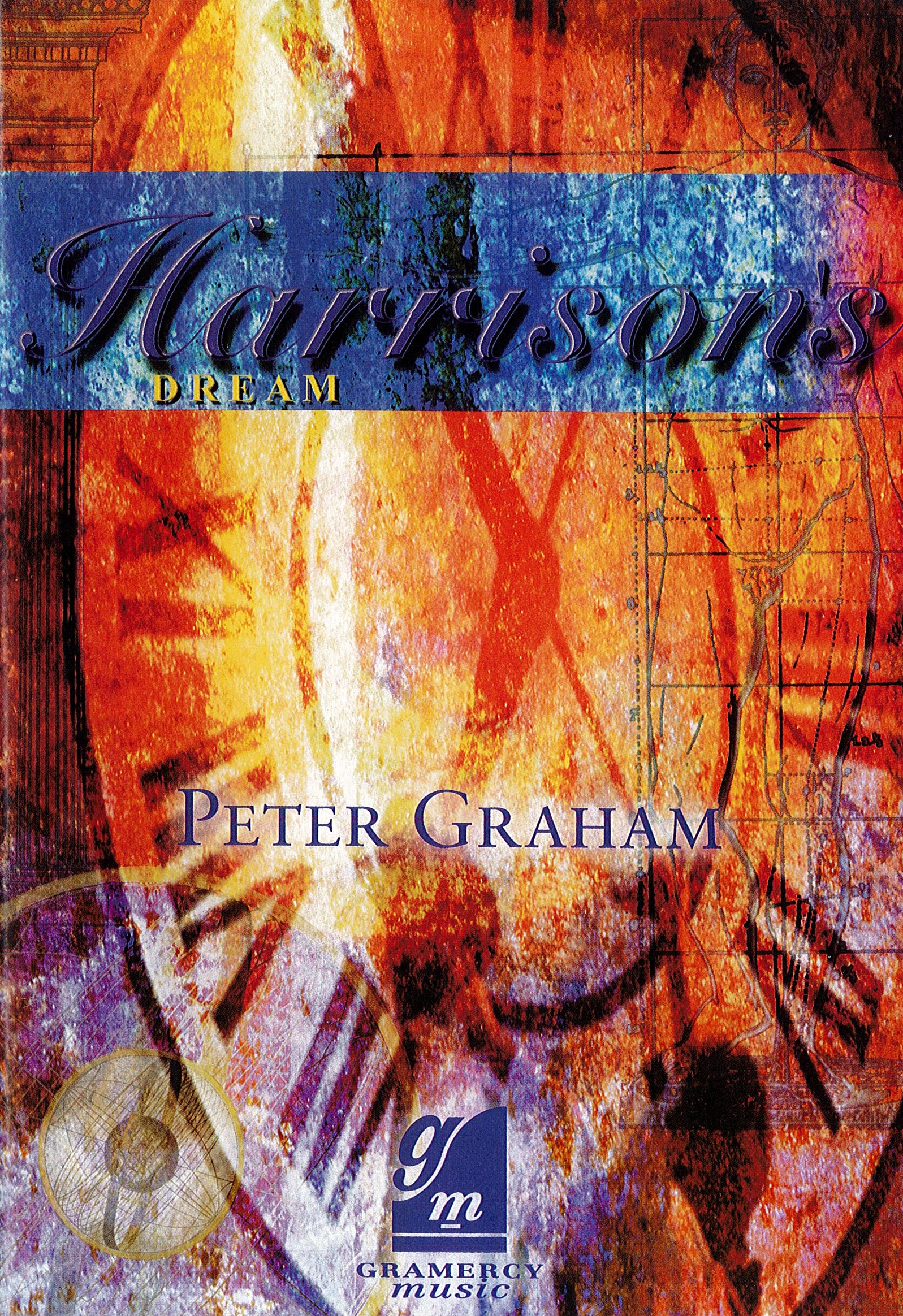
Harrison's Dream (Brass Band - Study Score)
At 8.00pm on the 22nd of October 1707, the Association, flagship of the Royal Navy, struck rocks off the Scilly Isles with the loss of the entire crew. Throughout the rest of the evening the remaining three ships in the fleet suffered the same fate. Only 26 of the original 1,647 crew members survived. This disaster was a direct result of an inability to calculate longitude, the most pressing scientific problem of the time. It pushed the longitude question to the forefront of the national consciousness and precipitated the Longitude Act. Parliament funded a prize of �20,000 to anyone whose method or device would solve the dilemma. For carpenter and self-taught clockmaker John Harrison, this was the beginning of a 40 year obsession. To calculate longitude it is necessary to know the time aboard ship and at the home port or place of known longitude, at precisely the same moment. Harrison's dream was to build a clock so accurate that this calculation could be made, an audacious feat of engineering. This work reflects on aspects of this epic tale, brilliantly brought to life in Dava Sobel's book Longitude. Much of the music is mechanistic in tone and is constructed along precise mathematical and metrical lines. The heart of the work however is human - the attraction of the �20,000 prize is often cited as Harrison's motivation. However, the realisation that countless lives depended on a solution was one which haunted Harrison. The emotional core of the music reflects on this, and in particular the evening of 22ndOctober 1707. Peter GrahamCheshireJuly 2000
Estimated dispatch 7-14 working days
-
 £119.95
Harrison's Dream (Brass Band - Score and Parts)
At 8.00pm on the 22nd of October 1707, the Association, flagship of the Royal Navy, struck rocks off the Scilly Isles with the loss of the entire crew. Throughout the rest of the evening the remaining three ships in the fleet suffered the same fate. Only 26 of the original 1,647 crew members survived. This disaster was a direct result of an inability to calculate longitude, the most pressing scientific problem of the time. It pushed the longitude question to the forefront of the national consciousness and precipitated the Longitude Act. Parliament funded a prize of �20,000 to anyone whose method or device would solve the dilemma. For carpenter and self-taught clockmaker John Harrison, this was the beginning of a 40 year obsession. To calculate longitude it is necessary to know the time aboard ship and at the home port or place of known longitude, at precisely the same moment. Harrison's dream was to build a clock so accurate that this calculation could be made, an audacious feat of engineering. This work reflects on aspects of this epic tale, brilliantly brought to life in Dava Sobel's book Longitude. Much of the music is mechanistic in tone and is constructed along precise mathematical and metrical lines. The heart of the work however is human - the attraction of the �20,000 prize is often cited as Harrison's motivation. However, the realisation that countless lives depended on a solution was one which haunted Harrison. The emotional core of the music reflects on this, and in particular the evening of 22ndOctober 1707. Peter GrahamCheshireJuly 2000
Estimated dispatch 7-14 working days
-
£37.95
Harrison's Dream (Brass Band - Score only)
At 8.00pm on the 22nd of October 1707, the Association, flagship of the Royal Navy, struck rocks off the Scilly Isles with the loss of the entire crew. Throughout the rest of the evening the remaining three ships in the fleet suffered the same fate. Only 26 of the original 1,647 crew members survived. This disaster was a direct result of an inability to calculate longitude, the most pressing scientific problem of the time. It pushed the longitude question to the forefront of the national consciousness and precipitated the Longitude Act. Parliament funded a prize of �20,000 to anyone whose method or device would solve the dilemma. For carpenter and self-taught clockmaker John Harrison, this was the beginning of a 40 year obsession. To calculate longitude it is necessary to know the time aboard ship and at the home port or place of known longitude, at precisely the same moment. Harrison's dream was to build a clock so accurate that this calculation could be made, an audacious feat of engineering. This work reflects on aspects of this epic tale, brilliantly brought to life in Dava Sobel's book Longitude. Much of the music is mechanistic in tone and is constructed along precise mathematical and metrical lines. The heart of the work however is human - the attraction of the �20,000 prize is often cited as Harrison's motivation. However, the realisation that countless lives depended on a solution was one which haunted Harrison. The emotional core of the music reflects on this, and in particular the evening of 22ndOctober 1707. Peter GrahamCheshireJuly 2000
Estimated dispatch 7-14 working days
-
 £49.95
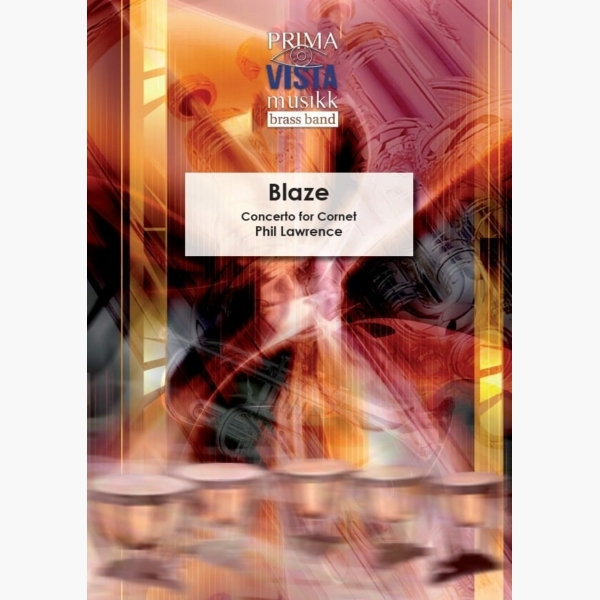
Blaze - Phil Lawrence
Cornet/trumpet sounds have been changing for some years; they are becoming heavier, more robust, slower vibratos. The dynamic level now pushed out by your average solo cornet is 30% more than it was some 35/40 years ago. This, is mainly...
Estimated dispatch 5-7 working days
-
 £134.99
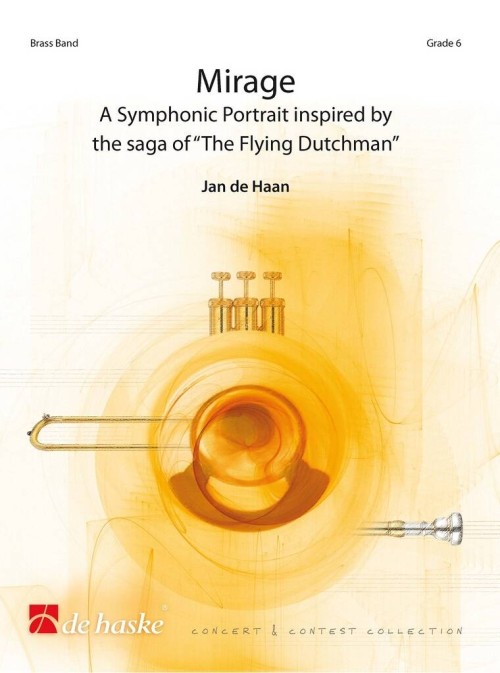
Mirage (Brass Band - Score and Parts) - De Haan, Jan
A Symphonic Portrait inspired by the saga of The Flying Dutchman.The composition Mirage takes inspiration from the legendary ghost ship "The Flying Dutchman", a story deeply rooted in maritime folklore. Cursed to wander the oceans forever, the ship often looms like a mirage on the horizon - a mysterious apparition in which reality and illusion blend intangibly.In Mirage the music tries to bring this mystical appearance to life. The piece begins with an atmosphere of mystery and wonder, creating the illusion of a mirage. The listener is taken to the vast sea, where the boundaries between the real and the unreal blur and the ghostly silhouette of the ship gradually becomes visible. Suddenly the tone changes. Powerful rhythms and stormy harmonies follow, expressing the ship's battle against the raging forces of nature. After this intense section, in which the musicians are pushed to their limits, the tranquility of the sea returns. The recurring mirages inspired the composer to create a lyrical middle section, in which various soloists tell their stories within this legend. In the final part, the sails are hoisted again, and the three-master continues its endless journey.Duration: 15.00
Estimated dispatch 7-14 working days
-
 £15.00
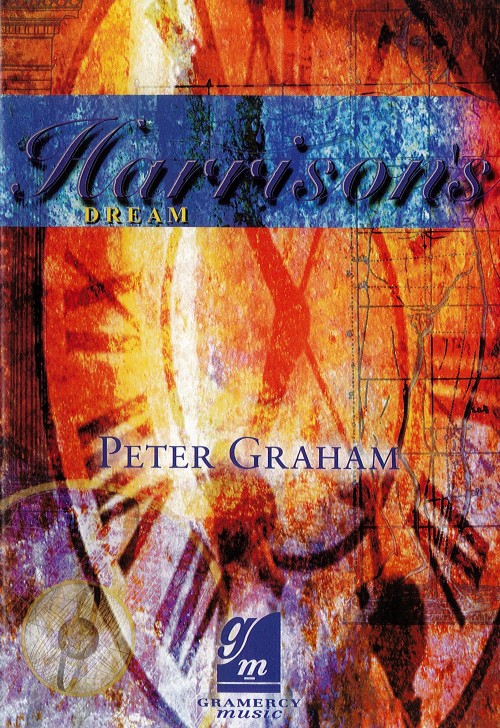
Harrison's Dream (Brass Band - Study Score) - Graham, Peter
At 8.00pm on the 22nd of October 1707, the Association, flagship of the Royal Navy, struck rocks off the Scilly Isles with the loss of the entire crew. Throughout the rest of the evening the remaining three ships in the fleet suffered the same fate. Only 26 of the original 1,647 crew members survived. This disaster was a direct result of an inability to calculate longitude, the most pressing scientific problem of the time. It pushed the longitude question to the forefront of the national consciousness and precipitated the Longitude Act. Parliament funded a prize of �20,000 to anyone whose method or device would solve the dilemma.For carpenter and self-taught clockmaker John Harrison, this was the beginning of a 40 year obsession. To calculate longitude it is necessary to know the time aboard ship and at the home port or place of known longitude, at precisely the same moment. Harrison's dream was to build a clock so accurate that this calculation could be made, an audacious feat of engineering.This work reflects on aspects of this epic tale, brilliantly brought to life in Dava Sobel's book Longitude. Much of the music is mechanistic in tone and is constructed along precise mathematical and metrical lines. The heart of the work however is human - the attraction of the �20,000 prize is often cited as Harrison's motivation. However, the realisation that countless lives depended on a solution was one which haunted Harrison. The emotional core of the music reflects on this, and in particular the evening of 22ndOctober 1707.- Peter GrahamJuly 2000 Recorded on Polyphonic QPRL219D Master Brass (Volume Fifteen). Duration: 14'30"
Estimated dispatch 7-14 working days
-
 £104.99
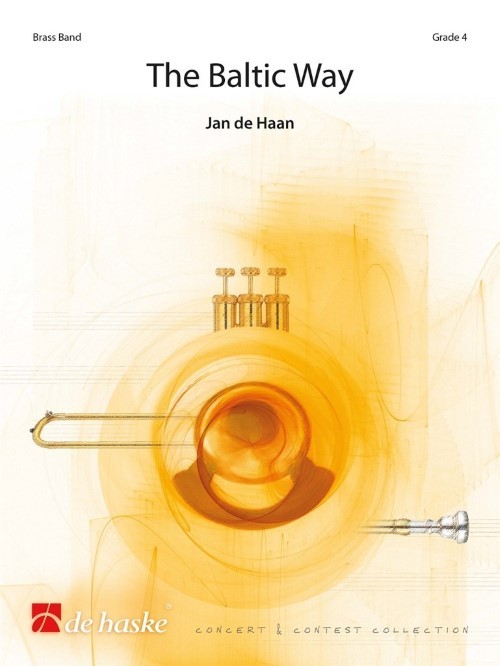
The Baltic Way (Brass Band - Score and Parts) - De Haan, Jan
In 1989, the demonstration named the Baltic Way also known as the Baltic Chain-- was held in the Baltic states of Estonia, Latvia and Lithuania by its citizens in a call for independence from the Soviet Union. On 23rd August 1989, some two million participants formed a human chain, hand-in-hand all the way from the Estonian capital of Tallinn its Latvian counterpart, Riga, through to the Lithuanian capital of Vilnius - six hundred kilometres long. It became the longest human chain ever created and turned out to be the final push needed for much sought-after independence. This historic event became the source of inspiration for this composition. The introduction of thefirst movement, 'Struggle for Independence', is based on a nocturne for piano by the renowned Lithuanian composer and painter Mikalojus Konstantinas iurlionis (1875-1911), thematic material from which has been incorporated throughout the whole composition. The melancholic beginning is followed by a powerful theme which reflects the resolve of the Baltic people. The sudden aggressive, dissonant chords and a dominant and--in rhythmic terms--contrary bass drum announce that the resistance is not going smoothly. Just for a moment, we hear the anthem of the Soviet Union in the lower brass, but this is relentlessly pushed to the background by the rest of the band playing the Lithuanian national anthem, 'Tautika giesm ' (Lithuania, our homeland). The second movement, 'Decades of Suffering', echoes life under the Soviet Union's thumb. In the pursuit of independence, a peaceful protest is planned in which a human chain is formed across the Baltic states of Estonia, Latvia and Lithuania. This 'Chain of Freedom' is depicted in the final movement of the work. Duration: 10.30
Estimated dispatch 7-14 working days
-
 £119.95
Harrison's Dream (Brass Band - Score and Parts) - Graham, Peter
At 8.00pm on the 22nd of October 1707, the Association, flagship of the Royal Navy, struck rocks off the Scilly Isles with the loss of the entire crew. Throughout the rest of the evening the remaining three ships in the fleet suffered the same fate. Only 26 of the original 1,647 crew members survived. This disaster was a direct result of an inability to calculate longitude, the most pressing scientific problem of the time. It pushed the longitude question to the forefront of the national consciousness and precipitated the Longitude Act. Parliament funded a prize of �20,000 to anyone whose method or device would solve the dilemma.For carpenter and self-taught clockmaker John Harrison, this was the beginning of a 40 year obsession. To calculate longitude it is necessary to know the time aboard ship and at the home port or place of known longitude, at precisely the same moment. Harrison's dream was to build a clock so accurate that this calculation could be made, an audacious feat of engineering.This work reflects on aspects of this epic tale, brilliantly brought to life in Dava Sobel's book Longitude. Much of the music is mechanistic in tone and is constructed along precise mathematical and metrical lines. The heart of the work however is human - the attraction of the �20,000 prize is often cited as Harrison's motivation. However, the realisation that countless lives depended on a solution was one which haunted Harrison. The emotional core of the music reflects on this, and in particular the evening of 22ndOctober 1707.- Peter GrahamJuly 2000 Recorded on Polyphonic QPRL219D Master Brass (Volume Fifteen). Duration: 14'30"
Estimated dispatch 7-14 working days
 View Music