
Results
-
£50.00
The Tortoise and the Hare - Fuller, B
This fun piece was the winner of the RWCMD Cory Composition Prize in 2022.It includes a role for the audience, and you'll need players with good finger dexterity for this one!ChampionshipDuration 5 mins Click to Listen - Courtesy of Cory Band
In Stock: Estimated dispatch 1-3 working days
-
£25.00
The Tortoise and the Hare (Score) - Fuller, B
This fun piece was the winner of the RWCMD Cory Composition Prize in 2022.It includes a role for the audience, and you'll need players with good finger dexterity for this one!ChampionshipDuration 5 mins Click to Listen - Courtesy of Cory Band
In Stock: Estimated dispatch 1-3 working days
-
 £40.00
English Counterpoint (Score and Parts)
The winner of the inaugural RWCMD Cory Composition Prize in 2015, debutant brass band composer Lewis Furber unlocks an original and evoactive soundworld, where the influence of composers such as Vaughan Williams is never far away. Features solos for flugel horn, euphonium and baritone.
Estimated dispatch 7-14 working days
-
 £29.95
Cantique De Jean Racine (Brass Band - Score and Parts)
This work, originally for mixed chorus, was completed in 1865 when Faure was just nineteen years old and gained him first prize when graduating from Ecole Niedermeyer de Paris. A further version for orchestra (possibly by the composer) appeared in 1906.
Estimated dispatch 7-14 working days
-
 £34.95
Judd: A Happy Day
This composition was awarded first prize in the Theme and Variations Section of the 1926 Salvation Army Band Music Competition and has remained popular with cornet soloists and audiences ever since. This was the first in a trilogy of cornet solos with the word 'day' in the title written by Erik Leidzen, the others being 'Happy all the Day' and 'Wondrous Day'.
Estimated dispatch 7-14 working days
-
 £29.95
Judd: Army of God
Herbert Rive contributed just two compositions to Salvation Army music, the other being the festival march The Kings Command. Spirit of Joy was awarded first prize in the 1953 70th Anniversary March Competition in New Zealand. Rive uses a short syncopated motif based on the first few notes of the Salvation Army tune If you keep singing to tie all aspects of this march together.
Estimated dispatch 7-14 working days
-
 £29.95
Judd: Spirit of Joy
This march was awarded first prize in the 1930 American Golden Jubilee National Music Competition and was published the same year in the first edition of the American Festival Series. It was subsequently re-printed in the General Series of 1984. Soderstroms imaginative use of syncopation and chromatic harmony brought a new, American sound to the Salvation Army march. For example, he took the old Salvation Army fight song Hark, hark my soul written and changes its metre from 6/8 to 4/4 while also syncopating it!
Estimated dispatch 7-14 working days
-
 £15.00
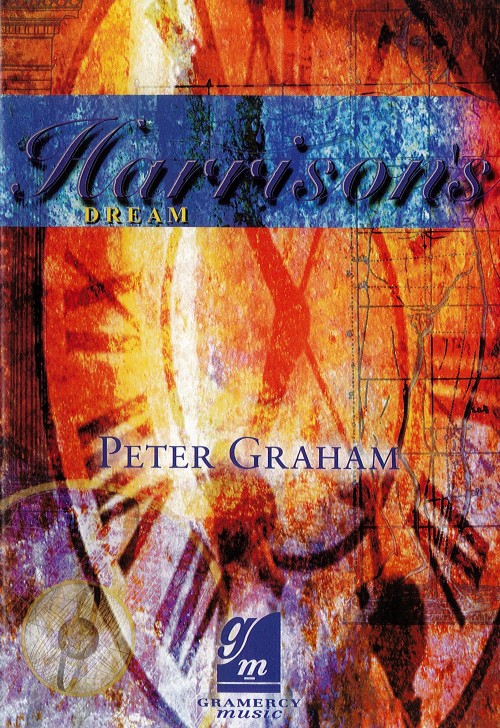
Harrison's Dream (Brass Band - Study Score) - Graham, Peter
At 8.00pm on the 22nd of October 1707, the Association, flagship of the Royal Navy, struck rocks off the Scilly Isles with the loss of the entire crew. Throughout the rest of the evening the remaining three ships in the fleet suffered the same fate. Only 26 of the original 1,647 crew members survived. This disaster was a direct result of an inability to calculate longitude, the most pressing scientific problem of the time. It pushed the longitude question to the forefront of the national consciousness and precipitated the Longitude Act. Parliament funded a prize of �20,000 to anyone whose method or device would solve the dilemma.For carpenter and self-taught clockmaker John Harrison, this was the beginning of a 40 year obsession. To calculate longitude it is necessary to know the time aboard ship and at the home port or place of known longitude, at precisely the same moment. Harrison's dream was to build a clock so accurate that this calculation could be made, an audacious feat of engineering.This work reflects on aspects of this epic tale, brilliantly brought to life in Dava Sobel's book Longitude. Much of the music is mechanistic in tone and is constructed along precise mathematical and metrical lines. The heart of the work however is human - the attraction of the �20,000 prize is often cited as Harrison's motivation. However, the realisation that countless lives depended on a solution was one which haunted Harrison. The emotional core of the music reflects on this, and in particular the evening of 22ndOctober 1707.- Peter GrahamJuly 2000 Recorded on Polyphonic QPRL219D Master Brass (Volume Fifteen). Duration: 14'30"
Estimated dispatch 7-14 working days
-
 £119.95
Harrison's Dream (Brass Band - Score and Parts) - Graham, Peter
At 8.00pm on the 22nd of October 1707, the Association, flagship of the Royal Navy, struck rocks off the Scilly Isles with the loss of the entire crew. Throughout the rest of the evening the remaining three ships in the fleet suffered the same fate. Only 26 of the original 1,647 crew members survived. This disaster was a direct result of an inability to calculate longitude, the most pressing scientific problem of the time. It pushed the longitude question to the forefront of the national consciousness and precipitated the Longitude Act. Parliament funded a prize of �20,000 to anyone whose method or device would solve the dilemma.For carpenter and self-taught clockmaker John Harrison, this was the beginning of a 40 year obsession. To calculate longitude it is necessary to know the time aboard ship and at the home port or place of known longitude, at precisely the same moment. Harrison's dream was to build a clock so accurate that this calculation could be made, an audacious feat of engineering.This work reflects on aspects of this epic tale, brilliantly brought to life in Dava Sobel's book Longitude. Much of the music is mechanistic in tone and is constructed along precise mathematical and metrical lines. The heart of the work however is human - the attraction of the �20,000 prize is often cited as Harrison's motivation. However, the realisation that countless lives depended on a solution was one which haunted Harrison. The emotional core of the music reflects on this, and in particular the evening of 22ndOctober 1707.- Peter GrahamJuly 2000 Recorded on Polyphonic QPRL219D Master Brass (Volume Fifteen). Duration: 14'30"
Estimated dispatch 7-14 working days
-
£44.95
Harrison's Dream (Brass Band - Score only) - Graham, Peter
At 8.00pm on the 22nd of October 1707, the Association, flagship of the Royal Navy, struck rocks off the Scilly Isles with the loss of the entire crew. Throughout the rest of the evening the remaining three ships in the fleet suffered the same fate. Only 26 of the original 1,647 crew members survived. This disaster was a direct result of an inability to calculate longitude, the most pressing scientific problem of the time. It pushed the longitude question to the forefront of the national consciousness and precipitated the Longitude Act. Parliament funded a prize of �20,000 to anyone whose method or device would solve the dilemma.For carpenter and self-taught clockmaker John Harrison, this was the beginning of a 40 year obsession. To calculate longitude it is necessary to know the time aboard ship and at the home port or place of known longitude, at precisely the same moment. Harrison's dream was to build a clock so accurate that this calculation could be made, an audacious feat of engineering.This work reflects on aspects of this epic tale, brilliantly brought to life in Dava Sobel's book Longitude. Much of the music is mechanistic in tone and is constructed along precise mathematical and metrical lines. The heart of the work however is human - the attraction of the �20,000 prize is often cited as Harrison's motivation. However, the realisation that countless lives depended on a solution was one which haunted Harrison. The emotional core of the music reflects on this, and in particular the evening of 22ndOctober 1707.- Peter GrahamJuly 2000 Recorded on Polyphonic QPRL219D Master Brass (Volume Fifteen). Duration: 14'30"
Estimated dispatch 7-14 working days
 View Music