Results
-
 £29.95
Aria con Variazioni - George Frideric Handel - Matthew Eden
This set of variations on Handel's well-known theme The Harmonious Blacksmith was originally commissioned by Mark Wilkinson, principal cornet of the Foden's band. The solo part stays largely faithful to the original keyboard work (which has since been arranged for...
Estimated dispatch 5-7 working days
-
 £24.95
Swiss Nocturne - Jonathan Bates
Swiss Nocturne was composed for Flowers Band's Principal Baritone Ben Stratford. One of the UK's leading baritone soloists, Ben was the recipient of the 'Best Baritone' award at the 2014 Brass in Concert Championships and is a music student at...
Estimated dispatch 5-7 working days
-
 £24.95
The Dirty Duck - Dan Price
Tom Hutchinson commissioned a cornet solo from up-and-coming composer Dan Price in 2009 to mark the beginning of his tenure as principal cornet with the Cory Band. Tom was looking for a solo that was virtuosic in content with jazz...
Estimated dispatch 5-7 working days
-
 £24.95
Troldhaugen - Jonathan Bates
Troldhaugen was composed especially for Rosie Hughes, Flowers Band's Principal Horn and 2013 Player of the Year. This luscious solo for Tenor Horn, incorporates snapshots of 'Morning' from Edvard Grieg's 'Peer Gynt' as a basis for the work's melodic material,...
Estimated dispatch 5-7 working days
-
£125.00
Titan's Progress (Score & Parts) - Hermann Pallhuber
Commissioned by Austria's leading brass band, Brass Band Oberoesterreich, Titan's Progress is a series of descriptive, virtuoso episodes based on the principal character of the novel by Jean Paul. This was also the original subject of Mahler's Symphony No. 1, from which Hermann Pallhuber derives much of his material. The work has proved an exceptionally popular test piece all over the world. Titan's Progress was the selected test piece for the British Open Brass Band Championship, held at Symphony Hall, Birmingham on Saturday 12th September 2009. Brass Band Grade 6: Championship Duration: 17 minutes The score provided with this set is a larger format, B4 size.
In Stock: Estimated dispatch 1-3 working days
-
£51.00
Metropolis
Metropolis was composed for James McLeod, Principal Euphonium of the Leyland Band. Inspired by a tour to Dubai in October 2014, the opening of the piece portrays a journey through the city on the main highway surrounded by the impressive skyline. This then moves into a slower passage reflecting the sun setting as the buildings start to illuminate the night sky. The final section encapsulates the
In Stock: Estimated dispatch 1-3 working days
-
 £19.95
Over Ambion Hill - Jonathan Bates
'Over Ambion Hill' is a cornet solo with piano accompaniment composed for the Principal Cornet of the Raty Band, Keir-Luc Evans-Brown. Ratby - as a village -is situated within the Bosworth & Hinckley district of Leicestershire, the former of which notorious for it's setting of the 'Battle of Bosworth Field'in 1485 - the final significant battle of the War of the Roses between the houses of Lancaster and York. The battlefield itself was for many years ajudged to be on the site of Ambion Hill where the current Battle of Bosworth visitor centre is situated, but this was later reassessed as being situated a couple of miles South West of Ambion Hill. The battle is synonymous with the death of Richard III, who's cortege passed Ambion Hill on it's way to Leicester Cathedral upon the rediscovery of his remains in 2015.
In Stock: Estimated dispatch 1-3 working days
-
 £29.99
Titan's Progress (score only) - Hermann Pallhuber
Commissioned by Austria's leading brass band, Brass Band Oberoesterreich, Titan's Progress is a series of descriptive, virtuoso episodes based on the principal character of the novel by Jean Paul. This was also the original subject of Mahler's Symphony No.1, from which Hermann Pallhuber derives much of his material. The work has proved an exceptionally popular test piece all over the world.Titan's Progress was the selected test piece for the British Open Brass Band Championship, held at Symphony Hall, Birmingham on Saturday 12th September 2009.Suitable for Championship BandsDuration: 17 minutes
Estimated dispatch 7-14 working days
-
 £31.95
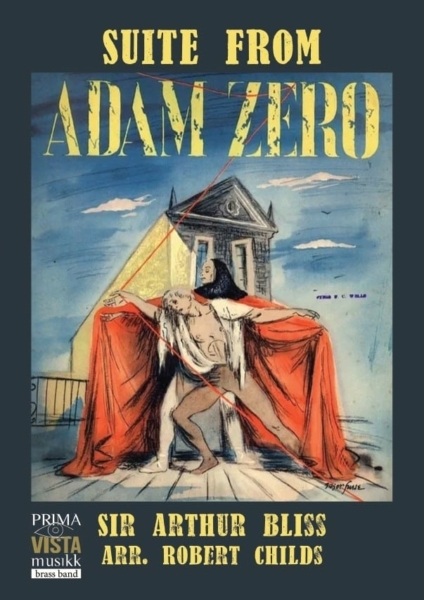
Adam Zero, Suite from (Brass Band - Score only) - Bliss, Arthur - Childs, Robert
Selected as the Section 2 test piece for the National Brass Band Championships of Great Britain 2025Following his ballet Checkmate, Bliss composed another score for the, by then, Sadler's Wells Ballet, Miracle in the Gorbals, which was choreographed by Robert Helpmann, to a scenario by Michael Benthall. Premired in 1944, the ballet made a considerable impact and was a box-office success. It was followed in turn by a further collaboration with Helpmann and Benthall, Adam Zero. This would serve Helpmann, in the eponymous role, as a vehicle in two respects: demonstrating his gifts as a dancer-actor and as a choreographer. First performed at the Royal Opera House, Covent Garden, on 8 April 1946, Adam Zero was conducted by Constant Lambert, the work's dedicatee. Bliss considered it 'his most varied and exciting ballet score'. Benthall provided a synopsis for the programme:There is a philosophy that life moves in an endless series of timeless cycles. As Nature passes through Spring, Summer, Autumn and Winter, so man is born, makes a success in his own particular sphere, loses his position to a younger generation, sees his world crumble before his eyes and only finds peace in death. This age-old story is told in terms of a Company creating a ballet and calling on the resources of the theatre to do so. Lighting, stage mechanism, dance conventions, musical forms and costumes and scenery of all periods are used to symbolize the world of 'Adam Zero'.Apart from Adam, as the Principal Dancer, other main roles included the Stage Director (representing Omnipotence), and Adam's Fates (Designer, Wardrobe Mistress, and Dresser). 'The Woman in this allegory', wrote Bliss, 'under the symbol of the Choreographer, was both the creator and destroyer of Adam: his first love, his wife, his mistress, and finally the figure of beneficent Death.' When the curtain rose, the 'audience saw the Covent Garden stage right back to the wall, completely empty except for the protagonists, 'the Company poised, still and expectant, as they await the birth of... Adam Zero.'Unfortunately, soon after the premire, Helpmann injured himself and had to withdraw from the remaining performances. Despite generally positive reviews, the ballet did not capture the imagination of audiences and, to Bliss's considerable disappointment, was not revived. Seventy years would elapse before its first major return to the stage, in 2016, performed by the ballet company of Stadttheater Bremerhaven with choreography by Sergei Vanaev.Bliss extracted a concert suite from the ballet, conducting its first performance with the City of Birmingham Symphony Orchestra on 28 October 1948. For his own suite, arranged for brass band in 2023, Dr Robert Childs chose three dances linked to the seasons, book-ending them with the ebullient 'Fanfare Overture' and 'Fanfare Coda'. After Adam has grown to manhood, his Fates clothe him in a costume synonymous with confident youth, appropriate for the virile, ardent 'Dance of Spring'. In the 'Approach of Autumn', Adam, now wearing a sombre costume, has grown older: his Fates have streaked grey in his hair and put lines on his face. But they had earlier raised Adam to the zenith of his power, and the 'Dance of Summer' depicts him in the prime of life, in music of sweeping grandeur. The 'Fanfare Coda' signals that the next cycle of life is about to begin.Duration: 10.30
Estimated dispatch 7-14 working days
-
£21.65
Adam Zero, Suite from (Brass Band - Study Score) - Bliss, Arthur - Childs, Robert
Selected as the Section 2 test piece for the National Brass Band Championships of Great Britain 2025Following his ballet Checkmate, Bliss composed another score for the, by then, Sadler's Wells Ballet, Miracle in the Gorbals, which was choreographed by Robert Helpmann, to a scenario by Michael Benthall. Premired in 1944, the ballet made a considerable impact and was a box-office success. It was followed in turn by a further collaboration with Helpmann and Benthall, Adam Zero. This would serve Helpmann, in the eponymous role, as a vehicle in two respects: demonstrating his gifts as a dancer-actor and as a choreographer. First performed at the Royal Opera House, Covent Garden, on 8 April 1946, Adam Zero was conducted by Constant Lambert, the work's dedicatee. Bliss considered it 'his most varied and exciting ballet score'. Benthall provided a synopsis for the programme:There is a philosophy that life moves in an endless series of timeless cycles. As Nature passes through Spring, Summer, Autumn and Winter, so man is born, makes a success in his own particular sphere, loses his position to a younger generation, sees his world crumble before his eyes and only finds peace in death. This age-old story is told in terms of a Company creating a ballet and calling on the resources of the theatre to do so. Lighting, stage mechanism, dance conventions, musical forms and costumes and scenery of all periods are used to symbolize the world of 'Adam Zero'.Apart from Adam, as the Principal Dancer, other main roles included the Stage Director (representing Omnipotence), and Adam's Fates (Designer, Wardrobe Mistress, and Dresser). 'The Woman in this allegory', wrote Bliss, 'under the symbol of the Choreographer, was both the creator and destroyer of Adam: his first love, his wife, his mistress, and finally the figure of beneficent Death.' When the curtain rose, the 'audience saw the Covent Garden stage right back to the wall, completely empty except for the protagonists, 'the Company poised, still and expectant, as they await the birth of... Adam Zero.'Unfortunately, soon after the premire, Helpmann injured himself and had to withdraw from the remaining performances. Despite generally positive reviews, the ballet did not capture the imagination of audiences and, to Bliss's considerable disappointment, was not revived. Seventy years would elapse before its first major return to the stage, in 2016, performed by the ballet company of Stadttheater Bremerhaven with choreography by Sergei Vanaev.Bliss extracted a concert suite from the ballet, conducting its first performance with the City of Birmingham Symphony Orchestra on 28 October 1948. For his own suite, arranged for brass band in 2023, Dr Robert Childs chose three dances linked to the seasons, book-ending them with the ebullient 'Fanfare Overture' and 'Fanfare Coda'. After Adam has grown to manhood, his Fates clothe him in a costume synonymous with confident youth, appropriate for the virile, ardent 'Dance of Spring'. In the 'Approach of Autumn', Adam, now wearing a sombre costume, has grown older: his Fates have streaked grey in his hair and put lines on his face. But they had earlier raised Adam to the zenith of his power, and the 'Dance of Summer' depicts him in the prime of life, in music of sweeping grandeur. The 'Fanfare Coda' signals that the next cycle of life is about to begin.Duration: 10.30
Estimated dispatch 7-14 working days