
Results
-
 £14.95
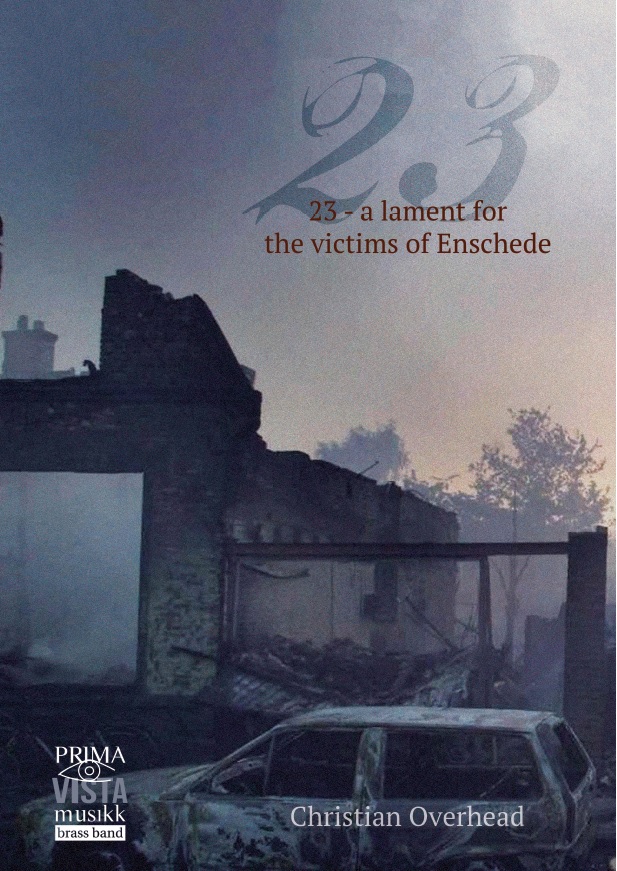
23 - A Lament for the Victims of Enschede (Score Only)
23 was composed for Brass Band Schoonhoven, and used as part of their programme for Brass in Concert in November 2016.On the 13 th May 2000, the Netherlands was shocked by an explosion in Roombeek - a district of Enschede, near the German border - after a fire broke out at a local fireworks depot. 23 people lost their lives in the tragic events. This piece pays tribute to their memory.The numbers 2 and 3 form the basis of the piece. The use of 5/4 allows the music to flow, alternating between 2 + 3 and 3 + 2; there are frequent passages where triplet quavers clash with straight quavers; and the tuned percussion make use of a scale composed of alternating intervals of 2 and 3 semitones.
Estimated dispatch 7-14 working days
-
 £59.95
Judd: King of Heaven
Based on the well-known hymn 'Praise my soul, the King of Heaven', this composition was specially written for The International Staff Band. A veritable showcase for the brass band, featuring each section in turn (cornets, horns and baritones, trombones, euphoniums and basses, percussion), the music concludes with an exciting and dramatic presentation of the theme.
Estimated dispatch 7-14 working days
-
 £42.60
Down to the River (8 Part Flexible Ensemble - Score and Parts)
8 Part & Percussion.Junior Band no.47
Estimated dispatch 7-14 working days
-
 £7.99
New Christmas Praise (Percussion)
Think of a Christmas tune or carol, and it's almost bound to be in this excellent collection of 115 Christmas arrangements. Contents are listed on the PDF. Specially arranged for brass or wind band (or a mixture of both.) A must for all bands intending to do some 'carolling'. The SATB Choral Editions Part 1 and 2 can be used as a score.
Estimated dispatch 7-14 working days
-
 £107.80
Blackbird Special - Davis - Reid Gilje
Blackbird Special" is a song by American band Dirty Dozen Brass Band. The song is an entertainment piece, a good concert opener or encore. When used as a concert opener one may let the different sections of the band enter the stage one by one playing in order of appearance. Percussion section may play their parts ad lib. The most important is the groove of the piece. Please pay attention to strict articulation from bar 17. Be aware of the marcatos at 33. The last note of the slurs at 41 must be not be too short. It's important to hold the note values, especially in bars 49, 51, 53 and 55. From 57 and throughout the piece, the percussion may invite the audience to join forhandclaps. As an extra effect, the Bass Tubas may stand at 57, the Horns at 59, backrow Cornets and Trombones at 61 and Euphonium/Baritone/Solo Cornets at 63. ||||||
Estimated dispatch 5-14 working days
-
 £127.30
Stealing Apples - Fats Waller - Reid Gilje
Stealing Apples is an old swing-tune written by Fats Waller. Performances by Benny Goodman and his big band made the song very popular. In this arrangement for brass band, the mallet percussion is very essential. Mallet Percussion presents the melody from letter A and is also featured as soli-instruments from letter L to P. These parts can alternatively be played as vibraphone solo. Please be aware of the balance at letter A. Horn and Trombones must play piano but well articulated. Letter D must sound sparkling and fresh with articulated and powerful trombones and cornets (using straight-mute). Make shue that the 8th-notes are not played too dotted two bars before letterG. Almost even 8th-notes accentuated on the start of the slur is a good tip. Watch the balance at letter H. This part have to sound homogeniously. The soloistic Soprano Cornet at letter Q must be played in the style of Benny Goodan. The accompaniment must not be too powerful from letter R to S. Best of luck with the performance!
Estimated dispatch 5-14 working days
-
£60.99
Centennial Prelude - Jan Van der Roost
This short opening music was composed on commission of the symphonic band of Jan Van der Roost's village (= Kontich near Antwerp / Belgium). In 1991, this community band celebrated its 100th anniversary. After composing commissioned pieces from different countries (even from Japan), this was the most 'near' commission he ever received indeed!It is a short but varied piece, featuring all sections of the band. After a short introduction, played by the brass instruments, a crisp rhythm starts and boxes the main theme. After a second theme, played by brass and percussion, a short melodical passage brings some 'rest'. At the end, the fanfare of the introductionreoccurs.Although this "Centennial Prelude" isn't a really demanding piece, it sounds colourful and energetic. It has been recorded on CD by the band of the 'Royal Dutch Airforce' and the 'Desford Colliery Brass band'.
Estimated dispatch 5-14 working days
-
 £40.00
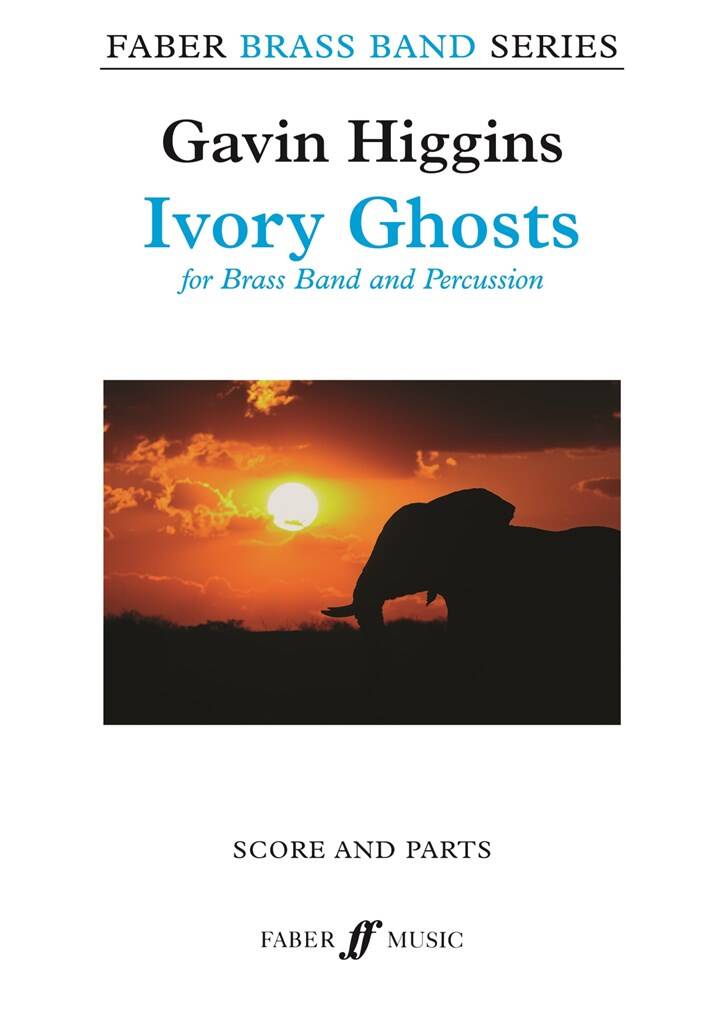
Ivory Ghosts - Gavin Higgins
Gavin Higgins wrote Ivory Ghosts in 2006 for brass ensemble as one of a collection of short pieces composed in support of the charity Brass Band Aid. It is a haunting miniature created in response to the horrors of the illegal trade in African elephant ivory. This definitive version for brass band and percussion was prepared for the Tredegar Town Band.
Estimated dispatch 5-14 working days
-
 £80.00
St. Magnus - Kenneth Downie
Dedicated to Alastair Massey, an inspirational music teacher. Commissioned by the Scottish Brass Band Association for the 2004 European Brass Band Championships in Glasgow. This music is a set of variations on the tune known as St Magnus, which is attributed to Jeremiah Clarke. Most people will associate it with Thomas Kelly's hymn which begins: "The Head that once was crowned with thorns is crowned with glory now". The tune is very simple, consisting of just two, four-bar phrases. Neither is there much in the way of rhythmic variety, every note being a crotchet with the exception of two quavers, and the last note in each phrase. Within such a simple structure, however, lies considerable strength. THEME The listener is given the opportunity of hearing it twice, in full, at the beginning, starting with one player but soon taken up by the full ensemble. It returns in the middle of the music and is stated again near the end. This has been done quite deliberately in the hope that there will be an appreciation of what material is being developed, by the listener as well as by those with access to the score, who are able to see the visual connections. VARIATION 1 This takes the rhythm of the last part of the theme and also uses the shape of the opening as a recurring figure. The mood is whimsical and skittish, with short, teasing rhythmic figures tossed around the band, and quick interplay with percussion, at a fast tempo. An energetic flourish finishes this variation before the Andante espress. VARIATION 2 This commences with chords related to the opening of Variation 1. The cantabile on solo comets establishes a new, lyrical mood and there is scope for expressive playing in a series of short solo passages. The theme works its way unobtrusively into the texture before a reprise of the solo cornet melody and some more lyrical interchanges between Eb bass, euphonium, flugel horn and comets. The variation ends serenely with clear references to the last phrase of the theme. VARIATION 3 The first idea to dominate is clearly linked to the shape of the theme's first phrase. There is a frenetic feel to much of this variation, with considerable energy and instability created by extensive use of cross-rhythms. A thinning-out of the score marks a clear change to development of the start of the second phrase of the theme. This proves to be short-lived however, and the opening material returns leading to a restatement of the theme, "Maestoso," after which a euphonium cadenza links to Variation 4. VARIATION 4 Here we have some solos for euphonium, cornet, trombone and Eb bass set against a background of horns and baritones presenting a pensive statement of the theme's opening. VARIATION 5 This commences Allegro, with lively work for cornet and euphonium spreading to the whole band before attention focuses on the beginning of the second phrase of the theme which is initially presented in diminution, then in regular rhythm, then in inversion. An increase in tempo coupled with a decrease in volume, requires dexterity and control, with several metrical challenges thrown in for good measure. The same fragment of phrase becomes an ostinato which generates a frenzied climax, punctuated by short, dramatic silence, before the opening figure returns and the music gradually winds down. The tubular bells herald the final return of the theme, in augmentation, marking the start of the Finale. FINALE This features the running semiquavers of the previous variation sounding in counterpoint. A fast, furious coda speeds the work to a conclusion while references to the opening of the theme are still trying to break into the texture of the music. Kenneth Downie
Estimated dispatch 5-14 working days
-
 £61.00
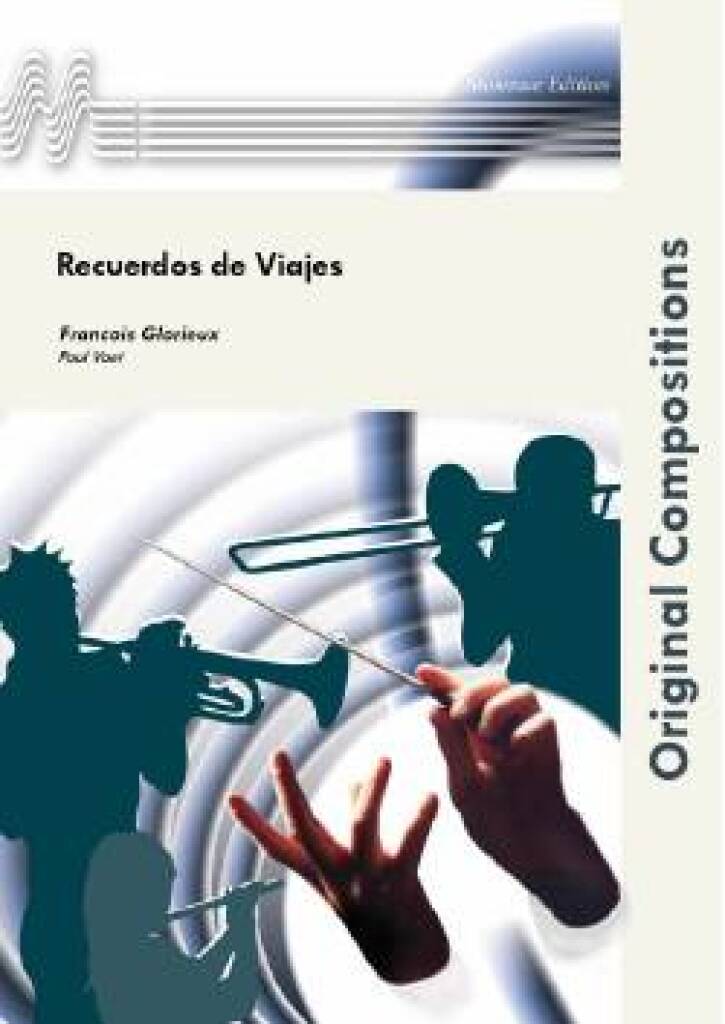
Recuerdos De Viajes - François Glorieux - Paul Voet
The Belgian piano virtuoso and composer Francois Glorieux (Kortrijk, 1932) has had a long international career as a concert pianist and conductor. As composer and arranger he worked, among others, with Stan Kenton and with the famous London brass ensemble 'Locke Brass Consort'. With that ensemble as well as with his own orchestra 'The Francois Glorieux Brass and Percussion Orchestra', he recorded many of his own compositions. His pupil trumpeter Paul Voet wrote an arrangement for brass band of these 'travel memories'. This is really a most fine original concert piece for brass band.
Estimated dispatch 5-14 working days
 View Music