
Results
-
 £34.99
Submerged... (Cornet Concerto No.2) - Jonathan Bates
'Submerged..' is a virtuoso concerto for Cornet composed as a response to the 'lost' Derbyshire villages of Ashopton & Derwent,. both of which were drowned in the early 1940's to make way for a new reservoir to aid the ever-increasing water demand from nearby. Sheffield and it's steel industry during World War 2. The work is through-composed but is defined by 3 clear main sections, 'The . Packhorse Bridge, Derwent', 'Ashopton Chapel' and 'Operation Chastise'. Much of the melodic and harmonic material throughout the. concerto is inspired by 3 contrasting sources; an original motif of towering block chords which opens the concerto, the famous opening. fragment of Eric Ball's 'High Peak' (1969) which was composed as a tribute to the district of Derbyshire where Ashopton & Derwent lie, . and finally Claude Debussy's haunting 'La Cath drale Engloutie' or 'The Sunken Cathedral', which was composed in 1910 around the legend of. the submerged cathedral of Ys. . I. Packhorse Bridge, Derwent (1925). One of the most striking features of the former village of Derwent was it's Packhorse Bridge, which spanned the River Derwent. adjacent to the Derwent Hall - a grand, picturesque Jacobean country house. In 1925, the renowned impressionist artist Stanley. Royle painted a striking image of the two in midwinter, with the partially frozen river sat quietly underneath the snow-topped. bridge in the foreground, while the old hall sits peacefully and dark in the background. The opening setion of this concerto paints. this picture in a quite schizophrenic manner; with frosty, shrill march-like material picturing the villagers crossing the narrow icy. bridge, combined with wild and frenzied waltz music of the grand hall and it's masquerade balls laying, for now, quietly mysterious. across the river. . II. Ashopton Chapel (1939). Ashopton was much the smaller and less-populated of the 2 'lost' villages, but still bore home to a Roman Catholic Chapel which was. the focal point of the village. The chapel - along with the rest of Ashopton - was drowned in 1943, but the final service to take place there. was held in 1939, with the final hymn being 'Day's Dying in the West'. This hymn forms a haunting coda to the 2nd section, with firstly the . piano leading the melody before an audio track containing an old recording of the hymn is accompanied by the sound of flowing water and . the rumble of storms as the village hypothetically disappears from existence with the hymn tune still echoing around the valley, before . subsiding into the growing roar of the engine of a Lancaster Bomber as it soars overhead towards Derwent to practise it's 'Dam-Buster' raid. . III. Operation Chastise (1943). The Derwent Reservoir lies adjacent to Ladybower Reservoir (of which Ashopton & Derwent were flooded to make way for) in the . Derbyshire High Peak, and during the 2nd World War was used as one of the central low-atitude practise areas of the 617 Squadron - more . commonly known affectionately as the 'Dambusters'. Before the destruction of Derwent, it's 'Packhorse Bridge' was dismantled stone by stone . and re-assembled upstream at Howden Dam to the north end of Derwent Reservoir. This is where the music begins, with a reconstruction of . the opening material before taking flight into a whirlwind tour of virtuosity from the soloist. .
In Stock: Estimated dispatch 1-3 working days
-
 £95.00
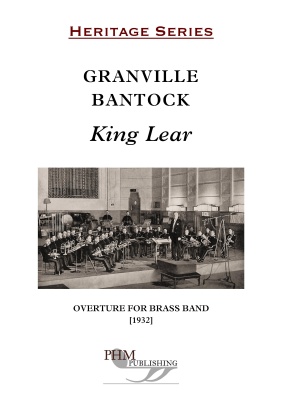
King Lear (Brass Band - Score and Parts)
Sir Granville Bantock (1868 - 1946) composed the second of his five major brass band work for Callender's Cableworks Band, completing the commission on 30 November 1932. Based in the Thames-side district of Belvedere near Erith, the band was active between 1898 and 1961. The works band of the Callender Cable & Construction Co. Ltd, it was at the peak of its popularity during the 1930s and was a frequent broadcaster on the radio. The band employed an in-house arranger and played saxophones in its lighter material. King Lear was one of the band's major commissions and was not published in Bantock's lifetime. The manuscript score and parts were thought to be lost for decades, but were found in the library of the Haydock Band (Lancashire), which had inherited part of Callender's library of manuscripts material and bespoke arrangements after it has been transferred to nearby Prescott Cables Band after Callender's Cable Works closed.King Lear is a substantial work, in essence a dramatic tone poem in the romantic Tchaikovskian manner, presenting a series of character portraits of the foolish old king and his three daughters, Goneril, Regan and Cordelia. The music is dramatic and lyrical by turns, with the most generous lyrical episode revealing perhaps the warm-hearted Cordelia. An expansive melody that flows from this is brought back towards the end as the main climax of the work.In 2001, Bantock's score was recorded by the University of Salford Brass Band, conducted by Dr. Roy Newsome. The original is serviceable, but in comparison with the orchestral version he made in 1936 (part of which was recorded on a Paxton 78 rpm) and later brass band scores, performing editions of which were prepared by others, it lacks colour and range typical of Bantock's orchestral work. Above all it lacks percussion, which can be heard on the recorded extract. With the kind permission of the Bantock Estate, I have prepared a performing edition for publication that incorporates percussion, derived from the orchestral recording and added editorially in similar manner elsewhere. I have revoiced some of the low- lying instrumental parts to present the material in more comfortable ranges. Editorial interventions more elaborate than revoicing the original text have been identified as cue notes.- Paul HindmarshDuration: 15.00
Estimated dispatch 7-14 working days
-
£40.00
King Lear (Brass Band - Score only)
Sir Granville Bantock (1868 - 1946) composed the second of his five major brass band work for Callender's Cableworks Band, completing the commission on 30 November 1932. Based in the Thames-side district of Belvedere near Erith, the band was active between 1898 and 1961. The works band of the Callender Cable & Construction Co. Ltd, it was at the peak of its popularity during the 1930s and was a frequent broadcaster on the radio. The band employed an in-house arranger and played saxophones in its lighter material. King Lear was one of the band's major commissions and was not published in Bantock's lifetime. The manuscript score and parts were thought to be lost for decades, but were found in the library of the Haydock Band (Lancashire), which had inherited part of Callender's library of manuscripts material and bespoke arrangements after it has been transferred to nearby Prescott Cables Band after Callender's Cable Works closed.King Lear is a substantial work, in essence a dramatic tone poem in the romantic Tchaikovskian manner, presenting a series of character portraits of the foolish old king and his three daughters, Goneril, Regan and Cordelia. The music is dramatic and lyrical by turns, with the most generous lyrical episode revealing perhaps the warm-hearted Cordelia. An expansive melody that flows from this is brought back towards the end as the main climax of the work.In 2001, Bantock's score was recorded by the University of Salford Brass Band, conducted by Dr. Roy Newsome. The original is serviceable, but in comparison with the orchestral version he made in 1936 (part of which was recorded on a Paxton 78 rpm) and later brass band scores, performing editions of which were prepared by others, it lacks colour and range typical of Bantock's orchestral work. Above all it lacks percussion, which can be heard on the recorded extract. With the kind permission of the Bantock Estate, I have prepared a performing edition for publication that incorporates percussion, derived from the orchestral recording and added editorially in similar manner elsewhere. I have revoiced some of the low- lying instrumental parts to present the material in more comfortable ranges. Editorial interventions more elaborate than revoicing the original text have been identified as cue notes.- Paul HindmarshDuration: 15.00
Estimated dispatch 7-14 working days
-
 £95.00
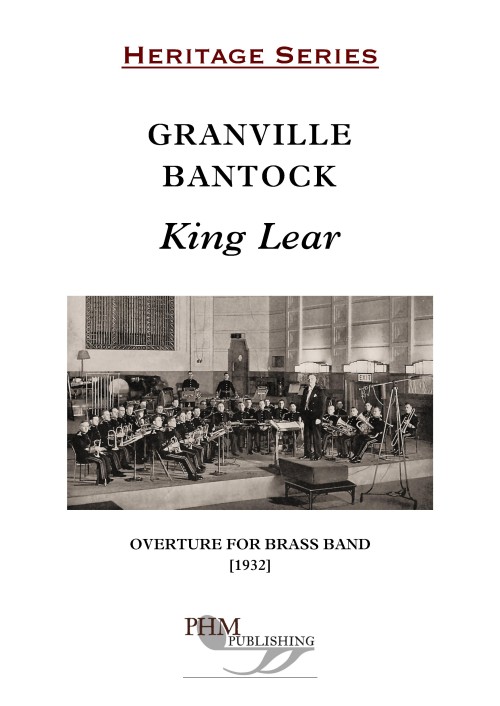
King Lear (Brass Band - Score and Parts) - Bantock, Granville - Hindmarsh, Paul
Sir Granville Bantock (1868 - 1946) composed the second of his five major brass band work for Callender's Cableworks Band, completing the commission on 30 November 1932. Based in the Thames-side district of Belvedere near Erith, the band was active between 1898 and 1961. The works band of the Callender Cable & Construction Co. Ltd, it was at the peak of its popularity during the 1930s and was a frequent broadcaster on the radio. The band employed an in-house arranger and played saxophones in its lighter material. King Lear was one of the band's major commissions and was not published in Bantock's lifetime. The manuscript score and parts were thought to be lost for decades, but were found in the library of the Haydock Band (Lancashire), which had inherited part of Callender's library of manuscripts material and bespoke arrangements after it has been transferred to nearby Prescott Cables Band after Callender's Cable Works closed.King Lear is a substantial work, in essence a dramatic tone poem in the romantic Tchaikovskian manner, presenting a series of character portraits of the foolish old king and his three daughters, Goneril, Regan and Cordelia. The music is dramatic and lyrical by turns, with the most generous lyrical episode revealing perhaps the warm-hearted Cordelia. An expansive melody that flows from this is brought back towards the end as the main climax of the work.In 2001, Bantock's score was recorded by the University of Salford Brass Band, conducted by Dr. Roy Newsome. The original is serviceable, but in comparison with the orchestral version he made in 1936 (part of which was recorded on a Paxton 78 rpm) and later brass band scores, performing editions of which were prepared by others, it lacks colour and range typical of Bantock's orchestral work. Above all it lacks percussion, which can be heard on the recorded extract. With the kind permission of the Bantock Estate, I have prepared a performing edition for publication that incorporates percussion, derived from the orchestral recording and added editorially in similar manner elsewhere. I have revoiced some of the low- lying instrumental parts to present the material in more comfortable ranges. Editorial interventions more elaborate than revoicing the original text have been identified as cue notes.- Paul HindmarshDuration: 15.00
Estimated dispatch 7-14 working days
-
£40.00
King Lear (Brass Band - Score only) - Bantock, Granville - Hindmarsh, Paul
Sir Granville Bantock (1868 - 1946) composed the second of his five major brass band work for Callender's Cableworks Band, completing the commission on 30 November 1932. Based in the Thames-side district of Belvedere near Erith, the band was active between 1898 and 1961. The works band of the Callender Cable & Construction Co. Ltd, it was at the peak of its popularity during the 1930s and was a frequent broadcaster on the radio. The band employed an in-house arranger and played saxophones in its lighter material. King Lear was one of the band's major commissions and was not published in Bantock's lifetime. The manuscript score and parts were thought to be lost for decades, but were found in the library of the Haydock Band (Lancashire), which had inherited part of Callender's library of manuscripts material and bespoke arrangements after it has been transferred to nearby Prescott Cables Band after Callender's Cable Works closed.King Lear is a substantial work, in essence a dramatic tone poem in the romantic Tchaikovskian manner, presenting a series of character portraits of the foolish old king and his three daughters, Goneril, Regan and Cordelia. The music is dramatic and lyrical by turns, with the most generous lyrical episode revealing perhaps the warm-hearted Cordelia. An expansive melody that flows from this is brought back towards the end as the main climax of the work.In 2001, Bantock's score was recorded by the University of Salford Brass Band, conducted by Dr. Roy Newsome. The original is serviceable, but in comparison with the orchestral version he made in 1936 (part of which was recorded on a Paxton 78 rpm) and later brass band scores, performing editions of which were prepared by others, it lacks colour and range typical of Bantock's orchestral work. Above all it lacks percussion, which can be heard on the recorded extract. With the kind permission of the Bantock Estate, I have prepared a performing edition for publication that incorporates percussion, derived from the orchestral recording and added editorially in similar manner elsewhere. I have revoiced some of the low- lying instrumental parts to present the material in more comfortable ranges. Editorial interventions more elaborate than revoicing the original text have been identified as cue notes.- Paul HindmarshDuration: 15.00
Estimated dispatch 7-14 working days
 View Music