
Results
-
Badinerie Swings - Len Jenkins - Len Jenkins
Featuring the Eb Soprano Cornet, this 'show-off' piece is based on movement VII of Suite No. 2 for Flute and String Orchestra by J S Bach. Originally written in B minor, it has been transposed to suit the range of normal brass instruments and it is trusted that Bach 'purists' will appreciate this adaptation along with the swing section which may be omitted if desired.
-
 £42.00
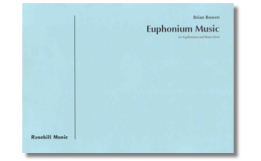
Euphonium Music (Score only) - Brian Bowen
Written in 1978, the work is constructed in three movements and is virtually a concerto for euphonium and band. The first movement begins with an unaccompanied motto theme, which uses all twelve notes of the scale but with a tonal feel. The slow second movement is based on an original song melody by the composer - 'The Eyes of God' - and affords lyrical and richly expressive playing that is typically euphonium. Movement three follows without a break - a capricious movement which ends triumphantly. Now available in versions for piano, brass band, wind band, and orchestra, Euphonium Music can be seen as a major contribution to the literature for the instrument. Duration: 15 minutes An orchestral version is available on hire.
Estimated dispatch 7-9 working days
-
 £52.00
Euphonium Music (Parts only) - Brian Bowen
Written in 1978, the work is constructed in three movements and is virtually a concerto for euphonium and band. The first movement begins with an unaccompanied motto theme, which uses all twelve notes of the scale but with a tonal feel. The slow second movement is based on an original song melody by the composer - 'The Eyes of God' - and affords lyrical and richly expressive playing that is typically euphonium. Movement three follows without a break - a capricious movement which ends triumphantly. Now available in versions for piano, brass band, wind band, and orchestra, Euphonium Music can be seen as a major contribution to the literature for the instrument. Duration: 15 minutes An orchestral version is available on hire.
Estimated dispatch 7-9 working days
-
 £51.95
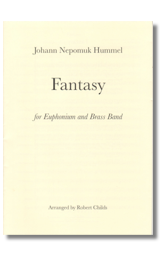
Fantasy - and Robert Childs
In the late eighteenth and early nineteenth centuries the 'fantasia' or 'pot-pourri' was a popular genre built on a selection of hit tunes of the day. Hummel wrote three such works, for guitar, cello, and viola; this arrangement is based on a shortened version of the work for viola and orchestra. The original, published as Hummel's Opus 94, dates from about 1820 and includes themes from Mozart's Don Giovanni, The Marriage of Figaro, Die Entfuhrung aus dem Serail, and Rossini's Tancredi.
Estimated dispatch 7-9 working days
-
 £62.00
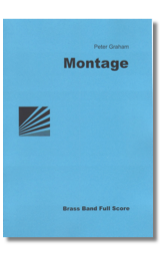
Montage (Score only) - Peter Graham
Each of the movements of the symphony take as their starting point forms originating in music of the 16th and 17th centuries. The first, an intrada, introduces the main thematic material (based on the interval of a minor third) in its embryonic state. As the piece progresses, this material is developed and manipulated in a variety of ways. The interval of the third remains central to the overall scheme of the work, even unifying the three movements on a tonal plane (I: F (minor); II: A flat (major); III: C flat (minor). The internal structure of the intrada is an arch form: ABCBA, roughly modelled on the first movement of Concerto for Orchestra by Witold Lutoslawski, to whose memory the movement is dedicated. A chaconne follows - the basic material now transformed into expansive solo lines underpinned by a recurring sequence of five chords (again, a third apart). The movement's structure combines both ternary form and golden section principles and the chaconne's continuous cycle of chords may be visualised as circles. The final movement, a rondo, bears the dramatic weight of the entire work, as the underlying tonal tensions surface. A musical journey ensues, making diversions through lyrical territories as well as through more spiky, jazz-flavoured ones. The aural (and visual) montage is perhaps most apparent towards the climax of the piece, where three keys and polyrhythms sound simultaneously in the upper brass, xylophone, horns, and timpani. The climax itself combines the lyrical music heard earlier with the rondo theme, now presented by cornets and trombones in canon. The teleological thrust of the movement (if not the entire work) can be symbolized by the flight of an arrow, as it steers a predetermined course towards its target. Duration: 16:00
Estimated dispatch 7-9 working days
-
 £74.00
Montage (Parts only) - Peter Graham
Each of the movements of the symphony take as their starting point forms originating in music of the 16th and 17th centuries. The first, an intrada, introduces the main thematic material (based on the interval of a minor third) in its embryonic state. As the piece progresses, this material is developed and manipulated in a variety of ways. The interval of the third remains central to the overall scheme of the work, even unifying the three movements on a tonal plane (I: F (minor); II: A flat (major); III: C flat (minor). The internal structure of the intrada is an arch form: ABCBA, roughly modelled on the first movement of Concerto for Orchestra by Witold Lutoslawski, to whose memory the movement is dedicated. A chaconne follows - the basic material now transformed into expansive solo lines underpinned by a recurring sequence of five chords (again, a third apart). The movement's structure combines both ternary form and golden section principles and the chaconne's continuous cycle of chords may be visualised as circles. The final movement, a rondo, bears the dramatic weight of the entire work, as the underlying tonal tensions surface. A musical journey ensues, making diversions through lyrical territories as well as through more spiky, jazz-flavoured ones. The aural (and visual) montage is perhaps most apparent towards the climax of the piece, where three keys and polyrhythms sound simultaneously in the upper brass, xylophone, horns, and timpani. The climax itself combines the lyrical music heard earlier with the rondo theme, now presented by cornets and trombones in canon. The teleological thrust of the movement (if not the entire work) can be symbolized by the flight of an arrow, as it steers a predetermined course towards its target. Duration: 16:00
Estimated dispatch 7-9 working days
-
 £7.46
£7.46Adoration (Cornet Solo with Brass Band - Additional Parts) Price arr. Wainwright
Florence Price was an American classical composer, pianist, organist and music teacher. She is noted as the first African-American woman to be recognised as a symphonic composer, and the first to have a composition played by a major orchestra. Price composed over 300 works: four symphonies, four concertos, as well as choral works, art songs, chamber music and music for solo instruments. In 2009, a substantial collection of her works and papers that had been previously considered lost was found in her abandoned summer home. Amongst these was this delightful work, Adoration, which had been composed in the 1950s for organ. According to IMSLP.org, the piece "failed to meet notice or renewal requirements to secure statutory copyright with no 'restoration' under the GATT amendments" and therefore is in the public domain. A version for violin and piano by Elaine Fine has become popular. This setting for cornet soloist with brass band has been arranged by Andrew Wainwright. It is also available as a Bb solo with piano here. The additional parts included in this download are for low brass in bass clef. The full brass band set is available here. To view a video of Andrew Roe performing the work, please visit: www.youtube.com/watch?v=_7UYlz8Fzxo Difficulty Level: 4th Section + Length: 3.15 minutes Sheet music available from: UK - www.brassband.co.uk USA - https://satradecentral.org Included in download: 1st Baritone B.C. 2nd Baritone B.C. 1st Trombone B.C. 2nd Trombone B.C. Euphonium B.C. Tuba B.C. (Eb Bass Part) Tuba B.C. (Bb Bass Part)
In Stock: Estimated dispatch 1-3 working days
-
£33.62
Adoration (Cornet Solo with Brass Band) Florence Price trs. Andrew Wainwright
Florence Price was an American classical composer, pianist, organist and music teacher. She is noted as the first African-American woman to be recognised as a symphonic composer, and the first to have a composition played by a major orchestra. Price composed over 300 works: four symphonies, four concertos, as well as choral works, art songs, chamber music and music for solo instruments. In 2009, a substantial collection of her works and papers that had been previously considered lost was found in her abandoned summer home. Amongst these was this delightful work, Adoration, which had been composed in the 1950s for organ. According to IMSLP.org, the piece "failed to meet notice or renewal requirements to secure statutory copyright with no 'restoration' under the GATT amendments" and therefore is in the public domain. A version for violin and piano by Elaine Fine has become popular. This setting for cornet soloist with brass band has been arranged by Andrew Wainwright. It is also available as a Bb solo with piano here. To view a video of Andrew Roe performing the work, please visit: www.youtube.com/watch?v=_7UYlz8Fzxo Difficulty Level: 4th Section + Length: 3.15 minutes Sheet music available from: UK - www.brassband.co.uk USA - https://satradecentral.org Instrumentation: Cornet Soloist Bb Soprano Cornet Eb Solo Cornet Bb Repiano Cornet Bb 2nd Cornet Bb 3rd Cornet Bb Flugel Horn Bb Solo Horn Eb 1st Horn Eb 2nd Horn Eb 1st Baritone Bb 2nd Baritone Bb 1st Trombone Bb 2nd Trombone Bb Bass Trombone Euphonium Bb Bass Eb Bass Bb (Percussion Tacet)
In Stock: Estimated dispatch 1-3 working days
-
 £48.56
Allegro Marcato from Symphony No.5 (Brass Band) Prokofiev arr. Fendall Hill
The premiere of Prokofiev's 5th Symphony took place on January 13, 1945, with Prokofiev himself conducting the USSR State Symphony Orchestra. During the performance, artillery fire could be heard in the distance, celebrating the Red Army's victory over German forces and providing a stark reminder of the ongoing conflict. Prokofiev's Symphony No. 5 emerged as a symbol of hope and human resilience. The 2nd movement is the Allegro marcato, a lively scherzo. The piece is energetic, full of contrasts and dynamic melodies, and embodies a spirit of defiance. It is one of the arranger's favourite pieces, and translates brilliantly to brass band for an orchestral transcription. To view a rolling score video of the work please visit www.youtube.com/watch?v=kM642RBFO2E PDF download includes score and parts. Sheet music available from: UK - www.brassband.co.uk USA - https://satradecentral.org Difficulty Level: 1st Section + Length: 8.45 minutes Instrumentation: Soprano Cornet Eb Solo Cornet Bb Repiano Cornet Bb 2nd Cornet Bb 3rd Cornet Bb Flugel Horn Bb Solo Horn Eb 1st Horn Eb 2nd Horn Eb 1st Baritone Bb 2nd Baritone Bb 1st Trombone Bb 2nd Trombone Bb Bass Trombone Euphonium Bb Bass Eb Bass Bb Timpani Percussion 1-3
In Stock: Estimated dispatch 1-3 working days
-
 £41.09
Christmas Day (Brass Band) Gustav Holst arr. Philip Rayment
VIEW SCORE PDF Well-known English composer, Gustav Holst (1874-1934) wrote this choral fantasy in 1910, about five years before his renowned orchestral suite, The Planets. The piece was originally composed for SATB choir and orchestra and dedicated to the students of Morley College, where Holst taught music. In the years since, it has been arranged for various combinations of voice and/or instruments. This arrangement is in the original key and could be adapted for use with choir and/or organ. Christmas Day features three carols in their entirety: Good Christian Men, Rejoice; God Rest Ye Merry, Gentlemen and Come, Ye Lofty, Come, Ye Lowly (an old Breton melody). There are also references to The First Nowell. Although well-received initially, this work (like many of Holst's) was neglected for many years and has not been widely recorded. It is hoped that it will be useful for brass bands during the festive season, particularly in a large acoustic. To listen to the Canadian Staff Band performing the work please visit www.youtube.com/watch?v=ccXkbWi_iWE Sheet music available from: UK - www.brassband.co.uk USA - www.solidbrassmusic.com Difficulty Level: 3rd Section + Instrumentation: Soprano Cornet Eb Solo Cornet Bb Repiano Cornet Bb 2nd Cornet Bb 3rd Cornet Bb Flugel Horn Bb Solo Horn Eb 1st Horn Eb 2nd Horn Eb 1st Baritone Bb 2nd Baritone Bb 1st Trombone Bb 2nd Trombone Bb Bass Trombone Euphonium Bb Bass Eb Bass Bb Percussion 1-3
In Stock: Estimated dispatch 1-3 working days
 Watch video