
Results
-
 £29.50
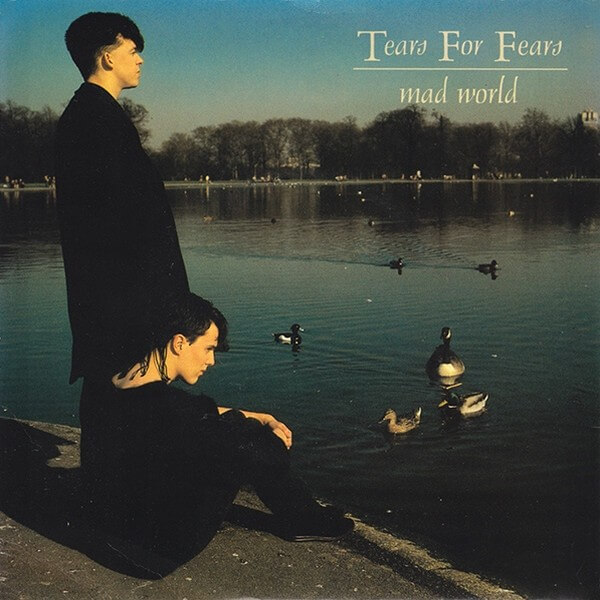
Mad World - Roland Orzabal - Gavin Somerset
Recently brought back into the limelight by its use in the Lloyds Bank TV advert, this song was originally released by the British band Tears For Fears, but it was not until it was covered by Gary Jules for the soundtrack of Donnie Darko that it became a number one hit. The re-scoring of the original gave the music a much darker feel and its melody became haunting with a slower tempo. Now finally available for band, this arrangement allows bands the chance to show off their soft, lyrical playing before a heavier ending sets in. The work is a great choice for any concert programme if you're after something different, yet popular at the same time this is a must have for any occasion.
In Stock: Estimated dispatch 1-3 working days
-
£29.50
Yakety Sax - Randolph & Rich - Neville Buxton
Made famous in its use on the Benny Hill Show, Yakety Sax has long been associated with comedy scenes. Now, arranged for the first time by Neville Buxton as a solo for any Bb instrument, some of that hilarity can now feature in your concerts! There's plenty of room for choreography to add to the spectacle, yet even without, this is one solo item that will have the audience wanting more!
In Stock: Estimated dispatch 1-3 working days
-
 £50.00
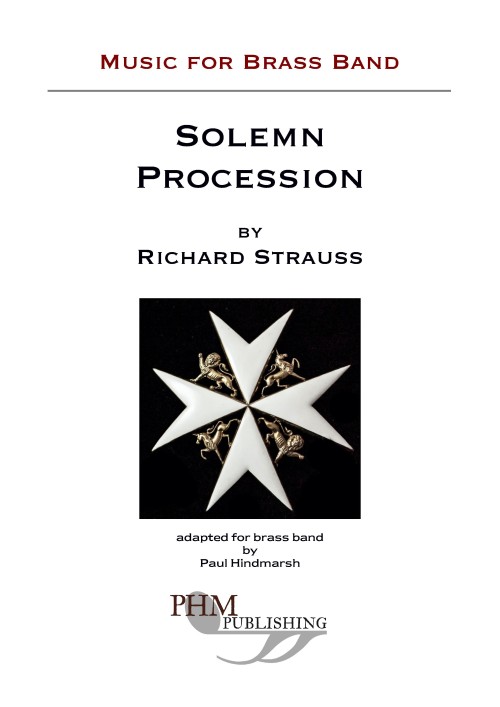
Solemn Procession (Brass Band - Score and Parts) - Strauss, Richard - Hindmarsh, Paul
Richard Strauss (1864 - 1949) was a famous conductor and composer when he wrote Feierlicher Einzug der Ritter des Johanniter-Ordens (Solemn Entrance of the Knights of the Order of Saint John) in 1909. One of only a handful of his works written exclusively for winds, Strauss composed Feierlicher Einzug for the investiture ceremonies of the Order of St. John, a Christian military order that was founded in Jerusalem in 1023 to care for poor, sick, or injured pilgrims journeying to the Holy Land.Strauss scored Feierlicher Einzug (TrV 224) for a large ensemble of fifteen trumpets, four horns, four trombones, two tubas and timpani. He saw enough potential in its stately character and majestic conclusion to produce a version for symphony orchestra with organ and it has been arranged for a variety of brass ensembles with or without organ since then.This version for British style brass band was adapted from the original in 1990 by Paul Hindmarsh for the exclusive use of Besses o' th' Barn Band, of which he was then the musical director. Now that the music of Richard Strauss published in his lifetime is in the public domain, Solemn Procession, as it has been rendered in English, can be enjoyed by all brass bands and their audiences.- Paul HindmarshDuration: 6.00
Estimated dispatch 7-14 working days
-
 £84.99
Pacific Dreams (Brass Band - Score and Parts) - De Haan, Jacob
Pacific Dreams describes the experience of Miguel, a travelling composer from Spain who, feeling somewhat alienated from his homeland, is wandering through an area of Sydney known as The Rocks. At a small outdoor market in a typical street of this old colonial neighbourhood, he discovers a print of William DeShazos painting "Pacific Dreams" Portrayed in the painting is the surf of one of the exotic islands in the Pacific. Next, with the impressive Sydney Harbour Bridge looming over the narrow streets of The Rocks, he envisions sultry Pacific beaches. Suddenly a theme he once composed about the lakes in Japan comes to him. Is it the Asian influences present in cosmopolitan Sydney that bring this theme to mind? Or perhaps the waters around Sydney, over which he could sail to Tahiti? He is uncertain. Could this same theme be used to create a new composition about his feelings for the metropolis Sydney? How then to work his Pacific Dreams into the mix? Miguel is certainly no fan of Hawaiian music. Maybe he could use the vocabularies of islands like Hawaii and Tahiti, their beautiful vowel combinations being sung ad libitum by a mixed choir.With these ideas and his newly purchased print of "Pacific Dreams", he boards the Metro at Circular Quay. He has a final glimpse of the harbour and the Sydney Opera House as the train races into the ground. On to the hotel! To work! He must compose! Maestoso : Miguel is impressed as he gazes upon the Sydney Harbour Bridge. And yet, he wants to go away from this city. Away, to an exotic island in the Pacific.Steady Rock : In the Rocks, musicians are playing at a square. Miguel basks in the atmosphere but at the same time he is fantasising about Hawaii and Tahiti. Andante Lamentoso : In his hotel room, Miguel is feeling sad and lonely in this big city. He takes comfort in his "Pacific Dreams". Allegro : Miguel boards the boat that takes him from Darling Harbour to Circular Quay. In his mind he is travelling on to Hawaii. Or is it home, where the bolero is playing? He is pulled back to reality by the skyline of Sydney.Duration: 9.15
Estimated dispatch 7-14 working days
-
 £55.00
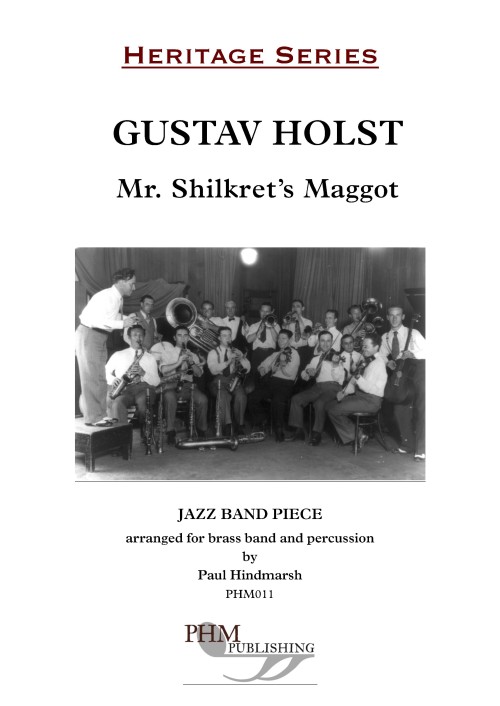
Mr Shilkret's Maggot (Brass Band - Score and Parts) - Holst, Gustav - Hindmarsh, Paul
This short piece was composed in 1932 during a visit Gustav Holst was making to the USA. He was invited by the band leader Nathaniel Shilkret to contribute to a series of piece for concert jazz band based on a folk song. Rather than using a traditional tune, Holst invented one of his own in folk song style and therefore the piece was not performed. Holst considered various titles for the piece including Mr. Shilkret's Dump, Folly and Maggot. On the manuscript he described it as a Jazz Band Piece. When the composer's daughter Imogen re-scored the piece for the English Chamber Orchestra to record under her direction in 1967, she changed decided to use the title Capriccio.Her re-orchestration involved removing the saxophone quartet, adding cor anglais and a second bassoon and changing cornet parts to trumpets. She retained the harp, extensive percussion, piano and celesta. My brass band version is based on the composer's manuscript, held at the British Library. It retains the composer's cornet parts, re-voices the woodwinds and strings, and places keyboards and harp onto glockenspiel, marimba, vibraphone and xylophone.I have selected the title Mr. Shilkret's Maggot for my scoring of Jazz Band Piece, which was first performed by The Cory Band, conducted by Philip Harper, at the Royal Northern College of Music Brass Band Festival, 29 January 2017.- Paul HindmarshDuration: 5.30
Estimated dispatch 7-14 working days
-
 £94.95
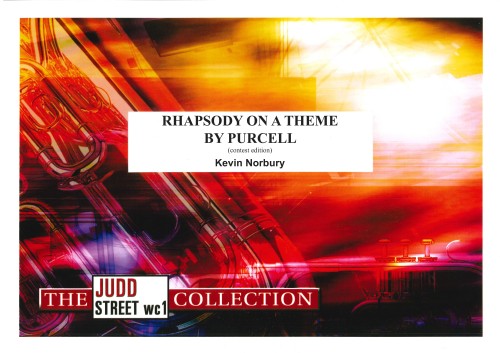
Rhapsody on a Theme by Purcell (Brass Band - Score and Parts) - Norbury, Kevin
Contest VersionIn his relatively short lifetime, Henry Purcell (1659 -1695) achieved stellar musical success and was known and admired internationally by his contemporaries. He is justifiably considered one of England's greatest composers.I thought long and hard before using this magnificent theme as the basis for a band piece because I think that Benjamin Britten has said just about everything possible regarding it in his The Young Person's Guide to the Orchestra. Bearing this in mind, I tentatively set about working on this composition. Once started though, the job became fun because the theme still yielded possibilities - even after Britten!The piece is basically a set of linked variations, much like Rachmaninov's great Rhapsody on theme by Paginini. The music starts slowly and makes much use of crisply dotted rhythms - a Purcellian characteristic. The theme is heard twice before the music changes into a jaunty duple time variation based on the opening motif of Purcell's theme. After this, the mood changes to a waltz-like variation in which clear references to the original theme can be heard. The slow movement follows, and is based on rising and descending scalic figures. This variation is an 'A-B-A' movement with two similar passages framing a more vigorous middle section which features antiphonal fanfare-like figures. Without any preamble, the last variation launches itself - a rumbustious dance which has a distinctive feel to it.The theme eventually reappears as a counter-melody to this dance music before a final triumphant treatment of the melody featuring a somewhat athletic bass line. The music accelerates at the Coda and disappears in a 'puff of smoke'.- Kevin Norbury
Estimated dispatch 7-14 working days
-
 £39.95
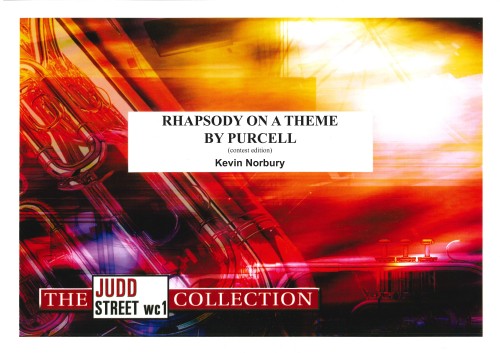
Rhapsody on a Theme by Purcell (Brass Band - Score only) - Norbury, Kevin
Contest VersionIn his relatively short lifetime, Henry Purcell (1659 -1695) achieved stellar musical success and was known and admired internationally by his contemporaries. He is justifiably considered one of England's greatest composers.I thought long and hard before using this magnificent theme as the basis for a band piece because I think that Benjamin Britten has said just about everything possible regarding it in his The Young Person's Guide to the Orchestra. Bearing this in mind, I tentatively set about working on this composition. Once started though, the job became fun because the theme still yielded possibilities - even after Britten!The piece is basically a set of linked variations, much like Rachmaninov's great Rhapsody on theme by Paginini. The music starts slowly and makes much use of crisply dotted rhythms - a Purcellian characteristic. The theme is heard twice before the music changes into a jaunty duple time variation based on the opening motif of Purcell's theme. After this, the mood changes to a waltz-like variation in which clear references to the original theme can be heard. The slow movement follows, and is based on rising and descending scalic figures. This variation is an 'A-B-A' movement with two similar passages framing a more vigorous middle section which features antiphonal fanfare-like figures. Without any preamble, the last variation launches itself - a rumbustious dance which has a distinctive feel to it.The theme eventually reappears as a counter-melody to this dance music before a final triumphant treatment of the melody featuring a somewhat athletic bass line. The music accelerates at the Coda and disappears in a 'puff of smoke'.- Kevin Norbury
Estimated dispatch 7-14 working days
-
 £60.99
Es ist ein Ros Entsprungen (Brass Band - Score and Parts) - Praetorius, Michael - Schwarz, Otto M.
The many sided and productive Michael Praetorius (1571-1621) is known as a composer of dance music, sacred music and music for the advent and Christmas time. He worked as Kapelmeister to the court at Wolffenbuttel, but he was also asked to serve in other places, including Dresden. Praetorius was valued for the new impulses he gave to music by means of his use of instrumental accompaniment. His main contribution is his theoretical work "Syntagma Musicum", one of the most important musical reference books, in connection with instruments and instrumentation in the early 17th Century. "Es ist ein ros entsprungen" is a well known ancient melody which has inspired numerous composers and arrangers throughout the Centuries. Otto M. Schwarz has made a choral arrangement.Duration: 3:00
Estimated dispatch 7-14 working days
-
 £60.99
Consolation (Brass Band - Score and Parts)
Wer nur den lieben Gott l?sst walten was composed by Georg Neumark in about 1641 and was subtitled 'Trostlied' literally meaning consolation song. Songbooks at the time showed the popularity of this song and it is still well-known today partly due to Johann Sebastian Bach's use of the melody for one of his own chorals. In Jan de Haan's arrangement the choral is heard twice, once, alternating with the original motif from the introduction and a second time, without interruption, reflecting the composer's original intention - a song of consolation. 03:10
Estimated dispatch 7-14 working days
-
 £40.00
William Tell Overture, Finale from (Brass Band - Score and Parts) - Littlemore, Phillip
The overture to Rossini's opera?William Tell?is a fairly large scale work in four sections and lasting some twelve minutes. However, it is the finale of the overture which is one of ?the most iconic pieces of music. This 'March of the Swiss Soldiers' is a dynamic cavalry charge and galop often used in popular media to denote galloping horses, a race, or a hero riding to the rescue. Its most famous use in that respect is as the theme music for the radio and TV show?The Lone Ranger. It was also used to great comic effect by Spike Jones and his City Slickers and it also finds it's way into the first movement of Shostakovich's 15th Symphony! Duration: 3:20
Estimated dispatch 7-14 working days
 View Music