
Results
-
 £24.50
Christmas Jig - Naomi Styles
With a different take on the traditional Christmas medley, this jolly selection takes several well-known Christmas carols written in 6/8 time and puts them in the style of a gleeful jig. Featuring In Dulci Jubilo, On Christmas Night, I Saw Three Ships, Christ was Born on Christmas Day & Here we Come a-Wassailing, the piece is a great workout for the band, whilst audiences will struggle to remain still throughout in this lively piece.
In Stock: Estimated dispatch 1-3 working days
-
£24.50
Duke Street - David Holling
Originally written during David's time as MD of Strata Brass, this lively concert march frequently featured in the band's programmes and its title comes from the street on which you would find the band rehearsing; as they have for some 30+ years. A great 3-minute opener to any concert without the need to DC!
In Stock: Estimated dispatch 1-3 working days
-
 £29.50
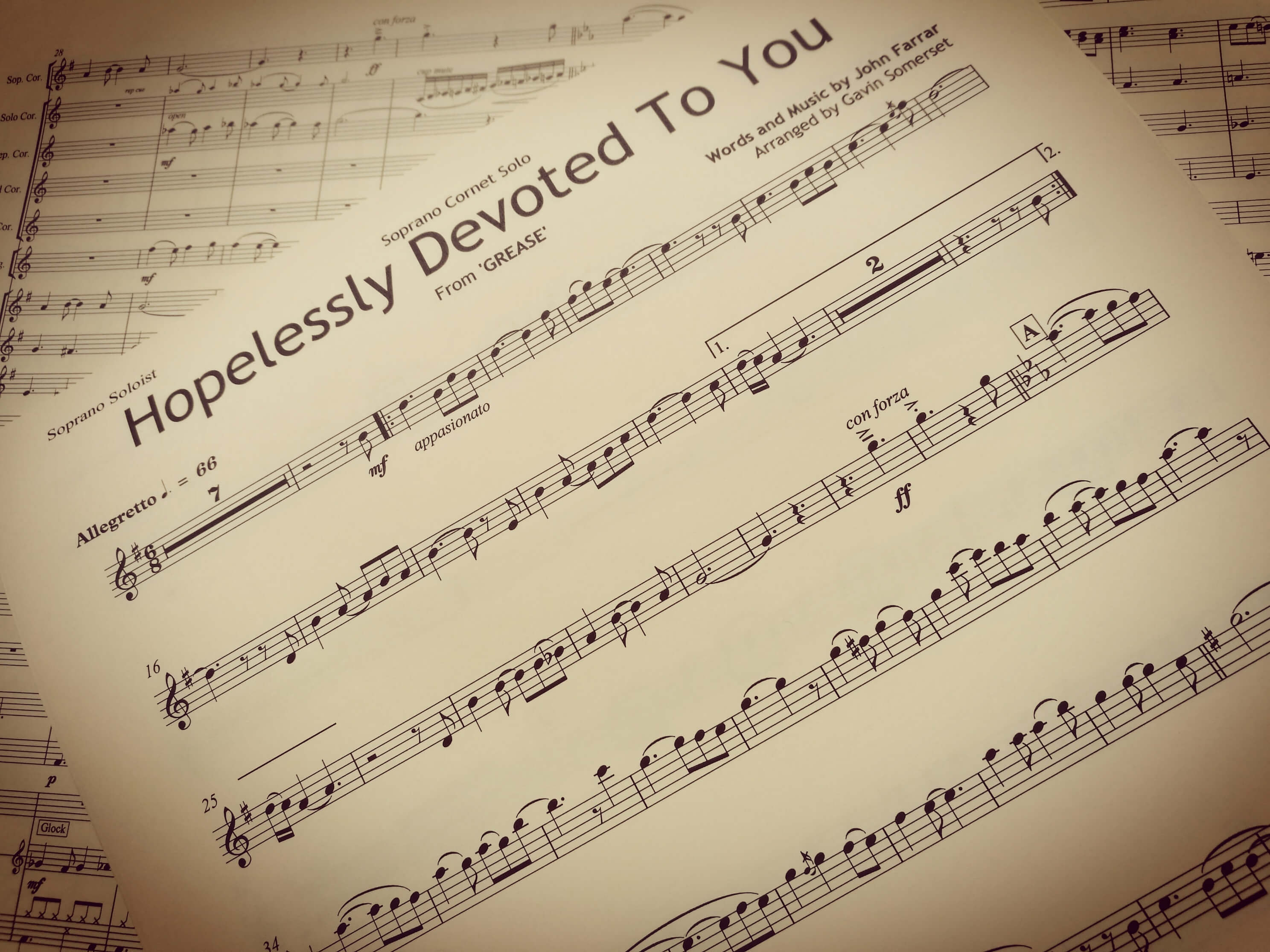
Hopelessly Devoted To You - John Farrar - Gavin Somerset
With Grease celebrating its 40th anniversary this year, this new Soprano Solo comes at the perfect time. The song was written by John Farrar, as the contractually agreed vocal solo for Olivia Newton-John to perform in the film. With simple accompaniments and a song well-known by audiences of all ages, this title is the perfect choice for Soprano players looking to combine their lyrical playing with power in the top register (highest note top C). A must have in the repertoire for soprano cornet soloists. **An alternate lower soloist part is also provided with this publication. FREE SOLOIST PART: CLICK HEREFREE ALTERNATE SOLOST PART: CLICK HERE To download the playback audio to play along to, please RIGHT CLICK HERE & Save As .
In Stock: Estimated dispatch 1-3 working days
-
£24.50
Mallyan - Alan Beaumont
Mallyan is an area in Gaothland (Heartbeat Country) and at the bottom of a lovely walk is a 70ft waterfall called Mallyan Fall. This is a standard 6/8 march with a bass solo in 2/4 time.
In Stock: Estimated dispatch 1-3 working days
-
 £29.50
Sing - Andrew Lloyd Webber & Gary Barlow - Dave Houghton
When it was announced that prolific composer Sir Andrew Lloyd Webber and hit song writer Gary Barlow were to collaborate on a project to commemorate the Diamond Jubilee of Queen Elizabeth II, the public were left in little doubt that the music would be an instant hit. We were not disappointed! Gary Barlow travelled across the Commonwealth searching for instruments and voices to perform on the single and the 'Military Wives Choir' were also included in the final edition. Now available for the first time for brass band in an arrangement by Dave Houghton, this moving work projects the 'feel good' factor to your audience and is a perfect addition to a programme on both the bandstand and concert hall. A must for every bands library.
In Stock: Estimated dispatch 1-3 working days
-
£29.50
So Amazing - Traditional - Jonathan Mead
'So Amazing', is a beautiful new hymn tune arrangement from the pen of Welsh Composer Jonathan Mead. The music would create a lovely moment in a concert, where the audience would have time for reflection. The title comes from the words that are often associated with this tune, 'Love so amazing, so divine,'. The tune used, is also well known in the brass band world as, 'The Water is wide'. The music is lovely to play as well as listen to. A must for any Concert Programme.
In Stock: Estimated dispatch 1-3 working days
-
 £44.95
Glorified (Brass Band - Score and Parts) - Wainwright, Andrew
Glorified was composed for the Canadian Staff Band's 50th Anniversary celebrations. This work is based on two tunes, Lord, be glorified and Great is thy faithfulness. This song celebrates and signifies the faithfulness to all associated with the Canadian Staff Band, and the commitment shown by its members through the years.The first half of the work harkens back to those members of the band who tragically perished in the early days on RMS Empress of Ireland, which was en route to England for the 1914 International Congress when it was struck by another vessel and sank. The rhythmic ostinatos heard represent the passing of time over the years. After the somewhat dark introduction, the music settles into a reflective rendition of In my life, Lord, be glorified, before bursting into a rhythmic and jagged mixed-metre section. A yearning elegy pays tribute to those who lost their lives.The second half of the piece is celebratory in nature and commemorates the reformation of the band and the rich history which has ensued in the subsequent years. The rhythmic energy found in this section builds to a majestic presentation of the tune Lord, be glorified, which leads into the return of Great is thy faithfulness but in an optimistic fashion.
Estimated dispatch 7-14 working days
-
 £89.99
Torsion (Brass Band - Score and Parts)
Torsion was commissioned by the Leyland Band and first performed on 23 January 2010 at the Royal Northern College of Music Festival of Brass, Manchester, by Leyland Band conducted by Jason Katsikaris. This colourful and dynamic work is the most personal and ambitious that Simon Dobson composed during his residency with the Lancashire brass band. The dictionary defines torsion as the state of being twisted and the composer interprets this as the imagined dis-torsions and con-torsions of Time, Light and Sound in three contrasting movements. Simon Dobson fuses the traditional brass band sound with drive and energy of pop and funk jazz with optional digitally distorted 'echoes' providing added aural confusion at the points of climax. Although composed as a substantial concert work, Torsion would also make a challenging test-piece for contesting brass bands in the elite divisions. Suitable for Championship Section Bands. Duration: 15.00
Estimated dispatch 7-14 working days
-
 £104.99
Deliverance (Brass Band - Score and Parts) - Crausaz, Etienne
Deliverance is an exciting concert suite by Etienne Crausaz. The first movement is in the style of a siciliana, starting out quiet and calmly, then slowly building in excitement and energy. The second movement, a scherzo, allows for colourful sounds and timbres and is full of humorous musical elements and contrasts. The third movement, the vivace, presents a dialogue between the higher and lower registers of the band with plenty of time changes. Deliverance is an action-packed composition, full of colour and contrast.Duration: 11.15
Estimated dispatch 7-14 working days
-
 £69.99
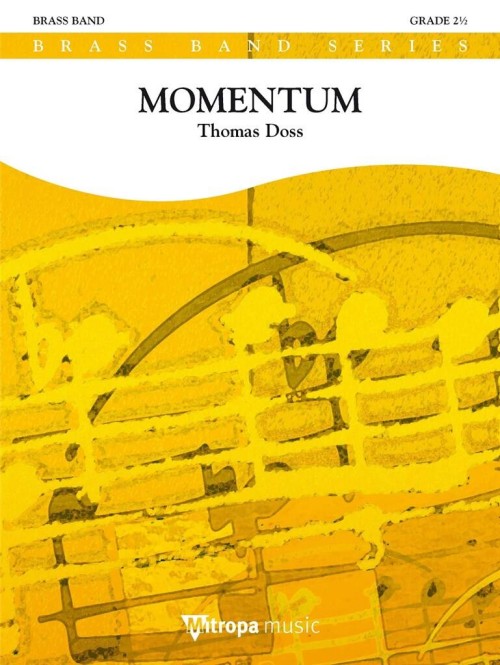
Momentum (Brass Band - Score and Parts) - Doss, Thomas
The Latin word Momentum has come to mean many different things in our language: a short period of time, a force, or a speed of movement. In our current times of around-the-clock high speed and energy, the composer wanted to write a reflective and meditative piece that focuses on the moment at hand.Duration: 5.30
Estimated dispatch 7-14 working days
 View Music
 Listen to MP3