
Results
-
£72.10
Sonate No 7 - Reiche - André Besançon
Estimated dispatch 5-14 working days
-
£35.20
No. 7, Yo Ho Ho - Stephen Roberts
Estimated dispatch 5-14 working days
-
£25.00
SLAVONIC DANCE NO. 7 - Dvorak/B.Strickle
In Stock: Estimated dispatch 3-5 working days
-
 £56.00
Allegretto From Symphony No. 7 - Ludwig van Beethoven - Rob J. Hume
Estimated dispatch 7-14 working days
-
 £14.95
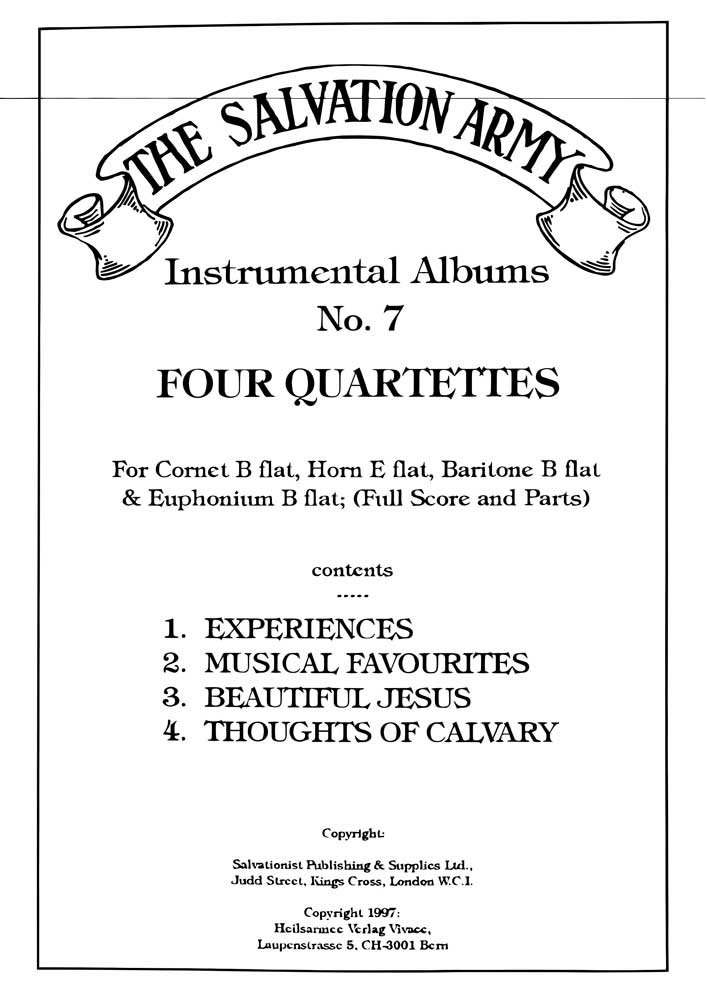
Instrumental Album No.7 - Four Quartettes
Includes: Experiences; Musical Favourites; Beautiful Jesus; Thoughts of CalvaryInstrumentation: Cornet, Eb Horn, Baritone & Euphonium (Bb)
Estimated dispatch 7-14 working days
-
£44.00
-
£35.00
-
 £56.00
Allegretto from Symphony No.7 (Brass Band - Score and Parts) - Beethoven, Ludwig van - Hume, Rob J.
Slightly reduced Brass Band instrumentation (no rep cornet, no 2nd horn, no 2nd trombone part)
Estimated dispatch 7-14 working days
-
 £33.20
Finale - Suite No.3 (Brass Band) Tchaikovsky arr. Ruben Schmidt
This arrangement by Ruben Schmidt is the exciting polonaise finale from the last movement of Tchaikovsky's thrilling Suite No.3 in G Major for Orchestra. This was first performed in Saint Petersburg on January 12th, 1885, at the fifth symphony concert of the Russian Musical Society, conducted by Hans von Bulow. The suite also was Tchaikovsky's first American success when it was performed by the New York Symphony Society at Carnegie Hall on May 7,1891. First intended as its own symphony, it became the most played and most successful of Tchaikovsky's four suites. The finale of the last movement is an invigorating polonaise dance to finish the suite. Tchaikovsky often enjoyed conducting this final movement as an independent work himself. To view a rolling score video of the work please visit www.youtube.com/watch?v=M-Ht80Lnk-c Duration: 4.00 minutes Difficulty Level: 1st Section + PDF download includes parts and score. Sheet music available here. Instrumentation: Soprano Cornet Eb Solo Cornet Bb Repiano Cornet Bb 2nd Cornet Bb 3rd Cornet Bb Flugel Horn Bb Solo Horn Eb 1st Horn Eb 2nd Horn Eb 1st Baritone Bb 2nd Baritone Bb 1st Trombone Bb 2nd Trombone Bb Bass Trombone Euphonium Bb Bass Eb Bass BbTimpani Percussion (Tambourine, Suspended Cymbal & Bass Drum)
In Stock: Estimated dispatch 1-3 working days
-
£34.95
CHALK FARM No.2 (Brass Band Set) - Edward Gregson
In 1909, The Salvation Army published a march called 'Chalk Farm'. 'Chalk Farm No. 2' was written to commemorate the centenary of the birth of Bandmaster Punchard, Bandmaster to Chalk Farm band for 50 years. The tune 'March on, we shall win the day' is common to both marches. The later march is symphonic rather than processional, including as it does irregular bars of 5 and 7 beats.
Estimated dispatch 7-14 working days
 View Music